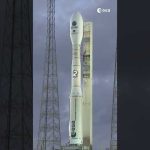
Our Biomass satellite has successfully launched, marking a major leap forward in understanding Earth’s forests and their vital role in the carbon cycle.
It lifted off on 29 April 2025 from Europe’s Spaceport in French Guiana aboard Vega-C, and is already sending back its first signals. Over the next few days, our mission controllers will carefully deploy Biomass’ enormous 12-metre-wide reflector – the key to its unique abilities.
📹 European Space Agency (ESA) 📸 ESA/CNES/Arianespace
ESA’s state-of-the-art Biomass mission is designed to provide new insights into the health and evolution of the world’s forests, helping us understand how they are changing over time and, importantly, their critical role in the global carbon cycle. Equipped with the first-ever fully polarimetric P-band synthetic aperture radar, this satellite can penetrate dense forest canopies. The long 70 cm wavelength of the radar enables it to measure ‘biomass’—the woody trunks, branches and stems—where trees store the majority of their carbon.
Credits: European Space Agency (ESA)
★ Subscribe: http://bit.ly/ESAsubscribe and click twice on the bell button to receive our notifications.
We are Europe’s gateway to space. Our mission is to shape the development of Europe’s space capability and ensure that investment in space continues to deliver benefits to the citizens of Europe and the world. Check out https://www.esa.int/ to get up to speed on everything space related.
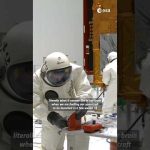
This video shows the precise and delicate process of loading the Biomass satellite with 132 kg of highly volatile fuel. This fuel will power the satellite so that it can carry out the complex manoeuvres that are needed during its mission.
📹 European Space Agency (ESA) 📸 ESA/CNES/Arianespace/Optique vidéo du CSG–T. Leduc
In this video, forestry expert Maurizio Santoro, senior researcher at Gamma Remote Sensing and one of the leaders of ESA projects related to the Climate Change Initiative (CCI), explains how the use of various data, whether in synergy or in comparison, can bring a great contribution/benefit to the field of mapping biomass and measuring this Essential Climate Variable.
★ Subscribe: http://bit.ly/ESAsubscribe and click twice on the bell button to receive our notifications.
We are Europe’s gateway to space. Our mission is to shape the development of Europe’s space capability and ensure that investment in space continues to deliver benefits to the citizens of Europe and the world. Check out https://www.esa.int/ to get up to speed on everything space related.
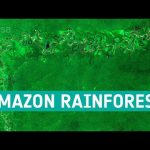
The Copernicus Sentinel-2 mission takes us over part of the Amazon rainforest in the Amazonas – the largest state in Brazil, in this edition of the Earth from Space programme.
We are Europe’s gateway to space. Our mission is to shape the development of Europe’s space capability and ensure that investment in space continues to deliver benefits to the citizens of Europe and the world. Check out https://www.esa.int/ to get up to speed on everything space related.
Forging state-of-the-art space technologies, our Earth Explorer satellite missions continue to surpass expectations with a range of interesting and complementary results that go beyond their original goals. In this video, learn how each mission is contributing to Earth science, and changing the way we look at our beloved planet.
★ Subscribe: http://bit.ly/ESAsubscribe and click twice on the bell button to receive our notifications.
We are Europe’s gateway to space. Our mission is to shape the development of Europe’s space capability and ensure that investment in space continues to deliver benefits to the citizens of Europe and the world. Check out http://www.esa.int/ESA to get up to speed on everything space related.
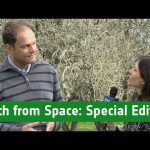
In this special edition of Earth from Space, senior project scientist at Gamma Remote Sensing, Dr Maurizio Santoro, joins the show to discuss how his team estimates forest biomass from space.