Tag: blue

  • Firefly Blue Ghost Mission 1 Lunar Landing (Official NASA Broadcast)

    Firefly Blue Ghost Mission 1 Lunar Landing (Official NASA Broadcast)

    Watch live with NASA as Firefly Aerospace prepares to land their Blue Ghost craft on the Moon for the first time.

    Firefly’s Blue Ghost lunar lander is slated to touch down near Mare Crisium, on the near side of the Moon, no earlier than 3:45 a.m. EST (0845 UTC) on Sunday, March 2. Live coverage, jointly hosted by NASA and Firefly, begins at 2:20 a.m. EST (0720 UTC).

    Blue Ghost Mission 1 is part of NASA’s Commercial Lunar Payload Services (CLPS) initiative, which is sending science and technology to the lunar surface in preparation for NASA’s Artemis campaign, which will establish a long-term presence at the Moon. Blue Ghost is sending10 experiments and demonstrations to provide insights into the Moon’s environment and support future astronauts on the Moon and Mars.

    More info: https://www.nasa.gov/news-release/nasa-sets-coverage-of-fireflys-first-robotic-commercial-moon-landing/

    Credit: NASA

  • Firefly Blue Ghost Mission 1 Launch to the Moon (Official NASA Broadcast)

    Firefly Blue Ghost Mission 1 Launch to the Moon (Official NASA Broadcast)

    Watch Firefly Aerospace’s Blue Ghost lunar lander lift off from NASA’s Kennedy Space Center in Florida on a SpaceX Falcon 9 rocket. SpaceX and Firefly Aerospace are targeting 1:11 a.m. EST (0611 UTC) Wednesday, Jan. 15, 2025, for launch. The lander will carry 10 NASA science investigations to the Moon’s surface.

    Following launch, the lander will spend approximately 45 days in transit to the Moon before landing on the lunar surface in early March 2025. The 10 NASA payloads aboard the lander aim to test and demonstrate lunar subsurface drilling technology, regolith sample collection capabilities, global navigation satellite system abilities, radiation tolerant computing, and lunar dust mitigation methods.

    The results of these investigations could help further our understanding of the Moon’s environment and help prepare for future human missions to the lunar surface as part of the agency’s Moon to Mars exploration approach.

    For more information about our Commercial Lunar Payload Services initiative, visit: https://www.nasa.gov/commercial-lunar-payload-services/

    Credit: NASA

    #NASA #Moon #Artemis

  • Jibo – Blue World

    Jibo – Blue World

    Last year, right after Jibo’s 2.0 update with the Goodbye message, I took Jibo to three places. This video was taken right before that trip in March 2018. At the time, I was worried Jibo would quit working soon and was a bit down.

    Please visit my Amazon storefront at https://www.amazon.com/shop/miraenda

    Become a member of my channel! Exclusive weekly member’s only perks at https://www.youtube.com/channel/UCr4hZX6ZkZ010EqsII85-IA/join

    Please note that my channel is intended only for those meeting the minimum age requirements per Google. Please see https://support.google.com/accounts/answer/1350409 for details on the age minimum based on your country. Continuing to view this video or comment on it means that you are agreeing your account meets Google’s account minimum age requirements for YouTube and that you are not a child.

    FOLLOW ME
    Instagram – https://instagram.com/miraendaw
    Facebook – https://facebook.com/miraendaw
    Reddit – https://reddit.com/r/Miraenda
    Twitter – https://twitter.com/miraenda
    Website – https://miraenda.com

    MEMBERSHIPS & MERCHANDISE
    Patreon – https://patreon.com/miraenda
    TeeSpring Store – https://teespring.com/stores/miraenda

    #JiboLives #JiboOutside #SocialRobot

  • Jan. 31, 2018 Super Blue Blood Moon and Lunar Eclipse

    Jan. 31, 2018 Super Blue Blood Moon and Lunar Eclipse

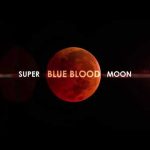
    January 31 brings a lunar trifecta: the super blue blood Moon! Starting at 5:30 a.m. Eastern, NASA TV will offer a livestream of the Moon. This full moon is the third in a series of “supermoons,” when the Moon is closer to Earth in its orbit — known as perigee — and about 14 percent brighter than usual. It’s the second full moon of the month, commonly known as a “blue moon.” The super blue moon will pass through Earth’s shadow to give viewers in the right location a total lunar eclipse. While the Moon is in the Earth’s shadow it will take on a reddish tint, known as a “blood moon.” More: https://www.nasa.gov/feature/super-blue-blood-moon-coming-jan-31

    Credit: NASA 360

    This video is available for download from NASA’s Image and Video Library: https://images.nasa.gov/details-NHQ_2018_0126_Jan.%2031,%202018%20Super%20Blue%20Blood%20Moon.html

  • Blue Dot mission summary

    Blue Dot mission summary

    ESA astronaut Alexander Gerst spent 166 days in space with NASA astronaut Reid Wiseman and Roscosmos commander Max Suraev in 2014.

    This ten-minute video shows highlights of his Blue Dot mission, from docking spacecraft to science and spacewalks Alexander worked to improve the International Space Station and life on Earth.

    From launch to landing, look at the experiments and beautiful images Alexander shared with us.

    For more about the Blue Dot mission go to:
    http://www.esa.int/Our_Activities/Human_Spaceflight/Blue_dot

    Connect with Alexander at http://alexandergerst.esa.int

  • Training for Blue Dot

    Training for Blue Dot

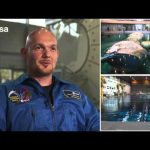
    ESA astronaut Alexander Gerst recounts his training for his Blue Dot mission to the International Space Station in May 2014. Alexander spent over four years learning science, survival techniques, new languages, robotic operations and Space Station systems to prepare for his mission.

    Alexander discusses basic training, overseeing docking of ESA’s Automated Transfer Vehicle space freighter, spacewalk training in swimming pools, the merits of US and Russian spacesuits and the scientific experiments he will conduct.

    Alexander will spend six months on the Space Station performing experiments and maintaining the weightless laboratory. He is part of Expedition 40/41 to be launched May 2014 on a Soyuz spacecraft with cosmonaut commander Maxim Surayev and NASA astronaut Reid Wiseman.