Tag: Blue Dot

  • Soyuz ride into space

    Soyuz ride into space

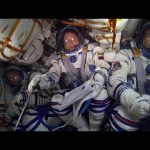
    On 28 May 2014, ESA astronaut Alexander Gerst and NASA astronaut Reid Wiseman under the command of Russian cosmonaut Maxim Suraev rocketed into space in a Soyuz spacecraft. This was their voyage.

    For Alexander and Reid it was the first time they saw Earth from space.

    Strapped atop 274 tonnes of rocket propellants delivering 26 million horsepower, it took only six hours to reach their destination, International Space Station.

    Alexander worked as a geophysicist and volcanologist before he was selected as an ESA astronaut in 2009. His Blue Dot mission included an extensive scientific programme of experiments in physical science, biology, and human physiology as well as radiation research and technology demonstrations. All experiments make use of the out-of-this-world laboratory to improve life on Earth or prepare for further human exploration of our Solar System.

    Read more about the Blue Dot mission: http://www.esa.int/Our_Activities/Human_Spaceflight/Blue_dot
    Follow Alexander: http://alexandergerst.esa.int/
  • ESA – Space to Relax / Gerst’s room with a view

    ESA – Space to Relax / Gerst’s room with a view

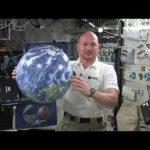
    Kick back to images and videos captured by ESA astronaut Alexander Gerst during his Blue Dot mission on the ISS. An ESA for Lufthansa inflight film.

    Music Space by Borisov. Images: ESA/NASA.

  • Blue Dot mission summary

    Blue Dot mission summary

    ESA astronaut Alexander Gerst spent 166 days in space with NASA astronaut Reid Wiseman and Roscosmos commander Max Suraev in 2014.

    This ten-minute video shows highlights of his Blue Dot mission, from docking spacecraft to science and spacewalks Alexander worked to improve the International Space Station and life on Earth.

    From launch to landing, look at the experiments and beautiful images Alexander shared with us.

    For more about the Blue Dot mission go to:
    http://www.esa.int/Our_Activities/Human_Spaceflight/Blue_dot

    Connect with Alexander at http://alexandergerst.esa.int

  • Day and night

    Day and night

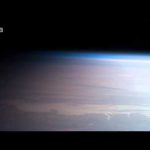
    It takes 90 minutes for an astronaut on the International Space Station to circle Earth completely, passing from daytime to nighttime and back again. This video taken by ESA astronaut Alexander Gerst shows the view from space in under one minute. Each orbit the Station moves around 2200 km to the West in relation to 90 minutes before.

    Astronauts often use normal consumer digital cameras to take pictures of Earth through Europe’s observatory module Cupola in their spare time. Setting the camera to take an image every few seconds and then playing the images back quickly create this timelapse effect.

    Alexander worked as a geophysicist and volcanologist before he was chosen as an ESA astronaut in 2009. His Blue Dot mission includes an extensive scientific programme of experiments in physical science, biology, and human physiology as well as radiation research and technology demonstrations. All experiments chosen make use of the out-of-this-world laboratory to improve life on Earth or prepare for further human exploration of our Solar System.

    Read more about his mission at http://www.esa.int/Our_Activities/Human_Spaceflight/Blue_dot

    Follow Alexander here: http://alexandergerst.esa.int/

  • ESA astronaut Alexander Gerst greets German planetariums

    ESA astronaut Alexander Gerst greets German planetariums

    On 25 July, several German planetariums connected with ESA’s Astronaut Centre in Cologne, Germany, for a Google Hangout session.

    Usually, visitors to a planetarium are explore the starry night sky. But on the evening of 25 July eight German planetariums organised an event to talk about Alexander Gerst’s Blue Dot mission on the International Space Station, the European Astronaut Centre and about human spaceflight in general. A highlight of the evening was this message from Alexander Gerst in space.

  • Training for Blue Dot

    Training for Blue Dot

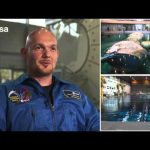
    ESA astronaut Alexander Gerst recounts his training for his Blue Dot mission to the International Space Station in May 2014. Alexander spent over four years learning science, survival techniques, new languages, robotic operations and Space Station systems to prepare for his mission.

    Alexander discusses basic training, overseeing docking of ESA’s Automated Transfer Vehicle space freighter, spacewalk training in swimming pools, the merits of US and Russian spacesuits and the scientific experiments he will conduct.

    Alexander will spend six months on the Space Station performing experiments and maintaining the weightless laboratory. He is part of Expedition 40/41 to be launched May 2014 on a Soyuz spacecraft with cosmonaut commander Maxim Surayev and NASA astronaut Reid Wiseman.