Tag: CERN (Organization)

  • ESA Euronews: The dark side

    ESA Euronews: The dark side

    All we can see around us, from planet Earth to distant galaxies, represents just five per cent of the Universe – the rest is dark energy or dark matter. So what do we know and what do we not know about these elusive components of the cosmos?

    The simple answer is that we don’t know much about dark matter and even less about dark energy.

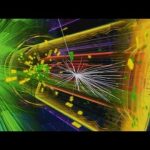
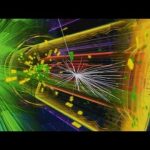
    However, that could change quite soon thanks to groundbreaking research being done by scientists at ESA and CERN, home to the world’s foremost particle accelerator, the Large Hadron Collider. The LHC’s discovery three years ago of the Higgs Boson set researchers on a voyage of discovery to the dark side of the Universe. They are about to fire up the colossal accelerator again this year, and for the first time at full power. That extra energy is what’s giving optimism for new revelations about dark energy and dark matter. One scientists tells Space: “we might have a discovery even in the first days, if not in the first weeks.”

    At the same time ESA is building a new space telescope called Euclid which will watch how the gravity of dark matter acts on galaxies, and how dark energy is pushing the expansion of our Universe.

    Find out how science is unraveling the dark mysteries of the cosmos.

    This video is also available in the following languages:
    French: http://youtu.be/laj4WuHG7Sw
    German: http://youtu.be/G9orG0fS3ew
    Spanish: http://youtu.be/zR15Z2gisJA
    Italian: http://youtu.be/ZEckJH4JTYg
    Hungarian: http://youtu.be/jv70GJmFz1M
    Greek: http://youtu.be/eL34G_A-OVg
    Portuguese: http://youtu.be/XqXJsbzp7G4
  • ESA Euronews: Du côté sombre de l’univers

    ESA Euronews: Du côté sombre de l’univers

    Une chose est sûre : aujourd’hui encore, notre compréhension de l’univers reste très lacunaire.
    Ce que nous pouvons voit autour de nous – de la planète Terre aux lointaines galaxies – ne représente ainsi que 5 % de l’univers.
    Alors, qu’y-a-t-il au-delà ?
    De la matière noire et de l’énergie sombre, nous disent les scientifiques sans pour autant en avoir percé le mystère.
    Deux outils sont à leur disposition pour essayer de résoudre cette énigme cosmique.
    À commencer par le Grand collisionneur de hadrons ou LHC.
    C’est l’accélérateur de particules le plus grand et le plus puissant du monde et se trouve au CERN, près de Genève.
    Il y a trois ans, c’est lui, par exemple, qui a détecté le Boson de Higgs.
    En 2015, il est fin prêt pour d’autres prouesses scientifiques. Dans quelque temps, le LHC va, en effet, tourner à plein régime pour la première fois et donc être en mesure d’identifier de la matière noire.
    Deuxième outil : Euclid, le télescope spatial construit actuellement par l’ESA, l’Agence spatiale européenne.
    Sa mission : étudier l’action de la gravitation de la matière noire sur les galaxies et dire comment cette matière noire contribue à l’expansion de notre univers.
    Car oui, l’univers est en constante expansion tout comme l’énergie sombre.

  • ESA Euronews: Dunkle Materie und dunkle Energie

    ESA Euronews: Dunkle Materie und dunkle Energie

    Derzeit wissen wir nur wenig über dunkle Materie und fast nichts über dunkle Energie, aber all das könnte sich bald ändern. Physiker und Kosmologen versuchen mit Weltraumteleskop und Teilchenbeschleuniger der dunklen Energie und der dunklen Materie auf die Spur zu kommen.

    Das Kernforschungszentrum CERN in der Nähe von Genf beheimatet den großen Hadronenbeschleuniger. Vor drei Jahren entdeckte er das Higgs-Teilchen. Dieses Jahr hat er sich viel vorgenommen. Die Physiker hoffen mit ihm zum ersten Mal Partikel der dunklen Materie zu produzieren.

    Eine solche Entdeckung würde wahrhaft kosmische Folgen haben, denn alles – Planeten, Sterne und Galaxien – steht unter dem Einfluss von dunkler Materie und dunkler Energie. Die neuen Erkenntnisse werden wir nicht nur dem Hadronenbeschleuniger zu verdanken haben. Die Europäische Weltraumorganisation, ESA, baut Euclid, ein neues Weltraumteleskop. Es soll die Tiefen des Universums neu vermessen und beobachten, wie sich die Gravität der dunklen Materie auf die Galaxien auswirkt und wie die dunkle Energie unser Universum immer weiter ausdehnt.

    Was die Wissenschaftler bisher herausgefunden haben, ist unglaublich: normale Materie macht nur fünf Prozent des Universums aus. Rund 68 Prozent des Universums besteht aus dunkler Energie und 27 Prozent besteht aus dunkler Materie.

    Die Forscher machen stetig Fortschritte. Was die dunkle Materie anbelangt, sind sie sich ziemlich sicher, dass es sich um ein geheimnisvolles Teilchen handelt, das sie früher oder später identifizieren werden.

  • ESA Euronews: Planck, Higgs and the Big Bang

    ESA Euronews: Planck, Higgs and the Big Bang

    When it comes to the origins of the Universe, there’s one idea that really captures our imagination: everything, even time itself, started with the Big Bang.

    The concept of the Big Bang is difficult to describe and problematic to measure, however that’s exactly what two major projects have set out to do: one on Earth, the Large Hadron Collider at CERN, the other in space, ESA’s Planck mission.

    In this edition of Space, Euronews gets to the heart of the matter and attempts to discover how matter and everything in the Universe came into being.

    We speak with experts from the CERN, Institut d’Astrophysique de Paris, Sorbonne University and ESA, all studying how the Universe works.

  • ESA Euronews: Planck, Higgs e a Teoria do Big Bang

    ESA Euronews: Planck, Higgs e a Teoria do Big Bang

    Quando se trata da origem do universo, há uma ideia que realmente capta a nossa atenção. Que é a seguinte: tudo, até mesmo o próprio tempo, começou com o Big Bang. Se o conceito de Big Bang é difícil de descrever é ainda mais difícil de medir e testar através de uma experiência científica. Mas é exatamente isso que dois dos principais projetos do nosso tempo pretendem fazer. Um deles está na terra, o outro no espaço. Na Terra, essa experiência está no CERN, perto de Genebra.