Tag: CNES

  • What would you do after 60 days in bed? 🛌 #shorts

    What would you do after 60 days in bed? 🛌 #shorts

    Lying in bed for a full 60 days – with one shoulder always touching the mattress – might sound like bliss, but add cycling, spinning and constant medical tests to the equation and it becomes a challenging experience for the sake of human space exploration.

    A group of 12 volunteers are bracing themselves for a bedridden journey that put them into a compulsory reclined lifestyle. Participants are kept in beds tilted 6 degrees below the horizontal with their feet up – meals, showers and toilet breaks included.

    As blood flows to the head and muscle is lost from underuse, researchers are charting how their bodies react. Bedrest studies offer a way of testing measures to counter some of the negative aspects of living in space.

    During space missions, astronauts’ bodies go through a wide array of changes due to lack of gravity – everything from their eyes to their heart is affected, and muscles and bones start to waste away.

    đŸ“č @EuropeanSpaceAgency
    đŸ“· ESA/CNES/MEDES-IMPS

    ★ Subscribe: http://bit.ly/ESAsubscribe and click twice on the bell button to receive our notifications.

    Check out our full video catalog: http://bit.ly/SpaceInVideos
    Follow us on Twitter: http://bit.ly/ESAonTwitter
    On Facebook: http://bit.ly/ESAonFacebook
    On Instagram: http://bit.ly/ESAonInstagram
    On LinkedIn: https://bit.ly/ESAonLinkedIn
    On Pinterest: https://bit.ly/ESAonPinterest
    On Flickr: http://bit.ly/ESAonFlickr

    We are Europe’s gateway to space. Our mission is to shape the development of Europe’s space capability and ensure that investment in space continues to deliver benefits to the citizens of Europe and the world. Check out https://www.esa.int/ to get up to speed on everything space related.

    Copyright information about our videos is available here: https://www.esa.int/ESA_Multimedia/Terms_and_Conditions

    #ESA
    #SpaceMedicine
    #SpaceExploration

  • Space workout anyone?đŸŠ” #shorts

    Space workout anyone?đŸŠ” #shorts

    ESA astronaut Thomas Pesquet is sharing scenes from life on board the International Space Station during his second mission “Alpha”. He shared this video on social media with the caption:

    “Space workout anyone? The Advanced Resistive Exercise Device or ARED is called this for a reason, it uses pressurized air in two cylinders and complicated machinery to allow us to weightlift in space: squats, deadlifts, bench press, shoulder press, biceps curl, etc, we can do it all
 but we do a lot of squats: these muscles don’t do much work during our normal day. We never skip exercise on the International Space Station. Every. Single. Day. I miss having a shower, and I miss the rain, and I miss fresh food, but secretly I also miss having a day without having to exercise. Don’t tell my flight surgeon!”

    Over 200 experiments are planned during Thomas’ time in space, with 40 European ones and 12 new experiments led by the French space agency @CNES.

    Follow Thomas: http://bit.ly/ThomasPesquetBlog

    ★ Subscribe: http://bit.ly/ESAsubscribe and click twice on the bell button to receive our notifications.

    Check out our full video catalog: http://bit.ly/SpaceInVideos
    Follow us on Twitter: http://bit.ly/ESAonTwitter
    On Facebook: http://bit.ly/ESAonFacebook
    On Instagram: http://bit.ly/ESAonInstagram
    On Pinterest: https://bit.ly/ESAonPinterest
    On Flickr: http://bit.ly/ESAonFlickr

    We are Europe’s gateway to space. Our mission is to shape the development of Europe’s space capability and ensure that investment in space continues to deliver benefits to the citizens of Europe and the world. Check out https://www.esa.int/ to get up to speed on everything space related.

    Copyright information about our videos is available here: https://www.esa.int/ESA_Multimedia/Terms_and_Conditions

    #ESA
    #Workout
    #MissionAlpha

  • Copernicus Sentinel-6 ready for launch

    Copernicus Sentinel-6 ready for launch

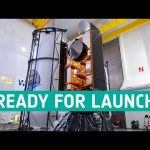
    Final preparations are underway in California for the launch of Sentinel-6 Michael Freilich, a joint European and US satellite designed to take precise measurements of sea-level change. The satellite forms part of the European Union’s Copernicus Earth Observation programme and will employ a radar altimeter to map sea-surface topography. The satellite will provide fundamental data for climate science and policymaking, helping to protect the 600 million people who live in vulnerable coastal areas. It will also deliver near-realtime information for marine and weather forecasts.

    The mission is a collaboration between ESA, the European Commission, EUMETSAT, NASA and NOAA, with support from the French space agency CNES. Scheduled for launch on 21 November on a SpaceX Falcon 9 rocket from the Vandenberg Air Force Base on the California coast, the satellite is named Michael Freilich after NASA’s former Director of Earth Science.

    ★ Subscribe: http://bit.ly/ESAsubscribe and click twice on the bell button to receive our notifications.

    Check out our full video catalog: http://bit.ly/SpaceInVideos
    Follow us on Twitter: http://bit.ly/ESAonTwitter
    On Facebook: http://bit.ly/ESAonFacebook
    On Instagram: http://bit.ly/ESAonInstagram
    On Flickr: http://bit.ly/ESAonFlickr

    We are Europe’s gateway to space. Our mission is to shape the development of Europe’s space capability and ensure that investment in space continues to deliver benefits to the citizens of Europe and the world. Check out https://www.esa.int/ to get up to speed on everything space related.

    Copyright information about our videos is available here: https://www.esa.int/ESA_Multimedia/Terms_and_Conditions

    #ESA
    #Sentinel6
    #SeeingTheSeas

  • Copernicus Sentinel-6 measuring sea levels using radar altimetry

    Copernicus Sentinel-6 measuring sea levels using radar altimetry

    This November the newest member of the EU’s Copernicus programme, Sentinel-6 Michael Freilich, will take to the heavens from Vandenberg Air Force Base in California. The satellite is named after NASA’s former Director of Earth Observation and is a radar altimetry mission to monitor sea-level rise, wave-height and windspeed.

    The mission is a collaboration between ESA, the European Commission, EUMETSAT, NASA and NOAA, with support from the French space agency CNES. It will continue a three-decade-long time-series of radar altimetry missions that started with the Topex-Poseidon mission and was then followed by the Jason missions.

    ★ Subscribe: http://bit.ly/ESAsubscribe and click twice on the bell button to receive our notifications.

    Check out our full video catalog: http://bit.ly/SpaceInVideos
    Follow us on Twitter: http://bit.ly/ESAonTwitter
    On Facebook: http://bit.ly/ESAonFacebook
    On Instagram: http://bit.ly/ESAonInstagram
    On Flickr: http://bit.ly/ESAonFlickr

    We are Europe’s gateway to space. Our mission is to shape the development of Europe’s space capability and ensure that investment in space continues to deliver benefits to the citizens of Europe and the world. Check out https://www.esa.int/ to get up to speed on everything space related.

    Copyright information about our videos is available here: https://www.esa.int/ESA_Multimedia/Terms_and_Conditions

    #ESA
    #Sentinel6
    #SeeingTheSeas

  • Ariane 6 launch complex – March 2020

    Ariane 6 launch complex – March 2020

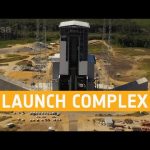
    Take a tour of the Ariane 6 launch complex and its various facilities filmed on 1 March 2020 at Europe’s Spaceport in French Guiana.

    The 8200 tonne 90 metre-high mobile gantry stands over the launch pad. Take a look at the bogies that moved it there. Inside stand two mock-ups of the P120C boosters flanked by work platforms that will enable engineers to access the launch vehicle.

    Delve deep under the launch table structure to see engineers working on the launch support systems.

    Outside, tour past the liquid hydrogen and oxygen stores and on up to the assembly building where a mock-up of the Ariane 6 core stage is waiting at the entrance. Close by are additional service facilities, and the pumping station that will provide the water to quell the exhaust from the motors at liftoff.

    Learn more about Ariane 6: http://bit.ly/esaAriane6

    Credits: CNES/ESA

    ★ Subscribe: http://bit.ly/ESAsubscribe and click twice on the bell button to receive our notifications.

    Check out our full video catalog: http://bit.ly/SpaceInVideos
    Follow us on Twitter: http://bit.ly/ESAonTwitter
    On Facebook: http://bit.ly/ESAonFacebook
    On Instagram: http://bit.ly/ESAonInstagram
    On Flickr: http://bit.ly/ESAonFlickr

    We are Europe’s gateway to space. Our mission is to shape the development of Europe’s space capability and ensure that investment in space continues to deliver benefits to the citizens of Europe and the world. Check out http://www.esa.int/ESA to get up to speed on everything space related.

    Copyright information about our videos is available here: http://www.esa.int/spaceinvideos/Terms_and_Conditions

    #ESA
    #Ariane6
    #WorkInProgress

  • Ariane 6 launch complex – September 2019

    Ariane 6 launch complex – September 2019

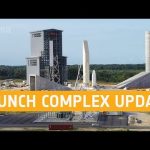
    Things are shaping up at Europe’s Spaceport in French Guiana in preparation for Ariane 6. Take a tour of the launch complex and its various facilities.

    Recent tests have used mock-ups of the P120C boosters to trial how they will be transported. See them on the launch pad, and get a sense of scale for Ariane 6.

    Learn more about Ariane 6: http://bit.ly/Ariane6ESA

    Copyright: CNES/ESA

    ★ Subscribe: http://bit.ly/ESAsubscribe and click twice on the bell button to receive our notifications.

    Check out our full video catalog: http://bit.ly/SpaceInVideos
    Follow us on Twitter: http://bit.ly/ESAonTwitter
    On Facebook: http://bit.ly/ESAonFacebook
    On Instagram: http://bit.ly/ESAonInstagram
    On Flickr: http://bit.ly/ESAonFlickr

    We are Europe’s gateway to space. Our mission is to shape the development of Europe’s space capability and ensure that investment in space continues to deliver benefits to the citizens of Europe and the world. Check out http://www.esa.int/ESA to get up to speed on everything space related.

    Copyright information about our videos is available here: http://www.esa.int/spaceinvideos/Terms_and_Conditions

    #ESA
    #Ariane6
    #Rocket

  • ESA Euronews: Ariane 6

    ESA Euronews: Ariane 6

    The race is on to build the new launch pad for the Ariane 6 rocket, due to make its maiden voyage in July 2020. Construction is in full swing in French Guiana as Europe builds not only a new rocket but also a new way of launching rockets, in a bid to face down competition from the likes of Space X.

    When Euronews visited, around 500 people were active on the site from six in the morning until ten at night, with attention focused on two key elements of the pad – firstly the huge flame trench which will take the hot gases away from the rocket on launch, and the new building in which the Ariane 6 will be built.

    This video is also available in the following languages:
    German: https://www.youtube.com/watch?v=n4u07oXpMLY />French: https://www.youtube.com/watch?v=R8Jiivb0eZs />Italian: https://www.youtube.com/watch?v=OEFpiOk6xQ0 />Spanish: https://www.youtube.com/watch?v=Z_8Gy7kQyI4 />Portuguese: https://www.youtube.com/watch?v=SzArKzBPF08 />Hungarian: https://www.youtube.com/watch?v=OdYyyMm4IyY />Greek: https://www.youtube.com/watch?v=b371yYF29MQ

  • ESA Euronews: Az Ariane-6 rakĂ©tĂĄt mĂĄr az Ʊrversenyre tervezik

    ESA Euronews: Az Ariane-6 rakétåt mår az Ʊrversenyre tervezik

    Francia-GuyanĂĄrĂłl köszöntjĂŒk az Euronews nĂ©zƑit, EurĂłpa ƱrkikötƑjĂ©ben vagyunk.

    Egy hatalmas Ă©pĂ­tkezĂ©s zajlik: Ășj kilövƑállĂĄst alakĂ­tanak ki az Ariane-6 rakĂ©tĂĄhoz. A tervek szerint 2020 jĂșliusĂĄban bocsĂĄtjĂĄk fel.

    Ma bepillantunk az elƑkĂ©szĂŒletek kulisszĂĄi mögĂ©. Ami zajlik mĂĄr nem csak kutatĂĄs, maga az Ʊrbiznisz.

  • ESA Euronews: Ariane 6

    ESA Euronews: Ariane 6

    El Puerto Espacial Europeo en la Guyana francesa, estĂĄ en plena efervescencia. Estamos en medio de una gigantesca obra. AquĂ­ se sitĂșa la nueva plataforma de lanzamiento de Ariane 6, cuyo despegue estĂĄ previsto en julio de 2020. Intentamos averigurar quĂ© se necesita para mantenerse a la vanguardia en el negocio del espacio.

    Amanece en Guyana y los ingenieros europeos se afanan en la construcciĂłn del terminal de lanzamiento de Ariane 6. Esta gigantesca obra tiene un Ășnico objetivo: lanzar cohetes al espacio por un coste, dos veces inferior al de Ariane 5. Para lograrlo se necesita un montĂłn de hormigĂłn, de acero y de mano de obra.

  • ESA Euronews: Pas de tir d’Ariane 6

    ESA Euronews: Pas de tir d’Ariane 6

    Dans cette Ă©dition de Space, nous entrons dans les coulisses d’un chantier colossal au Centre spatial europĂ©en de Kourou en Guyane française. Un pas de tir est en train de sortir de terre en vue du vol inaugural d’Ariane 6 programmĂ© en juillet 2020. GrĂące Ă  ce projet, l’Europe se relance dans la compĂ©tition mondiale qui oppose les acteurs du secteur spatial.

    Sur la cĂŽte nord-est de l’AmĂ©rique du Sud, Ă  Kourou en Guyane, des ingĂ©nieurs europĂ©ens s’affairent Ă  la construction du nouveau pas de tir d’Ariane 6. Ce chantier colossal doit rĂ©pondre Ă  un objectif simple : diviser par deux, les coĂ»ts de lancement par rapport Ă  son modĂšle prĂ©cĂ©dent. Pour y parvenir, il faut d’abord une quantitĂ© astronomique de bĂ©ton, d’acier et de main-d’oeuvre.

  • Earth from Space: special edition

    Earth from Space: special edition

    Discover more about our planet with the Earth from Space video programme. In this special edition, senior scientist at France’s Collecte Localisation Satellites, Marie-HĂ©lĂšne Rio, joins the show to discuss how data on ocean surface currents by the Sentinel-3 satellite mission are used by people working at sea.

    More about Sentinel-3:
    http://www.esa.int/Our_Activities/Observing_the_Earth/Copernicus/Sentinel-3

  • Earth from Space: special edition

    Earth from Space: special edition

    Discover more about our planet with the Earth from Space video programme. In this special edition, Jean-Yves Le Gall, President of the CNES French Space Agency, and Josef Aschbacher, Director of ESA’s Earth Observation Programmes, join the show to discuss how cooperation will further benefit Earth observation and the Copernicus environmental monitoring programme.

    More about ESA Earth observation:
    http://www.esa.int/Our_Activities/Observing_the_Earth

  • Capturing a dragon

    Capturing a dragon

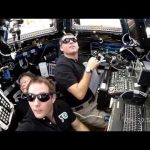
    ESA astronaut Thomas Pesquet with NASA astronauts Shane Kimbrough and Peggy Whitson in the Cupola observatory using the International Space Station’s 16-m robotic arm to grapple the SpaceX Dragon cargo spaceship.

    The video is sped up 20 times with this recording lasting 45 minutes 30 seconds at normal speed. It shows Shane and Thomas monitoring the spacecraft’s approach scanning the monitors, ready to step in if necessary. Thomas took manual control of the robotic arm and extended it to grapple the vehicle when 11 m from the Station. The Dragon CRS-10 flight was launched on 19 February 2017 and berthed with the Space Station four days later.

    The spacecraft carried over 1500 kg of supplies including NASA’s Stratospheric Aerosol and Gas Experiment, or SAGE III, to monitor aerosols, ozone and other gases in Earth’s high atmosphere by looking at the sunlight and moonlight as they pass through. SAGE III is mounted on ESA’s Hexapod – a six-legged tracker that points the facility in the right direction.

    Inside the spacecraft was also France’s CNES space agency Fluidics experiment to probe how fluids behave in weightlessness.
    Thomas is spending six months on the International Space Station as part of his Proxima mission. During Proxima, Thomas will perform around 50 scientific experiments for ESA and France’s space agency CNES as well as take part in many research activities for the other Station partners.

    The mission is part of ESA’s vision to use Earth-orbiting spacecraft as a place to live and work for the benefit of European society while using the experience to prepare for future voyages of exploration further into the Solar System.

    Connect with Thomas Pesquet: http://thomaspesquet.esa.int

  • Sterex images of ATV-4 launch

    Sterex images of ATV-4 launch

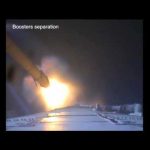
    ESA’s ATV-4 launch images taken by the Sterex experiment. These images provide a stunning vision of the Ariane 5 launch, including liftoff, boosters separation and ATV-4 release. The video system was developed by Kayser-Threde GmbH for ESA and DLR and integrated on Ariane by Astrium GmbH. Usage for ATV-4 was financed by DLR and ESA and supported by Arianespace and CNES.

    © ESA /DLR-BMWi 2013

  • ESA Euronews: 2011, año de los lanzadores espaciales europeos

    ESA Euronews: 2011, año de los lanzadores espaciales europeos

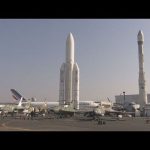
    Ariane 5, la punta de lanza de la industria europea de cohetes espaciales, lidera el mercado de lanzadores comerciales.
    En breve, otros cohetes se le unirån para completar la oferta europea, haciendo de 2011 el año de los lanzadores espaciales europeos

  • ESA Euronews: The year of the Launchers

    ESA Euronews: The year of the Launchers

    Ariane 5, the European space industry’s workhorse, continues to successfully carry payloads into orbit. Two new launchers will soon complement Ariane 5, offering a full range of competitive services to Europe.
    2011 will be the year of the launchers.

  • ATVCC tour with Kris Capelle

    ATVCC tour with Kris Capelle

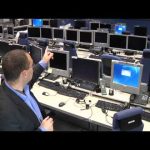
    A personal guided tour and explanation of the layout and functioning of the various control rooms at ESA’s ATV Control Centre, located at the CNES establishment at Toulouse, France. ESA’s Kris Capelle is the lead Mission Director overseeing all ATV flight operations.