This tiny satellite will study the surface of the asteroid Dimorphos up close, helping us learn more about asteroid deflection and space safety. With groundbreaking sensors and instruments, Milani is ready to explore this binary asteroid system alongside Hera and Juventas
Stay tuned for more on Hera’s thrilling mission!
📹 ESA – European Space Agency 📸 ESA/Science Office
In this last episode of the Young Professional Satellite docu series, we follow the team’s last steps to make their dream come true: sending their satellite to space.
After securing the crucial final assembly and battery connection, we take you inside the thermal vacuum tests (TVAC) to see how YPSat is tested under the extreme temperatures of space; through vibration tests to ensure its structural integrity during launch; and electromagnetic compatibility (EMC) tests to prevent interference with the launcher’s systems.
As we approach the European Space Agency’s traditional Flight Acceptance Review, the satellite is officially certified for flight. With the integration complete and final battery charge applied, control is handed over to the rocket. The only task left for the teams on the ground is to analyse one last time the rocket’s trajectory and await the critical first signal.
As tension builds up on launch day, watch as the team retrieves YPSat’s data and decodes breathtaking images and videos from its mission.
—————————————————
Credits: Directed and produced by Chilled Winston: https://chilledwinston.com/ and Emma de Cocker Powered by ESA – European Space Agency Soundtracks from Epidemic Sound
—————————————————
Chapters: 00:00 – Introduction 01:30 – Final Assembly 02:49 – The Test Campaign 06:42 – Final Launch Preparations 10:01 – Ariane 6 Launch 11:38 – Gathering & Decoding the Footage 15:15 – Unveiling the Footage 17:08 – Watch at the End
★ Subscribe: http://bit.ly/ESAsubscribe and click twice on the bell button to receive our notifications.
We are Europe’s gateway to space. Our mission is to shape the development of Europe’s space capability and ensure that investment in space continues to deliver benefits to the citizens of Europe and the world. Check out https://www.esa.int/ to get up to speed on everything space related.
In the second episode of this docu series, we take a closer look into what it took to build ESA’s Young Professional Satellite (YPSat). YPSat’s mission objectives are to capture the key moments of Ariane 6’s inaugural flight and take in-orbit pictures of Earth and space. To achieve this, the satellite requires the multiple sub-systems to work in harmony and adhere to a pre-defined mission sequence.
This episode zooms in four of the sub-systems: the Wake-Up System (WUS), Battery, On-Board Computer (OBC) and Telecommunications.
Running at ultra low power, the WUS circuit board was designed, tested and manufactured specifically for YPSat. Created to meet Arianespace’s requirement to be operational on the launchpad for 45 days, its function is to wake up the satellite during the launch to record the fairing separation.
Once the WUS detects the launch, it will signal to the battery to turn on the rest of the satellite. The battery has the challenge to maintain enough charge to power the remainder of the components.
The On-Board Computer (OBC) then takes the lead to orchestrate the rest of the mission. The OBC acts as the brain of the satellites; it sends commands to all the other sub-systems, including sending the commands to record the videos and pictures.
Once these are captured, the Telecommunications team takes over to coordinate with the ground stations to send the data back on Earth so it can be decoded into clear images. The challenge is to ensure enough communication between the satellite and Earth so the data is properly retrieved before the YPSat disintegrates upon re-entry.
One day prior launch, YPSat is now sitting in Ariane 6’s capsule. To get there, the satellite was subject to rigorous tests and certifications to meet the stringent standards of the European Space Agency and Arianespace. Will YPSat accomplish its mission objectives? We’ll find out in the next episode.
—————————————————
Credits: Directed and produced by Chilled Winston: https://chilledwinston.com/ and Emma de Cocker Powered by ESA – European Space Agency Music from Epidemic Sound
—————————————————
Chapters: 00:00 – Introduction 01:12 – The Wake-Up System 04:20 – The Battery 07:01 – The On-Board Computer 08:38 – Telecommunications 13:12 – Outro
★ Subscribe: http://bit.ly/ESAsubscribe and click twice on the bell button to receive our notifications.
We are Europe’s gateway to space. Our mission is to shape the development of Europe’s space capability and ensure that investment in space continues to deliver benefits to the citizens of Europe and the world. Check out https://www.esa.int/ to get up to speed on everything space related.
In this first episode of our docu-series, we embark on the exciting journey of the YPSat (Young Professional Satellite), a satellite flying on-board the inaugural flight of Ariane 6, Europe’s new heavy launcher. Two years ago, a team of Young Professionals at ESA, with diverse backgrounds, nationalities and expertise, have come together around one passion and with one ambition; design, manufacture and send their own satellite to space.
Starting with some trivial ideas, the team matured their mission objectives and won the approval and support of ESA management to kick start the project. YPSat will be ‘the witness’ of Ariane 6: it will record the fairing separation, document the CubeSats deployment and send back beautiful in-orbit images of Earth and space.
This scaled-down mission has all the ingredients of a large flagship mission; engineering, verification, testing and production assurance; project management, tight schedule, team coordination and communication; failures, crisis situations and successes. YPSat is a blueprint for the future of European space exploration. It has been a life changing opportunity for young professionals at ESA to get hands-on experience and experience the process of developing a space mission. But it has also been an eye-opening occasion for the European Space Agency to get inspired by the young generations, bringing in new ideas and technologies.
This is just the beginning of the adventure for the YPSat team. The next episode will unravel the creativity, ingenuity and determination that the young professionals brought in to achieve the mission’s objectives. What powers the satellite? Who activates the cameras? How is the data transmitted back on Earth?
—————————————————
Credits: Directed and produced by Chilled Winston: https://chilledwinston.com/ and Emma de Cocker Powered by ESA – European Space Agency Music from Epidemic Sound Footage from Chilled Winston (Chilled Winston – Where Stories Come to Life)
★ Subscribe: http://bit.ly/ESAsubscribe and click twice on the bell button to receive our notifications.
We are Europe’s gateway to space. Our mission is to shape the development of Europe’s space capability and ensure that investment in space continues to deliver benefits to the citizens of Europe and the world. Check out https://www.esa.int/ to get up to speed on everything space related.
Europe’s new rocket Ariane 6 will soon be launched from Europe’s Spaceport in French Guiana. But how does it get off the launch pad?
Ignited first at liftoff is the Vulcain 2.1, the rocket motor for the cryogenic main stage. The engine sits at the bottom end of Ariane 6 and fires for up to 8 minutes to help the rocket reach space! The boosters ignite 7 seconds after the Vulcain for liftoff thrust.
Europe’s new rocket Ariane 6 is set to launch soon. 🚀
On its first flight to space, Ariane 6 is offering a ride to miniature satellites, known as CubeSats.
ISTSat from Portugal, and ³Cat-4 from Spain, are two of Ariane 6’s passengers.
Both satellites were developed by students participating in our Fly Your Satellite! programme, one of the several hands-on programmes for university students offered by ESA Education.
ISTSat is the first Portuguese CubeSat built by students. It will track aircraft from space using a smaller, lower power Automatic Dependent Surveillance Broadcast system, which is the technology that enables websites like Flight Radar.
³Cat-4 from the Technical University of Catalonia combines a radiometer, a reflectometer and an Automatic Identification System into one payload that will perform Earth Observation experiments.
The students visited Exolaunch’s Berlin headquarters to perform the integration of their satellites, where they installed ISTSat-1 and ³Cat-4 into their deployer.
Watch live as Ireland goes to space, for the first time, with the launch of EIRSAT-1. Built by students at @universitycollegedublin under the guidance of ESA’s Education Office, EIRSAT-1 is a 2-unit CubeSat carrying three experiments, including a novel gamma ray detector that will study some of the most luminous explosions in the universe. Irish broadcaster Rick O’Shea, with guests from ESA and the EIRSAT-1 team, will take viewers through the mission’s development and major launch milestones including liftoff, separation and acquisition of signal, from outside the EIRSAT-1 Mission Control Room in Dublin. Níl aon satailít mar do shatailít féin! [There’s no satellite like your own satellite!]
We are Europe’s gateway to space. Our mission is to shape the development of Europe’s space capability and ensure that investment in space continues to deliver benefits to the citizens of Europe and the world. Check out https://www.esa.int/ to get up to speed on everything space related.
A team of university students from University College Dublin is taking Ireland to space, for the very first time. The story begins in 2017, when the team was accepted to ESA’s educational CubeSat programme, Fly Your Satellite! Over the course of six years, they have designed, built, and tested the satellite with the help of ESA experts and with access to ESA’s state-of-the-art spacecraft testing facilities. As the team prepares for launch and operations, hear more about their journey to this historic moment.
Credits: ESA – European Space Agency
★ Subscribe: http://bit.ly/ESAsubscribe and click twice on the bell button to receive our notifications.
We are Europe’s gateway to space. Our mission is to shape the development of Europe’s space capability and ensure that investment in space continues to deliver benefits to the citizens of Europe and the world. Check out https://www.esa.int/ to get up to speed on everything space related.
Meet Hera, our very own asteroid detective. Together with two CubeSats – Milani the rock decoder and Juventas the radar visionary – Hera is off on an adventure to explore Didymos, a double asteroid system that is typical of the thousands that pose an impact risk to planet Earth.
Suitable for kids and adults alike, this episode of ‘The Incredible Adventures of Hera’ details the miniaturised James-Bond-style technology that Hera and its CubeSats will carry aboard with them to explore their asteroid target.
We are Europe’s gateway to space. Our mission is to shape the development of Europe’s space capability and ensure that investment in space continues to deliver benefits to the citizens of Europe and the world. Check out https://www.esa.int/ to get up to speed on everything space related.
Meet Hera, our very own asteroid detective. Together with two small CubeSats – Milani the rock decoder and Juventas the radar visionary – Hera is off on an adventure to explore Didymos, a double asteroid system that is typical of the thousands that pose an impact risk to planet Earth.
Suitable for space enthusiasts young and old, this episode of ‘The incredible adventures of the Hera mission’ is all about craters. What are they? Why are they important? Why is NASA’s DART spacecraft about to collide with an asteroid to create the Solar System’s newest – and perhaps most important – crater? And why do we need Hera to unveil the secrets of this crater?
We are Europe’s gateway to space. Our mission is to shape the development of Europe’s space capability and ensure that investment in space continues to deliver benefits to the citizens of Europe and the world. Check out https://www.esa.int/ to get up to speed on everything space related.
Meet Hera, our very own asteroid detective. Together with two CubeSats – Milani the rock decoder and Juventas the radar visionary – Hera is off on an adventure to explore Didymos, a double asteroid system that is typical of the thousands that pose an impact risk to planet Earth.
Suitable for kids and adults alike, this episode tells the story of the discovery of asteroids, in ‘The Curious Case of the Missing Planet’. Astronomers in the 18th century were sure there was a planet in the wide gap between Mars and Jupiter – and even formed a group called the Celestial Police to find it. But eventually it became clear there was no single world out there, just lots and lots of little ones. Fast forward to today and more than a million asteroids have been discovered, and Hera will perform close-up detection on two of them.
We are Europe’s gateway to space. Our mission is to shape the development of Europe’s space capability and ensure that investment in space continues to deliver benefits to the citizens of Europe and the world. Check out https://www.esa.int/ to get up to speed on everything space related.
Meet Hera, our very own asteroid detective. Together with two CubeSats – Milani the rock decoder and Juventas the radar visionary – Hera is off on an adventure to explore Didymos, a double asteroid system that is typical of the thousands that pose an impact risk to planet Earth.
Suitable for kids and adults alike, this episode of ‘The Incredible Adventures of Hera’ takes you on a fun and informative journey to visit Didymos together with Hera. Along the way, you will discover who the main characters are, why this mission is so important, what ESA hopes to achieve with Hera and much more.
We are Europe’s gateway to space. Our mission is to shape the development of Europe’s space capability and ensure that investment in space continues to deliver benefits to the citizens of Europe and the world. Check out https://www.esa.int/ to get up to speed on everything space related.
Multiple small satellites will be launched at once on the Vega VV16 mission from Europe’s Spaceport in Kourou, French Guiana. This flight will demonstrate the modular SSMS dispenser resting on its upper stage intended to bring routine affordable launch opportunities for light satellites from 0.2 kg CubeSats up to 400 kg minisatellites.
Until now the smallest classes of satellites – all the way down to tiny CubeSats, built from 10 cm modular boxes – have typically ‘piggybacked’ to orbit. They have to make use of any spare capacity as a single large satellite is launched, meaning their overall launch opportunities are limited.
The new Vega Small Spacecraft Mission Service switches this into a ‘rideshare’ model, with multiple small satellites being flown together, splitting the launch cost.
SAB Aeropsace in the Czech Republic and Bercella in Italy designed and manufactured this modular dispenser for ESA’s Vega prime contractor Avio. The component structures are made of very low-density aluminium ‘sandwich’ panels protected by carbon fibre reinforced polymer skins. This makes it very lightweight and rigid.
The SSMS comprises two main sections, the hexagonal lower section can hold six nanosatellites or up to a dozen CubeSat deployers while the upper section section is used for microsatellites, minisatellites and small satellites. The lower section can also be used independently, coupled with a larger satellite replacing the top section.
The hexagonal module, a central column, towers, a supporting platform and a set of standard satellite interface spacers are assembled to suit each mission and combination of satellites. For this flight, a configuration called Flexi-3 weighing just 330 kg is being used.
This demonstration flight aims to prove the technical and financial viability of the rideshare service. ESA has collaborated with the European Union, which has partly funded this mission within the Horizon 2020 programme. This is part of the Contribution Agreement between ESA and the EU on space technology activities signed on 16 April 2019.
The animation shows the separation of the ESAIL mission which is a joint ESA LuxSpace project to extend the monitoring of maritime traffic beyond existing land-based tracking of Automatic Identification Systems (AIS) through the means of an array of microsatellites: SAT-AIS.
★ Subscribe: http://bit.ly/ESAsubscribe and click twice on the bell button to receive our notifications.
We are Europe’s gateway to space. Our mission is to shape the development of Europe’s space capability and ensure that investment in space continues to deliver benefits to the citizens of Europe and the world. Check out http://www.esa.int/ESA to get up to speed on everything space related.
The Land3U team consists of one PhD, and five MSc students from Cranfield University’s Astronautics and Space Engineering course. The team’s microgravity experiment proposed to simulate the landing of a 3U CubeSat on an asteroid, as part of ESA Academy’s Drop Your Thesis! 2018 Programme. For the team, the low gravity conditions of the Drop Tower in Bremen, Germany, are perfect as it resembles the gravity conditions surrounding the asteroids. Their CubeSat experiment sought to provide valuable insights into the engineering challenges that must be addressed by future asteroid missions; in particular when attempting to land on the surface of such low-gravity bodies.
ESA is Europe’s gateway to space. Our mission is to shape the development of Europe’s space capability and ensure that investment in space continues to deliver benefits to the citizens of Europe and the world. Check out http://www.esa.int/ESA to get up to speed on everything space related.
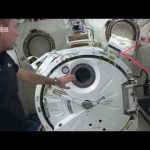
ESA astronaut Andreas Mogensen, the first astronaut from Denmark, explains the deployment of the student-built AAUSAT5 CubeSat – the first ESA student CubeSat mission launched from space and the pilot project of ESA’s ‘Fly Your Satellite from the ISS!’ education programme.
AAUSAT5, a CubeSat entirely built by a university team with ESA’s support, was launched to the International Space Station aboard the Japanese HTV-5 cargo vehicle 19 August 2015. Andreas gives a brief tour of the Japanese cargo vehicle’s storage space, where AAUSAT5 was housed during its flight to the Station. AAUSAT5 was taken to the Japanese Kibo Laboratory, put in a Nanoracks deployer, and placed into the airlock to be launched into space.
AAUSAT5 will be deployed into orbit 5 October 2015. Aalborg University will host a special event in Aalborg, Denmark entitled “ESA CubeSats from the Space Station: a new path for education and technology” to celebrate the deployment.