Tag: De
-
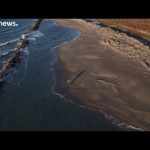
ESA Euronews: Estudar ameaças climáticas com o Sentinel
Camargue, no sul de França, é uma região famosa pelas paisagens e vida selvagem, mas também um lugar seriamente ameaçado pelas alterações climáticas, por causa da subida do nível do mar.
Os muros de rochas ao longo da costa foram construídos nos anos 80, num esforço fracassado para travar o mar Mediterrâneo. Naquela época, o nível do mar subia apenas alguns milímetros por ano. Agora, os satélites descobriram que as águas estão a subir muito mais rápido do que antes, alimentadas pelo degelo das calotas glaciares e pelo aumento das temperaturas.
Os cientistas estão a usar satélites para compreender melhor o que está a acontecer em regiões como esta e em todo o planeta.
★ Subscribe: http://bit.ly/ESAsubscribe and click twice on the bell button to receive our notifications.
Check out our full video catalog: http://bit.ly/SpaceInVideos
Follow ESA on Twitter: http://bit.ly/ESAonTwitter
On Facebook: http://bit.ly/ESAonFacebook
On Instagram: http://bit.ly/ESAonInstagram
On Flickr: http://bit.ly/ESAonFlickrESA is Europe’s gateway to space. Our mission is to shape the development of Europe’s space capability and ensure that investment in space continues to deliver benefits to the citizens of Europe and the world. Check out http://www.esa.int/ESA to get up to speed on everything space related.
Copyright information about our videos is available here: http://www.esa.int/spaceinvideos/Terms_and_Conditions
-
ESA Euronews: Europe and space exploration (Português)
Space exploration is a major global issue and Europe wants to be in the driving seat. It therefore needs to develop a global vision and a strategic action plan.
-
ESA Euronews: Europe and space exploration (Italiano)
Space exploration is a major global issue and Europe wants to be in the driving seat. It therefore needs to develop a global vision and a strategic action plan.
-
ESA Euronews: Europe and space exploration (Français)
Space exploration is a major global issue and Europe wants to be in the driving seat. It therefore needs to develop a global vision and a strategic action plan.
-
ESA Euronews: Europe and space exploration (Deutsch)
Space exploration is a major global issue and Europe wants to be in the driving seat. It therefore needs to develop a global vision and a strategic action plan.
-
ESA Euronews: Europe and space exploration
Space exploration is a major global issue and Europe wants to be in the driving seat. It therefore needs to develop a global vision and a strategic action plan.
-
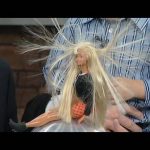
Van de Graaf – Static Electricity Generator
Check out this and other cool science experiments at http://www.stevespanglerscience.com/experiments/ Steve brings the expertise of young scientist Cody Brooks to the 9News studio to help explain the science of static electricity.
About Steve Spangler Science…
Steve Spangler is a celebrity teacher, science toy designer, speaker, author and an Emmy award-winning television personality. Spangler is probably best known for his Mentos and Diet Coke geyser experiment that went viral in 2005 and prompted more than 1,000 related YouTube videos. Spangler is the founder of www.SteveSpanglerScience.com, a Denver-based company specializing in the creation of science toys, classroom science demonstrations, teacher resources and home for Spangler’s popular science experiment archive and video collection. Spangler is a frequent guest on the Ellen DeGeneres Show where he takes classroom science experiments to the extreme. Check out his pool filled with 2,500 boxes of cornstarch!
Cool Science Toys – http://www.SteveSpanglerScience.com
Sign up for the Experiment of the Week – http://www.stevespanglerscience.com/experiment-of-the-week
Watch Spangler’s Science Videos – http://www.stevespanglerscience.com/video/
Attend a Spangler Hands-on Science Workshop for Teachers – http://www.stevespanglerscience.com/teacher_training/
Visit Spangler’s YouTube Channel – http://www.youtube.com/stevespanglerscienceJoin the conversation on Steve Spangler’s blog – http://www.SteveSpangler.com
Additional Information:
On the education side, Spangler started his career as a science teacher in the Cherry Creek School district for 12 years. Today, Steve travels extensively training teachers in ways to make learning more engaging and fun. His hands-on science boot camps and summer institutes for teachers inspire and teach teachers how to prepare a new generation for an ever-changing work force. Over the last 15 years, he has also made more than 500 television appearances as an authority on hands-on science and inquiry-based learning.
On the business side, Spangler is the founder and CEO of Steve Spangler Science, a Denver-based company specializing in the creation of educational toys and kits and hands-on science training services for teachers. The companys unique business strategies and viral creations have been featured in the Wall Street Journal, Inc. Magazine, Wired and TIME Magazine where online readers voted Steve Spangler #18 in the Top 100 Most Influential People of the Year for 2006 (what were they thinking?). You’ll find more than 140 Spangler created products available online at SteveSpanglerScience.com and distributed to toy stores and mass-market retailers worldwide.
Spangler joined NBC affiliate 9News in 2001 as the science education specialist. His weekly experiments and science segments are designed to teach viewers creative ways to make learning fun. His now famous Mentos Geyser experiment, turning 2-liter bottles of soda into erupting fountains, became an Internet sensation in September 2005 when thousands of people started posting their own Mentos explosions on YouTube.com.
As founder of SteveSpanglerScience.com, Spangler and his design team have developed more than 140 educational toys and science-related products featured by mass-market retailers like Target, Wal-Mart, Toys R’ Us, Discovery Channel Stores and over 1,400 independent specialty toy stores. His educational science catalog and on-line business offers more than a thousand science toys and unique learning resources. Recently, Spangler has been featured in the Wall Street Journal, Inc. Magazine, WIRED, the History Channel, Food Network and TIME Magazine where on-line readers voted Steve Spangler #18 in the Top 100 Most Influential People of the Year for 2006.
His recent appearances on the Ellen DeGeneres Show have taught viewers how to blow up their food, shock their friends, create mountains of foam, play on a bed of nails, vanish in a cloud of smoke and how to turn 2,500 boxes of cornstarch and a garden hose into a swimming pool of fun.
-
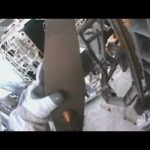
The ISS: a work in progress!
Highlights of ESA astronaut Christer Fuglesang’s 14-day Alissé mission to the International Space Station between 29 August and 12 September 2009. Fuglesang was part of the seven-strong STS-128 crew launched to the ISS with Space Shuttle Discovery. STS-128 delivered new supplies and equipment to the ISS. The crew also performed three spacewalks to continue Station construction.
-
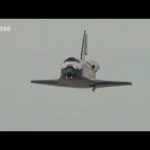
Space Shuttle Discovery returns to Earth
Space Shuttle Discovery lands at Edwards Air Force Base, California, on 12 September concluding ESA astronaut Christer Fuglesang’s 14-day Alissé mission to the the International Space Station.
-
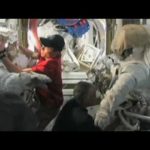
ESA astronauts working on the ISS
ESA astronauts Frank De Winne and Christer Fuglesang met up on the International Space Station in September 2009. Fuglesang was visiting the ISS during his 14-day Alissé mission. De Winne, on his six-month OasISS mission, was already on the ISS as part of the resident ISS Expedition 20 crew.
-
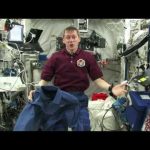
How do you wash your clothes in space?
Frank De Winne is answering a question on the ISS submitted by Herman from Belgium:
– How do you wash your clothes in space?
– Do you use washing powder to wash your clothes in space? -
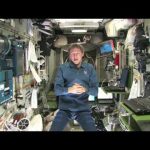
How does food stay fresh on the ISS?
Frank De Winne is answering a question on the ISS submitted by Cedric from Belgium:
– How do you occupy yourself during the 2-day Soyuz journey to the ISS?
– How does food stay fresh in space, since there is no fridge on the ISS? -
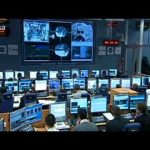
ESA’s space ferry: The Automated Transfer Vehicle
The International Space Station (ISS) depends on regular deliveries of equipment, food, air and water for its crews. Since the arrival of the first Automated Transfer Vehicle in April 2008, it has become one of the Stations indispensable supply ships.