This is only merged video from https://www.youtube.com/channel/UCcIXc5mJsHVYTZR1maL5l9w and I very want to share it all for the Learning.
Tag: deep learning
-
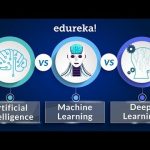
AI vs Machine Learning vs Deep Learning | Machine Learning Training with Python | Edureka
🔥 NIT Warangal Post Graduate Program on AI and Machine Learning: https://www.edureka.co/nitw-ai-ml-pgp
This Edureka Machine Learning tutorial (Machine Learning Tutorial with Python Blog: https://goo.gl/fe7ykh ) on “AI vs Machine Learning vs Deep Learning” talks about the differences and relationship between AL, Machine Learning and Deep Learning. Below are the topics covered in this tutorial:1. AI vs Machine Learning vs Deep Learning
2. What is Artificial Intelligence?
3. Example of Artificial Intelligence
4. What is Machine Learning?
5. Example of Machine Learning
6. What is Deep Learning?
7. Example of Deep Learning
8. Machine Learning vs Deep LearningMachine Learning Tutorial Playlist: https://goo.gl/UxjTxm
– – – – – – – – – – – – – – – – –
Subscribe to our channel to get video updates. Hit the subscribe button above: https://goo.gl/6ohpTV
Instagram: https://www.instagram.com/edureka_learning
Facebook: https://www.facebook.com/edurekaIN/
Twitter: https://twitter.com/edurekain
LinkedIn: https://www.linkedin.com/company/edureka
Telegram: https://t.me/edurekaupdates– – – – – – – – – – – – – – – – –
#edureka #AIvsMLvsDL #PythonTutorial #PythonMachineLearning #PythonTraining
How it Works?
1. This is a 5 Week Instructor led Online Course,40 hours of assignment and 20 hours of project work
2. We have a 24×7 One-on-One LIVE Technical Support to help you with any problems you might face or any clarifications you may require during the course.
3. At the end of the training you will be working on a real time project for which we will provide you a Grade and a Verifiable Certificate!– – – – – – – – – – – – – – – – –
About the Course
Edureka’s Python Online Certification Training will make you an expert in Python programming. It will also help you learn Python the Big data way with integration of Machine learning, Pig, Hive and Web Scraping through beautiful soup. During our Python Certification training, our instructors will help you:
1. Master the Basic and Advanced Concepts of Python
2. Understand Python Scripts on UNIX/Windows, Python Editors and IDEs
3. Master the Concepts of Sequences and File operations
4. Learn how to use and create functions, sorting different elements, Lambda function, error handling techniques and Regular expressions ans using modules in Python
5. Gain expertise in machine learning using Python and build a Real Life Machine Learning application
6. Understand the supervised and unsupervised learning and concepts of Scikit-Learn
7. Master the concepts of MapReduce in Hadoop
8. Learn to write Complex MapReduce programs
9. Understand what is PIG and HIVE, Streaming feature in Hadoop, MapReduce job running with Python
10. Implementing a PIG UDF in Python, Writing a HIVE UDF in Python, Pydoop and/Or MRjob Basics
11. Master the concepts of Web scraping in Python
12. Work on a Real Life Project on Big Data Analytics using Python and gain Hands on Project Experience
– – – – – – – – – – – – – – – – – – –Why learn Python?
Programmers love Python because of how fast and easy it is to use. Python cuts development time in half with its simple to read syntax and easy compilation feature. Debugging your programs is a breeze in Python with its built in debugger. Using Python makes Programmers more productive and their programs ultimately better. Python continues to be a favorite option for data scientists who use it for building and using Machine learning applications and other scientific computations.
Python runs on Windows, Linux/Unix, Mac OS and has been ported to Java and .NET virtual machines. Python is free to use, even for the commercial products, because of its OSI-approved open source license.
Python has evolved as the most preferred Language for Data Analytics and the increasing search trends on python also indicates that Python is the next “Big Thing” and a must for Professionals in the Data Analytics domain.For more information, please write back to us at sales@edureka.co or call us at IND: 9606058406 / US: 18338555775 (toll-free).
Customer Review
Sairaam Varadarajan, Data Evangelist at Medtronic, Tempe, Arizona: “I took Big Data and Hadoop / Python course and I am planning to take Apache Mahout thus becoming the “customer of Edureka!”. Instructors are knowledge… able and interactive in teaching. The sessions are well structured with a proper content in helping us to dive into Big Data / Python. Most of the online courses are free, edureka charges a minimal amount. Its acceptable for their hard-work in tailoring – All new advanced courses and its specific usage in industry. I am confident that, no other website which have tailored the courses like Edureka. It will help for an immediate take-off in Data Science and Hadoop working.”
-

Autoencoder Explained
How does an autoencoder work? Autoencoders are a type of neural network that reconstructs the input data its given. But we don’t care about the output, we care about the hidden representation its learned. Its a lower dimensional compression of the input that preserves its features. We can use this learned representation for tasks like image colorization, dialogue generation, and anomaly detection.
Code for this video (with Coding Challenge):
https://github.com/llSourcell/autoencoder_explainedPlease Subscribe! And like. And comment. That’s what keeps me going.
Want more education? Connect with me here:
Twitter: https://twitter.com/sirajraval
Facebook: https://www.facebook.com/sirajology
instagram: https://www.instagram.com/sirajravalMore learning resources:
http://ufldl.stanford.edu/tutorial/unsupervised/Autoencoders/
http://ai.stanford.edu/~quocle/tutorial2.pdf
https://lazyprogrammer.me/a-tutorial-on-autoencoders/
https://blog.keras.io/building-autoencoders-in-keras.html
https://jaan.io/what-is-variational-autoencoder-vae-tutorial/
https://hackernoon.com/autoencoders-deep-learning-bits-1-11731e200694Join us in the Wizards Slack channel:
http://wizards.herokuapp.com/And please support me on Patreon:
https://www.patreon.com/user?u=3191693
Signup for my newsletter for exciting updates in the field of AI:
https://goo.gl/FZzJ5w
Hit the Join button above to sign up to become a member of my channel for access to exclusive content! -
Python Artificial Intelligence Projects for Beginners : Neural Networks | packtpub.com
This playlist/video has been uploaded for Marketing purposes and contains only selective videos.
For the entire video course and code, visit [http://bit.ly/2lVk9cz].
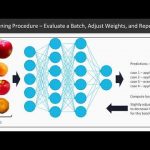
In this video, we will see what neural networks are, why are they named this way, and how do they work.
• Explain that neural networks are a kind of classification technique
• Explain that neural networks were designed to be analogous to brain neurons
• Learn that a neural network has multiple layers whose weights are trained over several epochsFor the latest Big Data and Business Intelligence video tutorials, please visit
http://bit.ly/1HCjJikFind us on Facebook — http://www.facebook.com/Packtvideo
Follow us on Twitter – http://www.twitter.com/packtvideo -
Python Artificial Intelligence Projects for Beginners : The Course Overview | packtpub.com
This playlist/video has been uploaded for Marketing purposes and contains only selective videos.
For the entire video course and code, visit [http://bit.ly/2lVk9cz].
This video gives an overview of the entire course.
For the latest Big Data and Business Intelligence video tutorials, please visit
http://bit.ly/1HCjJikFind us on Facebook — http://www.facebook.com/Packtvideo
Follow us on Twitter – http://www.twitter.com/packtvideo -
Machine Learning & Artificial Intelligence: Crash Course Computer Science #34
So we’ve talked a lot in this series about how computers fetch and display data, but how do they make decisions on this data? From spam filters and self-driving cars, to cutting edge medical diagnosis and real-time language translation, there has been an increasing need for our computers to learn from data and apply that knowledge to make predictions and decisions. This is the heart of machine learning which sits inside the more ambitious goal of artificial intelligence. We may be a long way from self-aware computers that think just like us, but with advancements in deep learning and artificial neural networks our computers are becoming more powerful than ever.
Produced in collaboration with PBS Digital Studios: http://youtube.com/pbsdigitalstudios
Want to know more about Carrie Anne?
https://about.me/carrieannephilbinThe Latest from PBS Digital Studios: https://www.youtube.com/playlist?list=PL1mtdjDVOoOqJzeaJAV15Tq0tZ1vKj7ZV
Want to find Crash Course elsewhere on the internet?
Facebook – https://www.facebook.com/YouTubeCrash…
Twitter – http://www.twitter.com/TheCrashCourse
Tumblr – http://thecrashcourse.tumblr.com
Support Crash Course on Patreon: http://patreon.com/crashcourse
CC Kids: http://www.youtube.com/crashcoursekids -
Artificial Neural Networks – Fun and Easy Machine Learning
Hey guys and welcome to another fun and easy Machine Learning Tutorial on Artificial Neural Networks.
►FREE YOLO GIFT – http://augmentedstartups.info/yolofreegiftsp
►KERAS Course – https://www.udemy.com/machine-learning-fun-and-easy-using-python-and-keras/?couponCode=YOUTUBE_MLDeep learning and Neural Networks are probably one of the hottest tech topics right now. Large corporations and young startups alike are all gold-rushing this state of the art field. If you think big data is important, then you should care about deep learning. Deep Learning (DL) and Neural Network (NN) is currently driving some of the most ingenious inventions this century. Their incredible ability to learn from data and the environment makes them the first choice for machine learning scientists.
Deep Learning and Neural Network lies in the heart of products such as self-driving cars, image recognition software, recommender systems and the list goes on. Evidently, being a powerful algorithm, it is highly adaptive to various data types as well.
People think neural network is an extremely difficult topic to learn. Therefore, either some of them don’t use it, or the ones who use it, use it as a black box. Is there any point in doing something without knowing how is it done? NO! That’s why you’ve’ come to right place at Augmented Startups to Learn about Artificial Neural Networks, so sit back relax and see how deep the rabbit hole goes.
————————————————————
Support us on Patreon
►AugmentedStartups.info/Patreon
Chat to us on Discord
►AugmentedStartups.info/discord
Interact with us on Facebook
►AugmentedStartups.info/Facebook
Check my latest work on Instagram
►AugmentedStartups.info/instagram
Learn Advanced Tutorials on Udemy
►AugmentedStartups.info/udemy
————————————————————
To learn more on Artificial Intelligence, Augmented Reality IoT, Deep Learning FPGAs, Arduinos, PCB Design and Image Processing then check out
http://augmentedstartups.info/homePlease Like and Subscribe for more videos 🙂
-

AI Explained in 101 Seconds
https://www.qualcomm.com/invention/5g
Artificial intelligence is making our devices more than just utilities. From smartphones to healthcare to autonomous cars, our own Gary Brotman explains the potential of AI to make our lives easier and more exciting. -
![8 puzzle | 8 puzzle Problem In Artificial Intelligence[Bangla Tutorial]](https://video.kidibot.ro/wp-content/uploads/2020/01/4397/8-puzzle-8-puzzle-problem-in-artificial-intelligencebangla-tutorial-150x150.jpg)
8 puzzle | 8 puzzle Problem In Artificial Intelligence[Bangla Tutorial]
8 puzzle | 8 puzzle Problem In Artificial Intelligence[Bangla Tutorial]
**********************************************************************This tutorial help for basic concept of 8 puzzle and it also help gather knowledge of 8 puzzle
i will provide very basic level concept to advance level concept of Artificial Intelligence if you watching this tutorial i think you will be learn about 8 puzzle. If you want to learn more then you must watch this playlist, playlist name Artificial Intelligence if there are any query in 8 puzzle in Artificial Intelligence please comment the comment section below,if you want more videos than you subscribe my channel for get update notification,
if this video are helping any kind of you than please share my video and like this video and also subscribe my channelOther videos:
What Is Artificial Intelligence: https://goo.gl/YLKkih
Breadth First Search:https://goo.gl/LSte2C
Depth First Search:https://goo.gl/1rj4yJ
Best First Search:https://goo.gl/rn4yvY
Bi-directional Search:https://goo.gl/s1NouJ
Uniform Cost Serach:https://goo.gl/vH5A9X
minimax algorithm:https://goo.gl/282jiv
Heuristic Serach:https://goo.gl/6uMzdr
Iterative Deepening Search:https://goo.gl/ofMxr5
greedy search algorithm:https://goo.gl/XpH6HZ
Class C subnetting: https://goo.gl/gw2gP1
Class A subnetting: https://goo.gl/TSPfpQ
half adder: https://goo.gl/0Y5jgM
full adder: https://youtu.be/LYL45uAfpuU -
Practical Machine Learning Tutorial with Python Intro p.1
The objective of this course is to give you a holistic understanding of machine learning, covering theory, application, and inner workings of supervised, unsupervised, and deep learning algorithms.
In this series, we’ll be covering linear regression, K Nearest Neighbors, Support Vector Machines (SVM), flat clustering, hierarchical clustering, and neural networks.
For each major algorithm that we cover, we will discuss the high level intuitions of the algorithms and how they are logically meant to work. Next, we’ll apply the algorithms in code using real world data sets along with a module, such as with Scikit-Learn. Finally, we’ll be diving into the inner workings of each of the algorithms by recreating them in code, from scratch, ourselves, including all of the math involved. This should give you a complete understanding of exactly how the algorithms work, how they can be tweaked, what advantages are, and what their disadvantages are.
In order to follow along with the series, I suggest you have at the very least a basic understanding of Python. If you do not, I suggest you at least follow the Python 3 Basics tutorial until the module installation with pip tutorial. If you have a basic understanding of Python, and the willingness to learn/ask questions, you will be able to follow along here with no issues. Most of the machine learning algorithms are actually quite simple, since they need to be in order to scale to large datasets. Math involved is typically linear algebra, but I will do my best to still explain all of the math. If you are confused/lost/curious about anything, ask in the comments section on YouTube, the community here, or by emailing me. You will also need Scikit-Learn and Pandas installed, along with others that we’ll grab along the way.
Machine learning was defined in 1959 by Arthur Samuel as the “field of study that gives computers the ability to learn without being explicitly programmed.” This means imbuing knowledge to machines without hard-coding it.
https://pythonprogramming.net/machine-learning-tutorial-python-introduction/
https://twitter.com/sentdex
https://www.facebook.com/pythonprogra…
https://plus.google.com/+sentdex