Tag: energy

  • How Much Does a Thought Weigh?

    How Much Does a Thought Weigh?

    How Much Does a Thought Weigh? a.) As much as an electron
    b.) As much as a water molecule
    c.) As much as a mosquito

    Subscribe on YouTube: https://www.youtube.com/WhatThePhysics?sub_confirmation=1

    ↓Want more info?↓

    SCIENTIFIC NOTES:
    * The relationship between information and energy comes from Landauer’s Principle, which connects the erasure of information and energy. But, more generally changes in information (e.g. recording information) are related to changes in energy. I will talk more about this in a future episode about the physics of memory, and why you will forget everything you ever knew! https://en.wikipedia.org/wiki/Landauer%27s_principle

    * The numbers calculated in this video give a lower limit on the energy to record a particular amount of information, but to create a more permanent storage of information would require more energy.

    * Retina display resolution, as it’s name implies, is similar to the eye’s resolution.

    CREDITS:

    Host, Producer: Greg Kestin

    Researcher: Samia Bouzid

    Writer:
    Samia Bouzid
    Greg Kestin

    Animation & Compositing:
    Danielle Gustitus
    Greg Kestin

    Contributing Writer:
    Lissy Herman

    Scientific Consultants:
    Frank Haist
    Murti Salapaka

    Filming, Writing, & Editing Contributions from:
    Samia Bouzid
    David Goodliffe
    Brian Kantor

    Guest Appearances:
    Lindsey Chou
    Ana Aceves
    Drew Gannon

    Editorial Input form:
    Julia Cort
    Anna Rothschild

    Special thanks:
    Ari Daniel
    Allison Eck
    Fernando Becerra
    Gil Kaplan
    Eric Brass
    Lauren Miller
    And the entire NOVA team

    From the producers of PBS NOVA
    © WGBH Educational Foundation

    Funding provided by FQXi

    Music provided by APM
    Sound effects: Freesound.org
    Neuron & Digital Brain footage: Pond5

  • Future City Predictions – A glimpse at Cities of the Future

    Future City Predictions – A glimpse at Cities of the Future

    Do you ever wonder what cities will be like in the next few decades?

    With over two thirds of our population living in urban areas by 2050 the demands on cities’ services will increase significantly.

    Technological improvements to our infrastructure will change the way citizens interact; artificial intelligence and the Internet of Things will allow the city to become smart; perhaps even allowing cities to think like a human brain.

    What changes can we expect?

    • Cities will become greener and have more cycle and walking space along with less pollution
    • Buildings will generate their own energy from renewable sources and their design will be continually optimised thanks to smart data
    • The high street will offer richer, interactive shopping experiences with augmented reality changing rooms

    Smart buildings and sustainable cities

    Be it a workplace, a hospital, school or library – public buildings will become smart and aware, constantly improving based on information they gather from themselves and the other buildings around them.

    Buildings will also gather their energy source themselves through developments like solar windows; and surplus energy traded between nearby buildings and vehicles so that those in need never run dry. Through the data they have access to, they’ll run at optimum efficiency – aware of each of its occupants, keeping them at the right temperature and making sure they stay healthy and safe.

    Shopping will also evolve – with augmented reality, AI and connected data all playing their parts. Imagine walking into a clothes shop and being presented with an interactive changing room. The shop would instantly know your size and use AI to present you a selection of clothing it thinks you would like based on your previous purchases and upcoming social calendar. Customisation of your choice will become available – tweak a design in an interactive mirror, and if it’s not in stock it can be delivered to your house by drone later that day.

    More time for you

    All of this will create more time for you, both socially and at work. AI and connected devices will play its part in the workplace too – automating things like waste collection pods to when demand in the city is high, and bringing care to people who need it.

    Will this automation take over from people’s employment? The hope is that no, but instead will see a shift so that people can focus on where they are needed most and provide a higher quality, more personal service along with more insight towards where they are needed most.

    Find out more about our Future City Predictions on the Innovate UK blog: https://innovateuk.blog.gov.uk/2017/04/18/predictions-future-of-the-city/

    View our other Predictions videos here: https://www.youtube.com/playlist?list=PLrMOhOrmeR6n2k12dXD5aIL7dxYfD-wTL

    View the Innovate UK Success Stories here: https://www.youtube.com/playlist?list=PLrMOhOrmeR6lMh1j4Qz_csh_3ljSrDZpj

    Subscribe to our YouTube channel here: https://www.youtube.com/user/Innovateuk?sub_confirmation=1

  • Human Circuit – Sick Science! #154

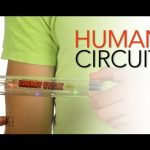
    Human Circuit – Sick Science! #154

    GET YOUR ENERGY STICK HERE: http://www.stevespanglerscience.com/energy-stick.html

    Find out why here: http://www.stevespanglerscience.com/lab/experiments/human-circuit#sthash.kceE3X71.dpuf

    The Energy Stick makes quite the “buzz” when you’re using it. To the untrained eye, it appears to be a plastic tube with a jumble of wires inside and two silver bands at each end. Well, those silver bands are actually electrodes. All the wires on the inside? They’re a solid state sensing circuit, tone generator, sound transducer, battery power supply, and LED lights. The perfect use for the Energy Stick is as a simple, yet fun, tool for learning about continuity and circuits. So… how do you turn it on?

    Want more experiments like this? Check out http://www.stevespanglerscience.com/product/naked-eggs-and-flying-potatoes

    Sick Science™ is a trademark of Steve Spangler, inc.

    © 2013 Steve Spangler Science all rights reserved

  • Inertia Beads – Sick Science! #153

    Inertia Beads – Sick Science! #153

    FIND OUT HOW THIS WORKS AT: http://www.stevespanglerscience.com/lab/experiments/newtons-inertia-beads#sthash.sQyGZdqx.dpuf

    All it takes is a slight tug and the long string of beads literally pull itself out of the container and onto the floor. Best of all, fifty feet of beads empty from the container in under five seconds! How does it work?

    Want more experiments like this? Check out http://www.stevespanglerscience.com/product/naked-eggs-and-flying-potatoes

    Sick Science™ is a trademark of Steve Spangler, inc.

    © 2013 Steve Spangler Science all rights reserved

  • ThermoMag – 1st lecture on Thermoelectricity

    ThermoMag – 1st lecture on Thermoelectricity

    Lecture from Anastasiia Prytuliak, European Space Agency postdoctoral research fellow in the Institute Laue Langevin and European Radiation Synchrotron Facility in Grenoble, France about a project called “ThermoMag”, which is devoted to the research and development of energy-harvesting thermoelectric materials.

    “ThermoMag” is a project co-funded by the 7th Framework Programme of the European Commission, coordinated by the European Space Agency.

    Watch the second lecture: http://www.youtube.com/watch?v=lmHSu5Yh6cE

  • Solar Oven S’more – Sick Science! #094

    Solar Oven S’more – Sick Science! #094

    Read the full experiment at http://www.stevespanglerscience.com/experiment/solar-oven-s-mores There are just some things that are synonymous with “summertime snacks,” and we can’t think of a summer snack we enjoy quite as much as s’mores. But what would you do if you weren’t allowed to have a fire or just didn’t have the tools necessary for a fire? We came up with a pretty neat way to harness the heat and energy of the sun to create a solar powered cooker that makes a delicious batch of s’mores without a fire!

    Want more experiments like this? Check out http://www.stevespanglerscience.com/product/naked-eggs-and-flying-potatoes

    Sick Science™ is a trademark of Steve Spangler, inc.

    © 2012 Steve Spangler Science all rights reserved