Tag: ESA Places

  • Earth from Space: Darmstadt

    Earth from Space: Darmstadt

    The Copernicus Sentinel-2 mission takes us over Darmstadt, Germany, home to ESA’s European Space Operations Centre, in this week’s edition of the Earth from Space programme.

    Download the image: https://www.esa.int/ESA_Multimedia/Images/2020/11/Darmstadt_Germany

    ★ Subscribe: http://bit.ly/ESAsubscribe and click twice on the bell button to receive our notifications.

    Check out our full video catalog: http://bit.ly/SpaceInVideos
    Follow us on Twitter: http://bit.ly/ESAonTwitter
    On Facebook: http://bit.ly/ESAonFacebook
    On Instagram: http://bit.ly/ESAonInstagram
    On Flickr: http://bit.ly/ESAonFlickr

    We are Europe’s gateway to space. Our mission is to shape the development of Europe’s space capability and ensure that investment in space continues to deliver benefits to the citizens of Europe and the world. Check out http://www.esa.int/ESA to get up to speed on everything space related.

    Copyright information about our videos is available here: https://www.esa.int/ESA_Multimedia/Terms_and_Conditions

    #ESA
    #EarthFromSpace
    #Darmstadt
  • Noordwijk shake

    Noordwijk shake

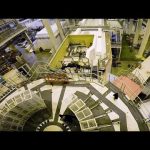
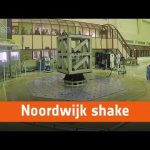
    ESA’s Test Centre based in Noordwijk, the Netherlands, simulates every aspect of space for satellite testing – including recreating the equivalent vibration of a rocket launch. This is ESA’s most powerful shaker: the Hydra hydraulic shaker, able to generate vibration equivalent to a 7.5 Richter scale  earthquake.

    Find out more about the test centre: http://www.esa.int/Our_Activities/Space_Engineering_Technology/Test_centre

    ★ Subscribe: http://bit.ly/ESAsubscribe

    Check out our full video catalog: http://bit.ly/SpaceInVideos
    Follow ESA on Twitter: http://bit.ly/ESAonTwitter
    On Facebook: http://bit.ly/ESAonFacebook
    On Instagram: http://bit.ly/ESAonInstagram
    On Flickr: http://bit.ly/ESAonFlickr

    ESA is Europe’s gateway to space. Our mission is to shape the development of Europe’s space capability and ensure that investment in space continues to deliver benefits to the citizens of Europe and the world. Check out http://www.esa.int/ESA to get up to speed on everything space related.

    Copyright information about our videos is available here: http://www.esa.int/spaceinvideos/Terms_and_Conditions

  • ESRIN: ESA’s Eye on Earth

    ESRIN: ESA’s Eye on Earth

    Located in Frascati, Italy, ESRIN – known as the ESA Centre for Earth Observation – is one of the five ESA specialised centres situated in Europe. The mission and payload operations of ESA’s Earth observation satellites are managed here and ESRIN is the primary source for the acquisition, distribution and exploitation of data from these and other non-ESA satellites.Within ESRIN, a key role in Europe’s space effort has been undertaken with the development of the new small launcher, Vega, which took its maiden voyage in February 2012.
    ESRIN designs and develops all ESA-wide software for corporate applications and is responsible for developing security measures for classified space programmes. The European Centre for Space Records (ECSR) is also based at ESRIN. The ECSR appraises and preserves the valuable technical records of completed ESA projects together with their management archives to safeguard this valuable knowledge for generations to come.Finally, ESRIN is home to ESA’s Near-Earth Object Coordination Centre. The centre serves as the central access point to a network of European near-Earth object data sources and information providers being established under ESA’s Space Situational Awareness (SSA) Programme.For more information, visit the ESRIN site.

  • ESRIN: gli occhi dell’ESA sulla Terra

    ESRIN: gli occhi dell’ESA sulla Terra

    Located in Frascati, Italy, ESRIN – known as the ESA Centre for Earth Observation – is one of the five ESA specialised centres situated in Europe. The mission and payload operations of ESA’s Earth observation satellites are managed here and ESRIN is the primary source for the acquisition, distribution and exploitation of data from these and other non-ESA satellites.Within ESRIN, a key role in Europe’s space effort has been undertaken with the development of the new small launcher, Vega, which took its maiden voyage in February 2012.
    ESRIN designs and develops all ESA-wide software for corporate applications and is responsible for developing security measures for classified space programmes. The European Centre for Space Records (ECSR) is also based at ESRIN. The ECSR appraises and preserves the valuable technical records of completed ESA projects together with their management archives to safeguard this valuable knowledge for generations to come.Finally, ESRIN is home to ESA’s Near-Earth Object Coordination Centre. The centre serves as the central access point to a network of European near-Earth object data sources and information providers being established under ESA’s Space Situational Awareness (SSA) Programme.For more information, visit the ESRIN site.

  • ESAC Research Fellows – Ginevra Favole

    ESAC Research Fellows – Ginevra Favole

    Ginevra Favole is an ESAC research fellow working on the large-scale structures of the universe. Her main scientific field is emission-line galaxies, galaxy clustering and weak gravitational lensing. She also works with mock catalogues and N-body cosmological simulations.

    Go to https://www.cosmos.esa.int/web/esac-science-faculty/home to learn more.

  • ESAC Research Fellows – Maggie Lieu

    ESAC Research Fellows – Maggie Lieu

    Maggie Lieu is an ESAC research fellow working on Euclid, a visible and near-infrared space telescope due to launch in 2021. By measuring the shapes of distant galaxies we can determine the mass of the largest systems in the Universe, galaxy clusters. Euclid will achieve unprecedented shape measurements of galaxies covering almost half of the extragalactic sky.Maggie is developing statistical methods to deal with this upcoming big, noisy dataset, so that we can better understand the physics of galaxy clusters and theirrolein the Dark Universe.

    Go to https://www.cosmos.esa.int/web/esac-science-faculty/home to learn more.

  • ESA Euronews: Pas de tir d’Ariane 6

    ESA Euronews: Pas de tir d’Ariane 6

    Dans cette édition de Space, nous entrons dans les coulisses d’un chantier colossal au Centre spatial européen de Kourou en Guyane française. Un pas de tir est en train de sortir de terre en vue du vol inaugural d’Ariane 6 programmé en juillet 2020. Grâce à ce projet, l’Europe se relance dans la compétition mondiale qui oppose les acteurs du secteur spatial.

    Sur la côte nord-est de l’Amérique du Sud, à Kourou en Guyane, des ingénieurs européens s’affairent à la construction du nouveau pas de tir d’Ariane 6. Ce chantier colossal doit répondre à un objectif simple : diviser par deux, les coûts de lancement par rapport à son modèle précédent. Pour y parvenir, il faut d’abord une quantité astronomique de béton, d’acier et de main-d’oeuvre.

  • ESA Euronews: Ariane 6

    ESA Euronews: Ariane 6

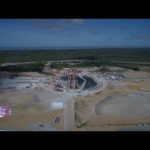
    The race is on to build the new launch pad for the Ariane 6 rocket, due to make its maiden voyage in July 2020. Construction is in full swing in French Guiana as Europe builds not only a new rocket but also a new way of launching rockets, in a bid to face down competition from the likes of Space X.

    When Euronews visited, around 500 people were active on the site from six in the morning until ten at night, with attention focused on two key elements of the pad – firstly the huge flame trench which will take the hot gases away from the rocket on launch, and the new building in which the Ariane 6 will be built.

    This video is also available in the following languages:
    German: https://www.youtube.com/watch?v=n4u07oXpMLY />French: https://www.youtube.com/watch?v=R8Jiivb0eZs />Italian: https://www.youtube.com/watch?v=OEFpiOk6xQ0 />Spanish: https://www.youtube.com/watch?v=Z_8Gy7kQyI4 />Portuguese: https://www.youtube.com/watch?v=SzArKzBPF08 />Hungarian: https://www.youtube.com/watch?v=OdYyyMm4IyY />Greek: https://www.youtube.com/watch?v=b371yYF29MQ

  • ESA Euronews: Az Ariane-6 rakétát már az űrversenyre tervezik

    ESA Euronews: Az Ariane-6 rakétát már az űrversenyre tervezik

    Francia-Guyanáról köszöntjük az Euronews nézőit, Európa űrkikötőjében vagyunk.

    Egy hatalmas építkezés zajlik: új kilövőállást alakítanak ki az Ariane-6 rakétához. A tervek szerint 2020 júliusában bocsátják fel.

    Ma bepillantunk az előkészületek kulisszái mögé. Ami zajlik már nem csak kutatás, maga az űrbiznisz.

  • ESA Euronews: Ariane 6

    ESA Euronews: Ariane 6

    El Puerto Espacial Europeo en la Guyana francesa, está en plena efervescencia. Estamos en medio de una gigantesca obra. Aquí se sitúa la nueva plataforma de lanzamiento de Ariane 6, cuyo despegue está previsto en julio de 2020. Intentamos averigurar qué se necesita para mantenerse a la vanguardia en el negocio del espacio.

    Amanece en Guyana y los ingenieros europeos se afanan en la construcción del terminal de lanzamiento de Ariane 6. Esta gigantesca obra tiene un único objetivo: lanzar cohetes al espacio por un coste, dos veces inferior al de Ariane 5. Para lograrlo se necesita un montón de hormigón, de acero y de mano de obra.

  • Hello, Darmstadt?

    Hello, Darmstadt?

    The European Space Operations Centre, ESOC, in Darmstadt, Germany, has served as Europe’s gateway to space for half a century. In 2017, the centre is celebrating its 50th anniversary, highlighting a rich history of achievement in space.

    This video offers a high-speed visual tour through five decades of mission control, which encompasses 77 spacecraft, ranging from telecom, weather, Earth observation and climate monitoring satellites to spacecraft studying the Sun and peering deep into our Universe.

    Exploring our Solar System, teams at ESOC have flown missions to the Moon, Mars and Venus, as well as three epoch-making triumphs: Giotto’s flyby of Halley’s Comet in 1986, the Huygens landing on Saturn’s moon Titan in 2005 and Rosetta’s delivery of Philae to comet 67P/Churyumov–Gerasimenko in 2014 – humanity’s first landing on a comet.

    More about #ESOC50 http://www.esa.int/esoc50

  • ESA’s ESTEC Open Day 2017

    ESA’s ESTEC Open Day 2017

    The date is fixed: you are invited to visit ESA’s technical heart in the Netherlands for its annual Open Day on Sunday, 8 October.

    The theme this year is Bringing Space to Earth. Visit us to meet astronauts and mission experts, see how we simulate space on the ground, and discover the knowledge and technologies brought back to Earth from space.

    For now, please save the date. You can register to attend #OpenESTEC from 3 July.

    In place for more than half a century, the ESTEC European Space Research and Technology Centre in Noordwijk on the North Sea coast is ESA’s largest establishment, focused on developing technology, planning missions and testing satellites.The hub of our continent’s space effort, this is where the majority of European space projects are born, developed and tested in advance of their flights into orbit.

    Find out more: http://www.esa.int/estec

  • ECSAT: Space for daily life

    ECSAT: Space for daily life

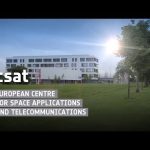
    ECSAT (European Centre for Space Applications and Telecommunications) is the European Space Agency’s centre in the UK. With a commercially driven ethos, it supports European and Canadian industry in developing commercial satcom products and services, downstream applications and the ‘spin-out’ of space into non-space sectors.

    ECSAT also the home of ESA’s Climate Office and has units dedicated to space exploration and technology development, one of which oversees the ESA–Rutherford Appleton Laboratory Advanced Manufacturing Laboratory.

    More about ECSAT:
    http://www.esa.int/About_Us/Welcome_to_ESA/ECSAT

  • ESTEC Open Day 2016

    ESTEC Open Day 2016

    In place for more than half a century, the complex ESTEC in Noordwijk is ESA’s single largest establishment, focused on developing technology, planning missions and testing satellites. More than 8700 visitors at the Open Day on 2 October 2016 were able to wander around the sprawling facility at their own pace, meeting astronauts, scientists and mission designers while seeing special exhibits and actual space hardware.  

    The theme of this year’s Open Day was “Breath of Life” – the ExoMars orbiter, currently nearing Mars, will be searching out methane and associated rare gases in the thin alien atmosphere as evidence of either surviving Mars microbes or a different kind of ‘life’ – subsurface volcanic activity, which would mean the planet remains geologically active.

  • ESA-RAL Advanced Manufacturing Laboratory

    ESA-RAL Advanced Manufacturing Laboratory

    Located on the UK Space Gateway, Harwell Campus, the ESA-RAL Advanced Manufacturing Laboratory provides expertise and test services to investigate and optimise advanced materials and manufacturing processes in support of cutting-edge research and development. The facility is physically located within the Science and Technology Facilities Council’s Rutherford Appleton Laboratory (RAL).

    The laboratory takes in samples of material destined for future space projects and puts them through various tests. A wide range of material properties and characteristics can be investigated in order to provide recommendations on how the materials can best be applied or improved before they can be considered for further development and used in a fully-fledged space mission. It has access to a metal-based 3D printer and is equipped with a suite of powerful microscopes, an X-ray CT machine and a range of furnaces.

    Mechanical testing such as tensile and micro hardness testing is also performed.The lab is a gateway to accessing some of the extensive on-site testing facilities based on Harwell Campus, such as STFC’s ISIS Neutron Source, the Diamond Light Source synchrotron and the UK’s Central Laser Facility.

    More about the new lab on our website:
    http://www.esa.int/Our_Activities/Space_Engineering_Technology/New_lab_for_advanced_manufacturing_techniques_and_materials

  • SpaceShip EAC heading for the Moon

    SpaceShip EAC heading for the Moon

    ESA’s European Astronaut Centre (EAC) in Cologne, Germany, trains and prepares astronauts for their missions into space. This video details how EAC is preparing astronauts and technology for missions to the Moon as part of their SpaceShip EAC programme.

  • ESA for students and young graduates

    ESA for students and young graduates

    Discover how you can participate in ESA programmes as a student, and learn about your entry options once you’ve got your Masters degree. ESA recruitment and education colleagues share some valuable info with you.