The European Space Operations Centre, ESOC, in Darmstadt, Germany, has served as Europe’s gateway to space for half a century. In 2017, the centre is celebrating its 50th anniversary, highlighting a rich history of achievement in space.
This video offers a high-speed visual tour through five decades of mission control, which encompasses 77 spacecraft, ranging from telecom, weather, Earth observation and climate monitoring satellites to spacecraft studying the Sun and peering deep into our Universe.
Exploring our Solar System, teams at ESOC have flown missions to the Moon, Mars and Venus, as well as three epoch-making triumphs: Giotto’s flyby of Halley’s Comet in 1986, the Huygens landing on Saturn’s moon Titan in 2005 and Rosetta’s delivery of Philae to comet 67P/Churyumov–Gerasimenko in 2014 – humanity’s first landing on a comet.
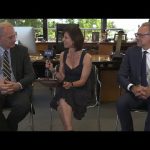
Discover more about our planet with the Earth from Space video programme. In this special edition, Jean-Yves Le Gall, President of the CNES French Space Agency, and Josef Aschbacher, Director of ESA’s Earth Observation Programmes, join the show to discuss how cooperation will further benefit Earth observation and the Copernicus environmental monitoring programme.
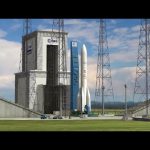
At the European spaceport in Kourou, French Guiana, the new launch facilities for ESA’s Ariane 6 launcher are being built. With the Ariane 6 launcher and the upgrade of the Vega to Vega C, Europe expands its launching capacities by creating versatile launchers that meet market demands. At the same time ESA supports both institutional missions and European industry as both Ariane 6 and Vega C will be fully European. With Ariane 6 and Vega C, Europe secures its independent access to space for years to come.
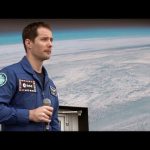
L’astronaute de l’ESA Thomas Pesquet, de retour sur terre, répond depuis le salon du Bourget aux questions à propos de la mission Proxima durant laquelle il a passé six mois à bord de la station spatiale internationale. Au cours de la mission, il a travaillé sur plus de 60 expériences scientifiques pour l’ESA, pour le CNES et pour les partenaires de l’ISS.
– – – – – – – – – – – – – – – – – – –
ESA astronaut Thomas Pesquet, who recently returned from the International Space Station, answers questions from the public at the Paris Air and Space Show 2017 about his six-month Proxima mission in which he took part in over 60 scientific experiments for ESA and France’s space agency CNES and the ISS partners.
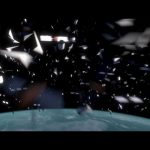
Space debris – a journey to Earth takes the audience on a journey from the outer solar system back to our home planet. The objects encountered along the way are manmade. Originally designed to explore the universe, these are now a challenge for modern space flight. An estimated number of 700,000 objects larger than 1 cm and 170 million objects larger than 1mm are expected to reside in Earth orbits.
The video gives a closer look at the different regions used for space flight and explains how mitigation and removal measures could preserve future usage of these orbits.
Produced for the 7th European Conference on Space Debris, 18-21 April 2017.
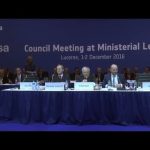
Ministers from ESA’s 22 member states plus Canada and Slovenia have agreed a €10.3 billion package ofspace programme funding. At the two-day council meeting at ministerial level in Lucerne, Switzerland, subscriptions were agreed for a future Marsrovermission,continued funding of missions tothe International Space Station, new elements of ESA’s launcher programme as well as developments in telecommunications, Earth observation and technology.
European spirit, identity and cohesion are the overarching aspects for Europe to achieve the best of outcomes for its states and citizens in space and for a globally successful European space sector.
United Space in Europe describes the intensive cooperation of different European entities for the sake of a strengthening of Europe. With this strengthened European cooperation in space, the 2016 Ministerial Council will further ESA’s breadth and strength of action to cover its mandate as laid out in the ESA Convention through enhanced partnership with its Member States, with other institutional actors and with space actors worldwide.
The conference takes place in the advent of the Space 4.0 era, a time when space is evolving from being the preserve of the governments of a few spacefaring nations to a situation in which there is the increased number of diverse space actors around the world, including the emergence of private companies, participation with academia, industry and citizens, digitalisation and global interaction.
Space 4.0 represents the evolution of the space sector into a new era, characterised by a new playing field. This era is unfolding through interaction between governments, private sector, society and politics. Space 4.0 is analogous to, and is intertwined with, Industry 4.0, which is considered as the unfolding fourth industrial revolution of manufacturing and services.
To meet the challenges and to proactively develop the different aspects of Space 4.0, the European space sector can become globally competitive only by fully integrating into European society and economy. This requires a sustainable space sector closely connected with the fabric of society and economy. For this to happen, space must be safe, secure and easily and readily accessible, and built on a foundation of excellence in science and technology – broadly and continuously over time.
ESA will table proposals at the meeting to meet the common European goals for space in this exciting and challenging new era.
[French version] European spirit, identity and cohesion are the overarching aspects for Europe to achieve the best of outcomes for its states and citizens in space and for a globally successful European space sector.
United Space in Europe describes the intensive cooperation of different European entities for the sake of a strengthening of Europe. With this strengthened European cooperation in space, the 2016 Ministerial Council will further ESA’s breadth and strength of action to cover its mandate as laid out in the ESA Convention through enhanced partnership with its Member States, with other institutional actors and with space actors worldwide.
The conference takes place in the advent of the Space 4.0 era, a time when space is evolving from being the preserve of the governments of a few spacefaring nations to a situation in which there is the increased number of diverse space actors around the world, including the emergence of private companies, participation with academia, industry and citizens, digitalisation and global interaction.
Space 4.0 represents the evolution of the space sector into a new era, characterised by a new playing field. This era is unfolding through interaction between governments, private sector, society and politics. Space 4.0 is analogous to, and is intertwined with, Industry 4.0, which is considered as the unfolding fourth industrial revolution of manufacturing and services.
To meet the challenges and to proactively develop the different aspects of Space 4.0, the European space sector can become globally competitive only by fully integrating into European society and economy. This requires a sustainable space sector closely connected with the fabric of society and economy. For this to happen, space must be safe, secure and easily and readily accessible, and built on a foundation of excellence in science and technology – broadly and continuously over time.
ESA will table proposals at the meeting to meet the common European goals for space in this exciting and challenging new era.
[Spanish version] European spirit, identity and cohesion are the overarching aspects for Europe to achieve the best of outcomes for its states and citizens in space and for a globally successful European space sector.
United Space in Europe describes the intensive cooperation of different European entities for the sake of a strengthening of Europe. With this strengthened European cooperation in space, the 2016 Ministerial Council will further ESA’s breadth and strength of action to cover its mandate as laid out in the ESA Convention through enhanced partnership with its Member States, with other institutional actors and with space actors worldwide.
The conference takes place in the advent of the Space 4.0 era, a time when space is evolving from being the preserve of the governments of a few spacefaring nations to a situation in which there is the increased number of diverse space actors around the world, including the emergence of private companies, participation with academia, industry and citizens, digitalisation and global interaction.
Space 4.0 represents the evolution of the space sector into a new era, characterised by a new playing field. This era is unfolding through interaction between governments, private sector, society and politics. Space 4.0 is analogous to, and is intertwined with, Industry 4.0, which is considered as the unfolding fourth industrial revolution of manufacturing and services.
To meet the challenges and to proactively develop the different aspects of Space 4.0, the European space sector can become globally competitive only by fully integrating into European society and economy. This requires a sustainable space sector closely connected with the fabric of society and economy. For this to happen, space must be safe, secure and easily and readily accessible, and built on a foundation of excellence in science and technology – broadly and continuously over time.
ESA will table proposals at the meeting to meet the common European goals for space in this exciting and challenging new era.
Gonzalo Martín-de-Mercado specialises in optical telecommunications. He speaks about how his academic background helps him to support collaboration between ESA and companies.
Discover more about our planet with the Earth from Space video programme. In this special edition, ESA’s Josef Aschbacher joins the show to discuss the past, present and future of the Copernicus environment monitoring programme and its Sentinel satellites.
The green light has been given for all users to have open access to all of the data from ESA’s Sentinel-2A satellite, launched in June for the Copernicus programme.
This video celebrates Sentinel-2A’s life, from its birth to what it has become today, and what it can give us tomorrow.