Tag: ESA Television

  • LISA Pathfinder results

    LISA Pathfinder results

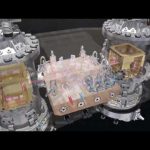
    Launched in December 2015, LISA Pathfinder travelled to its operational orbit, 1.5 million km from earth towards the Sun, where it started its scientific mission on 1 March.

    At the core of the spacecraft, two identical gold-platinum cubes, are being held in the most precise free-fall ever produced in space.

    Placing the test masses in a motion subject only to gravity is the challenging condition needed to build and operate a future space mission to observe gravitational waves. Predicted by Albert Einstein a century ago, gravitational waves are fluctuations in the fabric of space-time, which were recently detected directly for the first time by the Laser Interferometer Gravitational-Wave Observatory.

    Over the first two months of scientific operations, the LISA Pathfinder team has performed a number of experiments on the test masses to prove the feasibility of gravitational wave observation from space.

    These results are explained in this video with interviews of Paul McNamara, LISA Pathfinder Project scientist, ESA and two LISA Pathfinder Principal investigators : Rita DOLES, University of Trento and Martin Hewitson, University of Hannover.

    Read more in LISA Pathfinder exceeds expectations: http://www.esa.int/Our_Activities/Space_Science/LISA_Pathfinder_exceeds_expectations
  • Venus close-up

    Venus close-up

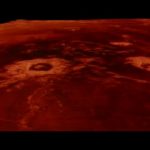
    Launched in 2005, ESA’s Venus Express spacecraft has been observing Earth’s so called ‘sister’ planet from a unique point of view: in orbit around Venus itself. This mission is providing scientists with detailed information about the Venusian atmosphere and in the course of these studies many surprises have emerged.

  • ATV-5 Georges Lemaître mission

    ATV-5 Georges Lemaître mission

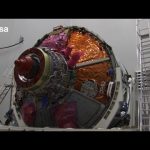
    ATV-5 is the last in the series to deliver supplies to the International Space Station. The fifth Automated Transfer Vehicle was launched from Europe’s Spaceport in French Guiana on 29 July 2014. It has been named Georges Lemaître as a tribute to the Belgian physicist, father of the Big Bang theory.

    After launch on an Ariane 5 from Kourou, ATV automatically navigates to a precision docking with the Station’s Russian Zvezda module. It remains attached to the ISS for up to six months before reentering the atmosphere and deliberately burning up together with several tonnes of Station waste.

  • ATV-5: Georges Lemaître, Monseigneur Big Bang

    ATV-5: Georges Lemaître, Monseigneur Big Bang

    With ATV-5 George Lemaitre soon to be launched to the ISS from Europe’s Spaceport in Kourou, ESA pays tribute to George Lemaitre, the Belgian cleric and professor who was the first to conceive the idea of a big bang.

    The name of the man who proposed the prevailing ‘expansion’ theory on the beginning of the universe was proposed by Belgium’s delegation to ESA.

    This video explains who was Georges Lemaitre and how he contributed to modern Cosmology. It includes an interview in English and French with Professor Dominique Lambert, Theoretical physics – University of Namur