Tag: European Commission

  • Copernicus Sentinel-6 ready for launch

    Copernicus Sentinel-6 ready for launch

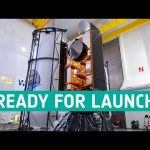
    Final preparations are underway in California for the launch of Sentinel-6 Michael Freilich, a joint European and US satellite designed to take precise measurements of sea-level change. The satellite forms part of the European Union’s Copernicus Earth Observation programme and will employ a radar altimeter to map sea-surface topography. The satellite will provide fundamental data for climate science and policymaking, helping to protect the 600 million people who live in vulnerable coastal areas. It will also deliver near-realtime information for marine and weather forecasts.

    The mission is a collaboration between ESA, the European Commission, EUMETSAT, NASA and NOAA, with support from the French space agency CNES. Scheduled for launch on 21 November on a SpaceX Falcon 9 rocket from the Vandenberg Air Force Base on the California coast, the satellite is named Michael Freilich after NASA’s former Director of Earth Science.

    ★ Subscribe: http://bit.ly/ESAsubscribe and click twice on the bell button to receive our notifications.

    Check out our full video catalog: http://bit.ly/SpaceInVideos
    Follow us on Twitter: http://bit.ly/ESAonTwitter
    On Facebook: http://bit.ly/ESAonFacebook
    On Instagram: http://bit.ly/ESAonInstagram
    On Flickr: http://bit.ly/ESAonFlickr

    We are Europe’s gateway to space. Our mission is to shape the development of Europe’s space capability and ensure that investment in space continues to deliver benefits to the citizens of Europe and the world. Check out https://www.esa.int/ to get up to speed on everything space related.

    Copyright information about our videos is available here: https://www.esa.int/ESA_Multimedia/Terms_and_Conditions

    #ESA
    #Sentinel6
    #SeeingTheSeas

  • Copernicus Sentinel-6 measuring sea levels using radar altimetry

    Copernicus Sentinel-6 measuring sea levels using radar altimetry

    This November the newest member of the EU’s Copernicus programme, Sentinel-6 Michael Freilich, will take to the heavens from Vandenberg Air Force Base in California. The satellite is named after NASA’s former Director of Earth Observation and is a radar altimetry mission to monitor sea-level rise, wave-height and windspeed.

    The mission is a collaboration between ESA, the European Commission, EUMETSAT, NASA and NOAA, with support from the French space agency CNES. It will continue a three-decade-long time-series of radar altimetry missions that started with the Topex-Poseidon mission and was then followed by the Jason missions.

    ★ Subscribe: http://bit.ly/ESAsubscribe and click twice on the bell button to receive our notifications.

    Check out our full video catalog: http://bit.ly/SpaceInVideos
    Follow us on Twitter: http://bit.ly/ESAonTwitter
    On Facebook: http://bit.ly/ESAonFacebook
    On Instagram: http://bit.ly/ESAonInstagram
    On Flickr: http://bit.ly/ESAonFlickr

    We are Europe’s gateway to space. Our mission is to shape the development of Europe’s space capability and ensure that investment in space continues to deliver benefits to the citizens of Europe and the world. Check out https://www.esa.int/ to get up to speed on everything space related.

    Copyright information about our videos is available here: https://www.esa.int/ESA_Multimedia/Terms_and_Conditions

    #ESA
    #Sentinel6
    #SeeingTheSeas
  • Copernicus Sentinel-6 Michael Freilich: preparing for launch

    Copernicus Sentinel-6 Michael Freilich: preparing for launch

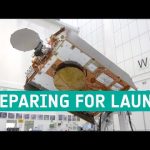
    A European satellite built to carry out precise measurements of sea level changes has arrived in California in preparation for launch. The Sentinel-6 Michael Freilich satellite forms part of the European Union’s Copernicus Earth Observation programme and will employ radar to map sea surface topography.

    The mission will be used to monitor the height of the sea surface to understand long-term change. It will also measure wave height and wind speed. The satellite will provide fundamental data for climate science, policy-making and protecting the 600 million people who live in vulnerable coastal areas.

    Data are provided to Copernicus services in near-real time to improve marine and weather forecasts used by maritime and coastal communities.

    The mission is a collaboration between ESA, the European Commission, EUMETSAT, NASA and NOAA, with support from the French Space Agency CNES.

    It is named Michael Freilich after NASA’s former Director of Earth Science and is scheduled for launch on 10 November on a SpaceX Falcon 9 rocket from the Vandenberg Air Force Base.

    ★ Subscribe: http://bit.ly/ESAsubscribe and click twice on the bell button to receive our notifications.

    Check out our full video catalog: http://bit.ly/SpaceInVideos
    Follow us on Twitter: http://bit.ly/ESAonTwitter
    On Facebook: http://bit.ly/ESAonFacebook
    On Instagram: http://bit.ly/ESAonInstagram
    On Flickr: http://bit.ly/ESAonFlickr

    We are Europe’s gateway to space. Our mission is to shape the development of Europe’s space capability and ensure that investment in space continues to deliver benefits to the citizens of Europe and the world. Check out http://www.esa.int/ESA to get up to speed on everything space related.

    Copyright information about our videos is available here: http://www.esa.int/spaceinvideos/Terms_and_Conditions

    #ESA
    #NASA
    #Sentinel6

  • Iris: satcom for aviation

    Iris: satcom for aviation

    Iris will provide a safe and secure text-based data link between pilots and air traffic control (ATC) networks using satellite technology.

    The programme is developed under a public-private partnership between ESA and Inmarsat, and will help relieve pressure on the aviation sector’s congested radio frequency communication channels.

    It will so as part of the European Commission’s Single European Sky ATM Research (SESAR) masterplan to modernise Europe’s air traffic management.

    ★ Subscribe: http://bit.ly/ESAsubscribe

  • Galileo coverage

    Galileo coverage

    Europe’s Galileo satellite navigation system has entered its initial operational phase, offering positioning, velocity and timing services to suitably equipped users worldwide. It takes a minimum of four Galileo satellites to be visible in the local sky to fix a receiver’s position. This animation shows how service availability increases as the overall number of satellites in the Galileo constellation goes up.

    Read more about Galileo’s Initial Service:
    http://www.esa.int/Our_Activities/Navigation/Galileo_begins_serving_the_globe