Il rientro dallo spazio è pericoloso per le navicelle spaziali e i loro passeggeri. Una nuovo veicolo dell’ESA, la European Space Agency, chiamato “IXV”, sarà lanciato nello spazio a novembre per affrontare in modo diretto la sfida del rientro. Gli ingegneri vogliono dominare la difficile transizione tra lo spazio e il pianeta terra.
Tag: European Space Agency (Space Agency)
-
ESA Euronews: IXV : le défi de la rentrée dans l’atmosphère
Pour les véhicules spatiaux, la rentrée dans l’atmosphère, c’est le moment où – pourrait-on dire – ça passe ou ça casse. C’est la phase où les satellites s’enflamment et où les astronautes retiennent leur souffle.
Un nouveau vaisseau de l’ESA baptisé IXV sera lancé dans l’espace en novembre 2014 dans l’objectif de fournir de nouvelles données aux ingénieurs alors qu’ils tentent de maîtriser cette délicate transition entre l’espace et la planète Terre.
Dans cette édition de Space sur euronews, le manager du programme IXV Giorgio Tumino nous présente le véhicule. Nous abordons aussi, images rares à l’appui, les conditions et les risques de cette rentrée atmosphérique.
-
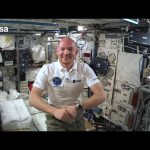
ESA astronaut Alexander Gerst sends greeting to Euro-Space-Day
ESA astronaut Alexander Gerst sends his greetings to the Euro-Space-Day in Saarbrücken, Germany. The tri-national (FR-LU-DE) event will bring together students, scientific institutions and space industry.
-
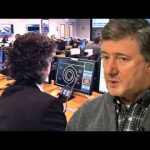
Working in the Concurrent Design Facility
Massimo Bandecchi speaks about the work being done in ESA’s Concurrent Design Facility (CDF). The CDF is a state-of-the-art facility equipped with a network of computers, multimedia devices and software tools, which allows a team of experts from several disciplines to apply the concurrent engineering method to the design of future space missions.
Interested to work here as a trainee? Vacancy posts for Young Graduate Trainees (YGTs) go online once a year in mid-November, and stay open for one month. About 80 YGT job offers will open, aimed at engineers, physicists, biologists or medical graduates, but also business graduates and lawyers.
More information on our Careers website:
http://www.esa.int/About_Us/Careers_at_ESA/Young_Graduate_Trainees -
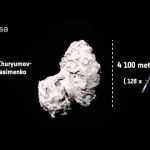
How big is Rosetta compared with the comet?
This short animation explains the relative sizes of the Rosetta spacecraft and comet 67P/Churyumov–Gerasimenko. Rosetta is 32 m from tip to tip of the solar wings. The comet measures 4.1 km along its longest length, 128 times the width of Rosetta.
Unlike typical artist’s impressions, this image is scaled to convey the vast difference in size between Rosetta and the comet, even when the spacecraft is in a close 10 km orbit, as depicted here.
Rosetta reached 10 km distance from the comet centre by October 2014.
Credits: ESA
-
ESA-ESTEC Open Day 2014
Sunday 5 October saw thousands of visitors converge on the European Space Agency’s technical heart for its annual Open Day. Touring across the site, they met astronauts, viewed spacecraft and inspected test facilities – and came face to face with a spectacular new world.
-
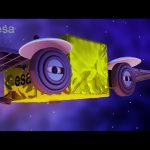
ESA presents… Clean Space
Clean Space is the European Space Agency’s initiative to safeguard the terrestrial and orbital environments, while boosting the innovation and competitiveness of Europe’s space sector. This animated guide follows a newly-launched satellite as it first enters orbit, in the process explaining the various branches of the Clean Space effort and the different future Clean Space aims to build.
Now with English, French, German, Dutch, Italian, Greek, Romanian and Swedish subtitles. More languages will be added as they become available.
-

ESA Euronews: Close encounters with Venus
Venus is our mysterious neighbour, a strange world where the Sun rises in the west and sets in the east, and a day lasts longer than a year. ESA’s Venus Express mission has spent the last eight years gathering data to offer science a fresh insight into the atmosphere and climate of the planet, including a daring aerobraking manœuvre this summer that revealed previously unknown waves in the upper atmosphere.
This video is also available in the following languages:
French http://youtu.be/I0uD82RfGHI
German: http://youtu.be/tXgiaR_5kPM
Italian: http://youtu.be/vs3OxPoF80o
Portuguese: http://youtu.be/N7Y_jU7e_FU
Spanish: http://youtu.be/luPHUdRhF1s
Greek: http://youtu.be/xQmFD44gV_w
Hungarian: http://youtu.be/1-hDeyd5ISQ -
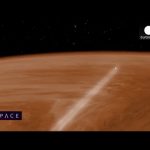
ESA Euronews: Találkozások Vénusszal
A Vénusz a Föld legközelebbi szomszédja, amelyről ehhez képest elég keveset tudunk. Különleges világ, ahol a Nap Nyugaton kel és Keleten megy le, egy nap pedig tovább tart, mint egy év. Az Európai Űrügynökség – az ESA Vénusz Expressz missziója az elmúlt évben nagy mennyiségű adatot gyűjtött össze, a bolygó légköréről és klímájáról. Egy kockázatos légfékezési manőverrel pedig korábban ismeretlen hullámzást fedeztek fel a bolygó sűrű atmoszférájának felső rétegeiben.
-
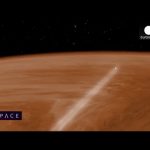
ESA Euronews: Στενές επαφές τρίτου τύπου με την Αφροδίτη
Η Αφροδίτη είναι ο μυστηριώδης γείτονάς μας. Ένας παράξενος κόσμος, όπου ο ήλιος ανατέλλει στη Δύση, δύει στην Ανατολή και μία ημέρα διαρκεί περισσότερο από ένα έτος. Η αποστολή “Venus Express” του Ευρωπαϊκού Οργανισμού Διαστήματος συγκεντρώνει τα τελευταία οκτώ χρόνια στοιχεία, που προσφέρουν μία ανανεωμένη εικόνα για την ατμόσφαιρα και το κλίμα στον πλανήτη Αφροδίτη. Η τολμηρή αεροπέδηση αποκαλύπτει άγνωστα κύματα στα ανώτερα στρώματα της ατμόσφαιρας.
-
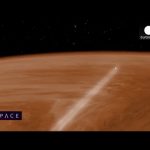
ESA Euronews: Acercándose a Venus
Venus, un misterioso vecino. Un extraño mundo donde el Sol sale por el oeste y se oculta por el este y el día dura más de un año terrestre. La misión de la ESA Venus Express ha pasado 8 años recogiendo datos sobre la atmósfera y el clima de este planeta tan singular. Gracias a la técnica del “aerobraking”, la nave pudo acercarse a la atmósfera de Venus revelando la existencia de olas desconocidas hasta ahora.
-

AIDA: Asteroid Impact and Deflection Assessment study
The Asteroid Impact and Deflection Assessment (AIDA) study examines ways to potentially deflect asteroids from trajectories that could lead to them impacting Earth. The Johns Hopkins University Applied Physics Laboratory would work with NASA and ESA on the mission, which includes two independent spacecraft: an impactor (to be built by APL for NASA) and an impact monitor (to be built by ESA).
The target of this mission is the binary asteroid system Didymos. The impactor would strike the smaller secondary of Didymos, while the monitor would observe and measure any change in the relative orbit.
Learn more:
http://www.esa.int/Our_Activities/Technology/NEO/Asteroid_Impact_Deflection_Assessment_AIDA_study
http://neo.jpl.nasa.gov/
http://www.neoshield.net/en/index.htm -
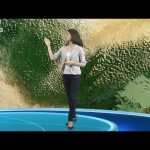
Earth from Space: Lake Chad
Earth from Space is presented by Kelsea Brennan-Wessels from the ESA Web-TV virtual studios. In the one-hundred-fifteenth edition, discover this important water source for over 60 million people in Chad, Cameroon, Niger and Nigeria.
See also http://www.esa.int/spaceinimages/Images/2014/09/Lake_Chad to download the image.
-
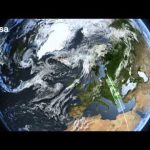
Delivering global navigation information
The Navigation Support Office is based at ESOC’s Navigation Facility, which provides products and services related to global navigation satellite systems in support of ESA missions and to European customers such as Eumetsat and to worldwide customers through its participation in the International Global Navigation Satellite Systems (IGNSS) Services group.
The core service consists of calculating and predicting highly accurate GPS, Galileo and GLONAS satellite orbits, in near-real time, every six hours, around the clock. These data are then used to improve GPS position accuracy, paving the way to even more sophisticated applications such as scientific studies, large-scale climate monitoring and tracking of long-term changes in Earth’s geology.
More about ESA Navigation Support Office:
http://www.esa.int/Our_Activities/Operations/Ground_Systems_Engineering/ESA_Navigation_Support_Office -
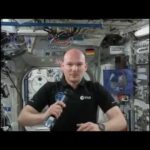
Inflight call with Alexander Gerst for #callAlex
Replay of an inflight call with ESA astronaut Alexander Gerst on the International Space Station. Forty of his social media followers were invited to the European Astronaut Centre in Cologne, Germany, for a SocialSpace event to watch the call to the ISS live. A handful of the participants also got to ask a question to Alexander.
-
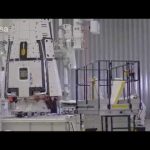
Shaking ESA’s IXV spaceplane
ESA’s Intermediate eXperimental Vehicle, IXV, is put to the test at ESA’s Technical Centre, ESTEC, in the Netherlands. It has to withstand extreme vibrations during liftoff, so the spacecraft is shaken at different frequencies and for various lengths of time to ensure its technical and structural integrity throughout the mission.
To be launched on Vega in early November 2014, IXV will test in flight the technologies and critical systems for Europe’s future automated re-entry vehicles returning from low orbit.
-

Docking of ATV Georges Lemaître to ISS
Highlights from the docking of ATV Georges Lemaître to the International Space Station. The fifth and final Automated Transfer Vehicle docked with the ISS at 13:30 UTC/15:30 CEST on 12 August 2014. The vehicle is carrying 6602 kg of freight, including 2680 kg of dry cargo and 3921 kg of water, propellants and gases.
-
ESA Euronews: Tschuri, die himmlische Badeente
Die Rosetta-Sonde hat ihren Zielkometen Tschuri erreicht. Damit hat für die Wissenschaftler von der ESA, die Rosetta vor zehn Jahren ins All geschickt haben, ein Wettlauf gegen die Zeit begonnen. Denn nun müssen sie den Kometen kartografieren und Daten sammeln, bevor sie im November den Landeroboter aus Rosetta ausklinken und auf Tschuri landen lassen. Dafür muss nun eine geeignete Landestelle gefunden werden – keine leichte Aufgabe. In der aktuellen Ausgabe von euronews Space zeigen uns die Kometen-Jäger in Darmstadt, wie man um einen Kometen fliegt, wie Rosetta ihr Ziel “sieht” und welche Bedeutung das ganze Projekt für die Wissenschaft und das Team hat.
-
ESA Euronews: Comet Hunters: Rosetta’s race to map 67P
The Rosetta mission is now on a race against time to prepare maps and collect data before the Philae lander is due to be sent down to the surface of comet 67P in November. In this edition of Euronews Space, the ‘Comet Hunters’ show us how to orbit a comet, how Rosetta ‘sees’ its target, and what the mission means to the world of science, and to this team in particular.
This video is available in the following languages:
Spanish: http://youtu.be/YBsk_qWuC8M
Portuguese: http://youtu.be/gVXQTYVjhkQ
Greek: http://youtu.be/PEbdC0FB1n8
Italian: http://youtu.be/D7RoCVKSYjg
German: http://youtu.be/AOdQc_vapF0
French: http://youtu.be/HF3Y6eKciLk
Hungarian soon! -
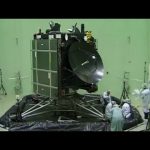
Rosetta Spacecraft at ESA’s ESTEC Test Centre
The road to humankind’s first rendezvous with a comet began at ESA’s technical centre in the Netherlands. The pioneering Rosetta spacecraft and its Philae lander were tested in simulated space conditions to ensure they could withstand the difficult journey.
Credits: ESA
-
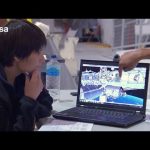
Samantha Cristoforetti, ESA astronaut training in Houston
Samantha Cristoforetti from Italy joined ESA’s Astronaut Corps in 2009. An experienced fighter pilot and Captain in the Italian Air Force, she’s been proposed by the Italian Space Agency ASI to fly to the International Space Station later this year. After extensive international training she’ll be launched from Baikonur Cosmodrome in Kazakhstan, becoming the eighth ESA astronaut to participate in a long-duration mission onboard the ISS.
Connect with Samantha on social media at http://samanthacristoforetti.esa.int
-
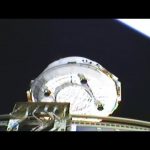
ATV-5 separation from Ariane 5
These images were taken by cameras on the Ariane 5 launcher that rocketed skywards on 29 July 2014 with Europe’s last cargo vessel to visit the International Space Station, ATV-5.
The video shows the separation of ATV Georges Lemaîtres and its Ariane 5.
From then on, it was a self-sufficient spacecraft heading towards the Space Station. The video also shows Ariane’s last stage manoeuvring out of the way.
ATV-5 is carrying almost 6.6 tonnes of supplies to the International Space Station, including a record amount of dry cargo – 2682 kg.
-
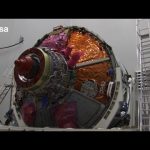
ATV-5 Georges Lemaître mission
ATV-5 is the last in the series to deliver supplies to the International Space Station. The fifth Automated Transfer Vehicle was launched from Europe’s Spaceport in French Guiana on 29 July 2014. It has been named Georges Lemaître as a tribute to the Belgian physicist, father of the Big Bang theory.
After launch on an Ariane 5 from Kourou, ATV automatically navigates to a precision docking with the Station’s Russian Zvezda module. It remains attached to the ISS for up to six months before reentering the atmosphere and deliberately burning up together with several tonnes of Station waste.
-

#RosettaAreWeThereYet – Where are YOU going?
We don’t know where you’re going, but we do know that Rosetta is about to arrive at comet 67P/Churyumov-Gerasimenko. Join the adventure and share your ‘are we there yet?’ photos to win great prizes.
More details and competition rules at http://www.esa.int/RosettaAreWeThereYet.
-

ATV-5: Georges Lemaître, Monseigneur Big Bang
With ATV-5 George Lemaitre soon to be launched to the ISS from Europe’s Spaceport in Kourou, ESA pays tribute to George Lemaitre, the Belgian cleric and professor who was the first to conceive the idea of a big bang.
The name of the man who proposed the prevailing ‘expansion’ theory on the beginning of the universe was proposed by Belgium’s delegation to ESA.
This video explains who was Georges Lemaitre and how he contributed to modern Cosmology. It includes an interview in English and French with Professor Dominique Lambert, Theoretical physics – University of Namur
-
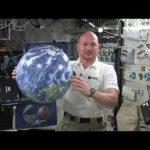
ESA astronaut Alexander Gerst greets German planetariums
On 25 July, several German planetariums connected with ESA’s Astronaut Centre in Cologne, Germany, for a Google Hangout session.
Usually, visitors to a planetarium are explore the starry night sky. But on the evening of 25 July eight German planetariums organised an event to talk about Alexander Gerst’s Blue Dot mission on the International Space Station, the European Astronaut Centre and about human spaceflight in general. A highlight of the evening was this message from Alexander Gerst in space.
-
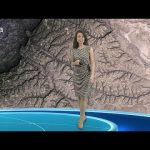
Earth from Space: Cal Madow
Earth from Space is presented by Kelsea Brennan-Wessels from the ESA Web-TV virtual studios. In the one-hundred-thirteenth edition, visit the Cal Madow mountain range in northern Somalia.
See also http://www.esa.int/spaceinimages/Images/2014/07/Cal_Madow_mountain_range_Somalia to download the image.
-
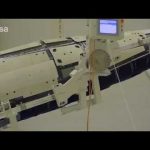
Measuring ESA’s IXV spaceplane
ESA’s Intermediate eXperimental Vehicle, IXV, is tilted and turned along and around all three axes at ESA’s Technical Centre, ESTEC, in the Netherlands to measure its centre of gravity and moments of inertia, because both influence its flying characteristics.
To be launched on Vega in early November 2014, IXV will flight-test the technologies and critical systems for Europe’s future automated reentry vehicles returning from low orbit.
-

#RosettaAreWeThereYet – Once upon a time…
..there was a spacecraft called Rosetta. Rosetta had been travelling in space for 10 years, towards a comet called 67P/Churyumov-Gerasimenko. Before long, Rosetta was able to see the comet in the distance, and she took stunning pictures as she got closer and closer. There was only a little way to go now…
This video is also available in the following languages:
Italian: https://youtu.be/PnF9KG5XN1s
French: https://youtu.be/g5ON54S07f4
Spanish: https://youtu.be/tfv1kGI7ho4
German: https://youtu.be/FdjSBCB93sUMore videos in the series are available in this playlist:
https://www.youtube.com/playlist?list=PLbyvawxScNbui_Ncl9uQ_fXLOjS4sNSd8 -
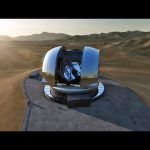
ESA Euronews: Empieza la construcción del telescopio óptico-infrarrojo más grande del mundo
Esta zona remota del desierto de Atacama, en Chile, es famosa porque aquí no hay nada. No hay agua, ni plantas, ni animales. Esto hace que sea un lugar perfecto para un proyecto realmente innovador, el Telescopio Europeo Extremadamente Grande, E-ELT.
Credits: ESA/Euronews
-
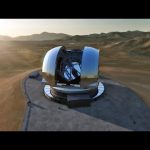
ESA Euronews: Um Telescópio Extremamente Grande para um Universo Infinito
O deserto de Atacama, no Chile é famoso por não ter nada – não tem água, nem plantas, nem animais. O que faz dele o local perfeito para acolher projeto verdadeiramente inovador, a construção do E-ELT, o European Extremely LargeTelescope ou o Telescópio Europeu Extremamente Grande.
Credits: ESA/Euronews
-
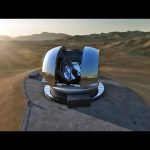
ESA Euronews: E-ELT: Das riesige Teleskop soll unbekannte Gebiete des Universums erforschen
Das E-ELT ist ein europäisches Projekt, um das weltweit größte optische Infrarot-Teleskop zu bauen. Die bahnbrechende Konstruktion in der Atacamawüste in Chile wird ferne Exoplaneten mit einer nie gekannten Detailschärfe untersuchen.
Credits: ESA/Euronews
-
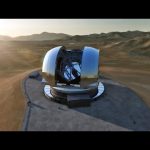
ESA Euronews: E-ELT : le télescope européen de l’extrême
Dans le désert d’Atacama au Chili, la construction du Télescope géant européen, l’E-ELT est entrée dans sa phase concrète avec la création d’une plate-forme au sommet d’une montagne à 3000 mètres d’altitude. C’est là que cet instrument optique / infrarouge le plus grand au monde sera mis en service au début de la prochaine décennie. Ses performances permettront notamment d’en savoir plus sur les exoplanètes et éventuellement, de faire avancer la vaste quête vers une autre forme de vie.
Credits: ESA/Euronews
-

ESA Euronews: E-ELT: Europe’s extreme new telescope
Work is underway to build the E-ELT, a telescope that could one day find signs of life on distant planets. With a 39-metre mirror, it will be the world’s biggest optical and infrared telescope.
Other languages available:
Italian: http://youtu.be/vrQZEBOWqsM
French: http://youtu.be/5enycnYuVR8
German: http://youtu.be/sCTKGGmHp2s
Spanish: http://youtu.be/_0jcfXKxjLI
Greek: http://youtu.be/e1y3FNZK9h0
Portuguese: http://youtu.be/ZX-srt2dlr8
Hungarian: http://youtu.be/nGyRcuk4ydkCredits: ESA/Euronews
-
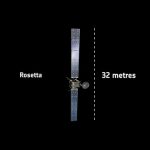
How big is Rosetta compared with the comet?
This short animation explains the relative sizes of the Rosetta spacecraft and comet 67P/Churyumov–Gerasimenko.
Rosetta is 32 m from tip to tip of the solar wings. Assuming the comet measures about 4 km across, that’s 125 times the width of Rosetta.
Unlike typical artist’s impressions, this image is scaled to convey the vast difference in size between Rosetta and the comet, even when the spacecraft is in a close 10 km orbit, as depicted here.
Rosetta arrives at the comet at an altitude of 100 km in the first week of August, and will move progressively closer over the following two months, with the intention to orbit at an altitude of just 10 km, depending on the comet’s activity. For Philae’s deployment in November, Rosetta will come to within a few kilometres of the surface.
The comet depicted in this animation is an artist’s impression.
#Rosettaarewethereyet
Credits: ESA
-
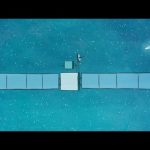
Are we there yet?
After a 10-year journey, Rosetta and Philae are impatient to arrive at their destination!
In July 2014, the public were invited to join the “Rosetta, are we there yet?” campaign, a photo contest to support the last leg of the spacecraft’s epic 10-year voyage to comet 67P/Churyumov–Gerasimenko.
This video is also available in the following languages:
German: https://youtu.be/MbsJ04OF4K8
Spanish: https://youtu.be/caHYr3m-QLc
French: https://youtu.be/7Xuxy0s6QEY
Italian: https://youtu.be/z_qN3HdLPzMMore videos in the series are available in this playlist:
https://www.youtube.com/playlist?list=PLbyvawxScNbui_Ncl9uQ_fXLOjS4sNSd8Credits: ESA/Design & Data
#Rosettaarewethereyet
-
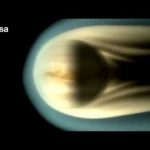
Venus Express plunging into the atmosphere
After eight years in orbit, ESA’s Venus Express has completed routine science observations and is preparing for a daring plunge into the planet’s hostile atmosphere.
Venus Express was launched on 9 November 2005, and arrived at Venus on 11 April 2006.
It has been orbiting Venus in an elliptical 24-hour loop that takes it from a distant 66 000 km over the south pole — affording incredible global views — to an altitude of around 250 km above the surface at the north pole, close to the top of the planet’s atmosphere.
With a suite of seven instruments, the spacecraft has provided a comprehensive study of the ionosphere, atmosphere and surface of Venus.
This video includes interviews in English with Håkan Svedhem, ESA mission scientist and Patrick Martin, ESA Venus Express mission manager
-
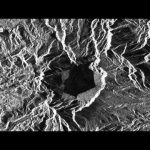
Earth from Space: Pinatubo
Earth from Space is presented by Kelsea Brennan-Wessels from the ESA Web-TV virtual studios. This week’s image from the Sentinel-1A radar satellite shows part of the Philippine island of Luzon with Mount Pinatubo.
See alsohttp://www.esa.int/spaceinimages/Images/2014/07/Mount_Pinatubo_Philippines the image.
-
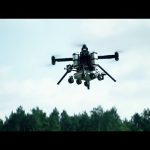
Dropship offers safe landings for Mars rovers
The dramatic conclusion to ESA’s latest StarTiger project: a ‘dropship’ quadcopter steers itself to lower a rover gently onto a safe patch of the rocky martian surface. StarTiger’s Dropter project was tasked with developing and demonstrating a European precision-landing capability for Mars and other targets.
Starting from scratch for the eight-month project, the Dropter team was challenged to produce vision-based navigation and hazard detection and avoidance for the dropship. It has to identify a safe landing site and height before winching down its passenger rover on a set of cables. Flight testing took place at Airbus Defence and Space’s Trauen test site in northern Germany.
Read more: http://www.esa.int/Our_Activities/Technology/Dropship_offers_safe_landings_for_Mars_rovers
Credit:
Deutsches Forschungszentrum für Künstliche Intelligenz, DFKI
Spin.Works
Poznañ University of Technology/Institute of Control and Information Engineering, IAII
Airbus Defence & Space -
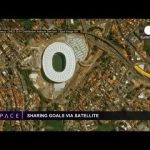
ESA Euronews: Gol via satellite
I Mondiali di calcio sono in corso e milioni le immagini dal Brasile arriveranno in tutto il mondo grazie alla tecnologia spaziale. Migliaia di fan vi assisteranno personalmente, ma si stima che più di 3,2 miliardi di persone (ovvero quasi la metà della popolazione del pianeta) ne seguiranno almeno una parte in tv. La Coppa del Mondo viene diffusa con quella che gli operatori satellitari come SES, qui in Lussemburgo, chiamano trasmissione per ‘uso occasionale’. Si tratta della banda supplementare adibita alla copertura di eventi speciali in diretta. Ed è uno spazio molto affollato. “Indipendentemente da quale sia la tecnologia usata nelle case per ricevere la tv” afferma Xavier Lobao, dell’ESA “si utilizzano i satelliti.”
Credits: ESA/Euronews