At some point, statistically speaking, a large asteroid will impact Earth. Whether that’s tomorrow, in ten years, or a problem for our descendants, ESA is getting prepared.
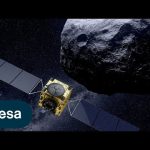
As part of the world’s first test of asteroid deflection, ESA’s Hera mission will perform a detailed post-impact survey of Dimorphos – the 160-metre asteroid struck, and successfully deflected, by NASA’s DART spacecraft.
Hera will soon study the aftermath. Launching in October 2024, Hera will turn this grand-scale experiment into a well-understood and hopefully repeatable planetary defence technique.
But before Hera and its two CubeSats fly, they’re rigorously tested at ESA’s ESTEC test centre in Noordwijk, the Netherlands. From the force and noise of the rocket take-off to the sustained vacuum and temperature extremes of deep space, all aspects of Hera’s functioning are checked before they begin their journey, alone in space.
Credits: ESA – European Space Agency
★ Subscribe: http://bit.ly/ESAsubscribe and click twice on the bell button to receive our notifications.
We are Europe’s gateway to space. Our mission is to shape the development of Europe’s space capability and ensure that investment in space continues to deliver benefits to the citizens of Europe and the world. Check out https://www.esa.int/ to get up to speed on everything space related.
ESA is testing kombucha cultures, famous for their fermentative properties and potential health benefits, to assess their resilience in space. These cultures hold great promise for supporting humans on the Moon and Mars.
The Minerva mission is ESA astronaut Samantha Cristoforetti’s second expedition to the International Space Station. The name of the mission takes inspiration from the Roman goddess of wisdom.
This video takes the viewer on a journey that zooms through space to reveal the Cartwheel Galaxy.
This image of the Cartwheel and its companion galaxies is a composite from Webb’s Near-Infrared Camera (NIRCam) and Mid-Infrared Instrument (MIRI), which reveals details that are difficult to see in the individual images alone.
Webb’s observations capture Cartwheel in a very transitory stage. The form that the Cartwheel Galaxy will eventually take, given these two competing forces, is still a mystery. However, this snapshot provides perspective on what happened to the galaxy in the past and what it will do in the future.
Credits: ESA/Webb, NASA, CSA, STScI, Dark Energy Survey/DOE/FNAL/DECam/CTIO/NOIRLab/NSF/AURA, E. Slawik, N. Risinger, N. Bartmann, M. Zamani Music: tonelabs – Happy Hubble
★ Subscribe: http://bit.ly/ESAsubscribe and click twice on the bell button to receive our notifications.
We are Europe’s gateway to space. Our mission is to shape the development of Europe’s space capability and ensure that investment in space continues to deliver benefits to the citizens of Europe and the world. Check out https://www.esa.int/ to get up to speed on everything space related.
2409 new objects were launched into space in 2022, that’s more than ever before.
Last year though, also saw a record number of satellites reenter Earth’s atmosphere.
The rising number of reentries is not necessarily a bad thing. Disposing of satellites efficiently is one of the most important things for keeping low-Earth orbits safe.
However, most objects reenter in an uncontrolled manner: they are switched off at the end of their mission and left to fall and burn up in Earth’s atmosphere.
There is good news though. Advancing technology has seen a recent increase in “controlled reentries” for rocket bodies. A controlled reentry allows operators to remove their hardware from protected regions more quickly and with greater control over where, when and how it reenters – and even lands – at the cost of allocating some fuel to do so.
By the way, just because an older satellite wasn’t designed to be controlled during its descent doesn’t mean it’s impossible to do so. In July 2023, our teams guided the Aeolus satellite to burn up over uninhabited regions in the Atlantic and Antarctica, even though the satellite was designed in the late 1990s with no intention to control it in this way.
Nestled between the colossal martian ‘Grand Canyon’ (Valles Marineris) and the tallest volcanoes in the Solar System (the Tharsis region) lies Noctis Labyrinthus – a vast system of deep and steep valleys that stretches out for around 1190 km (roughly the length of Italy here on Earth).
This video visualises a flight over the eastern part of Noctis Labyrinthus as seen by Mars Express’s High Resolution Stereo Camera (HRSC). It presents a perspective view down and across this fascinating landscape, showing distinctive ‘graben’ – parts of the crust that have subsided in relation to their surroundings. The intense volcanism in the nearby Tharsis region is to blame for the formation of these features; this volcanism caused large areas of martian crust to arch upwards and become stretched and tectonically stressed, leading to it thinning out, faulting and subsiding.
The highest plateaus seen here represent the original surface level before chunks of surface fell away. The intersecting canyons and valleys are up to 30 km wide and six km deep. In many places, gigantic landslides can be seen covering the valley slopes and floors, while other valley slopes show large dune fields created by sands blown both down and upslope by martian winds.
ESA has highlighted Mars Express images of Noctis Labyrinthus before, in 2006 and 2015. Mars Express has orbited the Red Planet since 2003, imaging Mars’s surface, mapping its minerals, studying its tenuous atmosphere, probing beneath its crust, and exploring how various phenomena interact in the martian environment. For more from the mission and HRSC, see ESA’s Mars Express releases.
Processing notes: The video was created using an image mosaic built over eight orbits (0442, 1085, 1944, 1977, 1988, 10497, 14632 and 16684) by ESA’s Mars Express and its HRSC. This mosaic is combined with topographic information from a digital terrain model to generate a three-dimensional landscape, with every second of the video comprising 50 separate frames rendered according to a pre-defined camera path. The opening credits (Mars globe, first 24 seconds) were created using the recent 20-year Mars global colour mosaic; this opening sequence has a three-fold vertical exaggeration, while the subsequent flight animation has a 1.5-fold exaggeration. Haze has been added to conceal the limits of the terrain model, and starts building up at distance of between 150 and 200 km. The video is centred at the martian coordinates of 7°S, 265°E.
Alt-text: The video begins on a rotating full-globe of Mars, with white polar caps and mottled tan surface visible. It then zooms in on the westernmost part of the large Valles Marineris canyon system, a region highlighted by a white box, and swaps to a new Mars Express visualisation of Noctis Labyrinthus. The camera then flies slowly across a landscape that is broken apart by deep intersecting valleys and canyons.
Credit: ESA/DLR/FU Berlin & NASA/JPL-Caltech/MSSS, CC BY-SA 3.0 IGO
★ Subscribe: http://bit.ly/ESAsubscribe and click twice on the bell button to receive our notifications.
We are Europe’s gateway to space. Our mission is to shape the development of Europe’s space capability and ensure that investment in space continues to deliver benefits to the citizens of Europe and the world. Check out https://www.esa.int/ to get up to speed on everything space related.
Today, our Gaia mission releases a goldmine of knowledge about our galaxy and beyond. Among other findings, the star surveyor surpasses its planned potential to reveal half a million new and faint stars in a massive cluster, identify over 380 possible cosmic lenses, and pinpoint the positions of more than 150 000 asteroids within the Solar System.
– Moon and Venus Conjunction (10 October): Don’t miss the stunning alignment of the Moon and Venus, only 3.2º apart.
– New Moon & Annular Solar Eclipse (14 October): It’s a double treat! The New Moon at 17:56 UTC sets the stage for an annular solar eclipse visible in several countries.
– Orionids Meteor Shower (21-22 October): Prepare for a meteor shower extravaganza with the peak on October 22.
– Venus at Greatest Western Elongation (23 October): Venus shines its brightest, 46.4º west of the Sun, and becomes the third brightest object in the sky.
– Partial Lunar Eclipse & Full Moon (28-29 October): Experience the beauty of a partial lunar eclipse while capturing the Full Moon’s magic.
– Moon and Jupiter Conjunction (29 October): End the month with a celestial embrace as Jupiter passes 3.1º south of the Moon.🌠
Astronauts on the International Space Station do a full circle of Earth every 90 minutes and experience 16 sunsets and sunrises every day.
With this unearthly routine, astronauts can struggle to find a natural daily rhythm in space.
The Space Station follows Greenwich Mean Time (GMT), which helps keep a consistent schedule, along with regular wake-up and bedtime routines.
During his Huginn mission, our astronaut Andreas Mogensen will run two experiments focusing on sleeping in space with real world applications: Circadian Light and Sleep in Orbit.
📹 ESA – European Space Agency 📸 SAGA Space Architects
1. Mars has two moons, Phobos and Deimos. They are both too light for gravity to make them spherical.
2. It has the highest volcano in the Solar System, the Olympus Mons. It rises 25 kilometres above the surrounding plain: Mount Everest is only one third as high.
3. The air is 100 times thinner than on Earth, and mostly made up of carbon dioxide. Human explorers will have to wear oxygen masks and special suits every time they step outside their sealed homes.
4. Like Earth, the Red Planet has two large ice caps at its north and south poles.
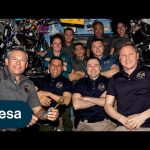
ESA astronaut Andreas Mogensen became commander of the International Space Station (ISS) on September 26, 2023, in a traditional ceremony in which the departing commander, Sergey Prokopyev, handed over the symbolic key of the Space Station. Mogensen is the sixth European to take on the role of ISS commander.
Mogensen will serve as commander for the rest of his Huginn mission until early 2024. During his command, he will be responsible for overseeing the crew’s activities and ensuring the safety and operation of the Space Station.
Credits: ESA/NASA
★ Subscribe: http://bit.ly/ESAsubscribe and click twice on the bell button to receive our notifications.
We are Europe’s gateway to space. Our mission is to shape the development of Europe’s space capability and ensure that investment in space continues to deliver benefits to the citizens of Europe and the world. Check out https://www.esa.int/ to get up to speed on everything space related.
ESA astronaut Andreas Mogensen has begun his Huginn mission, turning the International Space Station into his home and workplace. After piloting on Crew Dragon Endurance as the first non-US pilot, Andreas has started performing European experiments and technology demonstrations with many more to come throughout the mission.
Credits: ESA – European Space Agency
★ Subscribe: http://bit.ly/ESAsubscribe and click twice on the bell button to receive our notifications.
We are Europe’s gateway to space. Our mission is to shape the development of Europe’s space capability and ensure that investment in space continues to deliver benefits to the citizens of Europe and the world. Check out https://www.esa.int/ to get up to speed on everything space related.
Did you know, the Northern lights or Aurora Borealis are created when the mythical Finnish ‘Firefox’ runs so quickly across the snow that its tail causes sparks to fly into the night sky? At least, that’s one of the stories that has been told in Finland about this beautiful phenomenon. Another that we love comes from the Sámi people of Finnish Lapland (among others), who describe them as plumes of water ejected by whales.
Today’s scientific explanation for the origin of the Aurora wasn’t thought up until the 20th Century, by the Norwegian scientist Kristian Birkeland. Charged particles, electrons and protons, are constantly emitted by the Sun, making up the solar wind. This wind slams into Earth’s ionosphere – sometimes sped up to vast speeds by solar storms – and the charged particles are deflected towards the poles by the magnetosphere.
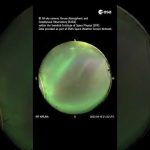
Molecules in our atmosphere then absorb energy from these charged particles from the Sun, and re-release it in their own unique set of colours. Oxygen produces green, but at high altitudes can create red, nitrogen creates blues, and colours can overlap creating purple. Waves, twists and streams are caused by variations in Earth’s magnetic fields. This striking video shows the Aurora over Kiruna, the northernmost city in Sweden. It’s composed of images taken by the Kiruna all-sky camera every minute for about ten hours over 18-19 September 2023.
The all-sky auroral camera is operated by the Kiruna Atmospheric and Geophysical Observatory (KAGO) within the Swedish Institute of Space Physics (IRF), and data from here is provided as part of ESA’s network of space weather services within the Agency’s Space Safety Programme. A sequence of multiple coronal mass ejections – large, sudden ejections of plasma and magnetic field from the Sun – recently struck Earth, and we are still recovering from the passage of the last of them. The fastest was travelling at around 700 km/s, which is considered a small event.
Solar storms are causing an increase in geomagnetic activity; temporary disturbances in Earth’s magnetosphere, which has led to increased light shows at Earth’s poles.
Credits: All-sky camera, Kiruna Atmospheric and Geophysical Observatory (KAGO) within the Swedish Institute of Space Physics (IRF). Data provided as part of ESA’s Space Weather Service Network.
One giant planet. Three icy moons. An eight-year journey. One special spacecraft.
Building a mission to Jupiter took years of planning and thousands of people. Now that Juice is finally en route to its destination, we take a look behind the scenes to discover the story behind the making of Juice. Featuring exclusive interviews with scientists and engineers from across Europe, as well as backstage footage from the planning, testing and launch of this once-in-a-generation mission.
ESA presents ‘The making of Juice’, a documentary by Maarten Roos (Lightcurve Films), starring the Juice spacecraft and the people who made it.
Release date: Thursday 23 November.
Credit: ESA/Lightcurve Films
★ Subscribe: http://bit.ly/ESAsubscribe and click twice on the bell button to receive our notifications.
We are Europe’s gateway to space. Our mission is to shape the development of Europe’s space capability and ensure that investment in space continues to deliver benefits to the citizens of Europe and the world. Check out https://www.esa.int/ to get up to speed on everything space related.
Coronal Mass Ejections or CMEs, are an eruption of around a billion tonnes of particles that comes from the solar atmosphere, the corona, and travels through the solar system. CMEs are an important part of ‘space weather’. The particles spark aurorae on planets with atmospheres, and can cause malfunctions in some technology. They can also be harmful to unprotected astronauts. So it is important to understand CMEs, and be able to track their progress.
Credits: ESA – European Space Agency
★ Subscribe: http://bit.ly/ESAsubscribe and click twice on the bell button to receive our notifications.
We are Europe’s gateway to space. Our mission is to shape the development of Europe’s space capability and ensure that investment in space continues to deliver benefits to the citizens of Europe and the world. Check out https://www.esa.int/ to get up to speed on everything space related.
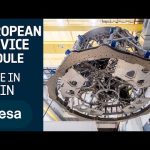
Artemis in Europe: the structure and radiators for the European Service Modules that fly NASA’s Orion spacecraft to the Moon are built in Turin, Italy.
Thales Alenia Space produces the structure that acts like a chassis on a car providing the solid foundations for all other elements to be attached to and also absorbs the forces that the Artemis spacecraft will endure during launch into Earth orbit and onto the Moon.
Technicians assemble the primary structure that is made from a core of Composite Fibre Reinforced Polymer sandwich panels and aluminium alloy elements for the secondary structures. This technology keeps the European Service Module light enough to fly farther and longer but strong enough to keep its shape.
Thales Alenia Space also supplies the radiators for the European Service Modules that consist of six elements forming two independent systems. Like a car’s radiator system the European Service Module radiators are designed to expel excess heat and keep the computers and other components inside from overheating.
The structures are trucked from Turin to Bremen, Germany, where the rest of the hardware that makes a spacecraft can be installed. The first step in their voyage to the Moon.
Credits: ESA – European Space Agency
★ Subscribe: http://bit.ly/ESAsubscribe and click twice on the bell button to receive our notifications.
We are Europe’s gateway to space. Our mission is to shape the development of Europe’s space capability and ensure that investment in space continues to deliver benefits to the citizens of Europe and the world. Check out https://www.esa.int/ to get up to speed on everything space related.
This video zooms through space to reveal Webb’s Near-Infrared Camera (NIRCam) image of the Southern Ring Nebula.
The bright star at the centre of NGC 3132, while prominent when viewed by the NASA/ESA/CSA James Webb Telescope in near-infrared light, plays a supporting role in sculpting the surrounding nebula. A second star, barely visible at lower left along one of the bright star’s diffraction spikes, is the nebula’s source. It has ejected at least eight layers of gas and dust over thousands of years.
Data from Webb’s Near-Infrared Camera (NIRCam) were used to make this extremely detailed image. It is teeming with scientific information — and research will begin following its release.
Credits: NASA, ESA, CSA, STScI, and the Webb ERO Production Team Music: tonelabs – Happy Hubble
★ Subscribe: http://bit.ly/ESAsubscribe and click twice on the bell button to receive our notifications.
We are Europe’s gateway to space. Our mission is to shape the development of Europe’s space capability and ensure that investment in space continues to deliver benefits to the citizens of Europe and the world. Check out https://www.esa.int/ to get up to speed on everything space related.
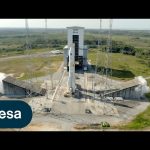
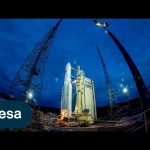
On 5 September 2023, teams from France’s space agency CNES and Arianegroup under the lead of ESA carried out a complete Ariane 6 launch sequence on its launch pad at Europe’s spaceport in French Guiana. The test ended with a hot-fire of the launcher’s core stage and startup of the Vulcain 2.1 engine.
This is a key step in the test campaign. It follows from initial integration of the Ariane 6 launcher on its launch pad, electrical and fluid system tests and the first launch sequence test run on 18 July 2023.
This test involved a launch sequence and final countdown representative of a launch, including removal of the Ariane 6 mobile gantry and filling the launcher’s upper and core stage tanks with liquid hydrogen and liquid oxygen. The test ended with the ignition and the startup of the core stage’s Vulcain 2.1 engine, followed by four seconds of firing.
The next milestone is to complete a core stage long hot-fire test, where the Vulcain 2.1 engine will operate for about 8 minutes.
Ariane 6 is an all-new design, created to succeed Ariane 5 as Europe’s heavy-lift launch system. With Ariane 6’s upper stage and its reignitable Vinci engine, Europe’s launch capability will be tailored to the needs of multiple payloads, for example to orbit satellite constellations. This autonomous capability to reach Earth orbit and deep space supports Europe’s navigation, Earth observation, scientific and security programmes. Ongoing development of Europe’s space transportation capabilities is made possible by the sustained dedication of thousands of talented people working in ESA’s 22 Member States.
www.esa.int/ariane
Credits: ESA/ARIANEGROUP/CNES – Optique vidéo du CSG
★ Subscribe: http://bit.ly/ESAsubscribe and click twice on the bell button to receive our notifications.
We are Europe’s gateway to space. Our mission is to shape the development of Europe’s space capability and ensure that investment in space continues to deliver benefits to the citizens of Europe and the world. Check out https://www.esa.int/ to get up to speed on everything space related.
Explore the mysteries behind the Earth-Moon system’s origin with these four intriguing theories. 🌍🌕 Which one do you think holds the key to our celestial companion’s creation?
Space exploration presents unique health challenges for astronauts due to lack of gravity, isolation, and radiation exposure. ESA’s SciSpacE activities aim to comprehend these effects and their implications for human well-being during extended missions.
ESA collaborates with researchers to conduct experiments in microgravity and analogue environments, shedding light on the consequences of space stressors. One critical concern is muscle and bone atrophy. Despite daily exercise routines, astronauts face deterioration. ESA is investigating electrical stimulation as a potential countermeasure, with tests planned on board the International Space Station.
The “Muscle Stimulation” experiment is a centrepiece of this research. By applying controlled electric currents to leg muscles, the study aims to enhance muscle mass, strength, and recovery. Complementary assessments, including MRI scans, microcirculation analysis, and blood samples, will provide a comprehensive understanding of the efficacy.
Addressing these challenges could yield benefits on Earth too. The insights gained could translate to better healthcare for diverse populations, from the elderly to clinical patients and athletes.
ESA’s dedication to advancing space exploration while safeguarding astronauts’ physical health underscores its commitment to a sustainable and thriving space programme. Through research and innovative solutions, humanity edges closer to conquering the challenges of extended spaceflight and improving life on our home planet.
Credits: ESA – European Space Agency
★ Subscribe: http://bit.ly/ESAsubscribe and click twice on the bell button to receive our notifications.
We are Europe’s gateway to space. Our mission is to shape the development of Europe’s space capability and ensure that investment in space continues to deliver benefits to the citizens of Europe and the world. Check out https://www.esa.int/ to get up to speed on everything space related.
Join ESA astronaut Samantha Cristoforetti for a guided tour of the International Space Station’s crew quarters – the bedroom.
After a day’s work running experiments and maintaining the weightless research centre astronauts can retreat to their private quarters that is no larger than a changing room. In this small space they can store personal items, use a laptop for internet and float to sleep in their sleeping bag.
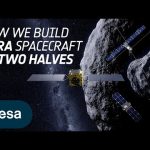
Hera is complete. ESA’s asteroid mission for planetary defence was built and prepared in two halves, but now, through a painstaking operation, they have been mated together to make a single spacecraft, ready for full-scale testing of its readiness for space.
The mating took place at OHB Bremen in Germany, with Hera’s Core Module raised more than 3 m above its Propulsion Module then gradually and carefully slotted into place, over a three-hour period. The modules had been placed in cages to ensure their correct alignment relative to each other down to a few tenths of a millimetre.
Hera’s Propulsion Module incorporates its propellant tanks – housed within a central titanium cylinder, the ‘backbone’ of the spacecraft – along with piping and thrusters, which will have the job of hauling the mission across deep space for more than two years, then to manoeuvre around the Dimorphos and Didymos asteroids.
Meanwhile Hera’s Core Module can be thought of as the brains of the mission, hosting its onboard computer, mission systems and instruments.
Once the tip of the Propulsion Module cylinder met the top deck of the Core Module the mating was complete. Then an initial test bolt was inserted to check the alignment was entirely correct in advance of the two modules being fully bolted together.
The combined Hera spacecraft is scheduled to go through a test campaign to assess its readiness for spaceflight, along with the two CubeSats it will carry aboard, in preparation for its October 2024 lift-off.
Credits: ESA – European Space Agency Footage: ESA / OHB
★ Subscribe: http://bit.ly/ESAsubscribe and click twice on the bell button to receive our notifications.
We are Europe’s gateway to space. Our mission is to shape the development of Europe’s space capability and ensure that investment in space continues to deliver benefits to the citizens of Europe and the world. Check out https://www.esa.int/ to get up to speed on everything space related.
This image was captured by NIRCam, Webb’s primary near-infrared camera, and contains the lensing galaxy cluster SDSS J1226+2149. It lies at a distance of around 6.3 billion light-years from Earth, in the constellation Coma Berenices. By combining Webb’s sensitivity with the magnifying effect of gravitational lensing, astronomers were able to use this gravitational lens to explore the earliest stages of star formation in distant galaxies. To do so, they relied on earlier studies by the NASA/ESA Hubble Space Telescope, which provided the ‘prescription’ for this gravitational lens.
Credit: ESA/Webb, NASA & CSA, J. Rigby Music: Stellardrone – Twilight
A solar eruption detected simultaneously at Earth, the Moon and Mars emphasises the need to prepare human exploration missions for the dangers of space radiation.
During Artemis I the European Service Module (ESM) surpassed expectations. Now, as we set our sights on Artemis II, the European Service Module is ready to once again serve as Orion’s primary power and propulsion component and keep the spacecraft at the right temperature and on course. And this time, with real astronauts on board.
ESM-2 stands as a testament to ESA’s contributions to NASA’s Orion spacecraft and the Artemis programme, ensuring the crew will have the essentials – from electricity to temperature control – in the vastness of space.
Next up, ESM-2 will be connected with the crew module to create the Artemis II vehicle. It will then be thoroughly tested before launch scheduled for next year.
ESA is committed to send astronauts beyond low-Earth orbit and ultimately to the surface of the Moon and beyond. ESM is a key contribution to this joint international endeavour.
This video features interviews with: – Philippe Berthe, ESA’s European Service Module Project Coordination manager – Kai Bergemann, Airbus deputy programme manager for Orion and the European Service Module – Jeremy Hansen, Canadian Space Agency Artemis II astronaut – Debbie Korth, NASA deputy programme manager for Orion
Credits: ESA – European Space Agency 📸 NASA/Kim Shiflett
★ Subscribe: http://bit.ly/ESAsubscribe and click twice on the bell button to receive our notifications.
We are Europe’s gateway to space. Our mission is to shape the development of Europe’s space capability and ensure that investment in space continues to deliver benefits to the citizens of Europe and the world. Check out https://www.esa.int/ to get up to speed on everything space related.
According to the @worldmetorg, July 2023 is likely to have been the hottest month on record. While much of Europe, North America and Asia suffered the immediate consequences of these brutal temperatures, extreme events are also hitting hard far away in the icy reaches of Antarctica. In a paper published today, scientists highlight Antarctica’s vulnerability to extremes and the role that satellites play in monitoring this remote region.
In the vast expanse of space, astronauts face a unique challenge – the need to share spacesuits during prolonged spacewalks. These suits, including their inner linings that come into direct contact with the astronauts’ skin, tend to accumulate bodily fluids over time. Drawing a rather relatable analogy, it’s akin to sharing underwear in space!
However, the practicality of washing these spacesuit interiors on lunar surfaces or beyond presents a significant hurdle. To counter this, a dedicated group of researchers is delving into innovative strategies to curb the growth of potentially harmful microbes within the inner layers of these suits.
Here’s where the solution gets intriguing: the world of microbiology offers a fascinating approach. Certain types of microbes possess ‘secondary metabolites’ that allow them to combat other microbes. These compounds are not only diverse in colour but also possess antibiotic properties. The ingenious idea involves integrating these microbial warriors into the very fabric of the spacesuit’s inner layer.
This pioneering research isn’t confined solely to the realm of spacesuits; its implications extend far beyond. The outcomes hold the potential to revolutionise the field of antimicrobial treatments and smart textile technologies right here on Earth. As we gear up for lunar expeditions and beyond, these microbial-fighting fabrics could play a pivotal role in ensuring astronauts’ health and well-being while opening new frontiers of innovation back home.
ESA’s Euclid mission will create a 3D-map of the Universe that scientists will use to measure the properties of dark energy and dark matter and uncover the nature of these mysterious components. The map will contain a vast amount of data, it will cover more than a third of the sky and its third dimension will represent time spanning 10 billion years of cosmic history.
But dealing with the huge and detailed set of novel data that Euclid observations will produce is not an easy task. To prepare for this, scientists in the Euclid Consortium have developed one of the most accurate and comprehensive computer simulations of the large-scale structure of the Universe ever produced. They named this the Euclid Flagship simulation.
Running on large banks of advanced processors, computer simulations provide a unique laboratory to model the formation and evolution of large-scale structures in the Universe, such as galaxies, galaxy clusters, and the filamentary cosmic web they form. These state-of-the-art computational techniques allow astrophysicists to trace the motion and behavior of an extremely large number of dark-matter particles over cosmological volumes under the influence of their own gravitational pull. They replicate how and where galaxies form and grow, and are used to predict their distribution across the celestial sphere.
Explore the Euclid Flagship simulation in this video and get a sneak preview of the structure of the dark Universe, as we currently model it. New insights will be brought to you by the Euclid mission in the coming years.
Credits: ESA/Euclid Consortium/Cacao Cinema The authors kindly acknowledge the use of the Splotch package: http://www.mpa-garching.mpg.de/~kdolag/Splotch
★ Subscribe: http://bit.ly/ESAsubscribe and click twice on the bell button to receive our notifications.
We are Europe’s gateway to space. Our mission is to shape the development of Europe’s space capability and ensure that investment in space continues to deliver benefits to the citizens of Europe and the world. Check out https://www.esa.int/ to get up to speed on everything space related.
The fraction of light that an object reflects is called its ‘albedo’. Most planets have a low albedo, either because they have an atmosphere that absorbs a lot of light, or because their surface is dark or rough. Earth, for example, only reflects around 30% of incoming sunlight. Exceptions tend to be frozen ice-worlds, or planets like Venus which have a cloud layer (reflecting 75% of the Sun’s light in Venus’ case).
LTT9779 b’s 80% of albedo came as a surprise because the planet’s side facing its star is estimated to be around 2000 °C. Any temperature above 100 °C is too hot for clouds of water to form, but the temperature of this planet’s atmosphere should even be too hot for clouds made of metal or glass.
LTT9779 b can form metallic clouds despite being so hot because the atmosphere is oversaturated with silicate and metal vapours.
📹 ESA – European Space Agency 🖥️ Ricardo Ramírez Reyes/Universidad de Chile
★ Subscribe: http://bit.ly/ESAsubscribe and click twice on the bell button to receive our notifications.
We are Europe’s gateway to space. Our mission is to shape the development of Europe’s space capability and ensure that investment in space continues to deliver benefits to the citizens of Europe and the world. Check out https://www.esa.int/ to get up to speed on everything space related.
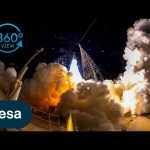
In July 2023 local time, the last Ariane 5 blasted off from Europe’s Spaceport in French Guiana. Relive the moment from up close in this 360° video showing the liftoff and Ariane 5 soaring to orbit.
The audio comes from the camera itself that was clamped to a steel cable on a northern ramp surrounding the Ariane 5 flame trench – about 50 m from the ZL3 launchpad. Despite being so close to the launch pad, the camera was only protected against humidity and rain. A solar panel provided extra power to the camera as it had to record for a long time to capture the liftoff as no people are allowed so close to near the launchpad during the countdown and blastoff.
Europe’s Ariane 5 rocket completed its final flight, placing two payloads – the German aerospace agency DLR’s Heinrich Hertz experimental communications satellite and the French communications satellite Syracuse 4b – into their planned geostationary transfer orbits. Total payload mass at liftoff was about 7700 kg – 7000 kg for the two satellites, and the rest for payload adapters and carrying structures.
The development of the Ariane series of launch vehicles is an expression of Europe’s position, dating to the 1960s, that participation in the new space age demanded an independent launch capability. Several European countries thus joined forces to develop a launch vehicle. This project, called Europa, was ultimately unsuccessful but in 1975 the European Launcher Development Organisation created to oversee it was merged with the European Space Research Organisation to create ESA, which initiated the Ariane programme.
That spirit of co-operation ultimately delivered Ariane 5 and the smaller Vega series of launch vehicles. ESA continues this work with its Member States and industrial partners to meet new market realities with Ariane 6, the newest launch vehicle in the Ariane family.
Credits: ESA-Manuel Pedoussaut
★ Subscribe: http://bit.ly/ESAsubscribe and click twice on the bell button to receive our notifications.
We are Europe’s gateway to space. Our mission is to shape the development of Europe’s space capability and ensure that investment in space continues to deliver benefits to the citizens of Europe and the world. Check out https://www.esa.int/ to get up to speed on everything space related.
The 117th and final launch of Europe’s Ariane 5 rocket capped a series which began in 1996. Commercial, institutional and scientific payloads included such iconic missions as Rosetta, the James Webb Space Telescope and Juice. Seen here is the launch campaign for VA261 on 5 July 2023, to close the Ariane 5 book; onboard were German aerospace agency DLR’s Heinrich Hertz experimental communications satellite and French communications satellite Syracuse 4b.
We are Europe’s gateway to space. Our mission is to shape the development of Europe’s space capability and ensure that investment in space continues to deliver benefits to the citizens of Europe and the world. Check out https://www.esa.int/ to get up to speed on everything space related.
Pearls and seashells are made from the same basic stuff as easily crushed chalk – humble calcium carbonate – so why are they so much tougher? Researchers are taking design tips from the micro-structure of these naturally formed materials to produce stronger, more fracture-resistant ceramics for future space missions.
The project began last year, with samples synthesised at Imperial College’s laboratory and tested at Azimut Space in Germany, with the Materials Testing Centre at Coventry in the UK looking into scaling up production processes.
📹 ESA – European Space Agency 📸 ESA, Dr. Erik Poloni, Airbus Defence and Space SAS 2014 A. Gilbert, University of Glasgow
★ Subscribe: http://bit.ly/ESAsubscribe and click twice on the bell button to receive our notifications.
We are Europe’s gateway to space. Our mission is to shape the development of Europe’s space capability and ensure that investment in space continues to deliver benefits to the citizens of Europe and the world. Check out https://www.esa.int/ to get up to speed on everything space related.
Euclid’s two instruments have captured their first test images. The mesmerising results indicate that the space telescope will achieve the scientific goals that it has been designed for – and possibly much more
Although there are months to go before Euclid delivers its true new view of the cosmos, reaching this milestone means the scientists and engineers behind the mission are confident that the telescope and instruments are working well.
📹 ESA – European Space Agency
★ Subscribe: http://bit.ly/ESAsubscribe and click twice on the bell button to receive our notifications.
We are Europe’s gateway to space. Our mission is to shape the development of Europe’s space capability and ensure that investment in space continues to deliver benefits to the citizens of Europe and the world. Check out https://www.esa.int/ to get up to speed on everything space related.
The summer fire season is well under way in Europe – countries all around the Mediterranean are experiencing record temperatures coupled with huge wildfires that have led to mass evacuations. In this enthralling new ESA documentary, explore how people on the frontline are using space to better monitor and fight the flames.
Follow the incredible stories of the firefighters who dealt with unprecedented fires in Gironde, France, and the forest officers using satellite data to plan for the forests’ recovery. Journey into the heart of Earth’s elemental might and discover how space is changing the game for monitoring volcanic eruptions too – including one of the world’s most studied volcano, Mount Etna.
FIRE is the first episode of ESA’s new series centred around the elements and showcases how Earth observation has become crucial to those fighting climate change on the ground.
Chapters: 00:00 – 11:23 Fighting wildfires in Gironde 11:23 – 24:13 The fire from volcanoes – walking up Mount Etna 24:13 – 31:45 Regenerating the burnt forests and getting ready for the next fire season in Gironde 31:45 – 33:01 Outro
Credits: ESA – European Space Agency
★ Subscribe: http://bit.ly/ESAsubscribe and click twice on the bell button to receive our notifications.
We are Europe’s gateway to space. Our mission is to shape the development of Europe’s space capability and ensure that investment in space continues to deliver benefits to the citizens of Europe and the world. Check out https://www.esa.int/ to get up to speed on everything space related.
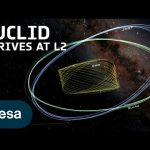
In the month after its launch on 1 July, Euclid has travelled 1.5 million kilometres from Earth towards the Sun-Earth Lagrange point L2, meaning it has ‘arrived’ at its destination orbit.
This animation showcases the orbits of Euclid (green), the James Webb Space Telescope (blue), and the Gaia mission (yellow) around this unique position in space. The positions of the spacecraft in this animation don’t correspond to their current positions in space.
Located about 1.5 million kilometres from Earth in the opposite direction from the Sun, L2 is about four times further away than our Moon. Several other space missions like Webb and Gaia also orbit L2 as it offers the perfect vantage point to study the Universe.
At L2, the spacecraft can keep the Sun, Earth and Moon behind them at all times, so they don’t interfere with observations, while at the same time getting a clear view of deep space and pointing an antenna back to Earth to remain in close communication.
Euclid and Webb’s halo orbit around L2 is big. In terms of distance, the ‘radius’ of Euclid’s orbit varies from about 400 000 kilometres at its closest to the centre, and up to 800 000 kilometres at its furthest. By the time Euclid has completed one full revolution around L2, the Moon will have circled the Earth six times. Gaia orbits L2 in a Lissajous orbit, with a maximum distance of around 350 000 km from its centre.
The region around L2 is big and even though the orbits of these spacecraft seem to cross in the animation, in reality there is plenty of space and a collision can be easily avoided. For example, Webb and Gaia are between 400 000 and 1 100 000 km apart, depending on where they are in their respective orbits.
Video credit: ESA/Gaia/DPAC; CC BY-SA 3.0 IGO
★ Subscribe: http://bit.ly/ESAsubscribe and click twice on the bell button to receive our notifications.
We are Europe’s gateway to space. Our mission is to shape the development of Europe’s space capability and ensure that investment in space continues to deliver benefits to the citizens of Europe and the world. Check out https://www.esa.int/ to get up to speed on everything space related.