Discover how you can participate in ESA programmes as a student, and learn about your entry options once you’ve got your Masters degree. ESA recruitment and education colleagues share some valuable info with you.
Tag: European Space Research And Technology Centre (Organization)
-
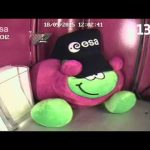
Paxi in the Large Diameter Centrifuge
ESA Education mascot Paxi was placed in a Large Diameter Centrifuge gondola which normally houses researchers’ and students’ experiments at ESA’s ESTEC establishment. As the centrifuge starts spinning, the relative g-levels within the gondola increase and this causes Paxi’s weight to increase. At 20 g, Paxi weighs 20 times what he normally does on Earth. As the centrifuge spins down, the g levels decrease and eventually when the centrifuge stops, return to normal.
-
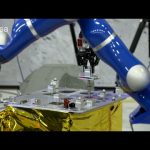
Andreas Mogensen controls ground rover from space
Putting a round peg in a round hole is not hard to do by someone standing next to it. But on 7 September 2015 ESA astronaut Andreas Mogensen did this while orbiting 400 km up aboard the International Space Station, remotely operating a rover and its robotic arm on the ground.
Andreas used a force-feedback control system developed at ESA, letting him feel for himself whenever the rover’s flexible arm met resistance.
These tactile sensations were essential for the success of the experiment, which involved placing a metal peg into a round hole in a ‘task board’ that offered less than a sixth of a millimetre of clearance. The peg needed to be inserted 4 cm to make an electrical connection.
Andreas managed two complete drive, approach, park and peg-in-hole insertions, demonstrating precision force-feedback from orbit for the very first time in the history of spaceflight.
The Interact Centaur rover used in the experiment was based at ESA’s technical centre ESTEC in Noordwijk, the Netherlands. It was designed and built by ESA’s Telerobotics & Haptics Laboratory in collaboration with graduate students from Delft University of Technology.The Interact experiment is a first step towards developing robots that provide their operators with much wider sensory input than currently available. In this way, ESA is literally ‘extending human reach’ down to Earth from space.
Read more on the ESA Portal:
http://www.esa.int/Our_Activities/Space_Engineering_Technology/Slam_dunk_for_Andreas_in_space_controlling_rover_on_ground -
ESTEC: a day in the life
A composite day at ESTEC, the European space research and technology centre, as depicted in time-lapse format.
Located in Noordwijk, the Netherlands, ESTEC is Europe’s largest place for space, the technical heart of the European Space Agency. For almost all European space missions, the path to space leads through ESTEC.
Around 2700 people arrive here for work every day, working on a broad range of space activities from scientific exploration to telecommunications, Earth observation to navigation, robotics to human spaceflight.
A suite of unique laboratories probe every aspect of the space environment, applying decades of hard-won expertise. Seen here is preparation for testing materials in simulated space conditions as well as atomic force microscopy, employing a nanometer-wide tip like a stylus across a record player to reveal surface topography down to the atomic scale.
Full-scale testing of satellites takes place in the ESTEC Test Centre, including the Maxwell Chamber, kept isolated from the external world for precision electromagnetic testing, and the Large Space Simulator, Europe’s largest vacuum chamber used to reproduce the airlessness and temperature extremes encountered in space. The chamber uses large quantities of liquid nitrogen to mimic the chill of deep space.
Erasmus is ESTEC’s human spaceflight facility, supporting researchers in the design and performance of experiments in microgravity conditions. Also based there is ESTEC’s Telerobotics lab – developing methods of remotely controlling robots using force feedback, extending the human sense of touch to space. The lab team are putting the finishing touches to the Interact Centaur rover, a robot designed to be operated remotely by astronauts in orbit.
Want to see more? You can on Sunday 4 October, with your own eyes – register to attend the 2015 ESTEC Open Day! http://www.esa.int/About_Us/ESTEC/See_spacecraft_and_meet_astronauts_at_ESA_s_technical_heart
Credit: ESA–S. Verzier
-
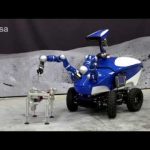
Meet ESA’s Interact Rover
This is the Interact Centaur rover that ESA astronaut Andreas Mogensen will be operating from orbit aboard the International Space Station, to drive into position and then perform an operation requiring sub-millimetre precision.
Developed by ESA’s Telerobotics and Haptics Laboratory, the Interact Centaur is a 4×4 wheeled rover combining a camera head on a neck system, a pair of highly advanced force sensitive robotic arms designed for remote force-feedback-based operation and a number of proximity and localisation sensors.
As demonstrated here, Andreas will first attempt to guide the robot to locate an ‘operations task board’ and then to remove and plug a metal pin into it, which has a very tight mechanical fit and tolerance of only about 150 micrometres, less than a sixth of a millimetre.
As currently scheduled, Monday 7 September should see the Interact rover driven around the grounds of ESA’s ESTEC technical centre in Noordwijk, the Netherlands, from the extremely remote location of Earth orbit, 400 km up.
Signals between the crew and the robot must travel a total distance of approximately ninety thousand kilometres, via a satellite constellation located in geostationary orbit. Despite this distance, Andreas will exactly feel what the robot does on the surface – with only a very slight lag.
-
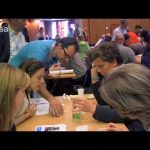
ESA Summer Teachers Workshop
Every summer, ESA’s Education Office welcomes primary and secondary teachers from across Europe to ESA’s European Space Research and Technology Centre, The Netherlands. Over the course of three days, in the heart of ESA’s largest establishment, the teachers engage in a number of workshops about how space can be used as a context for teaching many subjects. Space experts, both from within ESA and outside, guide the teachers through mainly hands-on practical workshop sessions.
Credits: ESA
-
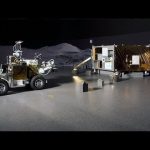
ESA Telerobotics Part 2 – Meteron
In preparation for his 10-day Iriss mission to the International Space Station in September this year, ESA astronaut Andreas Mogensen is at ESA’s technical centre, ESTEC, in Noordwijk, the Netherlands, visiting the Telerobotics and Haptics Laboratory. In this second part of his video diary, Andreas meets Bill Carey to talk about the Meteron project. Andreas will participate in Meteron during his ISS mission.
Connect with Andreas on social media at http://andreasmogensen.esa.int
ESA Telerobotics and Haptics Laboratory http://esa-telerobotics.net/ESA Telerobotics Part 1 – Haptics
https://youtu.be/RkOZe0XVRcgMore videos from Andreas:
https://www.youtube.com/playlist?list=PLbyvawxScNbsCtYE7cHbqq9O6JvA-HPOL -
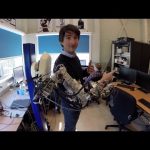
ESA Telerobotics Part 1 – Haptics
In preparation for his 10-day Iriss mission to the International Space
Station in September this year, ESA astronaut Andreas Mogensen is at
ESA’s technical centre, ESTEC, in Noordwijk, the Netherlands, visiting
the Telerobotics and Haptics Laboratory. Andreas catches up with Andre
Schiele, head of the laboratory, to learn more about the robotics
activities he will be participating in during his mission.Connect with Andreas on social media at http://andreasmogensen.esa.int
ESA Telerobotics and Haptics Laboratory http://esa-telerobotics.net/ESA Telerobotics Part 2 – Meteron
http://youtu.be/5Lis9fPXr7EMore videos from Andreas:
https://www.youtube.com/playlist?list=PLbyvawxScNbsCtYE7cHbqq9O6JvA-HPOL -
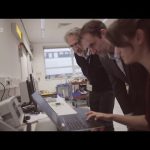
Radiation testing for space
The apparent void of space is actually awash in high-energy particle radiation, which can have just as harmful an effect on delicate satellite components as it does on living tissue. The threat to spacecraft varies greatly based on their orbits.
Ali Zadeh, head of ESA’s Components Space Evaluation and Radiation Effects section explains how electrical, electronic and electro-mechanical (EEE) components – the fundamental building blocks of any space mission – are tested for this harsh environment, assessing their suitability for space.
The Agency’s ESTEC technical centre in Noordwijk, the Netherlands, hosts a Cobalt-60 irradiation facility for highly-penetrating gamma ray testing, supplemented by a network of external European particle accelerator sites for electron, proton and heavy-ion radiation testing.
-

Testing ESA’s Mercury mission
Europe’s Mercury mission is moved through ESA’s ESTEC Test Centre in this new video, positioning it for testing inside the largest vacuum chamber in Europe, for a trial by vacuum.
BepiColombo, Europe’s first mission to study Mercury, is a joint mission with Japan. Two spacecraft – the Mercury Planetary Orbiter and the Mercury Magnetospheric Orbiter – will fly in two different paths around the planet to study it from complementary perspectives.
Flight hardware for the mission is undergoing testing at ESA’s Technical Centre, ESTEC, in Noordwijk, the Netherlands, the largest spacecraft test facility in Europe, to prepare for its 2016 launch.
The Mercury Planetary Orbiter was placed inside the chamber in late October for ‘thermal–vacuum’ testing. It will sit in vacuum until early December, subjected to the equivalent temperature extremes that will be experienced in Mercury orbit.
Liquid nitrogen runs through the walls of the chamber to recreate the chill of empty space, while an array of lamps focuses simulated sunlight 10 times more intense than on Earth.
-
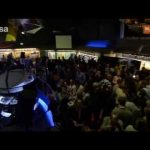
ESA’s technical heart celebrates Rosetta’s Philae landing
Celebrating the landing of Rosetta’s Philae lander on 67P/Churyumov–Gerasimenko at ESA’s technical heart. Along with the main Rosetta landing event taking place at ESA’s ESOC control centre, many other events took place all across Europe. More than a quarter of a century in the making, the Rosetta comet-chaser had been designed, planned and finally tested at ESTEC – ESA’s largest establishment, based in Noordwijk, the Netherlands – in advance of its 2004 launch.
More than 450 external guests, media representatives and Agency personnel gathered together at SpaceExpo, ESTEC’s visitor centre, to follow the nail-biting Philae landing during the afternoon and evening of Wednesday 12 November 2014. ESTEC Director Franco Ongaro presided over the gathering, which was also attended by ESA astronaut André Kuipers, Rob van Hassel of Airbus Defence and Space Netherlands – who detailed the Dutch contributions to Rosetta – as well as comet expert Inge Loes ten Kate from Utrecht University.
-
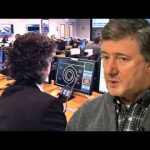
Working in the Concurrent Design Facility
Massimo Bandecchi speaks about the work being done in ESA’s Concurrent Design Facility (CDF). The CDF is a state-of-the-art facility equipped with a network of computers, multimedia devices and software tools, which allows a team of experts from several disciplines to apply the concurrent engineering method to the design of future space missions.
Interested to work here as a trainee? Vacancy posts for Young Graduate Trainees (YGTs) go online once a year in mid-November, and stay open for one month. About 80 YGT job offers will open, aimed at engineers, physicists, biologists or medical graduates, but also business graduates and lawyers.
More information on our Careers website:
http://www.esa.int/About_Us/Careers_at_ESA/Young_Graduate_Trainees -

ESA-ESTEC Open Day 2014
Sunday 5 October saw thousands of visitors converge on the European Space Agency’s technical heart for its annual Open Day. Touring across the site, they met astronauts, viewed spacecraft and inspected test facilities – and came face to face with a spectacular new world.
-
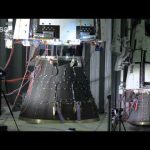
IXV separation test
ESA’s Intermediate eXperimental Vehicle, IXV, is put to the test at ESA’s technical centre, ESTEC, in the Netherlands. During the actual flight, at an altitude of 320 km, a pyrotechnic device will fire to open a clamp band for springs to push IXV away from the upper stage. This test shows mission planners that it can withstand the mechanical shock of the pyrotechnic detonation, mimicking the moment the craft separates from the Vega rocket.
To be launched on Vega in early November 2014, IXV will test in flight the technologies and critical systems for Europe’s future automated re-entry vehicles returning from low orbit.
-
Measuring ESA’s IXV spaceplane
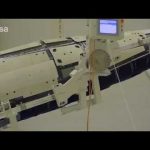
ESA’s Intermediate eXperimental Vehicle, IXV, is tilted and turned along and around all three axes at ESA’s Technical Centre, ESTEC, in the Netherlands to measure its centre of gravity and moments of inertia, because both influence its flying characteristics.
To be launched on Vega in early November 2014, IXV will flight-test the technologies and critical systems for Europe’s future automated reentry vehicles returning from low orbit.
-
Are we there yet?
After a 10-year journey, Rosetta and Philae are impatient to arrive at their destination!
In July 2014, the public were invited to join the “Rosetta, are we there yet?” campaign, a photo contest to support the last leg of the spacecraft’s epic 10-year voyage to comet 67P/Churyumov–Gerasimenko.
This video is also available in the following languages:
German: https://youtu.be/MbsJ04OF4K8
Spanish: https://youtu.be/caHYr3m-QLc
French: https://youtu.be/7Xuxy0s6QEY
Italian: https://youtu.be/z_qN3HdLPzMMore videos in the series are available in this playlist:
https://www.youtube.com/playlist?list=PLbyvawxScNbui_Ncl9uQ_fXLOjS4sNSd8Credits: ESA/Design & Data
#Rosettaarewethereyet
-

ESA ESTEC Large Diameter Centrifuge
Video of the ESA ESTEC LDC from the central gondola, accelerating and decelerating.
Credits: Life & Physical Science, Instrumentation and Life Support Laboratory, TEC-MMG Department