🚩 If you like what you see, consider supporting my work on Patreon and you get ad-free early access to my videos for as little as $1 https://www.patreon.com/historymarche — You can also show your support by subscribing to the channel and liking the video. Thank you for watching.
📢 Narrated by David McCallion
🎼 Music: EpidemicSound Filmstro
📚 Sources: The Gibraltar Crusade: Castile and the Battle for the Strait – Joseph F. O’Callaghan (2011) The Reconquista: The History and Legacy of the Conflicts Between the Moors and Christians on the Iberian Peninsula – Charles River Editors (2018) The Reconquest of Spain – Derek Lomax (1978) The Portuguese in the Age of Discovery 1340-1665 – David Nicolle (2012)
🚩 If you like what you see, consider supporting my work on Patreon and you get ad-free early access to my videos for as little as $1 https://www.patreon.com/historymarche — You can also show your support by subscribing to the channel and liking the video. Thank you for watching.
The Battle of Ourique is a defining moment in the history of Portugal, as it was here that Afonso Henriques was on July 25, 1139, proclaimed the first King of Portugal by his troops after defeating the Moorish army. The significance of the battle of Ourique cannot be overstated for it secured the founding of the Kingdom of Portugal.
The five blue shields at the very centre of the flag of Portugal represent the five Moorish kings that were defeated by Portugal’s first King Afonso Henriques in the battle of Ourique 1139. The white central shield is the personal armor of this same King and was said to have been given to him in a vision of the crucified Christ on the eve of battle.
📢 Narrated by David McCallion
🎼 Music: EpidemicSound Filmstro
📚 Sources: The Reconquest Kings of Portugal: Political and Cultural Reorientation on the Medieval Frontier – Stephen Lay (2008) Between Silences: The Coronation of Portuguese Medieval Kings (12th–14th Centuries) – Carla Varela Fernandes (2020) The Teaching of military history at Portuguese universities: Pride and Prejudice – João Gouveia Monteiro (2021) The History of Medieval Portugal in the Deducao cronologica analitica – Filipe Alves Moreira (2022) The Kingdom of León-Castilla under King Alfonso VII, 1126–1157 – Bernard F. Reilly (1998) Between God and the King: The world of military orders – Isabel Cristina Ferreira Fernandes (2018) A History of Portugal and the Portuguese Empire, volume I, Cambridge University Press – Anthony Disney (2009) The Reconquista and Its Legacy, 1000-1348 – António Henriques (2017) Fantastic Stories of the History of Portugal – João Ferreira (2010)
Correction: 10:48 The location of the battle is heavily debated. Contemporary sources said that they do not know where the battle took place, only that it took place on “fields near Ourique”. But today many historians argue that Alfonso couldn’t lead a full military campaign in Alentejo with his limited resources, so deep in Muslim territory (he was only a count with a small realm). A more plausible location is suggested near Vila Chã de Ourique, which was closer to Portugal’s traditional lands. Nevertheless, historians are divided between Ourique in Alentejo and Vila Chã de Ourique further north – my opinion is that Vila Chã de Ourique is much more plausible.
🚩 Visit https://betterhelp.com/historymarche or use “historymarche” when you sign up to get a special discount on your first month of therapy with our sponsor BetterHelp. 🚩 If you have any questions about the brand relating to how the therapists are licensed, their privacy policy, or therapist compensation model, check out this FAQ: https://www.betterhelp.com/your-questions-answered/
🚩 If you like what you see, consider supporting my work on Patreon and you get ad-free early access to my videos for as little as $1 https://www.patreon.com/historymarche — You can also show your support by subscribing to the channel and liking the video. Thank you for watching.
🚩 In early 13th century, crusade was a new concept in Iberia, just beginning to take hold and influence their approach to the regular warfare with their Muslim neighbors. However, the clash at Las Navas helped to solidify and expand the acceptance of crusade ideology in the minds of the Iberian Christians in the ensuing years. This was a turning point in the age of Reconquista…
📢 Narrated by David McCallion
🎼 Music: EpidemicSound Filmstro
📚 Sources Joseph F. O’Callaghan – A History of Medieval Spain Joseph F. O’Callaghan – Reconquest and Crusade in Medieval Spain George F. Nafziger, Mark W. Walton – Islam at War: A History Kenneth M. Setton et. al. – A History of the Crusades Vol. II: The Later Crusades
🚩 This video was produced in collaboration with Bulgarian Empire Mapping, check out their channel and give them the credit that they deserve! https://www.youtube.com/channel/UCD-0LPbxri4fSvd0UoisIfg – Big shout to BEM for collaborating with us on this video!
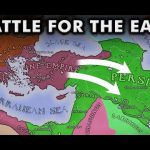
🚩 Heraclius’ campaigns are an example of an indirect approach to war strategy. And although his gains would be swiftly lost in the wake of the Muslim Conquest, the method by which they were achieved would remain a point of pride in Byzantine military history.
📜 Sources: Howard-Johnston J. The Last Great War of Antiquity. Oxford University Press 2021. Kaegi W. Heraclius Emperor of Byzantium. Cambridge University Press 2003. Daryaee T. Sasanian Persia. IB Tauris 2009. Kaegi W. Byzantine Military Unrest 471-843. Adolf M Hakkert 1981. Kardaras G. Byzantium and the Avars, 6th-9th Century AD. Brill 2019. Luttwak E. The Grand Strategy of the Byzantine Empire. Belknap Press of Harvard University Press 2009. Pohl W. The Avars. Cornell University Press 2018. Pourshariati P. Decline and Fall of the Sasanian Empire. IB Tauris 2008. Reinink G, Stolte B (eds.). The Reign of Heraclius (610-641). Peeters 2002. Maksymiuk K. Geography of Roman-Iranian Wars. Uniwersytet Przyrodniczo-Humanistyczny w Siedlcach, Siedlce 2015. Greatrex G, Lieu S. The Roman Eastern Frontier and the Persian Wars: Part II AD 363-630. Routledge 2002.
Designer babies, the end of diseases, genetically modified humans that never age. Outrageous things that used to be science fiction are suddenly becoming reality. The only thing we know for sure is that things will change irreversibly.
Thanks to Volker Henn, James Gurney and (prefers anonymity) for help with this video!
THANKS A LOT TO OUR LOVELY PATRONS FOR SUPPORTING US:
Jeffrey Schneider, Konstantin Kaganovich, Tom Leiser, Archie Castillo, Russell Eishard, Ben Kershaw, Marius Stollen, Henry Bowman, Ben Johns, Bogdan Radu, Sam Toland, Pierre Thalamy, Christopher Morgan, Rocks Arent People, Ross Devereux, Pascal Michaud, Derek DuBreuil, Sofia Quintero, Robert Swiniarski, Merkt Kızılırmak, Michelle Rowley, Andy Dong, Saphir Patel, Harris Rotto, Thomas Huzij, Ryan James Burke, NTRX, Chaz Lewis, Amir Resali, The War on Stupid, John Pestana, Lucien Delbert, iaDRM, Jacob Edwards, Lauritz Klaus, Jason Hunt, Marcus : ), Taylor Lau, Rhett H Eisenberg, Mr.Z, Jeremy Dumet, Fatman13, Kasturi Raghavan, Kousora, Rich Sekmistrz, Mozart Peter, Gaby Germanos, Andreas Hertle, Alena Vlachova, Zdravko Šašek
SOURCES AND FURTHER READING:
The best book we read about the topic: GMO Sapiens
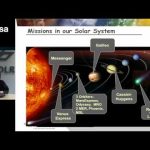
In this introductory lecture, Dr. Gerda Horneck of the DLR Institute of Aerospace Medicine in Cologne describes Astrobiology as a newly emerging field of science.
Astrobiology comprises the study of the overall pattern of chemical evolution of potential precursors of life, in the interstellar medium, and on the planets and small bodies of our solar system. Astrobiology also consists of studying the history of life on Earth back to its roots, deciphering the environments of planets in our solar system and of their satellites and searching for other planetary systems in our Galaxy.
Hereby, Astrobiology provides clues to the understanding of the origin, evolution and distribution of life and its interaction with the environment, here on Earth and in the Universe.
Learn more about Steve at https://www.stevespanglerscience.com/ Through the years, a lot has happened at Steve Spangler Science. We set a Guinness World Record, took 100 teachers on an Alaskan cruise, gave 700 people the experience of laying on a bed of nails, started a war with potato guns, and even had the police called on us… a few times! Here is a look at a few of the fun moments we’ve had!
Judson Laipply, the Evolution of Dance guy, teams up with Steve Spangler, the science guy from the Ellen Show, to see what happens when you mix science and dance. Judson recently visited the Spangler Labs to get some personal tips on shooting potatoes and launching trash cans while giving Steve Spangler some ideas for adding dance to his science lessons.
Steve Spangler is well-known for his Mentos and Diet Coke experiments, but his true passion is to make science fun. Spangler conducts hands-on science training boot camps for teachers throughout the country. His popular line of science toys and educational products help parents and teachers engage kids in their own learning. Visit http://www.stevespanglerscience.com/
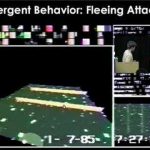
This presentation is about a potential shortcut to artificial intelligence by trading mind-design for world-design using artificial evolution. Evolutionary algorithms are a pump for turning CPU cycles into brain designs. With exponentially increasing CPU cycles while our understanding of intelligence is almost a flat-line, the evolutionary route to AI is a centerpiece of most Kurzweilian singularity scenarios. This talk introduces the Polyworld artificial life simulator as well as results from our ongoing attempt to evolve artificial intelligence and further the Singularity.
Polyworld is the brain child of Apple Computer Distinguished Scientist Larry Yaeger, who remains the primary developer of Polyworld:
Speaker: Virgil Griffith
Virgil Griffith is a first year graduate student in Computation and Neural Systems at the California Institute of Technology. On weekdays he studies evolution, computational neuroscience, and artificial life. He did computer security work until his first year of university when his work got him sued for sedition and espionage. He then decided that security was probably not safest field to be in and he turned his life to science.