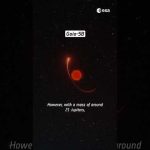
Using data from the European Space Agency’s Gaia mission, scientists have found a huge exoplanet and a brown dwarf. This is the first time a planet has been uniquely discovered by Gaia’s ability to sense the gravitational tug or ‘wobble’ the planet induces on a star. Both the planet and brown dwarf are orbiting low-mass stars, a scenario thought to be extremely rare.
📹 ESA – European Space Agency 📸 ESA/Gaia/DPAC/M. Marcussen
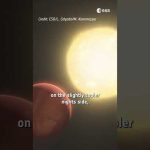
Scientists might have just found the first glory on a world outside our Solar System! “Glory” are colourful concentric rings of light that occur only under peculiar conditions. If confirmed, this finding could shed light on the mysterious atmosphere of the scorching hot gas giant WASP-76b.
More than 5000 exoplanets have been discovered to date, but what do they look like? ESA’s dedicated exoplanet missions Cheops, Plato and Ariel are on a quest to find out. Cheops will focus its search on mini-Neptunes, planets with sizes between Earth and Neptune, on short orbits around their stars. Cheops will find out how large these planets are, and may detect whether the planets have clouds. Plato will look at all kinds of exoplanets and determine their sizes and ages. Plato’s instruments are so sensitive it may discover the first Earth-like planet on an Earth-like orbit. Finally, Ariel will look at the atmospheres of exoplanets using the technique of transmission spectroscopy and discover what they are made of. Together these missions will discover what exoplanets and their systems look like and they will also reveal how special our own Solar System is.
We are Europe’s gateway to space. Our mission is to shape the development of Europe’s space capability and ensure that investment in space continues to deliver benefits to the citizens of Europe and the world. Check out https://www.esa.int/ to get up to speed on everything space related.
Earth is the only place in the universe that is known to host life. When examining exoplanets and defining the possible conditions for habitability, scientists try to identify similar conditions to Earth, like temperature. Join Laetitia Delrez, Exoplanet Researcher at the University of Liege, and discover how to determine if two mysterious exoplanets, KELT-3b and TOI-560c, could be habitable from their temperatures.
This video has been developed in the context of the first ever ESA Education hackathon for secondary students: “Hack an Exoplanet”. This educational activity allows students to use real satellite data to investigate alien worlds and become exoplanet detectives for a day.
We are Europe’s gateway to space. Our mission is to shape the development of Europe’s space capability and ensure that investment in space continues to deliver benefits to the citizens of Europe and the world. Check out https://www.esa.int/ to get up to speed on everything space related.
Earth is the only place in the universe that is known to host life. When examining exoplanets and defining the possible conditions for habitability, scientists try to identify similar conditions to Earth, like temperature. Join Laetitia Delrez, Exoplanet Researcher at the University of Liege, and discover how to determine if two mysterious exoplanets, KELT-3b and TOI-560c, could be habitable from their temperatures.
This video has been developed in the context of the first ever ESA Education hackathon for secondary students: “Hack an Exoplanet”. This educational activity allows students to use real satellite data to investigate alien worlds and become exoplanet detectives for a day.
We are Europe’s gateway to space. Our mission is to shape the development of Europe’s space capability and ensure that investment in space continues to deliver benefits to the citizens of Europe and the world. Check out https://www.esa.int/ to get up to speed on everything space related.
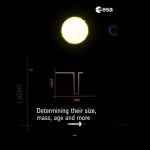
When an exoplanet passes in front of its star, known as a transit, there is a dip in the light received from the star. Join Cheops Project Scientist, Maximillian Guenther, to learn how to measure the depth of the dip in the transit light curve data and discover how to determine the size of two exoplanet targets: KELT-3b and TOI-560c.
This video has been developed in the context of the first ever ESA Education hackathon for secondary students: “Hack an Exoplanet”. This educational activity allows students to use real satellite data to investigate alien worlds and become exoplanet detectives for a day.
We are Europe’s gateway to space. Our mission is to shape the development of Europe’s space capability and ensure that investment in space continues to deliver benefits to the citizens of Europe and the world. Check out https://www.esa.int/ to get up to speed on everything space related.
Astronomers use specific software and tools to analyse satellite data. Join Cheops Project Scientist, Maximillian Guenther, in this step-by-step guide on using allesfitter to fit the best model fit to Cheops exoplanet data and begin analysing two mysterious exoplanets: KELT-3b and TOI-560c.
This video has been developed in the context of the first ever ESA Education hackathon for secondary students: “Hack an Exoplanet”. This educational activity allows students to use real satellite data to investigate alien worlds and become exoplanet detectives for a day.
We are Europe’s gateway to space. Our mission is to shape the development of Europe’s space capability and ensure that investment in space continues to deliver benefits to the citizens of Europe and the world. Check out https://www.esa.int/ to get up to speed on everything space related.
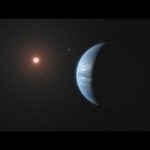
Researchers have found evidence for the existence of a new type of planet they have called a “water world,” where water makes up a large fraction of the entire planet. These worlds, discovered in a planetary system 218 light-years away, are unlike any planets in our Solar System.
📹 @europeanspaceagency 🖥️ @nasa , ESA, L. Hustak
★ Subscribe: http://bit.ly/ESAsubscribe and click twice on the bell button to receive our notifications.
We are Europe’s gateway to space. Our mission is to shape the development of Europe’s space capability and ensure that investment in space continues to deliver benefits to the citizens of Europe and the world. Check out https://www.esa.int/ to get up to speed on everything space related.
Researchers have confirmed the presence of an exoplanet, a planet that orbits another star, using James Webb Space Telescope for the first time. Formally classified as LHS 475 b, the planet is almost exactly the same size as our own, clocking in at 99% of Earth’s diameter.
Among all operating telescopes, only Webb is capable of characterising the atmospheres of Earth-sized exoplanets. The team attempted to assess what is in the planet’s atmosphere by analysing its transmission spectrum. Although the data show that this is an Earth-sized terrestrial planet, they do not yet know if it has an atmosphere.
Webb also revealed that the planet is a few hundred degrees warmer than Earth, so if clouds are detected it may lead the researchers to conclude that the planet is more like Venus, which has a carbon dioxide atmosphere and is perpetually shrouded in thick cloud.
📹 @EuropeanSpaceAgency 🖥️ @NASA , ESA, @canadianspaceagency , L. Hustak
★ Subscribe: http://bit.ly/ESAsubscribe and click twice on the bell button to receive our notifications.
We are Europe’s gateway to space. Our mission is to shape the development of Europe’s space capability and ensure that investment in space continues to deliver benefits to the citizens of Europe and the world. Check out https://www.esa.int/ to get up to speed on everything space related.
While Webb and other space telescopes, including the NASA/ESA Hubble Space Telescope, have previously revealed isolated ingredients of this heated planet’s atmosphere, the new readings provide a full menu of atoms, molecules, and even signs of active chemistry and clouds. The latest data also give a hint of how these clouds might look up close: broken up rather than as a single, uniform blanket over the planet.
📹 @EuropeanSpaceAgency
📸 @NASA, ESA, @canadianspaceagency , J. Olmsted (STS)
★ Subscribe: http://bit.ly/ESAsubscribe and click twice on the bell button to receive our notifications.
We are Europe’s gateway to space. Our mission is to shape the development of Europe’s space capability and ensure that investment in space continues to deliver benefits to the citizens of Europe and the world. Check out https://www.esa.int/ to get up to speed on everything space related.
Clever space detectives, we need your help! We’ve got a case on our hands, of two mysterious exoplanets, and we need your help to profile them. Find out how you can use real satellite data to investigate an alien planet and become an exoplanet detective in the first ever ESA Education student hackathon.
Join us for this exciting new event featuring experts such as Didier Queloz, the 2019 Nobel Laureate in Physics and Kate Isaak, ESA project scientist for the Cheops mission.
We are Europe’s gateway to space. Our mission is to shape the development of Europe’s space capability and ensure that investment in space continues to deliver benefits to the citizens of Europe and the world. Check out https://www.esa.int/ to get up to speed on everything space related.
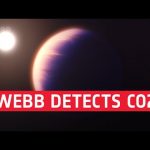
A transmission spectrum of the hot gas giant exoplanet WASP-39 b, captured by Webb’s Near-Infrared Spectrograph on 10 July 2022, reveals the first definitive evidence for carbon dioxide in the atmosphere of a planet outside the Solar System. This is the first detailed transmission spectrum ever captured that covers wavelengths between 3 and 5.5 microns.
We are Europe’s gateway to space. Our mission is to shape the development of Europe’s space capability and ensure that investment in space continues to deliver benefits to the citizens of Europe and the world. Check out https://www.esa.int/ to get up to speed on everything space related.
Webb’s first observations were selected by a group of representatives from NASA, ESA, CSA, and the Space Telescope Science Institute:
– WASP-96b: Webb’s detailed observation of this hot, puffy planet outside our solar system reveals the clear signature of water, along with evidence of haze and clouds that previous studies of this planet did not detect. With Webb’s first detection of water in the atmosphere of an exoplanet, it will now set out to study hundreds of other systems to understand what other planetary atmospheres are made of.
– Carina Nebula: Webb’s look at the ‘Cosmic Cliffs’ in the Carina Nebula unveils the earliest, rapid phases of star formation that were previously hidden. Looking at this star-forming region in the southern constellation Carina, as well as others like it, Webb can see newly forming stars and study the gas and dust that made them.
– Southern Ring: This planetary nebula, an expanding cloud of gas that surrounds a dying star, is approximately 2,000 light years away. Here, Webb’s powerful infrared eyes bring a second dying star into full view for the first time. From birth to death as a planetary nebula, Webb can explore the expelling shells of dust and gas of aging stars that may one day become a new star or planet.
– Stephan’s Quintet: Webb’s view of this compact group of galaxies, located in the constellation Pegasus, pierced through the shroud of dust surrounding the center of one galaxy, to reveal the velocity and composition of the gas near its supermassive black hole. Now, scientists can get a rare look, in unprecedented detail, at how interacting galaxies are triggering star formation in each other and how the gas in these galaxies is being disturbed.
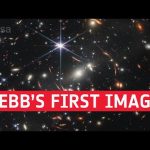
– SMACS 0723: Webb has delivered the deepest and sharpest infrared image of the distant Universe so far – and in only 12.5 hours. This new image, a color composite of multiple exposures each about two hours long, is approximately the size of a grain of sand held at arm’s length. This deep field uses a lensing galaxy cluster to find some of the most distant galaxies ever detected. This image only scratches the surface of Webb’s capabilities in studying deep fields and tracing galaxies back to the beginning of cosmic time.
We are Europe’s gateway to space. Our mission is to shape the development of Europe’s space capability and ensure that investment in space continues to deliver benefits to the citizens of Europe and the world. Check out https://www.esa.int/ to get up to speed on everything space related.
A superhero team of space telescopes has been working tirelessly to discover exoplanets and unveil their secrets. Now, a new superhero joins the team—the James Webb Space Telescope. What will it find?
Over the past few decades, a team of now legendary space telescopes has been on a mission of exploration. Hubble, Chandra, Spitzer, Kepler, TESS and now, the Webb telescope all have powers to discover exoplanets or to tell us more about them.
Many of their “super powers,” of course, go far beyond detecting exoplanets. Hubble can look deep into the cosmic past, seeing light from the early universe and some of the most distant stars and galaxies ever observed. The Chandra X-ray Observatory, like Hubble one of NASA’s “Great Observatories,” examines the universe in X-rays. That has allowed it to peer into the tatters of exploded stars and the edges of our galaxy’s central, supermassive black hole.
Another Great Observatory, the Spitzer Space Telescope, viewed the cosmos in infrared light, observing structural details of disks around stars and the faint glow of distant galaxies.
Kepler and TESS, meanwhile, took on exoplanets as their main mission, both employing the transit method – searching for tiny dips in starlight as a planet crosses, or “transits,” the face of its star. TESS is still looking for new worlds!
Each telescope can reveal something different when studying the same planet. The James Webb Space Telescope will give us a closer look at exoplanets, and will be able to tell us something new.
When we describe different types of exoplanets – planets outside our solar system – what do we mean by “hot Jupiters,” “warm Neptunes,” and “super-Earths”? Since we’re still surveying and learning about the variety of worlds out there among the stars, it’s sometimes helpful to refer to characteristics they share with planets we’re familiar with in our own planetary system.
Is there a planet like our Earth out there? Scientists have discovered over 4000 exoplanets, or planets outside of our Solar System, that ESA’s CHEOPS satellite will study in depth. Project scientist Kate Isaak discusses the types of exoplanets discovered and what we can learn from them.
We are Europe’s gateway to space. Our mission is to shape the development of Europe’s space capability and ensure that investment in space continues to deliver benefits to the citizens of Europe and the world. Check out http://www.esa.int/ESA to get up to speed on everything space related.
We are Europe’s gateway to space. Our mission is to shape the development of Europe’s space capability and ensure that investment in space continues to deliver benefits to the citizens of Europe and the world. Check out http://www.esa.int/ESA to get up to speed on everything space related.
What is ESA’s Characterising Exoplanet Satellite, Cheops, and how will it improve our knowledge of exoplanets? Find out more in this interview with Kate Isaak, ESA Cheops project scientist.
We are Europe’s gateway to space. Our mission is to shape the development of Europe’s space capability and ensure that investment in space continues to deliver benefits to the citizens of Europe and the world. Check out http://www.esa.int/ESA to get up to speed on everything space related.
We are Europe’s gateway to space. Our mission is to shape the development of Europe’s space capability and ensure that investment in space continues to deliver benefits to the citizens of Europe and the world. Check out http://www.esa.int/ESA to get up to speed on everything space related.
Alăturați-vă lui Paxi într-o călătorie dincolo de sistemul nostru solar. În acest videoclip, destinat copiilor cu vârste cuprinse între 6 și 12 ani, Paxi explorează planetele extrasolare.
★ Subscribe: http://bit.ly/ESAsubscribe and click twice on the bell button to receive our notifications.
We are Europe’s gateway to space. Our mission is to shape the development of Europe’s space capability and ensure that investment in space continues to deliver benefits to the citizens of Europe and the world. Check out http://www.esa.int/ESA to get up to speed on everything space related.
We are Europe’s gateway to space. Our mission is to shape the development of Europe’s space capability and ensure that investment in space continues to deliver benefits to the citizens of Europe and the world. Check out http://www.esa.int/ESA to get up to speed on everything space related.
Kom med Paxi på en rejse ud af vores solsystem. I denne video, som er beregnet til børn i alderen fra 6 til 12 år, udforsker Paxi ekstrasolare planeter.
★ Subscribe: http://bit.ly/ESAsubscribe and click twice on the bell button to receive our notifications.
We are Europe’s gateway to space. Our mission is to shape the development of Europe’s space capability and ensure that investment in space continues to deliver benefits to the citizens of Europe and the world. Check out http://www.esa.int/ESA to get up to speed on everything space related.
Připojte se k Paximu na cestě za hranice naší sluneční soustavy. V tomto videu určeném pro děti ve věku od 6 do 12 let zkoumá Paxi extrasolární planety.
★ Subscribe: http://bit.ly/ESAsubscribe and click twice on the bell button to receive our notifications.
We are Europe’s gateway to space. Our mission is to shape the development of Europe’s space capability and ensure that investment in space continues to deliver benefits to the citizens of Europe and the world. Check out http://www.esa.int/ESA to get up to speed on everything space related.
We are Europe’s gateway to space. Our mission is to shape the development of Europe’s space capability and ensure that investment in space continues to deliver benefits to the citizens of Europe and the world. Check out http://www.esa.int/ESA to get up to speed on everything space related.
ESA’s first mission dedicated to investigating planets outside our solar system is scheduled for launch on a Soyuz rocket from the European spaceport in French Guiana on 17 December 2019.
Cheops – Characterising ExOPlanet Satellite – will study known exoplanets that are orbiting bright stars. The aim is to obtain detailed information about these planets to find out more about their composition and internal structure.
The mission is a partnership between ESA and Switzerland with additional contributions from Austria, Belgium, France, Germany, Hungary, Italy, Portugal, Spain, Sweden and the UK.
We are Europe’s gateway to space. Our mission is to shape the development of Europe’s space capability and ensure that investment in space continues to deliver benefits to the citizens of Europe and the world. Check out http://www.esa.int/ESA to get up to speed on everything space related.
Hubble makes an exoplanet discovery, the next space station crew gets ready to launch, and back to work in Florida after weathering the storm … a few of the stories to tell you about – This Week at NASA!
This video is available for download from NASA’s Image and Video Library: https://images.nasa.gov/details-NHQ_2019_0913_An%20Exoplanet%20Discovery%20from%20Hubble%20on%20This%20Week%20@NASA%20%E2%80%93%20September%2013,%202019.html
Revisit the April 18, 2018, launch of NASA’s Transiting Exoplanet Survey Satellite (TESS) aboard a SpaceX Falcon 9 rocket. TESS is already scanning the skies, identifying planet candidates that may be orbiting distant stars. https://go.nasa.gov/2Q3J9ei
TESS is NASA’s next step in the search for planets outside of our solar system, including those that could support life. The mission will find exoplanets that periodically block part of the light from their host stars, events called transits. TESS will survey 200,000 of the brightest stars near the sun to search for transiting exoplanets.
In this edition of Space, Euronews correspondent Jeremy Wilks reports from the Observatory of Geneva – home to experts in exoplanets, the name given to planets outside our solar system.
So far they have managed to find more than 3500, but they believe there could be literally billions of them across the Milky Way.
The first exoplanet to be discovered was what’s known as a hot Jupiter, a giant gas planet orbiting close to its star. That discovery, made by University of Geneva professor Michel Mayor in 1995, kick-started a revolution in astronomy, one which at the time of our interview put the number of exoplanets at 3559 and counting.
Dans Space, Jérémy Wilks vous emmène ce mois-ci à l’observatoire de Genève, la “maison” des experts en exoplanètes, ces planètes qui sont en dehors de notre système solaire. A ce jour, 3.559 d’entre elles ont été découvertes, mais les scientifiques pensent qu’il en existe des millions dans la Voie Lactée.
La première exoplanète qui a été découverte est une planète géante gazeuse similaire à Jupiter, en orbite autour de son étoile. Cette découverte, faite en 1995 par le professeur Michel Mayor de l’Université de Genève, a donné le coup d’envoi d’une révolution en astronomie. Une révolution qui part de l’existence prouvée d’une exoplanète, à la découverte de 3.559 exoplanètes aujourd’hui.
Az exobolygók, vagyis a Naprendszeren kívüli bolygók keresése azon az emberi álmon alapszik, hogy a homo sapiens valaha elhagyhatja a Földet, és új hazát fog keresni. A bolygókat megtalálni azonban rendkívül nehéz, hiszen nem bocsátanak ki fényt, és olyan messze vannak, hogy a legerősebb távcsővel sem láthatók. Ezért sokáig a létezésükre sem volt bizonyíték.
Az első felfedezett exobolygó egy hatalmas gázbolygó volt, a genfi egyetemi professzor, Michel Mayor és csapatának 1995-ös felfedezése forradalmat hozott a csillagászatban. Húsz év alatt egyetlen exobolygótól eljutottunk 3599-ig.
A team of planet hunters led by astronomers at the University of California (UC), Santa Cruz and the Carnegie Institution of Washington has announced the discovery of a planet orbiting a nearby star, Gliese 581, at a distance that places it squarely in the middle of the star’s “habitable zone.” This would be the most Earth-like exoplanet and the first truly habitable one yet discovered. The research was supported by grants from NASA and the National Science Foundation. “Goldilocks” refers to an exoplanet whose temperatures are “not too cold, not too hot, but just right” to maintain water and support Earth-like life.