NASA’s Commercial Lunar Payload Services (CLPS) initiative allows NASA to send science investigations and technology demonstrations to the lunar surface. Under Artemis, NASA will study more of the Moon than ever before, and CLPS will demonstrate how NASA is working with commercial companies to achieve robotic lunar exploration.
NASA astronaut Victor Glover served as the pilot on NASA’s SpaceX Crew-1 mission and spent six months on the International Space Station, where he worked on scientific investigations, technology demonstrations, and completed four spacewalks. He’ll speak live from the Smithsonian National Museum of African American History and Culture about preparing to be an astronaut, his recent mission, and the future of space travel including Artemis missions to the Moon.
As part of Agenda 2025, ESA will take preparatory steps towards a sample return mission from the moons of giant planets, and will foster innovation by challenging commercial companies to develop a next generation of competitively priced European space transportation systems.
Space science and planetary exploration have a unique inspirational power for engaging young generations in science, technology, engineering and maths, creating a highly educated workforce for the future.
Collaborating with the European space industry to foster innovation generates economic growth and new revenues, as well as creating new jobs for European citizens. All the money invested in space is spent on Earth.
We are Europe’s gateway to space. Our mission is to shape the development of Europe’s space capability and ensure that investment in space continues to deliver benefits to the citizens of Europe and the world. Check out https://www.esa.int/ to get up to speed on everything space related.
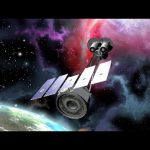
By studying X-rays in deep space, we can learn about some of the most violent and extreme objects in the universe, such as black holes and the remains of stars that have exploded. NASA’s Imaging X-Ray Polarimetry Explorer, IXPE, will study these phenomena in a new way. Learn more in this episode of #EZScience, starring NASA associate administrator for science Dr. Thomas Zurbuchen and Smithsonian Under Secretary for Science and Research Dr. Ellen Stofan.
IXPE is set to launch Dec. 9 at 1:00 a.m. EST (06:00 UTC) from NASA’s Kennedy Space Center. Watch the live broadcast: https://youtu.be/JGij0x0PA_Q
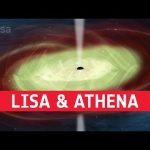
In this video, our scientists Paul McNamara and Matteo Guainazzi explain how we could combine the observing power of two of our future missions, LISA and Athena, to study these cosmic clashes and their mysterious aftermath for the first time.
LISA, the Laser Interferometer Space Antenna, will be the first space-borne observatory of gravitational waves – fluctuations in the fabric of spacetime produced by the acceleration of cosmic objects with very strong gravity fields, like pairs of merging black holes. Athena, the Advanced Telescope for High-ENergy Astrophysics, will be the largest X-ray observatory ever built, investigating some of the hottest and most energetic phenomena in the cosmos with unprecedented accuracy and depth. Currently in the study phase, both missions are scheduled for launch in the early 2030s.
Credits: Event Horizon Telescope Collaboration (black hole image); NASA, ESA and F. Summers, STScI (Hubble Ultra Deep Field flythrough and galaxy merger); Simulating eXtreme Spacetimes Project (gravitational waves and merging black holes); NASA’s Goddard Space Flight Centre (spiralling supermassive black holes); AEI/Milde Science Communication/exozet (LISA orbit sequence); ESA/Hubble, NASA, M. Kornmesser
★ Subscribe: http://bit.ly/ESAsubscribe and click twice on the bell button to receive our notifications.
We are Europe’s gateway to space. Our mission is to shape the development of Europe’s space capability and ensure that investment in space continues to deliver benefits to the citizens of Europe and the world. Check out http://www.esa.int/ESA to get up to speed on everything space related.
Right now the Cassini spacecraft is flying between the rings of Saturn and the planet itself, a daring trajectory chosen to conclude a unique exploration mission.
To find out what that orbit means, and to look back at some of Cassini-Huygens finest moments, we met up with key members of the science team in the UK for this edition of Space.
Die Cassini-Huygens-Mission am Saturn startete vor zwanzig Jahren, 2004 schwenkte die Doppel-Sonde in ihre Umlaufbahn um den Saturn ein. Im Dezember 2004 koppelte der Lander Huygens von der Cassini-Sonde ab und setzte im Januar 2005 auf dem Titan auf. Die Mission entdeckte unter anderem ein Eismeer auf dem Saturn-Mond Enceladus und fliegt jetzt zwischen den Ringen des Saturn und dem Planeten selbst. Im September soll Cassini mangels Treibstoffvorräten in der Saturn-Atmosphäre verglühen.
Die Saturn-Spezialisten des Mullard Space Science Laboratory (MSSL) in Südengland verfolgen die Mission und erforschen das Sonnensystem des pittoresken Planeten. Die Cassini-Sonde wird gerade auf ihre finale Umlaufbahn gebracht, um nächstmögliche Eindrücke vom Saturn zu gewinnen.
Where is the best place to find living life beyond Earth? It may be a small, ice-covered moon of Jupiter or Saturn that harbors some of the most habitable real estate in our Solar System. Life loves liquid water and these moons have lots of it! Dr.Kevin Hand, Deputy Chief Scientist for Solar System Exploration at NASA’s Jet Propulsion Laboratory explains the science behind how these oceans exist and what we know about the conditions on these worlds. Dr. Hand focuses on Jupiter’s moon Europa, which is a top priority for future NASA missions and shows how the exploration of Earth’s ocean is helping our understanding of the potential habitability of worlds.