Tag: finds

  • Hubble finds hungry black hole twisting captured star into donut shape #shorts

    Hubble finds hungry black hole twisting captured star into donut shape #shorts

    These are termed “tidal disruption events.” But the wording belies the complex, raw violence of a black hole encounter. There is a balance between the black hole’s gravity pulling in star stuff, and radiation blowing material out. In other words, black holes are messy eaters. Astronomers are using Hubble to find out the details of what happens when a wayward star plunges into the gravitational abyss.

    Learn more: https://esahubble.org/images/opo2301a/

    ★ Subscribe: http://bit.ly/ESAsubscribe and click twice on the bell button to receive our notifications.

    Check out our full video catalog: http://bit.ly/SpaceInVideos
    Follow us on Twitter: http://bit.ly/ESAonTwitter
    On Facebook: http://bit.ly/ESAonFacebook
    On Instagram: http://bit.ly/ESAonInstagram
    On LinkedIn: https://bit.ly/ESAonLinkedIn
    On Pinterest: https://bit.ly/ESAonPinterest
    On Flickr: http://bit.ly/ESAonFlickr

    We are Europe’s gateway to space. Our mission is to shape the development of Europe’s space capability and ensure that investment in space continues to deliver benefits to the citizens of Europe and the world. Check out https://www.esa.int/ to get up to speed on everything space related.

    Copyright information about our videos is available here: https://www.esa.int/ESA_Multimedia/Terms_and_Conditions

    #ESA
    #Hubble
    #BlackHole

  • NASA’s Curiosity Rover Finds Old Streambed on Mars

    NASA’s Curiosity Rover Finds Old Streambed on Mars

    NASA’s newest Mars rover has found evidence that a stream once ran vigorously across the area on the Red Planet where the rover is now driving. The finding is a different type of evidence for water on Mars than ever found before. Scientists are studying Curiosity’s images of rocks containing ancient streambed gravels. The sizes and shapes of stones cemented into a layer of conglomerate rock are clues to the speed and distance of a long-ago stream’s flow.

  • NASA’s Chandra Finds “Nearby” Black Holes

    NASA’s Chandra Finds “Nearby” Black Holes

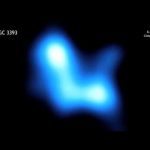
    Astronomers using NASA’s Chandra X-ray Observatory have discovered the first pair of supermassive black holes in a spiral galaxy similar to the Milky Way. Approximately 160 million light years from Earth, the pair is the nearest known such phenomenon. The black holes are located near the center of the spiral galaxy NGC 3393. Separated by only 490 light years, the black holes are likely the remnant of a merger of two galaxies of unequal mass a billion or more years ago.

  • NASA’s Kepler Finds Its First “Goldilocks” Candidates

    NASA’s Kepler Finds Its First “Goldilocks” Candidates

    NASA’s Kepler Mission has discovered 54 planet candidates that orbit in the habitable zone of their host star; this so-called “Goldilocks” region is “not too hot or too cold, but just right” for the possible existence of liquid water on the surface of a planet. Four of those candidates are near Earth-sized planets in orbit around small, cool stars. The findings, discussed at a news conference held Feb. 2 at NASA Headquarters in Washington, are based on data collected by the space telescope between May and September, 2009. Ground-based observatories will be used this spring and summer to help determine if these candidates can be validated as planets.

  • NASA’s Hubble Finds Most Distant Galaxy Candidate Ever Seen in Universe

    NASA’s Hubble Finds Most Distant Galaxy Candidate Ever Seen in Universe

    Astronomers have pushed NASA’s Hubble Space Telescope to its limits by finding what they believe is the most distant, ancient object ever seen in the universe. Its light traveled 13.2 billion years to reach Hubble, roughly 150 million years longer than the previous record holder. The age of the universe is 13.7 billion years. The dim object is a tiny, compact galaxy of blue stars that existed 480 million years after the big bang, only four percent of the universe’s current age. It is so small, more than one hundred similarly-sized mini-galaxies would be needed to make up our Milky Way.