Tag: Galileo

  • Galileo Second Generation

    Galileo Second Generation

    Europe’s Galileo is the world’s most precise satellite navigation system, providing metre-level accuracy to billions of users. ESA and European industry are preparing a new generation of satellites for the European Union, the Galileo Second Generation or G2, that will revolutionise the fleet with enhanced capabilities.

    Galileo Second Generation satellites will integrate seamlessly with the current fleet to form the largest European satellite constellation and deliver essential services worldwide. With fully digital navigation payloads, electric propulsion, a better-performing navigation antenna, inter-satellite link capacity and an advanced atomic clock configuration, G2 satellites will provide more robust and reliable positioning, navigation and timing.

    Galileo is managed and funded by the European Commission, in partnership with ESA and EUSPA. Since its inception, ESA leads the design and development and is entrusted with R&D activities. EUSPA is the system prime for the operational system and oversees the exploitation of services.

    Credits: European Space Agency (ESA)

    Check out our full video catalog: http://bit.ly/SpaceInVideos
    Follow us on Twitter: http://bit.ly/ESAonTwitter
    On Facebook: http://bit.ly/ESAonFacebook
    On Instagram: http://bit.ly/ESAonInstagram
    On LinkedIn: https://bit.ly/ESAonLinkedIn
    On Pinterest: https://bit.ly/ESAonPinterest
    On Flickr: http://bit.ly/ESAonFlickr

    We are Europe’s gateway to space. Our mission is to shape the development of Europe’s space capability and ensure that investment in space continues to deliver benefits to the citizens of Europe and the world. Check out https://www.esa.int/ to get up to speed on everything space related.

    Copyright information about our videos is available here: https://www.esa.int/ESA_Multimedia/Terms_and_Conditions
  • Advanced Research in Telecommunications Systems (ARTES) 4.0

    Advanced Research in Telecommunications Systems (ARTES) 4.0

    Satellite communication underpins everyday life, enabling fundamental improvements not just in communication, but also in transport, healthcare, safety and security, environmental services and many other industries.

    The Advanced Research in Telecommunications Systems (ARTES) 4.0 programme enables European and Canadian industry to explore, through research and development, innovative concepts that stimulates the wider economy, creating new business and jobs across almost every industry. ARTES 4.0 supports the production of market-leading and cutting-edge products and services within a fiercely competitive global satellite communications market.

    Learn more: https://connectivity.esa.int/

    Credits: ESA – European Space Agency

    ★ Subscribe: http://bit.ly/ESAsubscribe and click twice on the bell button to receive our notifications.

    Check out our full video catalog: http://bit.ly/SpaceInVideos
    Follow us on Twitter: http://bit.ly/ESAonTwitter
    On Facebook: http://bit.ly/ESAonFacebook
    On Instagram: http://bit.ly/ESAonInstagram
    On LinkedIn: https://bit.ly/ESAonLinkedIn
    On Pinterest: https://bit.ly/ESAonPinterest
    On Flickr: http://bit.ly/ESAonFlickr

    We are Europe’s gateway to space. Our mission is to shape the development of Europe’s space capability and ensure that investment in space continues to deliver benefits to the citizens of Europe and the world. Check out https://www.esa.int/ to get up to speed on everything space related.

    Copyright information about our videos is available here: https://www.esa.int/ESA_Multimedia/Terms_and_Conditions
    #ESA #Satellite #Telecommunications

  • Our 2022 highlights 🗓️ #shorts

    Our 2022 highlights 🗓️ #shorts

    2022 was a year of many ‘firsts’ for space in Europe, seeing the first European female International Space Station commander, the launch of the first Vega-C rocket, the launch of the first Artemis mission working to bring humans back to the Moon, and first images from the James Webb Space Telescope among many other success stories and lessons learned.

    ★ Subscribe: http://bit.ly/ESAsubscribe and click twice on the bell button to receive our notifications.

    Check out our full video catalog: http://bit.ly/SpaceInVideos
    Follow us on Twitter: http://bit.ly/ESAonTwitter
    On Facebook: http://bit.ly/ESAonFacebook
    On Instagram: http://bit.ly/ESAonInstagram
    On LinkedIn: https://bit.ly/ESAonLinkedIn
    On Pinterest: https://bit.ly/ESAonPinterest
    On Flickr: http://bit.ly/ESAonFlickr

    We are Europe’s gateway to space. Our mission is to shape the development of Europe’s space capability and ensure that investment in space continues to deliver benefits to the citizens of Europe and the world. Check out https://www.esa.int/ to get up to speed on everything space related.

    Copyright information about our videos is available here: https://www.esa.int/ESA_Multimedia/Terms_and_Conditions
    #ESA
    #YearInReview
    #2022Highlights

  • ESA Highlights 2022

    ESA Highlights 2022

    2022 was a year of many ‘firsts’ for space in Europe, seeing the first European female ISS commander, the launch of the first Vega-C rocket, Solar Orbiter’s first close encounter with our home star, the launch of the first Artemis mission working to bring humans back to the Moon, and first images from the James Webb Space Telescope.

    Let’s take a look at the highlights and accomplishments of the European Space Agency during 2022.

    ★ Subscribe: http://bit.ly/ESAsubscribe and click twice on the bell button to receive our notifications.

    Check out our full video catalog: http://bit.ly/SpaceInVideos
    Follow us on Twitter: http://bit.ly/ESAonTwitter
    On Facebook: http://bit.ly/ESAonFacebook
    On Instagram: http://bit.ly/ESAonInstagram
    On LinkedIn: https://bit.ly/ESAonLinkedIn
    On Pinterest: https://bit.ly/ESAonPinterest
    On Flickr: http://bit.ly/ESAonFlickr

    We are Europe’s gateway to space. Our mission is to shape the development of Europe’s space capability and ensure that investment in space continues to deliver benefits to the citizens of Europe and the world. Check out https://www.esa.int/ to get up to speed on everything space related.

    Copyright information about our videos is available here: https://www.esa.int/ESA_Multimedia/Terms_and_Conditions
    #ESA
    #Highlights
    #EuropeanSpaceAgency

  • Saying goodbye to Galileo 1st Generation

    Saying goodbye to Galileo 1st Generation

    Galileo is Europe’s largest satellite constellation – and the world’s most accurate satnav system. The work on Galileo began two decades ago with two test GIOVE satellites, followed by a series of operational launches.

    The two GIOVE satellites, the first Galileo In-Orbit Validation satellite and all 34 Galileo Full Operational Capability satellites were tested at ESA’s ESTEC Test Centre, Europe’s largest satellite testing facility.

    On this day the very last satellite in the Galileo First Generation series leaves the site, and the people responsible for readying them for space have gathered to say goodbye. Next will come the Galileo Second Generation satellites, already in development.

    Galileo is managed and funded by the European Union. The @EuropeanCommission, ESA and EUSPA (the EU Agency for the Space Programme) have signed an agreement by which ESA acts as design authority and system development prime on behalf of the Commission and EUSPA as the exploitation and operation manager of Galileo/EGNOS.
    ★ Subscribe: http://bit.ly/ESAsubscribe and click twice on the bell button to receive our notifications.

    Check out our full video catalog: http://bit.ly/SpaceInVideos
    Follow us on Twitter: http://bit.ly/ESAonTwitter
    On Facebook: http://bit.ly/ESAonFacebook
    On Instagram: http://bit.ly/ESAonInstagram
    On LinkedIn: https://bit.ly/ESAonLinkedIn
    On Pinterest: https://bit.ly/ESAonPinterest
    On Flickr: http://bit.ly/ESAonFlickr

    We are Europe’s gateway to space. Our mission is to shape the development of Europe’s space capability and ensure that investment in space continues to deliver benefits to the citizens of Europe and the world. Check out https://www.esa.int/ to get up to speed on everything space related.

    Copyright information about our videos is available here: https://www.esa.int/ESA_Multimedia/Terms_and_Conditions
    #ESA
    #Galileo
    #SatelliteNavigation

  • Testing Galileo for space

    Testing Galileo for space

    Galileo has grown to become Europe’s single largest satellite constellation, and the world’s most accurate satellite navigation system, delivering metre-level positioning to more than 3.5 billion users around the globe.

    It all began at ESTEC’s Test Centre, Europe’s largest satellite testing facility. This is where the very first positioning fix took place in March 2013, after the launch into orbit of the initial four IOV satellites. Following that, all 34 Galileo Full Operational Capability satellites also passed by ESTEC for their pre-flight testing.
    This 3000 sq. m environmentally-controlled complex, operated and managed by European Test Services for ESA, hosts an array of test equipment able to simulate all aspects of spaceflight, from the noise and vibration of launch to the vacuum and temperature extremes of Earth orbit.
    The production line at manufacturer OHB in Germany completed one new satellite every six weeks. After integration each satellite was then shipped to the ESTEC Test Centre for a three-month test campaign, after which it would be accepted by the Agency and declared ready for flight. Some facilities have had to be adapted specifically for Galileo, and the ESTEC Test Centre had to institute new security protocols because this was the first time that satellites with security restrictions were being tested at the site.
    Today there are 28 of these Galileo First Generation satellites in service, with 10 more due to be launched in the next years. Upgraded Galileo Second Generation satellites are under development and will follow them into orbit later this decade.
    Members of ESA’s Galileo team and ETS look back on this massive testing effort that established Galileo was ready for space.

    *About Galileo* :
    Galileo is managed and funded by the European Union. The European Commission, ESA and EUSPA (the EU Agency for the Space Programme) have signed an agreement by which ESA acts as design authority and system development prime on behalf of the Commission and EUSPA as the exploitation and operation manager of Galileo/EGNOS.

    ★ Subscribe: http://bit.ly/ESAsubscribe and click twice on the bell button to receive our notifications.

    Check out our full video catalog: http://bit.ly/SpaceInVideos
    Follow us on Twitter: http://bit.ly/ESAonTwitter
    On Facebook: http://bit.ly/ESAonFacebook
    On Instagram: http://bit.ly/ESAonInstagram
    On LinkedIn: https://bit.ly/ESAonLinkedIn
    On Pinterest: https://bit.ly/ESAonPinterest
    On Flickr: http://bit.ly/ESAonFlickr

    We are Europe’s gateway to space. Our mission is to shape the development of Europe’s space capability and ensure that investment in space continues to deliver benefits to the citizens of Europe and the world. Check out https://www.esa.int/ to get up to speed on everything space related.

    Copyright information about our videos is available here: https://www.esa.int/ESA_Multimedia/Terms_and_Conditions
    #ESA
    #Galileo
    #Satellite

  • Media session – ESA Council extraordinary meeting

    Media session – ESA Council extraordinary meeting

    ESA Director General Josef Aschbacher shares the outcome of the ESA Council extraordinary meeting in this virtual Q&A with journalists. Additional updates are provided on ESA’s main programmes, the overall rollout of Agenda 2025 on the way to the ESA Ministerial Meeting in November 2022 as well as further implications of the current geopolitical situation on ESA’s activities.

    Learn more: https://www.esa.int/Newsroom/Press_Releases/Redirecting_ESA_programmes_in_response_to_geopolitical_crisis

    ★ Subscribe: http://bit.ly/ESAsubscribe and click twice on the bell button to receive our notifications.

    Check out our full video catalog: http://bit.ly/SpaceInVideos
    Follow us on Twitter: http://bit.ly/ESAonTwitter
    On Facebook: http://bit.ly/ESAonFacebook
    On Instagram: http://bit.ly/ESAonInstagram
    On LinkedIn: https://bit.ly/ESAonLinkedIn
    On Pinterest: https://bit.ly/ESAonPinterest
    On Flickr: http://bit.ly/ESAonFlickr

    We are Europe’s gateway to space. Our mission is to shape the development of Europe’s space capability and ensure that investment in space continues to deliver benefits to the citizens of Europe and the world. Check out https://www.esa.int/ to get up to speed on everything space related.

    Copyright information about our videos is available here: https://www.esa.int/ESA_Multimedia/Terms_and_Conditions
    #ESA
    #Space
    #MediaSession

  • Galileo: en route to full operational capability

    Galileo: en route to full operational capability

    Soon another pair of Galileo satellites will be launched on top of a Soyuz from Europe spaceport in French Guiana. These satellites are the first of the so-called ‘Batch 3’, comprising of 12 additional first-generation Galileo satellites commissioned in 2017 to bring the constellation to full operational capability. They will be used to further expand the constellation up to 38 satellites and act as backups and spares for satellites that reach their end-of-life.
    This 11th Galileo launch also marks the 10 year anniversary of the first launch of the Galileo operational satellites and the start of the construction of the constellation. Ten years later Galileo is the most accurate satellite navigation system in the world and available on every recent smartphone and device. It is also two decades since satellite navigation was first introduced as a completely new activity in the European space sector.

    Meanwhile ESA continues to ensure the future of the Galileo programme and European expertise in satellite navigation. For Galileo ESA has already commissioned a second generation of more powerful and flexible navigation satellites while new services are being developed to meet market demand.

    ★ Subscribe: http://bit.ly/ESAsubscribe and click twice on the bell button to receive our notifications.

    Check out our full video catalog: http://bit.ly/SpaceInVideos
    Follow us on Twitter: http://bit.ly/ESAonTwitter
    On Facebook: http://bit.ly/ESAonFacebook
    On Instagram: http://bit.ly/ESAonInstagram
    On LinkedIn: https://bit.ly/ESAonLinkedIn
    On Pinterest: https://bit.ly/ESAonPinterest
    On Flickr: http://bit.ly/ESAonFlickr

    We are Europe’s gateway to space. Our mission is to shape the development of Europe’s space capability and ensure that investment in space continues to deliver benefits to the citizens of Europe and the world. Check out https://www.esa.int/ to get up to speed on everything space related.

    Copyright information about our videos is available here: https://www.esa.int/ESA_Multimedia/Terms_and_Conditions

    #ESA
    #Galileo
    #SatelliteNavigation

  • Galileo: the first ten years

    Galileo: the first ten years

    Europe’s own satellite navigation system, Galileo, has become the world’s most precise, delivering metre-level accuracy, available anywhere on Earth. It is also saving lives, relaying distress calls for search and rescue. Today there are 26 Galileo satellites in orbit 23 222 km over our heads; the first of them were launched on 21 October 2011, with nine more launches in the following years. The satellites in space are supported by a globe-spanning ground segment. The system as a whole is set to grow, with the first of 12 ‘Batch 3’ about to join the current satellites in orbit and new ‘Galileo Second Generation’ satellites in development.

    Galileo has been financed by the EU and developed by ESA, with services delivered by EUSPA.

    ★ Subscribe: http://bit.ly/ESAsubscribe and click twice on the bell button to receive our notifications.

    Check out our full video catalog: http://bit.ly/SpaceInVideos
    Follow us on Twitter: http://bit.ly/ESAonTwitter
    On Facebook: http://bit.ly/ESAonFacebook
    On Instagram: http://bit.ly/ESAonInstagram
    On LinkedIn: https://bit.ly/ESAonLinkedIn
    On Pinterest: https://bit.ly/ESAonPinterest
    On Flickr: http://bit.ly/ESAonFlickr

    We are Europe’s gateway to space. Our mission is to shape the development of Europe’s space capability and ensure that investment in space continues to deliver benefits to the citizens of Europe and the world. Check out https://www.esa.int/ to get up to speed on everything space related.

    Copyright information about our videos is available here: https://www.esa.int/ESA_Multimedia/Terms_and_Conditions
    #ESA
    #Galileo
    #SatelliteNavigation

  • Galileo: finding our way

    Galileo: finding our way

    More than two billion smartphones, with users worldwide are now making use of Europe’s Galileo navigation satellite constellation. But how do satellites thousands of kilometres away in space manage to tell you where you are and where you’re going? Simply being so far away is part of the answer – learn the details of the world’s most precise navigation system in this new video.

    ★ Subscribe: http://bit.ly/ESAsubscribe and click twice on the bell button to receive our notifications.

    Check out our full video catalog: http://bit.ly/SpaceInVideos
    Follow us on Twitter: http://bit.ly/ESAonTwitter
    On Facebook: http://bit.ly/ESAonFacebook
    On Instagram: http://bit.ly/ESAonInstagram
    On Flickr: http://bit.ly/ESAonFlickr

    We are Europe’s gateway to space. Our mission is to shape the development of Europe’s space capability and ensure that investment in space continues to deliver benefits to the citizens of Europe and the world. Check out https://www.esa.int/ to get up to speed on everything space related.

    Copyright information about our videos is available here: https://www.esa.int/ESA_Multimedia/Terms_and_Conditions
    #ESA
    #Galileo
    #SatelliteNavigation

  • Galileo 23-26 – Liftoff

    Galileo 23-26 – Liftoff

    Europe’s next four Galileo satellites lifted off at 11:25 GMT (13:25 CEST, 08:25 local time) on 25 July from Europe’s Spaceport in French Guiana atop an Ariane 5 launcher.

    Copyright: ESA/CNES/Arianespace

    ★ Subscribe: http://bit.ly/ESAsubscribe

  • Preview 2018

    Preview 2018

    After a fruitful 2017 with many exciting launches and the end of some historic missions, ESA is ready for the year to come. 2018 will see the 10th anniversary of the International Space Station’s Columbus module and an ESA astronaut taking the helm of the ISS as commander. There will be more launches of new Earth observation and exploration satellites and ESA will venture to the innermost planet in our Solar System. 2018 will also mark the completion of the first part of the Copernicus constellation observing the Earth and of the full Galileo constellation, Europe’s own satellite navigation system.

  • ESA highlights 2017

    ESA highlights 2017

    With 2018 approaching rapidly and 2017 coming to a close, ESA can look back on a fruitful year. It has been a year dominated by the ESA astronaut missions to the International Space Station, the launch of more Sentinel satellites and the first launch of a small Geo satellite.

    This video looks back at the highlights of 2017 for ESA.

    More about ESA: http://www.esa.int

  • Galileo coverage

    Galileo coverage

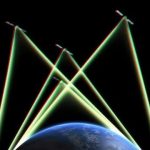
    Europe’s Galileo satellite navigation system has entered its initial operational phase, offering positioning, velocity and timing services to suitably equipped users worldwide. It takes a minimum of four Galileo satellites to be visible in the local sky to fix a receiver’s position. This animation shows how service availability increases as the overall number of satellites in the Galileo constellation goes up.

    Read more about Galileo’s Initial Service:
    http://www.esa.int/Our_Activities/Navigation/Galileo_begins_serving_the_globe

  • Galileo 15-18 – liftoff replay

    Galileo 15-18 – liftoff replay

    Europe’s 15th, 16th, 17th and 18th Galileo satellites lifted off from Europe’s Spaceport in French Guiana atop an Ariane 5 launcher.

    Credit: ESA/CNES/Arianespace

  • Galileo satellites recovered

    Galileo satellites recovered

    Last summer, they were considered lost: two Galileo satellites ended in the wrong orbit after their launch by a Soyuz from Kourou, French Guiana. But now the two satellites have been recovered and they should be able to fulfil at least partially their mission – a situation made possible thanks to expertise and hard work in the extended Galileo team, from ESA, to agencies partners and industry.

    More about Galileo:
    http://esa.int/galileo

  • Galileo deployment phase

    Galileo deployment phase

    On 21 August, at 12:31 UTC/14:31 CEST, a Soyuz rocket will launch the fifth and six Galileo satellites from Europe’s Spaceport in Kourou, French Guiana.

    These are the first ‘Full Operational Capability’ satellites for the deployment phase of Galileo, following the so-called ‘In Orbit Validation’ (IOV) phase, which allowed the European Space Agency to make sure that the design of the Galileo system provided its expected performance both in space and on the ground.

    Now it is time to build the full Galileo constellation, allowing full deployment to take place, the IOV satellites having paved the way for this European navigation programme, the first civilian system with worldwide services.

    This phase of the Galileo programme is being managed and funded by the European Commission, with ESA acting as design and procurement agent on behalf of the Commission.

    This video recalls the success of the In Orbit Validation phase and explains what will be the mission of these fifth and sixth Galileo satellites.

    It includes an interview with Sylvain Loddo, Galileo Ground Segment Manager.

    More about launching Galileo:
    http://www.esa.int/Our_Activities/Navigation/The_future_-_Galileo/Launching_Galileo

  • Galileo works, and works well

    Galileo works, and works well

    How far has Europe’s Galileo satellite navigation system progressed?

    Watch this video summary of Galileo’s In-Orbit Validation phase milestones to find out, and learn what happens next.

  • 2012 ESA Missions Preview

    2012 ESA Missions Preview

    This video presents the key events in 2012 for ESA.

    André Kuipers continues his PromISSe mission aboard the International Space Station until May, the 4th ESA long duration mission. During his stay the third European ATV cargo ship will bring food and supplies to the orbital outpost. Early in the year the new Vega launcher will make its qualifying flight from Europe’s Spaceport in French Guiana. The end of the year will be marked by an ESA Conference at Ministerial level, a major decision point for the future of Europe in Space.

    More backgroud information can be found on: www.esa.int

  • First Soyuz transfer and liftoff from French Guiana

    First Soyuz transfer and liftoff from French Guiana

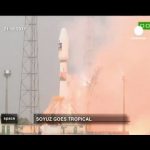
    The Russian Soyuz vehicle lifted off for the first time from its new launch complex at Europe’s Spaceport in French Guiana on 21 October 2011. Flight VS01 carried the first two operational satellites of Europe’s Galileo navigation system into orbit.
    This time-lapse movie shows the three-stage Soyuz transfer from the assembly and testing building to the launch pad where it is then raised to the vertical. Once in the Mobile gantry, the Upper Composite containing the satellites and Fregat-MT upper stage is hoisted into position on top of the vehicle. The gantry is then rolled back, clearing the way for Soyuz to lift off.

  • ESA Euronews: Soyuz descola pela primeira vez do Porto Espacial da Europa

    ESA Euronews: Soyuz descola pela primeira vez do Porto Espacial da Europa

    Lançou o Sputnik e Gagarin para o espaço. O mítico foguetão russo Soyuz conta já com mais de 1700 voos. O lançamento do Porto Espacial Europeu, na Guiana Francesa, abre um novo capítulo na sua longa carreira.

  • Galileo — Europe leads the way… in 3D!

    Galileo — Europe leads the way… in 3D!

    A 3D presentation of the Galileo satellite navigation system, a joint development by the European Union and European Space Agency. This constellation of satellites will allow users to pinpoint their location anywhere on Earth — their launches commencing on 20 October 2011.

    Use red/blue 3D glasses to experience the full 3D experience of this clip.

  • ESA Euronews: la Navegación por Satélite

    ESA Euronews: la Navegación por Satélite

    En nuestros días el GPS es una herramienta muy útil. Los europeos han querido afinar su pecisión desarrollando el sistema EGNOS, precursor de la Constelación Galileo. En esta edición de “Space” podrá descubrir cómo funciona la navegación por satélite y sus aplicaciones.

  • ESA Euronews: La navigazione satellitare

    ESA Euronews: La navigazione satellitare

    Ai giorni nostri il GPS è uno strumento familiare e molto utile. Gli europei hanno voluto perfezionare la sua precisione sviluppando il sistema EGNOS, precursore della costellazione Galileo. La navigazione satellitare e le sue applicazioni in questa edizione di Space.

  • ESA Euronews: Satelliten-Navigation

    ESA Euronews: Satelliten-Navigation

    Heutzutage ist das GPS ein sehr nützliches Werkzeug, das aus dem Alltag nicht mehr wegzudenken ist. Mit dem System Egnos, Vorreiter der Satelliten-Konstellation Galileo, wollen die Europäer seine Treffsicherheit erhöhen. Die Satelliten-Navigation und ihre Anwendungen in dieser Ausgabe von “Space”.

  • ESA Euronews: Navigation by satellite

    ESA Euronews: Navigation by satellite

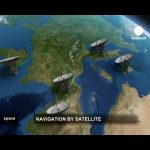
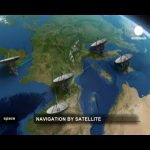
    Today GPS is a common and extremely useful tool. Europeans wanted to refine its accuracy by developing EGNOS, the precursor of the Galileo constellation.
    We look at satellite navigation and its applications.