Tag: Huygens

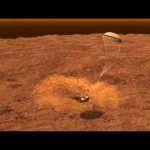
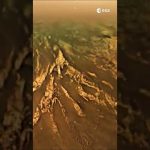
  • POV: Huygens probe landing on Titan

    POV: Huygens probe landing on Titan

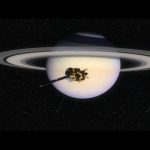
    19 years ago, on 25 December 2004, ESA’s Huygens probe was released from the Cassini spacecraft. Huygens continued on to Titan, Saturn’s largest and most interesting moon, descending via parachute and touching-down at 11:30 UTC, 14 January 2005. The descent phase lasted around 2 hours, 27 minutes, with a further 1 hour and 10 minutes of operation on the surface.

    This video has been accelerated to 200% speed, showing the descent from an altitude of 62 km at 9:41 UTC to the touchdown.

    Credits: NASA/ESA/University of Arizona

    #ESA #Titan #Huygens

  • ESA Euronews: Hunting Earth-like exoplanets

    ESA Euronews: Hunting Earth-like exoplanets

    In this edition of Space, Euronews correspondent Jeremy Wilks reports from the Observatory of Geneva – home to experts in exoplanets, the name given to planets outside our solar system.

    So far they have managed to find more than 3500, but they believe there could be literally billions of them across the Milky Way.

    The first exoplanet to be discovered was what’s known as a hot Jupiter, a giant gas planet orbiting close to its star. That discovery, made by University of Geneva professor Michel Mayor in 1995, kick-started a revolution in astronomy, one which at the time of our interview put the number of exoplanets at 3559 and counting.

    This video is also available in the following languages:
    French https://www.youtube.com/watch?v=0BzHpdyp3wY />German https://www.youtube.com/watch?v=_RQjMsL5RM4 />Italian https://www.youtube.com/watch?v=iiwWd932k-Y />Spanish https://www.youtube.com/watch?v=To-sKEx2kgY />Portuguese https://www.youtube.com/watch?v=YloRlQQS-eU />Hungarian https://www.youtube.com/watch?v=Ki_Cuz-Vjzo />Greek https://www.youtube.com/watch?v=mA-ymp2ZvbE

  • ESA Euronews: Voyage au coeur du mystère des exoplanètes

    ESA Euronews: Voyage au coeur du mystère des exoplanètes

    Dans Space, Jérémy Wilks vous emmène ce mois-ci à l’observatoire de Genève, la “maison” des experts en exoplanètes, ces planètes qui sont en dehors de notre système solaire. A ce jour, 3.559 d’entre elles ont été découvertes, mais les scientifiques pensent qu’il en existe des millions dans la Voie Lactée.

    La première exoplanète qui a été découverte est une planète géante gazeuse similaire à Jupiter, en orbite autour de son étoile. Cette découverte, faite en 1995 par le professeur Michel Mayor de l’Université de Genève, a donné le coup d’envoi d’une révolution en astronomie. Une révolution qui part de l’existence prouvée d’une exoplanète, à la découverte de 3.559 exoplanètes aujourd’hui.

  • ESA Euronews: Vadászat az emberiség lehetséges következő otthonára

    ESA Euronews: Vadászat az emberiség lehetséges következő otthonára

    Az exobolygók, vagyis a Naprendszeren kívüli bolygók keresése azon az emberi álmon alapszik, hogy a homo sapiens valaha elhagyhatja a Földet, és új hazát fog keresni. A bolygókat megtalálni azonban rendkívül nehéz, hiszen nem bocsátanak ki fényt, és olyan messze vannak, hogy a legerősebb távcsővel sem láthatók. Ezért sokáig a létezésükre sem volt bizonyíték.

    Az első felfedezett exobolygó egy hatalmas gázbolygó volt, a genfi egyetemi professzor, Michel Mayor és csapatának 1995-ös felfedezése forradalmat hozott a csillagászatban. Húsz év alatt egyetlen exobolygótól eljutottunk 3599-ig.

  • The Huygens experience

    The Huygens experience

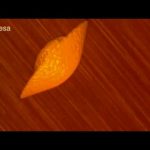
    A new rendering of Huygens descent and touchdown created using real data recorded by the probe’s instruments as it descended to the surface of Titan, Saturn’s largest moon, on 14 January 2005.
    The animation takes into account Titan’s atmospheric conditions, including the Sun and wind direction, the behaviour of the parachute (with some artistic interpretation only on the movement of the ropes after touchdown), and the dynamics of the landing itself. Even the stones immediately facing Huygens were rendered to match the photograph of the landing site returned from the probe, which is revealed at the end of the animation.
    Split into four sequences, the animation first shows a wide-angle view of the descent and landing followed by two close-ups of the touchdown from different angles, and finally a simulated view from Huygens itself — the true Huygens experience.
    This animation was released on the eighth anniversary of Huygen’s touchdown on Titan as a Space Science Image of the Week feature.

    Animation: ESA–C. Carreau/Schröder, Karkoschka et al (2012). Image from Titan’s surface: ESA/NASA/JPL/University of Arizona

  • ESA Euronews: Segredos de Saturno

    ESA Euronews: Segredos de Saturno

    Há algumas décadas, para observar Saturno, os cientistas recorriam a
    telescópios. Hoje em dia, os segredos de Saturno e da sua misteriosa lua Titã são revelados graças aos dados e imagens enviados pela missão Cassini-Huygens. Saturno nunca antes visto, é o tema de Space esta semana.

  • ESA Euronews: Los secretos de Saturno

    ESA Euronews: Los secretos de Saturno

    Hasta hace algunas décadas para ver Saturno la ciencia tenía que mirar a
    través de telescópios. Hoy Saturno y su misteriosa luna Titán son nuevos
    conocidos gracias a la misión Cassini-Huygens que desde 2004 envía imágenes y datos. Una aventura que está cambiando la percepción que hasta ahora teníamos de nuestro Sistema Solar.

  • ESA Euronews: Der Saturn gibt seine Geheimnisse preis

    ESA Euronews: Der Saturn gibt seine Geheimnisse preis

    Noch vor einigen Jahrzehnten konnte man den Saturn nur mit dem Teleskop
    beobachten. Heute lüftet die Cassini-Huygens-Mission mit ihren Bildern die
    Geheimnisse des Saturnsystems und liefert Antworten auf entscheidende
    wissenschaftliche Fragen.

  • Cosmic Vision – See how Huygens landed on Titan

    Cosmic Vision – See how Huygens landed on Titan

    After an epic space journey, the European Huygens probe landed on Saturn’s moon Titan, a mysterious satellite that has perplexed astronomers for decades. On 14 January 2005, Huygens made the farthest touchdown of any human-built object sent to land on another world.