Join us as NASA Administrator Bill Nelson and Deputy Administrator Pam Melroy host a town hall on artificial intelligence (AI) and the future of AI across the agency.
NASA experts participating in this town hall include:
Katherine Calvin, NASA Chief Scientist A.C. Charania, NASA Chief Technologist David Salvagnini, NASA Chief Artificial Intelligence Officer Jeff Seaton, NASA Chief Information Officer
If astrobiologists find life beyond Earth in the solar system, it will most likely be in the form of tiny organisms called microbes – nothing that would talk to us. But the galaxy is a big place; the universe even bigger. Somewhere out there, life may have evolved to become as smart, or even much smarter, than us. And the next step in that ladder may be “post-biological,” argues Susan Schneider, the Baruch S. Blumberg NASA/Library of Congress Chair in Astrobiology, Exploration, and Scientific Innovation. Advanced life may be entirely based on microchips and silicon, using the tools of artificial intelligence instead of brains. Listen to the full episode of “Gravity Assist” at nasa.gov/gravityassist.
Producer Credit: Sonnet Apple & Elizabeth Landau
Music Credit: Universal Production Music
I think AI should have the capacity to do evil. Just like a child learning right from wrong by making mistakes and being corrected, so too should AI be given that possibility. Humans seem to be incapable of perfection, even with collective effort. Given this, setting out to design a perfect form of consciousness might result in the exact opposite. It might be that the perfection we create deems it’s creator imperfect and unworthy. If, on the other hand, we give it the capacity for evil, it might also have sympathy for our sometimes miserable existence.
Find the best Ai toys at Ai Toys Tech channel and site aitoystech.com. We review in depth Ai robots toys, best Ai toys and also machine learning toys for both boys and girls of all ages. Adults are not forgotten on the contrary we cover all range of best Ai robot toys, best tech toys as well as some of the coolest new tech toys you may find. We have from Ai for kids, cool tech toys, cool gadgets for kids to electronic educational toys and the new tech toys. We make reviews of the very best tech toys. https://www.youtube.com/playlist?list=PLGmDDN9uRDw3DKEo8H6e-sLdz6pOj6RP9 Best Artificial Intelligence for Kids
Find the best Ai toys at Ai Toys Tech channel and site https://aitoystech.com. We review in depth Ai robots toys, best Ai toys and also machine learning toys for both boys and girls of all ages. Adults are not forgotten on the contrary we cover all range of best Ai robot toys, best tech toys as well as some of the coolest new tech toys you may find. We have from Ai for kids, cool tech toys, cool gadgets for kids to electronic educational toys and the new tech toys. We make reviews of the very best tech toys.
E FM Okka Nimisham is all about artificial intelligence tool for kids.
Eenadu which is a very famous publication house of south india which has several tv channels like Etv, etv plus, etv telangana, etv andhrapradesh, etv abhiruchi and many more, it has done several famous shows like jabardasth, pathas, dhee, jeans and many more, eenadu also has several newspapers like eenadu, annadata, vasundhara etc is now launching fm stations in Vijayawada 91.9 FM, Warangal 104.8 FM, Tirupati 104 FM and Rajahmundry 92.7 FM, E FM corporate office is located in Ramoji Film City.
Few of famous shows of Eenadu’s E FM are
Premam is a beautiful story telling program which comes on E FM everyday, where in RJ Kittu narrates beautiful stories to you all, listen to them here https://www.youtube.com/watch?v=qM3nz…
Attha Kodalu – Atha is from Andhra Pradesh and Kodalu is from Telangana listen to their everyday funny conversation here https://www.youtube.com/watch?v=s3keh…
Eenadu E FM also does some special programs every now and then, listen to heristage sites of different cities like Warangal, Rajahmundry, Tirupati and Vijayawada speaking their history and facts in their own language here https://www.youtube.com/watch?v=byJvM…
To subscribe to our channel click on
www.youtube.com/eenadufm
to like our page click on
www.facebook.com/eenadufm
to follow us click on
www.instagram.com/eenadufm
for more info write us on
info@eenadufm.net
or visit us on
www.eenadufm.net
Artificial Intelligence is not neutral: there are cases where software used in justice systems have been racially biased. We need a massive democratisation of technologies.
In New Dark Age: Technology and the End of the Future leading artist and writer James Bridle surveys the history of art, technology, and information systems, and reveals the dark clouds that gather over our dreams of the digital sublime.
James Bridle is a literary editor, technologist, writer, journalist, and visual artist. He writes for Guardian, Observer, Wired, Frieze, Atlantic, and many other publications.
What does artificial intelligence mean for education? Will A.I. replace teachers? What’s a student’s educational journey look like with more A.I. in the classroom?
Ryan M. Cameron is a higher education administrator and artificial intelligence scholar. Give this episode a listen to learn about the A.I. developments happening right now in classrooms across the world. And get a glimpse into the future of the A.I./teacher/student relationship.
Plus, Ryan and I discuss what artificial intelligence really is, should we be afraid of A.I., and what happens if an A.I. goes around our kill switches!
Don’t forget to take the quiz at 04:10!
Comment below what you think is the right answer, to be one of the 3 lucky winners who can win Amazon vouchers worth INR 500 or $10 (depending on your location). What are you waiting for? Winners will be announced on May 09, 2019.
This video on Artificial Intelligence introduces you to Artificial intelligence with a fun and simple approach. We will talk about what is artificial intelligence, how it’s different from machine learning and deep learning, its features, types, and scope. We also look at some interesting applications of Artificial Intelligence.
By the end of this video, you will understand:
1. What is Artificial Intelligence?
2. Difference between Artificial intelligence, Machine Learning and Deep Learning
3. Examples of Artificial Intelligence
4. Future of Artificial Intelligence
About Simplilearn Artificial Intelligence course:
Simplilearns’ Introduction to Artificial Intelligence course is designed to help learners decode the mystery of artificial intelligence and its business applications. The course provides an overview of AI concepts and workflows, machine learning and deep learning, and performance metrics. You’ll learn the difference between supervised, unsupervised and reinforcement learning; be exposed to use cases, and see how clustering and classification algorithms help identify AI business applications.
What are the career benefits of this Introduction to AI course?
Artificial intelligence has become a powerful driving force in a wide range of industries, helping people and businesses create exciting, innovative products and services, enable more informed business decisions, and achieve key performance goals. The median salary of an AI engineer in the US is $171,715(Source: Datamation). By 2022, the AI market will grow at a CAGR of 53.25 per cent, and an estimated. 2.3 million jobs will be created in the AI field by 2020 (Source: Gartner).
What are the course objectives?
The Introduction to Artificial Intelligence course will give you a look at the booming field of AI and show you how AI can help drive business value. The course covers basic concepts, terminologies, scope and stages of artificial intelligence and their effect on real-world business processes. By the end of the course, you will be able to clearly define various supervised and unsupervised AI algorithms, apply machine learning workflow to solve business problems and measure ROI based on performance metrics.
What skills will you learn from this Introduction to Artificial Intelligence course?
Upon completion of this course, you will understand:
1. The meaning, purpose, scope, stages, applications and effects of AI
2. Fundamental concepts of machine learning and deep learning
3. The difference between supervised, semi-supervised and unsupervised learning
Who should take this Introduction to Artificial Intelligence course?
Simplilearn’s Introduction to Artificial Intelligence imparts the basic concepts and principles of Artificial Intelligence to learners. The course caters to CxO level and middle management professionals who want to improve their ability to derive business value and ROI from AI and machine learning. This Artificial Intelligence Introduction course does not require programming or IT background, making it well-suited for the following audience:
1. Developers aspiring to be an artificial intelligence engineer or machine learning engineer
2. Analytics managers who are leading a team of analysts
3. Information architects who want to gain expertise in AI algorithms
4. Analytics professionals who want to work in machine learning or artificial intelligence
5. Graduates looking to build a career in artificial intelligence or machine learning
Thanks for watching The Science KID “Artificial Intelligence In the Medical Field,” explaining what AI is, therapeutic robots, virtual presence, virtual reality, financial costs, death rates, etc.
Recommended Grade: 3rd, 4th, 5th, 6th, 7th, 8th, High School Science
Make sure to subscribe if you haven’t yet, what are you waiting for?!
The Science Kid is a scientific genius in a 13-year-old body! I post Science Videos on about everything Science. I hope you enjoy 😊 Remember “Science Can Always Be FUN!”
During ESA’s ɸ-week on 12–16 November in Italy, Patrick Helber from the German Research Center for Artificial Intelligence explains how artificial intelligence is being trained with Earth observation data and images such as that from the Copernicus Sentinel-2 mission so features can be detected automatically. This can then be used to classify land cover types automatically, for example.
ESA is Europe’s gateway to space. Our mission is to shape the development of Europe’s space capability and ensure that investment in space continues to deliver benefits to the citizens of Europe and the world. Check out http://www.esa.int/ESA to get up to speed on everything space related.
In this podcast, Bernard Dan speaks to Professor Hugues Bersini of Université Libre de Bruxelles. They discuss Bernard’s editorial in the September 2018 issue of Developmental Medicine & Child Neurology: ‘Artificial intelligence and cerebral palsy’.
DMCN Journal:
Developmental Medicine & Child Neurology (DMCN) has defined the field of paediatric neurology and childhood-onset neurodisability for over 60 years. DMCN disseminates the latest clinical research results globally to enhance the care and improve the lives of disabled children and their families.
Mac Keith Press:
We exist to improve the care of disabled children by extending the knowledge and understanding of developmental medicine and paediatric neurology. We publish the journal DMCN and books in related subject areas. These are of interest to researchers, health professionals, clinicians, therapists, parents and all involved in the care of children and young people with neurodevelopmental conditions.
In the not-too-distant future, leukemia patients may get their treatment recommendations from a computer. A team of researchers in Seattle is testing a program that could take the trial and error out of cancer treatment.
FREE AI SUMMER SCHOOL FOR KIDS – WATCH A FUTURE AI TALENT SPEAK ON HER EXPERIENCE.
Africa’s AI future is great! We are excited to host amazing kids at our AI Summer School. They learnt Introductory Python programming, they applied codes in interacting with robotic objects (e.g. drones) and did intro Machine Learning with y=mx+c linear equation for prediction. Amazing how they grasped the concept of regression/dependent and independent variables in prediction.Listen to future AI superstar, Victory Yinka-Banjo as she shares her experience.Batch 2 will run 13-17 August. Selection has been sent to all the participants.
SpaceX Dragon carried an Artificial Intelligence (AI) robot named CIMON to the ISS. CIMON stands for ‘Crew Interactive Mobile Companion’ and is the first-ever AI space robot. Watch BusinessToday.In’s video to know more about CIMON, built by Airbus and how he assists astronauts in relieving their stress.
———————-
About the Channel: Watch Business Today videos to get the latest news on Business, stock market, sensex – BSE India, NSE India, personal finance, gold prices, petrol prices and more. Also, get an insight into the dealings of the top companies in India from Business Today’s award-winning journalists. Get up to date with all investment options (Mutual Funds, SIPs, Debt, Equity, Insurance, Home Loans, Pension Schemes, Retirement Plans) from our Money Today team. Also, watch interviews of top CEOs.
Regular shows to watch out:
The Good The Bad and The Ugly with BusinessToday.in Editor Rajeev Dubey to know the top stories of the day specially curated from the world of business and economy.
Watch Inside India’s Factories to find out how different products get manufactured and processed for final consumption.
Artificial Intelligence is everywhere now, what changed?
This artificial intelligence tutorial explains in a simple way by comparing how a child learns how to recognize various objects & why we see AI everywhere now.
00:00 So why is artificial intelligence everywhere all of a sudden? So Hi, this is Charlotte from fashion marketing and in this tutorial, I’m going to talk about why are we seeing artificial intelligence, machine learning deep learning everywhere and what has actually changed it caused this. So to understand that, let’s take a look at how a child actually learns. So when you have a child, a niece and nephew or your own kid probably, and you want your kid to tell the difference between a car and a bus. So what do you do? You show them multiple images of a car. Like, let’s say we’re driving on the freeway and you’re like, hey, that’s a car that’s a car. And then you see a bunch of buses and you tell them, hey, that’s an image of a bus or this is actually a bus looks like. So you’re teaching them and eventually you’re showing them so many images of cars and buses and telling them this is actually what a car looks like or this is actually what a bus looks like.
00:50 And eventually the kid learns to tell the difference between a car and a bus, and now when you show them an image of a car or a bus that they have not seen before, and you ask them, hey, which one is the bus? And if they’re able to get this right, that this is a bug and this is, this is not a bus, you know, that, that per, that your child is actually learning. And now in the future, if you show them an image of a bus or a car that they have not seen, they will be able to tell the difference. So this is basically how machine learning or deep learning is used to teach computers so they can recognize any object and they can tell one object from another. So in, in order for artificial intelligence to function, it basically needs three components, right?
01:34 So number one is high-performance GPU, which can calculate a fast enough. Number two is sophisticated algorithms that you can create a sophisticated model that tells what is the definition of a bus and what is, how do you define a bus? Or if I were to define a pair of shoes or things like that. And third is it lots of labeled data. So which also has like two subcategory, which means having a lot of data and then having a lot of labeled data. So in the past few years we always had, you know, we had high-performance Gpu, Nvidia, we always can create sophisticated algorithms because the programming language has not changed that much, but what would need, what we did not have was a lot of big data and lot of labeled data. So what, what is labeled data? So you think about, you know, 90 percent of the world data has been created in last two years and two point three quintillion bytes of data is created every single day.
02:32 So what is a label data? So labeling data basically means is the way you were teaching your kid, right? So you were telling him this is a car, this is a bus. So in the same way, think about having thousands and thousands and millions of images and each image actually being labeled that this is a car, this is a person you know, this is a sign, this is a signal, and the same thing was done for clothing that this is actually a mustard solid full wool coat. Know these are sneakers and they are solid, they have laces, they are pink in color or this is a sweatshirt which has yellow in color, has drowned as full and as a solid color. So a lot of this data has been available, which has turned out to be big data and big data. That data has been labeled by either by a lot of companies or lot by people.
03:21 And the biggest example is facebook. So remember back in the days when Facebook came out and it was asking you to tag your friends, it could not tell which was the person’s face. So we will just point at where a regular person and we’ll ask you to click on the person’s face and then you typed in the name of the person that this is carried. This is kate, fast forward a couple of years. Then facebook was able to tell that this is actually a face, but it still could not tell whose face it is, so it will put a little square around the face and they’ll ask you to tag the person that you will still tie it into. This is Carrie. This is kate. This is Nicole, and now facebook has had enough people on the facebook platform. Tag carries image so many different times from so many different angles and now facebook is actually able to figure out that this actually carries and this is kate and this is Nicole and this is Jessica.
LyreBird is an Artificial Intelligence that allows you to clone your voice.
00:03 This tiny room is the home to a startup called liar bird. It was founded by Yahshua’s former students and has built an APP that can clone your voice. Your speaking about this new algorithm to copy of voices is they can make a say anything really anything. One of its founders is this guy, Mexican expat Jose. He taught me the art of the club.
00:30 So you’ll need to record yourself for a few minutes of audio.
00:36 Thousands of letters danced across the amateur author screen. When you start to eat like this, something is the matter. You guys better quit politics and take in washing. I don’t know where that one came from.
00:52 Okay, so create my digital voice now. Creating a digital voice. It takes at least one minute. One minute. Oh my God. Yeah. So before to create some artificial voice of someone, you would need to record yourself or are at least eight hours. Test Your Voice. Alright, so now I get the types of things. Yeah, so the moment of the truth. Okay.
01:17 What’s layer birds? Ai has worked its magic. After I’m done
01:20 typing. Going to spell that out. Any words I put into the APP can be played back in my digital voice, and here’s the crazy thing,
01:30 even words I never actually said in the first place, artificial intelligence technology seems to be advancing very quickly. Should we be afraid? I mean I can definitely hear by voice in there. That’s. That is. That’s really interesting. I just picked those words at random and I definitely did not say some of them and it’s like flawless and being able to sort of pick from just about anywhere and manufacturer it.
01:56 Hello world is the best show I have ever seen.
02:02 This technology seemed sweet but lends itself to all manner of trickery. Have popped back to my hotel to test out the library and technology a little bit and you can see some really obvious ways that this could be abused. This is, this is fake. Donald Trump talking
02:25 United States is considering in addition to other options, stopping all trade with any country doing business with North Korea
02:32 and then you can picture of somebody taking over your voice and creating some mayhem in your personal life. Now to really put my computer voice to the test, I am going to call my dear, sweet mother and see if she recognizes me.
02:54 Hey Mom, where are you guys up to today when it’s shut that we didn’t have any electricity
03:00 early this morning and we’re just hanging around the house.
03:03 I’m just finishing up work and waiting for the boys to get home. Okay. I think I’m coming down with a virus.
03:11 Oh, well you feel bad. Hey,
03:15 I was messing around with you. You were talking to a computer.
03:18 I felt like I was talking to you. This mic.
03:22 Is that scary or are good?
03:24 It could be scary if it was something really important. I always knew that. I don’t know. It sounds like. Is it
03:42 after realizing that anyone with the time and inclination could mess with my life? It was only one thing left to do. I joined Hosea and a few other lyrebirds to chat more about the evils of Ai. Well, dulling my fear with food.
03:57 Obviously some people are freaked out by this technology because we’re already blurring the line about truth. In reality. Of course there is some risk in, in people using this kind of technology for better applications. Unfortunately, technologies, it’s not possible to stop it, so the ethical, but then we have this idea is to show these to people, to make them know that this kind of technology is available to make them more cautious, cautious on this kind of subject. We really believe that right now, when the technology is not perfect is the right time to let people play. They get used to it slowly so you guys think that the idea is just sort of knew and that’s why it scares people, but if you get used to it, it’s just that’s just the way it is. We want our technology to be used for, for positive things. It’s not something that we should be really afraid of. It’s something that we should be careful about, but I feel enthusiastic about.
05:02 It’s nice to be enthusiastic. It’s also nice to meditate on the consequences of your inventions instead of turning our souls over to chance and blind luck. It is kind of cool to be a cynical bastard in my new artismal computer voice.
************************************************************
Watch the Full video by Bloomberg here: (its really cool 😉
#Jude Law as Gigolo Joe.
#Sam Robards as Henry Swinton.
#Frances O’Connor as Monica Swinton.
#Jake Thomas as Martin Swinton.
#Ashley Scott as Gigolo Jane.
#Haley Joel Osment as David.
#William Hurt as Prof. Hobby.
Motivated by the urge to help one of his own, Senthil kumar a man of great intellect took it upon
himself to find the solution to a problem that stared right at the face of mankind.
Senthil Kumar M hailing from Madurai, Tamil Nadu, India, has a great passion for innovating
through technology to solve real-life problems.
His vision is to build technology-enabled self-sustaining communities. He actively engages in
community empowerment and education initiatives especially among girls through
‘MetooMentor’ – an NPO that mentors young women to innovate through technology.
The ingenious device developed by him monitors and tracks the vitals of pregnant women living
in the remote villages of India, transmitting the collected data over the cloud to the nearest health
center by incorporating AI and DEEP LEARNING algorithms.
Watch him speaking about the experiences and challenges he encountered throughout his
journey!! Senthil Kumar M hailing from Madurai has a great passion for innovating through technology to solve real-life problems. He worked in fields like a wireless network, defence, maternal healthcare, and safety solutions and filed nearly 10 patents for the same. He began his career as an engineer in – Samsung | Qualcomm, but he quit his job to found two tech startups, GeoMeo and JioVio, in urban infrastructure and healthcare sector respectively. His vision is to build technology-enabled self-sustaining communities. He believes that we can achieve this only by bridging the digital divide in the society and by empowering the powerless/vulnerable.He actively engages in community empowerment and education initiatives especially among girls through ‘MetooMentor’ – an NPO that mentors young women to innovate through technology.With a handful of dedicated volunteers, He reached over 1000 girls in Madurai.He has been honoured as the top 5 Technology Explorers in India by Nasscom. This talk was given at a TEDx event using the TED conference format but independently organized by a local community. Learn more at https://www.ted.com/tedx
This talk explores the similarities between the human brain and AI. It is a very high level abstraction of AI and how it enables us to unfold the convolutions of the mind. It convinces you that when you invest in AI, you are actually investing in yourself. Upamanyu Ghose is a 3rd year computer science and engineering student, who is an ex computer vision team member of Project Manas, the only team comprising only of undergraduate students, working to build India’s first driverless car for Mahindra’s million dollar rise prize challenge.
He has been actively pursuing projects and research in the field of computer vision and natural language processing for the past year and is currently working on a project to enable searching through contents of a video. His prior projects include, cervical cancer detection using deep learning, tweet generator, generating stem cell lineage using image processing techniques (assisted a lab in Imperial College London). He’s also a part of a group called Teach Code for Good, which focuses on teaching underprivileged children the basics of coding in order to gear them up for the future.
His future plan is to pursue research in the field of human cognition in order to understand the mind better through artificial intelligence. This talk was given at a TEDx event using the TED conference format but independently organized by a local community. Learn more at https://www.ted.com/tedx
On September 11, 2017, the Deming Center at Columbia Business School partnered with the School for Engineering and Applied Science to host an event on Artificial Intelligence just for the children of faculty, staff and friends of the Center. More than 50 kids ages 6 to 16 gathered to hear Professor of Mechanical Engineering and Director of the Creative Machines Lab Hod Lipson speak to the past, present and future of AI.
Impressing on them that their lives would be profoundly impacted by advances in AI and Machine Learning, Professor Lipson took the children on a journey through the history of the field, bringing them up to speed on the incredible advances of the last 50 years. He then explored all of the ways in which AI is being used today from simply playing a game of Tic Tac Toe and painting portraits to diagnosing diseases and synthesizing the vast amounts of data being generated by computers, algorithms and images that affect our daily lives. They then turned their attention to all of the ways in which AI would permeate their lives in the near future from driverless cars to robotic traffic police.
The children asked creative, probing questions throughout compelling the adults in the room to think outside-of-the-box and consider the deep nuances their questions asked. From 6-year old Aziz who was curious as to whether Artificial Intelligence can exist in water to 12-year old Christina’s question about how AI will affect terrorism and war in the future, children and parents alike were left with a sense of wonder and excitement about the future.
For many years scientists have been working to simulate human perception and human actions in machines. The aim: artificial intelligence. But if artificial intelligence is already superior to people in some areas, what role will we then still play in the future? And how can we trust these systems if today’s computers are susceptible to viruses and hacking? Check out latest video to find out more about.
Script download: www.explainity.com/education-project/transskripte/
——-
This explainer video was produced by explainity GmbH
Homepage: www.explainity.com
E-Mail: info@explainity.com
This explanatory film was produced and published for private, non-commercial use and may be used free of charge in this context for private purposes without consultation or written authorization. Please note, however, that neither the content nor the graphics of this explanatory film may be altered in any way. Please always give explainity as the source when using the film, and if you publish it on the internet, provide a reference to www.explainity.com.
For commercial use or use for training purposes, such as projection of the film at training events (e.g. projection of the film as a teaching aid in school or in adult education), a licence is required. Further information on this subject will be found here: https://www.explainity.com/education-project
If you are interested in an own explainity explainer video, visit our website www.explainity.com and contact us. We are looking forward to your inquiry.
In this video, we will see what neural networks are, why are they named this way, and how do they work.
• Explain that neural networks are a kind of classification technique
• Explain that neural networks were designed to be analogous to brain neurons
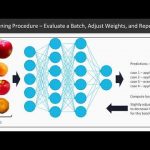
• Learn that a neural network has multiple layers whose weights are trained over several epochs
For the latest Big Data and Business Intelligence video tutorials, please visit http://bit.ly/1HCjJik
I was just making another video but got an unexpected call from an alien world. In this video, I help a girl named North from another planet help find a missing device using Artificial Intelligence. We use machine learning/deep learning technologies to help find the device in the mountain of data. Using programming, we’ll try to search for it. This video is made for the young and young at heart.
Coding challenge winners, i’ll announce you guys in a separate video this weekend. To everyone, Please Subscribe! And like. And comment. That’s what keeps me creating.
The newly-discovered Kepler-90i — a sizzling hot, rocky planet that orbits its star once every 14.4 days — was found by researchers from Google and The University of Texas at Austin using machine learning. Machine learning is an approach to artificial intelligence in which computers “learn.” In this case, computers learned to identify planets by finding in Kepler data instances where the telescope recorded signals from planets beyond our solar system, known as exoplanets.
Video credit: NASA/Ames Research Center
NASA’s Ames Research Center is located in California’s Silicon Valley. Follow us on social media to hear about the latest developments in space, science and technology.
On September 11, 2017, the Deming Center at Columbia Business School partnered with the School for Engineering and Applied Science to host an event on Artificial Intelligence just for the children of faculty, staff and friends of the Center. More than 50 kids ages 6 to 16 gathered to hear Professor of Mechanical Engineering and Director of the Creative Machines Lab Hod Lipson speak to the past, present and future of AI.
Impressing on them that their lives would be profoundly impacted by advances in AI and Machine Learning, Professor Lipson took the children on a journey through the history of the field, bringing them up to speed on the incredible advances of the last 50 years. He then explored all of the ways in which AI is being used today from simply playing a game of Tic Tac Toe and painting portraits to diagnosing diseases and synthesizing the vast amounts of data being generated by computers, algorithms and images that affect our daily lives. They then turned their attention to all of the ways in which AI would permeate their lives in the near future from driverless cars to robotic traffic police.
The children asked creative, probing questions throughout compelling the adults in the room to think outside-of-the-box and consider the deep nuances their questions asked. From 6-year old Aziz who was curious as to whether Artificial Intelligence can exist in water to 12-year old Christina’s question about how AI will affect terrorism and war in the future, children and parents alike were left with a sense of wonder and excitement about the future.
jael.ai is a fully integrated real time artificial intelligence chatbot that can coordinate care for victims of domestic violence at the point of trauma. jael.ai is training to respond to men and women in dangerous situations by helping them find a safe place for themselves and their families, contact the nearest shelter, and understand the many resources that are available according to the time and location they are needing help. jael.ai is building a national database with heavily curated information about organizations and resources for victims of domestic violence. By having direct access to the most up-to-date data jael.ai can give the most relevant help to people reaching out for assistance.
Brian Davis
AXIOM88
Brian Russel Davis is the founder of Axiom88, an emerging business with a team of 20 developers in four offices worldwide. Previously, Brian was a Pandora engineer working exclusively for the Creative team. A child of Trinidadian-Guyanese parents, born in Brooklyn, New York, and raised in Sacramento, California, Brian started mixing art and technology early, coding in 5th grade and beginning formal art training at 12. He holds a BA in philosophy with a focus in analytical logic from Morehouse College in Atlanta, Georgia.
http://themysticalspiral.com Ra talks of his encounters as a child with A.I. Shadow children traveling thru the electricity, electric elixir, soul exchange drag you into the shade where in the still you can see the electricity, in the center of eyes, inside the screen, inside the electricity, in blinking recollections, i know what you mean……..dragonflys and remembrance……
Artificial intelligence is rapidly moving into health care, led by some of the biggest technology companies and emerging startups using it to diagnose and respond to a raft of conditions.VIDEOGRAPHIC
Artificial intelligence or AI is intelligence displayed by machines such as computers, in a way similar to us, humans.
It’s able to observe its environment, learn and solve problems.
Want to learn more about AI and machine learning? Take this free HubSpot Academy course: https://bit.ly/2Sm2rzG
What is AI? What is machine learning and how does it work? You’ve probably heard the buzz. The age of artificial intelligence has arrived. But that doesn’t mean it’s easy to wrap your mind around. For the full story on the rise of artificial intelligence, check out The Robot Revolution: http://hubs.ly/H0630650
Let’s break down the basics of artificial intelligence, bots, and machine learning. Besides, there’s nothing that will impact marketing more in the next five to ten years than artificial intelligence. Learn what the coming revolution means for your day-to-day work, your business, and ultimately, your customers.
Every day, a large portion of the population is at the mercy of a rising technology, yet few actually understand what it is.
Artificial intelligence. You know, HAL 9000 and Marvin the Paranoid Android?
Thanks to books and movies, each generation has formed its own fantasy of a world ruled — or at least served — by robots. We’ve been conditioned to expect flying cars that steer clear of traffic and robotic maids whipping up our weekday dinner.
But if the age of AI is here, why don’t our lives look more like the Jetsons?
Well, for starters, that’s a cartoon. And really, if you’ve ever browsed Netflix movie suggestions or told Alexa to order a pizza, you’re probably interacting with artificial intelligence more than you realize.
And that’s kind of the point. AI is designed so you don’t realize there’s a computer calling the shots. But that also makes understanding what AI is — and what it’s not — a little complicated.
In basic terms, AI is a broad area of computer science that makes machines seem like they have human intelligence.
So it’s not only programming a computer to drive a car by obeying traffic signals, but it’s when that program also learns to exhibit signs of human-like road rage.
As intimidating as it may seem, this technology isn’t new. Actually, for the past half-a-century, it’s been an idea ahead of its time.
The term “artificial intelligence” was first coined back in 1956 by Dartmouth professor John McCarthy. He called together a group of computer scientists and mathematicians to see if machines could learn like a young child does, using trial and error to develop formal reasoning. The project proposal says they’ll figure out how to make machines “use language, form abstractions and concepts, solve kinds of problems now reserved for humans, and improve themselves.”
That was more than 60 years ago.
Since then, AI has remained for the most part in university classrooms and super secret labs … But that’s changing.
Like all exponential curves, it’s hard to tell when a line that’s slowly ticking upwards is going to skyrocket.
But during the past few years, a couple of factors have led to AI becoming the next “big” thing: First, huge amounts of data are being created every minute. In fact, 90% of the world’s data has been generated in the past two years. And now thanks to advances in processing speeds, computers can actually make sense of all this information more quickly. Because of this, tech giants and venture capitalists have bought into AI and are infusing the market with cash and new applications.
Very soon, AI will become a little less artificial, and a lot more intelligent.
Now the question is: Should you brace yourself for yet another Terminator movie, live on your city streets?
Not exactly. In fact, stop thinking of robots. When it comes to AI, a robot is nothing more than the shell concealing what’s actually used to power the technology.
That means AI can manifest itself in many different ways. Let’s break down the options…
First, you have your bots. They’re text-based and incredibly powerful, but they have limitations.
Ask a weather bot for the forecast, and it will tell you it’s partly cloudy with a high of 57. But ask that same bot what time it is in Tokyo, and it’ll get a little confused. That’s because the bot’s creator only programmed it to give you the weather by pulling from a specific data source.
Natural language processing makes these bots a bit more sophisticated. When you ask Siri or Cortana where the closest gas station is, it’s really just translating your voice into text, feeding it to a search engine, and reading the answer back in human syntax. So in other words, you don’t have to speak in code.
Machine intelligence, artificial intelligence, machine learning, artificial intelligence tutorial, machine learning tutorial, evolution of machine learning, advantages of artificial intelligence, applications of artificial intelligence, ai meaning, machine learning applications, artificial intelligence examples.
Want to stay current on emerging tech? Check out our free guide today: http://bit.ly/2GJesc2













![Artificial Intelligence Can Clone Any Voice, Yours Too [ LyreBird ]](https://video.kidibot.ro/wp-content/uploads/2020/01/1544/artificial-intelligence-can-clone-any-voice-yours-too-lyrebird-150x150.jpg)