Tag: JAXA

  • A dragon made of clouds is singing to Earth

    A dragon made of clouds is singing to Earth

    What if satellite cloud data could become music? Meet Hakuryu — a dragon born as the European Space Agency’s EarthCARE satellite, singing a song of peace for our planet.

    EarthCARE is the European Space Agency’s most advanced Earth Explorer launched to date, equipped with instruments that help us understand clouds and aerosols in new and unprecedented ways.

    It is a collaboration between ESA and the Japanese Aerospace Exploration Agency, JAXA, who designed and developed the satellite’s Cloud Profiling Radar (CPR) instrument. JAXA called EarthCARE Hakuryu, which is Japanese for White Dragon.

    Hakuryu now lends its name to the title of a groundbreaking immersive installation that creates an audiovisual story from EarthCARE cloud and aerosol data in a way that has never been seen or heard before.

    Through data sonification, Hakuryu transforms over thirty types of data into immersive soundscapes and music. Clouds become choirs as Hakuryu sings to Earth, with voices from notable public, scientific and ESA figures joined by those needing care most – people from the frontline of climate change, displacement and conflict.

    Adding to this, data from atmospheric elements such as rain, snow, dust and smoke are rendered as rich environmental sonic textures. Simultaneously the same data is transformed into clouds, creating a vibrant trail behind an animated white dragon. Viewers slowly fly with Hakuryu, in a beautiful representation of Earth as it moves from day into night on its journey around the sun.

    The film you see here comprises one entire EarthCARE orbit around our planet. It is running live all week at ESA’s Living Planet Symposium in Vienna, from 23 to 27 June 2025, as an immersive installation. Following its debut, Hakuryu will travel the world in a variety of ways soon to be revealed.

    More about EarthCARE: https://esa.int/earthcare

    More about the EarthCARE DISC: https://earth.esa.int/eogateway/activities/earthcare-disc

    Visit the artist’s website: https://www.jamieperera.com/

    Credits:
    Artist: Jamie Perera

    Visual programming: Tekja (Jacopo Hirschstein)

    Sonification programmer: N3xtcoder (Jonathan Moore) & Adrian Lewis

    ESA development & production: Bjoern Frommknecht, Peter Bickerton, Shannon Mason and the EarthCARE Data, Innovation and Science Cluster (DISC)

    Installation production: Lorenza Versace

    Additional audio development: Danny Bright

    ★ Subscribe: http://bit.ly/ESAsubscribe and click twice on the bell button to receive our notifications.

    Check out our full video catalog: http://bit.ly/SpaceInVideos
    Follow us on Twitter: http://bit.ly/ESAonTwitter
    On Facebook: http://bit.ly/ESAonFacebook
    On Instagram: http://bit.ly/ESAonInstagram
    On LinkedIn: https://bit.ly/ESAonLinkedIn
    On Pinterest: https://bit.ly/ESAonPinterest
    On Flickr: http://bit.ly/ESAonFlickr

    We are Europe’s gateway to space. Our mission is to shape the development of Europe’s space capability and ensure that investment in space continues to deliver benefits to the citizens of Europe and the world. Check out https://www.esa.int/ to get up to speed on everything space related.

    Copyright information about our videos is available here: https://www.esa.int/ESA_Multimedia/Terms_and_Conditions

  • The sounds of BepiColombo’s sixth flight past Mercury

    The sounds of BepiColombo’s sixth flight past Mercury

    Listen to the ESA/JAXA BepiColombo spacecraft as it flew past Mercury on 8 January 2025. This sixth and final flyby used the little planet’s gravity to steer the spacecraft on course for entering orbit around Mercury in 2026.

    What you can hear in the sonification soundtrack of this video are real spacecraft vibrations measured by the Italian Spring Accelerometer (ISA) instrument. The accelerometer data have been shifted in frequency to make them audible to human ears – one hour of measurements have been sped up to one minute of sound.

    BepiColombo is always shaking ever so slightly: fuel is slightly sloshing, the solar panels are vibrating at their natural frequency, heat pipes are pushing vapour through small tubes, and so forth. This creates the eerie underlying hum throughout the video.

    But as BepiColombo gets closer to Mercury, ISA detects other forces acting on the spacecraft. Most scientifically interesting are the audible shocks that sound like short, soft bongs. These are caused by the spacecraft responding to entering and exiting Mercury’s shadow, where the Sun’s intense radiation is suddenly blocked. One of ISA’s scientific goals is to monitor the changes in the ‘solar radiation pressure’ – a force caused by sunlight striking BepiColombo as it orbits the Sun and, eventually, Mercury.

    The loudest noises – an ominous ‘rumbling’ – are caused by the spacecraft’s large solar panels rotating. The first rotation occurs in shadow at 00:17 in the video, while the second adjustment at 00:51 was also captured by one of the spacecraft’s monitoring cameras.

    Faint sounds like wind being picked up in a phone call, which grow more audible around 30 seconds into the video, are caused by Mercury’s gravitational field pulling the nearest and furthest parts of the spacecraft by different amounts. As the planet’s gravity stretches the spacecraft ever so slightly, the spacecraft responds structurally. At the same time, the onboard reaction wheels change their speed to maintain the spacecraft’s orientation, which you can hear as a frequency shift in the background.

    This is the last time that many of these effects can be measured with BepiColombo’s largest solar panels, which make the spacecraft more susceptible to vibrations. The spacecraft module carrying these panels will not enter orbit around Mercury with the mission’s two orbiter spacecraft.

    The video shows an accurate simulation of the spacecraft and its route past Mercury during the flyby, made with the SPICE-enhanced Cosmographia spacecraft visualisation tool. The inset that appears 38 seconds into the video shows real photographs taken by one of BepiColombo’s monitoring cameras.

    Read more: https://www.esa.int/Science_Exploration/Space_Science/BepiColombo/BepiColombo_to_swing_by_Mercury_for_the_sixth_time

    Credits: ESA/BepiColombo/ISA & MTM
    Acknowledgements: Sonification and SPICE-enhanced Cosmographia spacecraft visualisation by Carmelo Magnafico (IAPS/INAF)

    ★ Subscribe: http://bit.ly/ESAsubscribe and click twice on the bell button to receive our notifications.

    Check out our full video catalog: http://bit.ly/SpaceInVideos
    Follow us on Twitter: http://bit.ly/ESAonTwitter
    On Facebook: http://bit.ly/ESAonFacebook
    On Instagram: http://bit.ly/ESAonInstagram
    On LinkedIn: https://bit.ly/ESAonLinkedIn
    On Pinterest: https://bit.ly/ESAonPinterest
    On Flickr: http://bit.ly/ESAonFlickr

    We are Europe’s gateway to space. Our mission is to shape the development of Europe’s space capability and ensure that investment in space continues to deliver benefits to the citizens of Europe and the world. Check out https://www.esa.int/ to get up to speed on everything space related.

    Copyright information about our videos is available here: https://www.esa.int/ESA_Multimedia/Terms_and_Conditions

    #ESA #BepiColombo #Mercury

  • Timelapse of BepiColombo’s sixth Mercury flyby

    Timelapse of BepiColombo’s sixth Mercury flyby

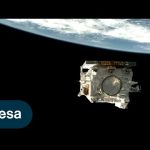
    Fly over Mercury with BepiColombo for the final time during the mission’s epic expedition around the Sun. The ESA/JAXA spacecraft captured these images of the Solar System’s smallest planet on 7 and 8 January 2025, before and during its sixth encounter with Mercury. This was its final planetary flyby until it enters orbit around the planet in late 2026.

    The video begins with BepiColombo’s approach to Mercury, showing images taken by onboard monitoring cameras 1 and 2 (M-CAM 1 and M-CAM 2) between 16:59 CET on 7 January and 01:45 CET on 8 January. During this time, the spacecraft moved from 106 019 to 42 513 km from Mercury’s surface. The view from M-CAM 1 is along a 15-metre-long solar array, whereas M-CAM 2 images show an antenna and boom in the foreground.

    After emerging into view from behind the solar array, Mercury appears to jump to the right. Both the spacecraft and its solar arrays rotated in preparation for passing through Mercury’s cold, dark shadow.

    For several hours after these first images were taken, the part of Mercury’s surface illuminated by the Sun was no longer visible from the M-CAMs. BepiColombo’s closest approach to Mercury took place in darkness at 06:58:52 CET on 8 January, when it got as close as 295 km.

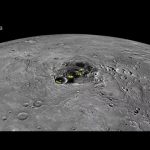
    Shortly after re-emerging into the intense sunlight, the spacecraft peered down onto the planet’s north pole, imaging several craters whose floors are in permanent shadow. The long shadows in this region are particularly striking on the floor of Prokofiev crater (the largest crater to the right of centre) – the central peak of that crater casts spiky shadows that exaggerate the shape of this mountain.

    Next, we have a beautiful view of Mercury crossing the field of view from left to right, seen first by M-CAM 1 then by M-CAM 2 between 07:06 and 07:49 CET. These images showcase the planet’s northern plains, which were smoothed over billions of years ago when massive amounts of runny lava flowed across Mercury’s cratered surface.

    The background music is The Hebrides overture, composed by Felix Mendelssohn in 1830 after being inspired by a visit to Fingal’s Cave, a sea cave created by ancient lava flows on the island of Staffa, Scotland. Similarly shaped by lava is Mercury’s Mendelssohn crater, one of the large craters visible passing from left to right above the solar array in M-CAM 1’s views, and at the very bottom of M-CAM 2’s views. The Mendelssohn crater was flooded with lava after an impact originally created it.

    The end of the video lingers on the final three close-up images that the M-CAMs will ever obtain of Mercury. The cameras will continue to operate until September 2026, fulfilling their role of monitoring various parts of the spacecraft. After that point, the spacecraft module carrying the M-CAMs will separate from BepiColombo’s other two parts, ESA’s Mercury Planetary Orbiter (MPO) and JAXA’s Mercury Magnetospheric Orbiter (Mio). MPO’s much more powerful science cameras will take over from the M-CAMs, mapping Mercury over a range of colours in visible and infrared light.

    Credits: ESA/BepiColombo/MTM
    Acknowledgements: Thank you to external collaborators Emanuele Simioni (INAF), Valentina Galluzzi (INAF), Jack Wright (Open University), and David Rothery (Open University) for their involvement in image sequence planning.

    ★ Subscribe: http://bit.ly/ESAsubscribe and click twice on the bell button to receive our notifications.

    Check out our full video catalog: http://bit.ly/SpaceInVideos
    Follow us on Twitter: http://bit.ly/ESAonTwitter
    On Facebook: http://bit.ly/ESAonFacebook
    On Instagram: http://bit.ly/ESAonInstagram
    On LinkedIn: https://bit.ly/ESAonLinkedIn
    On Pinterest: https://bit.ly/ESAonPinterest
    On Flickr: http://bit.ly/ESAonFlickr

    We are Europe’s gateway to space. Our mission is to shape the development of Europe’s space capability and ensure that investment in space continues to deliver benefits to the citizens of Europe and the world. Check out https://www.esa.int/ to get up to speed on everything space related.

    Copyright information about our videos is available here: https://www.esa.int/ESA_Multimedia/Terms_and_Conditions
    #ESA #BepiColombo #Mercury

  • Timelapse of BepiColombo’s fourth Mercury flyby

    Timelapse of BepiColombo’s fourth Mercury flyby

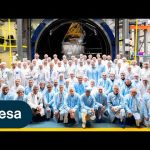
    Watch the closest flyby of a planet ever, as the ESA/JAXA BepiColombo spacecraft sped past Mercury during its latest encounter on 4 September 2024.

    This flyby marked BepiColombo’s closest approach to Mercury yet, and for the first time, the spacecraft had a clear view of Mercury’s south pole.

    This timelapse is made up of 128 different images captured by all three of BepiColombo’s monitoring cameras, M-CAM 1, 2 and 3. We see the planet move in and out of the fields of view of M-CAM 2 and 3, before M-CAM 1 sees the planet receding into the distance at the end of the video.
    The first few images are taken in the days and weeks before the flyby. Mercury first appears in an image taken at 23:50 CEST (21:50 UTC) on 4 September, at a distance of 191 km. Closest approach was at 23:48 CEST at a distance of 165 km.

    The sequence ends around 24 hours later, on 5 September 2024, when BepiColombo was about 243 000 km from Mercury.

    During the flyby it was possible to identify various geological features that BepiColombo will study in more detail once in orbit around the planet. Four minutes after closest approach, a large ‘peak ring basin’ called Vivaldi came into view.

    This crater was named after the famous Italian composer Antonio Vivaldi (1678–1741). The flyover of Vivaldi crater was the inspiration for using Antonio Vivaldi’s ‘Four Seasons’ as the soundtrack for this timelapse.

    Peak ring basins are mysterious craters created by powerful asteroid or comet impacts, so-called because of the inner ring of peaks on an otherwise flattish floor.

    A couple of minutes later, another peak ring basin came into view: newly named Stoddart. The name was recently assigned following a request from the M-CAM team, who realised that this crater would be visible in these images and decided it would be worth naming considering its potential interest for scientists in the future.

    BepiColombo’s three monitoring cameras provided 1024 x 1024 pixel snapshots. Their main purpose is to monitor the spacecraft’s various booms and antennas, hence why we see parts of the spacecraft in the foreground. The photos that they capture of Mercury during the flybys are a bonus.

    The 4 September gravity assist flyby was the fourth at Mercury and the seventh of nine planetary flybys overall. During its eight-year cruise to the smallest and innermost planet of the Solar System, BepiColombo makes one flyby at Earth, two at Venus and six at Mercury, to help steer itself on course for entering orbit around Mercury in 2026.

    BepiColombo is an international collaboration between ESA and JAXA.

    BepiColombo’s best images yet highlight fourth Mercury flyby: https://www.esa.int/Science_Exploration/Space_Science/BepiColombo/BepiColombo_s_best_images_yet_highlight_fourth_Mercury_flyby

    BepiColombo images in ESA’s Planetary Science: https://psa.esa.int/psa/#/pages/home

    Processing notes: The BepiColombo monitoring cameras provide 1024 x 1024 pixel images. These raw images have been lightly processed. The M-CAM 1 images have been cropped to 995 x 995 pixels.

    Credits: ESA/BepiColombo/MTM
    Acknowledgements: Image processing and video production by Mark McCaughrean

    ★ Subscribe: http://bit.ly/ESAsubscribe and click twice on the bell button to receive our notifications.

    Check out our full video catalog: http://bit.ly/SpaceInVideos
    Follow us on Twitter: http://bit.ly/ESAonTwitter
    On Facebook: http://bit.ly/ESAonFacebook
    On Instagram: http://bit.ly/ESAonInstagram
    On LinkedIn: https://bit.ly/ESAonLinkedIn
    On Pinterest: https://bit.ly/ESAonPinterest
    On Flickr: http://bit.ly/ESAonFlickr

    We are Europe’s gateway to space. Our mission is to shape the development of Europe’s space capability and ensure that investment in space continues to deliver benefits to the citizens of Europe and the world. Check out https://www.esa.int/ to get up to speed on everything space related.

    Copyright information about our videos is available here: https://www.esa.int/ESA_Multimedia/Terms_and_Conditions
    #ESA #BepiColombo #Mercury

  • Taking EarthCARE into orbit

    Taking EarthCARE into orbit

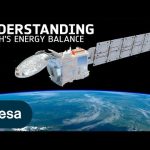
    ESA’s EarthCARE satellite lifted off on a SpaceX Falcon 9 rocket from the Vandenberg Space Force Base in California, US, on 29 May at 00:20 CEST (28 May, 15:20 local time).

    Developed as a cooperation between ESA and the Japan Aerospace Exploration Agency (JAXA), the Earth Cloud Aerosol and Radiation Explorer satellite carries a set of four instruments to make a range of different measurements that together will shed new light on the role that clouds and aerosols play in regulating Earth’s climate.

    Credits: ESA/SpaceX

    ★ Subscribe: http://bit.ly/ESAsubscribe and click twice on the bell button to receive our notifications.

    Check out our full video catalog: http://bit.ly/SpaceInVideos
    Follow us on Twitter: http://bit.ly/ESAonTwitter
    On Facebook: http://bit.ly/ESAonFacebook
    On Instagram: http://bit.ly/ESAonInstagram
    On LinkedIn: https://bit.ly/ESAonLinkedIn
    On Pinterest: https://bit.ly/ESAonPinterest
    On Flickr: http://bit.ly/ESAonFlickr

    We are Europe’s gateway to space. Our mission is to shape the development of Europe’s space capability and ensure that investment in space continues to deliver benefits to the citizens of Europe and the world. Check out https://www.esa.int/ to get up to speed on everything space related.

    Copyright information about our videos is available here: https://www.esa.int/ESA_Multimedia/Terms_and_Conditions
    #ESA #EarthCARE #Launch

  • Meet the team behind EarthCARE

    Meet the team behind EarthCARE

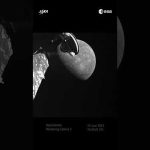
    As we approach the launch of ESA’s EarthCARE mission, we caught up with some of the scientists, engineers and experts behind the mission.

    With the climate crisis increasingly tightening its grip, ESA’s Earth Cloud Aerosol and Radiation Explorer mission (EarthCARE) will shed new light on the complex interactions between clouds, aerosols and radiation in Earth’s atmosphere.

    EarthCARE is the largest and most complex Earth Explorer mission. It comes at a critical time in the development of kilometre-scale resolution, global climate models and will provide an important contribution to an improved understanding of cloud convection and its role in Earth’s radiation budget.

    EarthCARE is an ESA mission, but it has been developed as a cooperation between ESA and JAXA, the Japanese Space Agency.

    This video features interviews with: Pavlos Kollias from Stony Brook University – McGill University, Thorsten Fehr, EarthCARE Mission Scientist at ESA, Robin Hogan, Senior Scientist at ECMWF, Dirk Bernaerts, EarthCARE Project Manager at ESA, Kotska Wallace, Mission and Optical Payload Manager at ESA, Tomomi Nio, EarthCARE Mission Manager at JAXA, Eiichi Tomita, EarthCARE/CPR Project Manager at JAXA, Ulla Wandinger, Senior Scientist at Leibniz Institute for Tropospheric Research and Bjoern Frommknecht, EarthCARE Mission Manager at ESA.

    Follow the EarthCARE launch campaign blog for more updates.

    Credits: ESA – European Space Agency

    ★ Subscribe: http://bit.ly/ESAsubscribe and click twice on the bell button to receive our notifications.

    Check out our full video catalog: http://bit.ly/SpaceInVideos
    Follow us on Twitter: http://bit.ly/ESAonTwitter
    On Facebook: http://bit.ly/ESAonFacebook
    On Instagram: http://bit.ly/ESAonInstagram
    On LinkedIn: https://bit.ly/ESAonLinkedIn
    On Pinterest: https://bit.ly/ESAonPinterest
    On Flickr: http://bit.ly/ESAonFlickr

    We are Europe’s gateway to space. Our mission is to shape the development of Europe’s space capability and ensure that investment in space continues to deliver benefits to the citizens of Europe and the world. Check out https://www.esa.int/ to get up to speed on everything space related.

    Copyright information about our videos is available here: https://www.esa.int/ESA_Multimedia/Terms_and_Conditions
    #ESA #EarthCARE #Team

  • EarthCARE bids adieu to Europe

    EarthCARE bids adieu to Europe

    After years of development and a rigorous testing programme, ESA’s EarthCARE satellite has left Munich, Germany, and is now on its away to SpaceX’s launch site in Vandenberg, California. Once it arrives, it will be put into storage for a few weeks until it is time to ready the satellite for liftoff – which is scheduled to launch in May on a Falcon 9 rocket.

    The Earth Cloud Aerosol and Radiation Explorer, or EarthCARE for short, is the most complex Earth Explorer mission to date. The new satellite will look at the role that clouds and aerosols play in heating and cooling Earth’s atmosphere – contributing to our understanding of climate change.

    With its unique set of four instruments, EarthCARE will examine the role clouds and aerosols play in reflecting solar radiation back into space and also in trapping infrared radiation emitted from Earth’s surface.

    EarthCARE is a joint venture between ESA and JAXA, the Japan Aerospace Exploration Agency.

    This video features interviews with Simonetta Cheli, Director of Earth Observation Programmes at ESA, Thorsten Fehr, ESA’s EarthCARE Mission Scientist, Dirk Bernaerts, ESA’s EarthCARE Project Manager and Eiichi Tomita, JAXA’s EarthCARE/CPR Project Manager.

    Credits: ESA – European Space Agency

    ★ Subscribe: http://bit.ly/ESAsubscribe and click twice on the bell button to receive our notifications.

    Check out our full video catalog: http://bit.ly/SpaceInVideos
    Follow us on Twitter: http://bit.ly/ESAonTwitter
    On Facebook: http://bit.ly/ESAonFacebook
    On Instagram: http://bit.ly/ESAonInstagram
    On LinkedIn: https://bit.ly/ESAonLinkedIn
    On Pinterest: https://bit.ly/ESAonPinterest
    On Flickr: http://bit.ly/ESAonFlickr

    We are Europe’s gateway to space. Our mission is to shape the development of Europe’s space capability and ensure that investment in space continues to deliver benefits to the citizens of Europe and the world. Check out https://www.esa.int/ to get up to speed on everything space related.

    Copyright information about our videos is available here: https://www.esa.int/ESA_Multimedia/Terms_and_Conditions
    #ESA #EarthObservation #Satellite

  • BepiColombo’s third Mercury flyby 🛰️ #shorts

    BepiColombo’s third Mercury flyby 🛰️ #shorts

    Watch Mercury appear from the shadows as the ESA/JAXA BepiColombo spacecraft sped by the planet’s night side during its 19 June 2023 close flyby, and enjoy a special flyover of geologically rich terrain.

    Credits:
    Image: ESA/BepiColombo/MTM, CC BY-SA 3.0 IGO; Music composed by ILĀ. Shape from shading processing and animation (using Unity) by K. Wohlfarth and M. Tenthoff (TU Dortmund), based on techniques described by Tenthoff et al. (2020) and Domingue et al. (2015) with a global terrain model from Becker et al. (2016).

    Music: Tim Garland – Moonlight Mystery

    ★ Subscribe: http://bit.ly/ESAsubscribe and click twice on the bell button to receive our notifications.

    Check out our full video catalog: http://bit.ly/SpaceInVideos
    Follow us on Twitter: http://bit.ly/ESAonTwitter
    On Facebook: http://bit.ly/ESAonFacebook
    On Instagram: http://bit.ly/ESAonInstagram
    On LinkedIn: https://bit.ly/ESAonLinkedIn
    On Pinterest: https://bit.ly/ESAonPinterest
    On Flickr: http://bit.ly/ESAonFlickr

    We are Europe’s gateway to space. Our mission is to shape the development of Europe’s space capability and ensure that investment in space continues to deliver benefits to the citizens of Europe and the world. Check out https://www.esa.int/ to get up to speed on everything space related.

    Copyright information about our videos is available here: https://www.esa.int/ESA_Multimedia/Terms_and_Conditions

    #ESA
    #Mercury
    #BepiColombo

  • BepiColombo’s third Mercury flyby

    BepiColombo’s third Mercury flyby

    Watch Mercury appear from the shadows as the ESA/JAXA BepiColombo spacecraft sped by the planet’s night side during its 19 June 2023 close flyby, and enjoy a special flyover of geologically rich terrain.

    The first part of the movie is composed of 217 images captured by BepiColombo’s monitoring camera M-CAM3. The image sequence starts from 19:46:25 UTC on 19 June 2023, at an altitude of 1 789 km above the planet’s surface, and ends at 20:34:25 UTC on 20 June 2023, when BepiColombo was 331 755 km away. The image cadence was roughly once per minute around closest approach, but much slower in the later phases.

    The second part of the movie cuts to a flyover of a special region of interest, rotating around features such as the 600 km-long Beagle Rupes curved escarpment and the elongated Sveinsdóttir impact crater that it cuts through. It also features the 218 km-wide Manley Crater and the straight Challenger Rupes scarp. At the end, the animated topography fades out and the projected image used for 3D reconstruction appears. Regions like these will be important for BepiColombo’s main science mission, to learn more about Mercury’s geological history.

    Music was composed for the sequence by ILĀ, with the assistance of AI tools developed by the Machine Intelligence for Musical Audio (MIMA) group, University of Sheffield.

    More information about this movie and music: https://www.esa.int/Science_Exploration/Space_Science/BepiColombo/BepiColombo_s_third_Mercury_flyby_the_movie

    Credits:
    Image: ESA/BepiColombo/MTM, CC BY-SA 3.0 IGO; Music composed by ILĀ. Shape from shading processing and animation (using Unity) by K. Wohlfarth and M. Tenthoff (TU Dortmund), based on techniques described by Tenthoff et al. (2020) and Domingue et al. (2015) with a global terrain model from Becker et al. (2016).

    ★ Subscribe: http://bit.ly/ESAsubscribe and click twice on the bell button to receive our notifications.

    Check out our full video catalog: http://bit.ly/SpaceInVideos
    Follow us on Twitter: http://bit.ly/ESAonTwitter
    On Facebook: http://bit.ly/ESAonFacebook
    On Instagram: http://bit.ly/ESAonInstagram
    On LinkedIn: https://bit.ly/ESAonLinkedIn
    On Pinterest: https://bit.ly/ESAonPinterest
    On Flickr: http://bit.ly/ESAonFlickr

    We are Europe’s gateway to space. Our mission is to shape the development of Europe’s space capability and ensure that investment in space continues to deliver benefits to the citizens of Europe and the world. Check out https://www.esa.int/ to get up to speed on everything space related.

    Copyright information about our videos is available here: https://www.esa.int/ESA_Multimedia/Terms_and_Conditions
    #ESA
    #Mercury
    #BepiColombo

  • Sneak peek of planet Mercury during BepiColombo’s second Mercury flyby #shorts

    Sneak peek of planet Mercury during BepiColombo’s second Mercury flyby #shorts

    The ESA/ @JAXA-HQ BepiColombo mission has made its second gravity assist of planet Mercury, capturing new close-up images as it steers closer towards Mercury orbit in 2025.

    The closest approach took place at 09:44 UTC (11:44 CEST) on 23 June 2022, about 200 km above the planet’s surface. Images from the spacecraft’s three monitoring cameras (MCAM), along with scientific data from a number of instruments, were collected during the encounter.

    Read more about the flyby here: https://www.esa.int/Science_Exploration/Space_Science/BepiColombo/Second_helpings_of_Mercury

    Credit: Image: ESA/BepiColombo/MTM, CC BY-SA 3.0 IGO

    ★ Subscribe: http://bit.ly/ESAsubscribe and click twice on the bell button to receive our notifications.

    Check out our full video catalog: http://bit.ly/SpaceInVideos
    Follow us on Twitter: http://bit.ly/ESAonTwitter
    On Facebook: http://bit.ly/ESAonFacebook
    On Instagram: http://bit.ly/ESAonInstagram
    On LinkedIn: https://bit.ly/ESAonLinkedIn
    On Pinterest: https://bit.ly/ESAonPinterest
    On Flickr: http://bit.ly/ESAonFlickr

    We are Europe’s gateway to space. Our mission is to shape the development of Europe’s space capability and ensure that investment in space continues to deliver benefits to the citizens of Europe and the world. Check out https://www.esa.int/ to get up to speed on everything space related.

    Copyright information about our videos is available here: https://www.esa.int/ESA_Multimedia/Terms_and_Conditions
    #ESA
    #BepiColombo
    #MercuryFlyby

  • Spacewalk scenes with Thomas and Aki – 8K!

    Spacewalk scenes with Thomas and Aki – 8K!

    ESA astronaut Thomas Pesquet and @JAXA | 宇宙航空研究開発機構 astronaut Akihiko Hoshide performed a spacewalk on 12 September 2021 to prepare for the installation of a new solar array on the International Space Station.

    The new solar arrays, called IROSA or ISS Roll-Out Solar Array, are being gradually installed over the existing arrays to boost the International Space Station’s power system.

    Thomas and @NASA astronaut Shane Kimbrough prepared and installed two IROSA solar panels across three spacewalk in June. The arrays were taken from their storage area outside the Space Station and passed from spacewalker to spacewalker to the worksite. There the rolled arrays were secured, unfolded, connected and then unfurled.

    Aki and Thomas prepared the P4 truss for its IROSA installation. This is the same area as where Thomas and Shane installed two IROSA’s but closer to the main body of the Space Station, in an area called the 4A channel. Only one new solar array will be installed here, on a later spacewalk.
    While the extravehicular activity or EVA was already the fourth spacewalk during Thomas’ Alpha mission, it was his first with Aki and the first time a spacewalking pair did not feature a US or Russian astronaut.

    Aki and Thomas made good time preparing the 4A channel for the next IROSA and were able to complete a second task to replace a floating potential measurement unit that was faulty. This unit measures the difference between the Space Station’s conductive structures and the atmospheric plasma.

    Thomas and Aki completed their spacewalk in six hours and 54 minutes, which hands Thomas the ESA record for longest time spent spacewalking.

    Thomas posted this video on his social media channels with the caption: “Hanging out with my buddy Aki on last week’s spacewalk. The music and timelapse makes it look comical, but as you can see tools and equipment have a life of their own and never stop floating away. Keeping track and even just staying in position in front of the worksite is a constant fight! We got the support bracket done and the truss is ready for the new roll-out solar arrays. We are passing on the baton to the next crew, the arrays need to be launched still and they will be installed next year.”

    Over 200 experiments are planned during Thomas’ time in space, with 40 European ones and 12 new experiments led by the French space agency @CNES.

    Follow Thomas: http://bit.ly/ThomasPesquetBlog

    ★ Subscribe: http://bit.ly/ESAsubscribe and click twice on the bell button to receive our notifications.

    Check out our full video catalog: http://bit.ly/SpaceInVideos
    Follow us on Twitter: http://bit.ly/ESAonTwitter
    On Facebook: http://bit.ly/ESAonFacebook
    On Instagram: http://bit.ly/ESAonInstagram
    On Pinterest: https://bit.ly/ESAonPinterest
    On Flickr: http://bit.ly/ESAonFlickr

    We are Europe’s gateway to space. Our mission is to shape the development of Europe’s space capability and ensure that investment in space continues to deliver benefits to the citizens of Europe and the world. Check out https://www.esa.int/ to get up to speed on everything space related.

    Copyright information about our videos is available here: https://www.esa.int/ESA_Multimedia/Terms_and_Conditions

    #ESA
    #8K
    #MissionAlpha

  • BepiColombo first Mercury flyby

    BepiColombo first Mercury flyby

    Visualisation of BepiColombo flying by Mercury on 1 October 2021. The spacecraft makes nine gravity assist manoeuvres (one of Earth, two of Venus and six of Mercury) before entering orbit around the innermost planet of the Solar System.

    The closest approach is at 23:34 UTC on 1 October (01:34 CEST 2 October) at a distance of about 200 km.

    BepiColombo is an international collaboration between #ESA and #JAXA.

    Credit: ESA/ATG medialab

    ★ Subscribe: http://bit.ly/ESAsubscribe and click twice on the bell button to receive our notifications.

    Check out our full video catalog: http://bit.ly/SpaceInVideos
    Follow us on Twitter: http://bit.ly/ESAonTwitter
    On Facebook: http://bit.ly/ESAonFacebook
    On Instagram: http://bit.ly/ESAonInstagram
    On Pinterest: https://bit.ly/ESAonPinterest
    On Flickr: http://bit.ly/ESAonFlickr

    We are Europe’s gateway to space. Our mission is to shape the development of Europe’s space capability and ensure that investment in space continues to deliver benefits to the citizens of Europe and the world. Check out https://www.esa.int/ to get up to speed on everything space related.

    Copyright information about our videos is available here: https://www.esa.int/ESA_Multimedia/Terms_and_Conditions

    #ESA
    #BepiColombo
    #Mercury

  • Quest airlock | Space Station 360 [in French with English subtitles available]

    Quest airlock | Space Station 360 [in French with English subtitles available]

    ESA astronaut Thomas Pesquet takes you on a tour of the International Space Station like no other. Filmed with a 360 camera, the Space Station 360 series lets you explore for yourself alongside Thomas’s explanation – episode four is @NASA’s Quest airlock.

    The Quest airlock is the Station’s smallest module, but it is vital for going on spacewalks. This is where the astronauts suit up into their spacesuits, prepare for the spacewalk and enter the airlock to go outside for maintenance, installing new equipment or science experiments.

    Follow Thomas: http://bit.ly/ThomasPesquetBlog

    ★ Subscribe: http://bit.ly/ESAsubscribe and click twice on the bell button to receive our notifications.

    Check out our full video catalog: http://bit.ly/SpaceInVideos
    Follow us on Twitter: http://bit.ly/ESAonTwitter
    On Facebook: http://bit.ly/ESAonFacebook
    On Instagram: http://bit.ly/ESAonInstagram
    On Pinterest: https://bit.ly/ESAonPinterest
    On Flickr: http://bit.ly/ESAonFlickr

    We are Europe’s gateway to space. Our mission is to shape the development of Europe’s space capability and ensure that investment in space continues to deliver benefits to the citizens of Europe and the world. Check out https://www.esa.int/ to get up to speed on everything space related.

    Copyright information about our videos is available here: https://www.esa.int/ESA_Multimedia/Terms_and_Conditions

    #ESA
    #ISSTour
    #MissionAlpha

  • Kibo | Space Station 360 [in French with English subtitles available]

    Kibo | Space Station 360 [in French with English subtitles available]

    ESA astronaut Thomas Pesquet takes you on a tour of the International Space Station like no other. Filmed with a 360 camera, the Space Station 360 series lets you explore for yourself alongside Thomas’s explanation – this is the Kibo module.

    Kibo is the Japanese module, also known as the Japanese Experiment Module or JEM. Thomas takes you through the hardware available for the astronauts and researchers on Earth and the unique airlock and storage space in Kibo.

    The video is part of a series with Thomas showing each module in full 360 surround video.
    Click and drag with your mouse or move your smartphone around to see different angles and feel like you are in space with Thomas.

    Follow Thomas: http://bit.ly/ThomasPesquetBlog

    ★ Subscribe: http://bit.ly/ESAsubscribe and click twice on the bell button to receive our notifications.

    Check out our full video catalog: http://bit.ly/SpaceInVideos
    Follow us on Twitter: http://bit.ly/ESAonTwitter
    On Facebook: http://bit.ly/ESAonFacebook
    On Instagram: http://bit.ly/ESAonInstagram
    On Pinterest: https://bit.ly/ESAonPinterest
    On Flickr: http://bit.ly/ESAonFlickr

    We are Europe’s gateway to space. Our mission is to shape the development of Europe’s space capability and ensure that investment in space continues to deliver benefits to the citizens of Europe and the world. Check out https://www.esa.int/ to get up to speed on everything space related.

    Copyright information about our videos is available here: https://www.esa.int/ESA_Multimedia/Terms_and_Conditions

    #ESA
    #ISSTour
    #MissionAlpha

  • Sound of a close Venus flyby #shorts

    Sound of a close Venus flyby #shorts

    A sonification of data recorded by the Italian Spring Accelerometer (ISA) aboard the BepiColombo Mercury Planetary Orbiter spacecraft during the flyby of Venus on 10 August 2021. The accelerometer data was converted to frequency to be made audible to the human ear. The resulting sound is rich with interesting effects due to the planet’s gravity acting on the spacecraft structure, the response of the spacecraft to the rapid temperature changes, and the change in reaction wheel velocity as they work hard to compensate for these effects.

    The audio has been matched to the timing that the images seen in this movie were captured, in the moments after closest approach.

    Read more: https://www.esa.int/Science_Exploration/Space_Science/Sights_and_sounds_of_a_Venus_flyby

    Credit:
    Images: ESA/BepiColombo/MTM, CC BY-SA 3.0 IGO
    Audio: ESA/BepiColombo/ISA/ASI-INAF, CC BY-SA 3.0 IGO

    ★ Subscribe: http://bit.ly/ESAsubscribe and click twice on the bell button to receive our notifications.

    Check out our full video catalog: http://bit.ly/SpaceInVideos
    Follow us on Twitter: http://bit.ly/ESAonTwitter
    On Facebook: http://bit.ly/ESAonFacebook
    On Instagram: http://bit.ly/ESAonInstagram
    On Pinterest: https://bit.ly/ESAonPinterest
    On Flickr: http://bit.ly/ESAonFlickr

    We are Europe’s gateway to space. Our mission is to shape the development of Europe’s space capability and ensure that investment in space continues to deliver benefits to the citizens of Europe and the world. Check out https://www.esa.int/ to get up to speed on everything space related.

    Copyright information about our videos is available here: https://www.esa.int/ESA_Multimedia/Terms_and_Conditions

    #ESA
    #JAXA
    #BepiColombo

  • BepiColombo’s close Venus encounter

    BepiColombo’s close Venus encounter

    A stunning sequence of 89 images taken by the monitoring cameras on board the European-Japanese BepiColombo mission to Mercury, as the spacecraft made a close approach of Venus on 10 August 2021.

    The sequence includes images from all three Monitoring Cameras (MCAM) onboard the Mercury Transfer Module, which provides black-and-white snapshots in 1024 x 1024 pixel resolution. It is not possible to image with the high-resolution camera suite during the cruise phase. The images have been lightly processed to enhance contrast and use the full dynamic range. A small amount of optical vignetting is seen in the corners of some of the images.

    The first image is from MCAM 1, and was taken at 13:41:02 UTC, prior to close approach. As such, the spacecraft was still on the nightside of the planet, but the dayside can just be seen creeping into view. Part of the spacecraft’s solar array can also be seen.

    The second image was taken by MCAM 2 at 13:51:56 UTC, two seconds after closest approach. With the Venus surface just 552 km away, the planet fills the entire field of view. The camera is not able to image detail of the planet’s atmosphere. The image also captures the Mercury Planetary Orbiter’s medium gain antenna and magnetometer boom.

    The rest of the sequence is from MCAM 3, while the spacecraft was pointed at Venus, and then as it slews away and gradually recedes from view, covering the time period 13:53:56 UTC on 10 August until 12:21:26 UTC on 11 August. The high gain antenna of the Mercury Planetary Orbiter is also seen changing orientation as it points towards Earth.

    The music accompanying the compilation was composed especially for the occasion, by @Anna Phoebe.

    The images were captured during the second of two Venus flybys, and the third of nine flybys overall. The flybys are gravity assist manoeuvres needed to help steer the spacecraft on course for Mercury. During its seven-year cruise to the smallest and innermost planet of the Solar System, BepiColombo makes one flyby at Earth, two at Venus and six at Mercury in order to approach the orbit around Mercury. Its first Mercury flyby will take place 1-2 October 2021 from a distance of just 200 km.

    BepiColombo, which comprises ESA’s Mercury Planetary Orbiter and the Mercury Magnetospheric Orbiter of @JAXA | 宇宙航空研究開発機構, is scheduled to reach its target orbit around the smallest and innermost planet of the Solar System in 2025. The spacecraft will separate and enter into their respective orbits before starting their science mission in early 2026 .

    Credit: ESA/BepiColombo/MTM, CC BY-SA 3.0 IGO

    Music composed by Anna Phoebe, with additional soundscapes by Mark McCaughrean

    ★ Subscribe: http://bit.ly/ESAsubscribe and click twice on the bell button to receive our notifications.

    Check out our full video catalog: http://bit.ly/SpaceInVideos
    Follow us on Twitter: http://bit.ly/ESAonTwitter
    On Facebook: http://bit.ly/ESAonFacebook
    On Instagram: http://bit.ly/ESAonInstagram
    On Pinterest: https://bit.ly/ESAonPinterest
    On Flickr: http://bit.ly/ESAonFlickr

    We are Europe’s gateway to space. Our mission is to shape the development of Europe’s space capability and ensure that investment in space continues to deliver benefits to the citizens of Europe and the world. Check out https://www.esa.int/ to get up to speed on everything space related.

    Copyright information about our videos is available here: https://www.esa.int/ESA_Multimedia/Terms_and_Conditions

    #ESA
    #JAXA
    #BepiColombo

  • Underwater spacewalk training with Thomas Pesquet

    Underwater spacewalk training with Thomas Pesquet

    In preparation for his second mission to the International Space Station, ESA astronaut Thomas Pesquet is training for possible spacewalks at @NASA’s Johnson Space Center. His second six-month mission is called Alpha and will see Thomas launch as part Crew-2 on the @SpaceX Dragon spacecraft with NASA astronaut Megan Behnken and Shane Kimbrough and @JAXA | 宇宙航空研究開発機構 astronaut Aki Hoshide.

    Watch this underwater spacewalk training session in 4K with audio from the astronauts and “mission control” recorded on 2 December 2020. Thomas is moved into position on a functional mockup of the International Space Station’s robotic arm to install hardware.

    Astronauts practice spacewalks in NASA’s Neutral Buoyancy Laboratory. The training pool is the largest indoor swimming pool in the world, holding over 23 million litres of water, but it is still not large enough to hold the complete Space Station. Instead, specific parts of the Station structure are used as needed for training.

    Training underwater is as close as it gets to experiencing weightlessness on Earth so spending time in a full spacesuit is used to practise techniques for spacewalks and neutral buoyancy is substituted for microgravity. Support and training divers are on hand to guide the astronauts during their tasks. In space, the astronauts are aided by mission control and colleague astronauts on the Station.

    Extra Vehicular Activities (known as EVAs or spacewalks) are the most challenging tasks for an astronaut. When venturing from their spacecraft in a self-contained spacesuit to carry out repairs or install new equipment outside the International Space Station safety and efficiency are vital.

    It might be relaxing and soothing to watch this underwater spacewalk at home, but spacewalks are marathons that require concentration and physical exertion for six hours at a time, with no food or bathroom breaks.

    Follow Thomas: http://bit.ly/ThomasPesquetBlog

    ★ Subscribe: http://bit.ly/ESAsubscribe and click twice on the bell button to receive our notifications.

    Check out our full video catalog: http://bit.ly/SpaceInVideos
    Follow us on Twitter: http://bit.ly/ESAonTwitter
    On Facebook: http://bit.ly/ESAonFacebook
    On Instagram: http://bit.ly/ESAonInstagram
    On Flickr: http://bit.ly/ESAonFlickr

    We are Europe’s gateway to space. Our mission is to shape the development of Europe’s space capability and ensure that investment in space continues to deliver benefits to the citizens of Europe and the world. Check out https://www.esa.int/ to get up to speed on everything space related.

    Copyright information about our videos is available here: https://www.esa.int/ESA_Multimedia/Terms_and_Conditions

    #ESA
    #ThomasPesquet
    #AstronautTraining

  • Space Station 20th: astronauts celebrate humans’ home in space

    Space Station 20th: astronauts celebrate humans’ home in space

    Monday 2 November, 2020 marks 20 years since the first crew took up residence on the International Space Station. Since then, 240 people including 18 ESA astronauts have lived and worked on the orbital outpost, carrying out essential research to benefit life on Earth.

    In this clip, ESA astronauts Luca Parmitano, Alexander Gerst, Thomas Pesquet, Tim Peake, Andreas Mogensen, André Kuipers, Christer Fuglesang, Frank De Winne and Reinhold Ewald pay tribute to the Station. ESA Director General Jan Wörner and NASA Administrator Jim Bridenstine also speak about the Station’s significance for space exploration and international collaboration.

    The next ESA mission to the International Space Station is set for 2021, when Thomas Pesquet will become the first European to fly on a SpaceX Crew Dragon spacecraft for his Alpha mission.

    ★ Subscribe: http://bit.ly/ESAsubscribe and click twice on the bell button to receive our notifications.

    Check out our full video catalog: http://bit.ly/SpaceInVideos
    Follow us on Twitter: http://bit.ly/ESAonTwitter
    On Facebook: http://bit.ly/ESAonFacebook
    On Instagram: http://bit.ly/ESAonInstagram
    On Flickr: http://bit.ly/ESAonFlickr

    We are Europe’s gateway to space. Our mission is to shape the development of Europe’s space capability and ensure that investment in space continues to deliver benefits to the citizens of Europe and the world. Check out https://www.esa.int/ to get up to speed on everything space related.

    Copyright information about our videos is available here: https://www.esa.int/ESA_Multimedia/Terms_and_Conditions

    #ESA
    #InternationalSpaceStation
    #SpaceStation20th

  • Zoom past Earth with BepiColombo in virtual reality simulation

    Zoom past Earth with BepiColombo in virtual reality simulation

    With a simple Google Cardboard-style virtual reality (VR) viewer, you can experience how it feels to be a spacecraft hurtling past Earth. This 360-degree VR simulation of a flyby manoeuvre performed by ESA’s Mercury-bound BepiColombo spacecraft takes you on a trip past Earth at the distance of only 12 700 km, closer than the orbit of Europe’s navigational satellites Galileo.

    The simulation displays the field of view of two of BepiColombo’s science instruments (MERTIS and PHEBUS) and two of its three MCAM selfie cameras during the gravity-assist flyby at Earth on 10 April 2020.

    The simulation was created using the SPICE software developed by NASA’s Jet Propulsion Laboratory and data generated by the European Space and Astronomy Centre (ESAC)in Spain.

    BepiColombo, a joint mission of ESA and the Japan Aerospace Exploration Agency (JAXA), is on a seven-year cruise to Mercury, the smallest and innermost planet of the Solar System. Launched in October 2018, BepiColombo follows an intricate trajectory that involves nine gravity-assist flyby manoeuvres. In addition to the flyby at Earth, BepiColombo will perform two flybys at Venus and six at Mercury, its target planet. The manoeuvres slow down the spacecraft as it needs to constantly brake against the gravitational pull of the Sun in order to be able to enter the correct orbit around Mercury in 2025, ahead of commencing science operations in early 2026.

    Credit: ESA SPICE Service/RHEA Group.

    ★ Subscribe: http://bit.ly/ESAsubscribe and click twice on the bell button to receive our notifications.

    Check out our full video catalog: http://bit.ly/SpaceInVideos
    Follow us on Twitter: http://bit.ly/ESAonTwitter
    On Facebook: http://bit.ly/ESAonFacebook
    On Instagram: http://bit.ly/ESAonInstagram
    On Flickr: http://bit.ly/ESAonFlickr

    We are Europe’s gateway to space. Our mission is to shape the development of Europe’s space capability and ensure that investment in space continues to deliver benefits to the citizens of Europe and the world. Check out http://www.esa.int/ESA to get up to speed on everything space related.

    Copyright information about our videos is available here: http://www.esa.int/spaceinvideos/Terms_and_Conditions

    #ESA
    #BepiColombo
    #360º

  • Grand tour of the International Space Station with Drew and Luca | Single take

    Grand tour of the International Space Station with Drew and Luca | Single take

    ESA astronaut Luca Parmitano and NASA astronaut Drew Morgan take you on a unique tour of the International Space Station shot in one take with two cameras strapped together. Luca and Drew take it in turns to guide you through the modules and spacecraft docked to the orbital outpost.

    Starting from the Soyuz MS-15 spacecraft that bought Drew to the Space Station, the duo show each module and spacecraft docked with the International Space Station at the time it was recorded around the New Year 2020. Passing colleagues include NASA astronaut Jessica Meir and Christina Koch exercising and Russian cosmonauts Alexander Skvortsov and Oleg Skripochka.

    This is the first tour of the International Space Station with two astronauts presenting and the first done in a single take.

    At the time of recording three supply vehicles were docked, the Russian Progress MS-13, Space-X’s Dragon-19 and Northrup Grumman’s Cygnus-12, as well as two astronaut vehicles the Soyuz MS-15 and Soyuz MS-13.

    The map overlay graphic erroneously shows the future Nauka module instead of Pirs. The Russian Multipurpose Laboratory Module Nauka is planned for launch in the future and will replace Pirs, but we put it on the map already.

    Skip to specific modules or features such as the toilets using the timestamps below:

    00:00:06 Soyuz MS-15
    00:04:53 Zvezda service module
    00:08:01 Pirs
    00:09:27 Mini Research Module-2 (MRM-2)
    00:10:30 Soyuz MS-13
    00:11:44 MRM-2
    00:12:27 Progress
    00:13:19 Functional Cargo Block (FGB)
    00:07:12 Mini Research Module-1 (MRM-1)
    00:19:36 Pressurised Mating Adapter
    00:20:42 Node-1 Unity
    00:22:46 Northrup Grumman Cygnus-12
    00:27:32 Quest Airlock
    00:29:27 Node-3 Tranquility
    00:30:58 T2 Treadmill
    00:31:17 Toilet
    00:33:38 Cupola at night
    00:34:11 Permanent Multipurpose Module Leonardo (PMM)
    00:36:42 US laboratory Destiny
    00:37:45 Robotics station for Canadarm2
    00:38:40 Exercise bike
    00:42:21 Node-2 Harmony
    00:44:40 Space X Dragon
    00:46:35 European laboratory Columbus
    00:49:53 Japanese laboratory Kibo
    00:56:17 Space Station fly through
    01:00:43 Cupola daytime
    01:04:27 Goodbye from Cupola

    ★ Subscribe: http://bit.ly/ESAsubscribe and click twice on the bell button to receive our notifications.

    Check out our full video catalog: http://bit.ly/SpaceInVideos
    Follow us on Twitter: http://bit.ly/ESAonTwitter
    On Facebook: http://bit.ly/ESAonFacebook
    On Instagram: http://bit.ly/ESAonInstagram
    On Flickr: http://bit.ly/ESAonFlickr

    We are Europe’s gateway to space. Our mission is to shape the development of Europe’s space capability and ensure that investment in space continues to deliver benefits to the citizens of Europe and the world. Check out http://www.esa.int/ESA to get up to speed on everything space related.

    Copyright information about our videos is available here: http://www.esa.int/spaceinvideos/Terms_and_Conditions

    #ESA
    #LucaParmitano
    #InternationalSpaceStation

  • BepiColombo: preparations & launch (timelapse)

    BepiColombo: preparations & launch (timelapse)

    This year saw ESA’s science exploration mission BepiColombo begin its seven year cruise to the innermost planet of our Solar System: Mercury. This timelapse recalls some of the preparations that went into readying the mission at Europe’s Spaceport in Kourou, French Guiana.

    The mission, a joint endeavour between ESA and JAXA, comprises three spacecraft modules: ESA’s Mercury Planetary Orbiter and JAXA’s Mercury Magnetospheric Orbiter that will study all aspects of Mercury from their complementary orbits around the planet, and ESA’s Mercury Transfer Module that will bring them to the planet using a combination of solar electric propulsion and nine planetary flybys.

    The video includes testing of the individual spacecraft units, stacking of the three modules and a protective sunshield into their launch configuration, integration of the spacecraft inside the launcher fairing, roll out to the launch pad, and finally launch itself. The mission lifted off at 01:45:28 GMT on 20 October 2018.

    ★ Subscribe: http://bit.ly/ESAsubscribe and click twice on the bell to receive our notifications.

    Check out our full video catalog: http://bit.ly/SpaceInVideos
    Follow ESA on Twitter: http://bit.ly/ESAonTwitter
    On Facebook: http://bit.ly/ESAonFacebook
    On Instagram: http://bit.ly/ESAonInstagram
    On Flickr: http://bit.ly/ESAonFlickr

    ESA is Europe’s gateway to space. Our mission is to shape the development of Europe’s space capability and ensure that investment in space continues to deliver benefits to the citizens of Europe and the world. Check out http://www.esa.int/ESA to get up to speed on everything space related.

    Copyright information about our videos is available here: http://www.esa.int/spaceinvideos/Terms_and_Conditions

  • BepiColombo: Mercury’s Mysteries

    BepiColombo: Mercury’s Mysteries

    BepiColombo, Europe’s first mission to Mercury, launched on 20 October 2018. The spacecraft began its seven year journey by unfurling antennas and solar arrays, taking a few selfies and deploying a three metre magnetometer boom. The spacecraft, a joint mission between ESA and the Japanese space agency JAXA, will soon engage its solar propulsion engine but meanwhile scientists are busy preparing for BepiColombo’s arrival in 2025.

    Learn more about #BepiColombo: http://bit.ly/ESAsBepiColombo

    ★ Subscribe: http://bit.ly/ESAsubscribe and click twice on the bell button to receive our notifications.

    Check out our full video catalog: http://bit.ly/SpaceInVideos
    Follow ESA on Twitter: http://bit.ly/ESAonTwitter
    On Facebook: http://bit.ly/ESAonFacebook
    On Instagram: http://bit.ly/ESAonInstagram
    On Flickr: http://bit.ly/ESAonFlickr

    ESA is Europe’s gateway to space. Our mission is to shape the development of Europe’s space capability and ensure that investment in space continues to deliver benefits to the citizens of Europe and the world. Check out http://www.esa.int/ESA to get up to speed on everything space related.

    Copyright information about our videos is available here: http://www.esa.int/spaceinvideos/Terms_and_Conditions

  • The European Space Agency Sets Its Sights On Mercury | Answers With Joe

    The European Space Agency Sets Its Sights On Mercury | Answers With Joe

    Get a month of CuriosityStream for free at http://www.curiositystream.com/joescott.

    The European Space Agency – or ESA – has been a major player in the commercial launch space for decades with their Ariane series of rockets. But they also have been racking up some impressive interplanetary missions, their latest one being the BepiColumbo mission to Mercury.

    Here we break down the ESA, talk about some of their biggest victories, and where they want to go in the future.

    Like my shirt? Get one here:
    http://www.answerswithjoe.com/shirts

    Support me on Patreon!
    http://www.patreon.com/answerswithjoe

    Follow me at all my places!
    Instagram: https://instagram.com/answerswithjoe
    Snapchat: https://www.snapchat.com/add/answerswithjoe
    Facebook: http://www.facebook.com/answerswithjoe
    Twitter: https://www.twitter.com/answerswithjoe

    LINKS LINKS LINKS:

    https://www.esa.int/About_Us/Law_at_ESA/ESA_Convention

    First launch of the Ariane 5 that blew up:
    https://www.youtube.com/watch?v=gp_D8r-2hwk

    The BepiColumbo path to Mercury:
    https://www.youtube.com/watch?v=0Yp-q1wqgig

    https://www.space.com/39390-alien-planets-reveal-our-strange-solar-system.html

    http://sci.esa.int/juice/

    https://www.popularmechanics.com/space/rockets/a27290/one-chart-spacex-dominate-rocket-launches/

  • BepiColombo launch highlights

    BepiColombo launch highlights

    Highlights from the days up to and including the exciting launch of the ESA-JAXA BepiColombo mission to Mercury.

    BepiColombo launched at 01:45 GMT from Europe’s Spaceport in Kourou, French Guiana. It will make a seven year cruise to Mercury, flying by Earth once, Venus twice and Mercury six times before entering orbit.

    It is the first European mission to Mercury, the smallest and least explored planet in the inner Solar System, and the first to send two spacecraft to make complementary measurements of the planet and its dynamic environment at the same time. The mission comprises two science orbiters: ESA’s Mercury Planetary Orbiter (MPO) and JAXA’s Mercury Magnetospheric Orbiter (MMO). The ESA-built Mercury Transfer Module (MTM) will carry the orbiters to Mercury using a combination of solar electric propulsion and gravity assist flybys.

    Learn more about #BepiColombo: http://bit.ly/ESAsBepiColombo

    ★ Subscribe: http://bit.ly/ESAsubscribe

    Check out our full video catalog: http://bit.ly/SpaceInVideos
    Follow ESA on Twitter: http://bit.ly/ESAonTwitter
    On Facebook: http://bit.ly/ESAonFacebook
    On Instagram: http://bit.ly/ESAonInstagram
    On Flickr: http://bit.ly/ESAonFlickr

    ESA is Europe’s gateway to space. Our mission is to shape the development of Europe’s space capability and ensure that investment in space continues to deliver benefits to the citizens of Europe and the world. Check out http://www.esa.int/ESA to get up to speed on everything space related.

    Copyright information about our videos is available here: http://www.esa.int/spaceinvideos/Terms_and_Conditions

  • ESA Euronews: Setting off to Mercury with BepiColombo

    ESA Euronews: Setting off to Mercury with BepiColombo

    Mercury is a planetary misfit, an oddball in the solar system, and this month the BepiColombo mission is setting off to study it in unprecedented detail.
    The best images we have of Mercury are from NASA’s MESSENGER mission, which pictured its cratered surface and curious features earlier this decade.
    Soon, the joint European and Japanese BepiColombo mission will head there to take an even closer look.

    Watch the launch of BepiColombo live on 20 October 2018 at 1:45 GMT: http://bit.ly/BepiColomboLaunch

    Learn more about #BepiColombo: http://bit.ly/ESAsBepiColombo

    This video is also available in the following languages:
    German: https://youtu.be/yElZ1NHcgdY
    French: https://youtu.be/8sWBo1z170U
    Italian: https://youtu.be/nKXiF71RClQ
    Spanish: https://youtu.be/GERlq_9J3-I
    Portuguese: https://youtu.be/7PY9Wgi72oI
    Greek: https://youtu.be/36BKw7iubLI
    Hungarian: https://youtu.be/tDDk7nNcpfI

    ★ Subscribe: http://bit.ly/ESAsubscribe

    Check out our full video catalog: http://bit.ly/SpaceInVideos
    Follow ESA on Twitter: http://bit.ly/ESAonTwitter
    On Facebook: http://bit.ly/ESAonFacebook
    On Instagram: http://bit.ly/ESAonInstagram
    On Flickr: http://bit.ly/ESAonFlickr

    ESA is Europe’s gateway to space. Our mission is to shape the development of Europe’s space capability and ensure that investment in space continues to deliver benefits to the citizens of Europe and the world. Check out http://www.esa.int/ESA to get up to speed on everything space related.

    Copyright information about our videos is available here: http://www.esa.int/spaceinvideos/Terms_and_Conditions

  • ESA Euronews: Leszállás a Mercury-hoz a BepiColombo-val

    ESA Euronews: Leszállás a Mercury-hoz a BepiColombo-val

    Ebben a hónapban a Space-ben közelről megnézhetjük a Naprendszer egyik legrejtélyesebb szereplőjét, a Merkúrt. Még októberben elindul egy űrhajó, hogy a Naphoz legközelebbi bolygót tanulmányozza. Az Euronews stábja olyan kutatókkal találkozott, akiket elbűvöl ez a különös világ.

    A jelenleg létező legjobb felvételeket a Merkúrról a NASA Messenger missziója készített néhány éve. Egy kráterekkel teli bolygó látszik rajtuk, rejtélyes vonásokkal a felszínén. Annak érdekében, hogy ezek ne legyenek annyira rejtélyesek, a közös európai-japán BepiColombo misszió néz a dolgok mélyére.

    Nézd meg a BepiColombo elindítását 2018. október 20-án, 03:45 CEST: http://bit.ly/BepiColomboLaunch

    Tudjon meg többet a #BepiColombo-ról: http://bit.ly/ESAsBepiColombo

    ★ Subscribe: http://bit.ly/ESAsubscribe

    Check out our full video catalog: http://bit.ly/SpaceInVideos
    Follow ESA on Twitter: http://bit.ly/ESAonTwitter
    On Facebook: http://bit.ly/ESAonFacebook
    On Instagram: http://bit.ly/ESAonInstagram
    On Flickr: http://bit.ly/ESAonFlickr

    ESA is Europe’s gateway to space. Our mission is to shape the development of Europe’s space capability and ensure that investment in space continues to deliver benefits to the citizens of Europe and the world. Check out http://www.esa.int/ESA to get up to speed on everything space related.

    Copyright information about our videos is available here: http://www.esa.int/spaceinvideos/Terms_and_Conditions

  • ESA Euronews: Partenza per Mercury con BepiColombo

    ESA Euronews: Partenza per Mercury con BepiColombo

    In questo numero di Space andiamo a osservare da vicino uno dei pianeti più misteriosi del Sistema solare: Mercurio. Questo mese un nuovo veicolo spaziale inizia il suo viaggio per andare a studiare il pianeta più vicino al Sole. Abbiamo incontrato alcuni degli scienziati affascinati da quest’enigmatico mondo.

    Guarda il lancio di BepiColombo dal vivo il 20 ottobre 2018 alle 03:45 CEST: http://bit.ly/BepiColomboLaunch

    Ulteriori informazioni su #BepiColombo: http://bit.ly/ESAsBepiColombo

    ★ Subscribe: http://bit.ly/ESAsubscribe

    Check out our full video catalog: http://bit.ly/SpaceInVideos
    Follow ESA on Twitter: http://bit.ly/ESAonTwitter
    On Facebook: http://bit.ly/ESAonFacebook
    On Instagram: http://bit.ly/ESAonInstagram
    On Flickr: http://bit.ly/ESAonFlickr

    ESA is Europe’s gateway to space. Our mission is to shape the development of Europe’s space capability and ensure that investment in space continues to deliver benefits to the citizens of Europe and the world. Check out http://www.esa.int/ESA to get up to speed on everything space related.

    Copyright information about our videos is available here: http://www.esa.int/spaceinvideos/Terms_and_Conditions

  • ESA Euronews: Partir à Mercure avec BepiColombo

    ESA Euronews: Partir à Mercure avec BepiColombo

    Une nouvelle mission appelée BepiColombo entame ce mois-ci son voyage pour aller étudier la planète Mercure, l’une des contrées les plus étranges de notre système solaire. Des scientifiques européens notamment tentent d’en percer les mystères.

    Regardez le lancement de BepiColombo en direct le 20 octobre 2018 à 01h45 GMT: http://bit.ly/BepiColomboLaunch

    En savoir plus sur #BepiColombo: http://bit.ly/ESAsBepiColombo

    ★ Subscribe: http://bit.ly/ESAsubscribe

    Check out our full video catalog: http://bit.ly/SpaceInVideos
    Follow ESA on Twitter: http://bit.ly/ESAonTwitter
    On Facebook: http://bit.ly/ESAonFacebook
    On Instagram: http://bit.ly/ESAonInstagram
    On Flickr: http://bit.ly/ESAonFlickr

    ESA is Europe’s gateway to space. Our mission is to shape the development of Europe’s space capability and ensure that investment in space continues to deliver benefits to the citizens of Europe and the world. Check out http://www.esa.int/ESA to get up to speed on everything space related.

    Copyright information about our videos is available here: http://www.esa.int/spaceinvideos/Terms_and_Conditions

  • The epic adventures of BepiColombo | Part 1: to the launch pad!

    The epic adventures of BepiColombo | Part 1: to the launch pad!

    Meet Bepi, Mio and MTM, three new space explorers about to start an extraordinary journey to Mercury, a planet of extremes and mysteries.

    Find out how these bold spacecraft have been preparing for their epic adventure, from space school to flyby practice. Watch as their training covers not only planetary science and space education, but also cultural aspects of their places of origin: Bepi and MTM were born in Europe, while Mio comes from Japan.

    Follow Bepi, Mio and MTM as they become fascinated by their destination thanks to the curious discoveries made by their cousin Messenger. Learn about the science questions that Bepi and Mio will investigate, from Mercury’s geology and surface composition to the magnetic field and its interaction with the solar wind.

    Finally, walk with them to the launch pad and wish them a great start to a memorable adventure.

    This video is also available in the following languages:
    日本人: https://youtu.be/Z96Sw0NyvEg
    Français: https://youtu.be/m5vaMYJupfM
    Deutsche: https://youtu.be/fvahTWyhV1g
    Italiano: https://youtu.be/ziMwI5fR2HA
    Español: https://youtu.be/2VnUX6yRn4Q

    Learn more about #BepiColombo: http://bit.ly/ESAsBepiColombo

    ★ Subscribe: http://bit.ly/ESAsubscribe

    Check out our full video catalog: http://bit.ly/SpaceInVideos
    Follow ESA on Twitter: http://bit.ly/ESAonTwitter
    On Facebook: http://bit.ly/ESAonFacebook
    On Instagram: http://bit.ly/ESAonInstagram
    On Flickr: http://bit.ly/ESAonFlickr

    ESA is Europe’s gateway to space. Our mission is to shape the development of Europe’s space capability and ensure that investment in space continues to deliver benefits to the citizens of Europe and the world. Check out http://www.esa.int/ESA to get up to speed on everything space related.

    Copyright information about our videos is available here: http://www.esa.int/spaceinvideos/Terms_and_Conditions

  • BepiColombo mission to Mercury

    BepiColombo mission to Mercury

    BepiColombo is scheduled for launch at 01:45 GMT (03:45 CEST) on 20 October on an Ariane 5 from Europe’s Spaceport in Kourou.

    Final assembly of the two orbiters and transfer module has taken place, ready for the spacecraft to be integrated into its Ariane 5 launcher.

    BepiColombo is Europe’s first mission to Mercury, the smallest and least explored planet in the inner Solar System. It is a joint endeavour between ESA and the Japan Aerospace Exploration Agency, JAXA, and consists of two scientific orbiters: ESA’s Mercury Planetary Orbiter (MPO) and JAXA’s Mercury Magnetospheric Orbiter (MMO). The mission will study all aspects of Mercury, from the structure and dynamics of its magnetosphere and how it interacts with the solar wind, to its internal structure with its large iron core, and the origin of the planet’s magnetic field.

    More about #BepiColombo: http://bit.ly/ESAsBepiColombo

    ★ Subscribe: http://bit.ly/ESAsubscribe

    Check out our full video catalog: http://bit.ly/SpaceInVideos
    Follow ESA on Twitter: http://bit.ly/ESAonTwitter
    On Facebook: http://bit.ly/ESAonFacebook
    On Instagram: http://bit.ly/ESAonInstagram
    On Flickr: http://bit.ly/ESAonFlickr

    ESA is Europe’s gateway to space. Our mission is to shape the development of Europe’s space capability and ensure that investment in space continues to deliver benefits to the citizens of Europe and the world. Check out http://www.esa.int/ESA to get up to speed on everything space related.

    Copyright information about our videos is available here: http://www.esa.int/spaceinvideos/Terms_and_Conditions

  • BepiColombo launch to Mercury

    BepiColombo launch to Mercury

    Enjoy this animation visualising BepiColombo’s launch and cruise to Mercury. Some aspects have been simplified for the purpose of this animation.

    The joint ESA-JAXA mission comprises the European Mercury Planetary Orbiter and Japan’s Mercury Magnetospheric Orbiter, which will be transported to the innermost planet by the Mercury Transfer Module. The animation highlights several key milestones, including the solar array and antenna deployments once in space, through to the arrival at Mercury seven years later. When approaching Mercury, the transfer module will separate and the two science orbiters, still together, will be captured into orbit around the planet. Their altitude will be adjusted until the Magnetospheric Orbiter’s desired orbit is reached. Then the Planetary Orbiter will separate and descend to its lower orbit, and the two craft will begin their scientific exploration of Mercury and its environment.

    More information: http://bit.ly/ESAsBepiColombo

    Credits: ESA/ATG medialab

    ★ Subscribe: http://bit.ly/ESAsubscribe

  • To Europe’s spaceport!

    To Europe’s spaceport!

    Meet our new space explorers, the spacecraft of the BepiColombo mission, as they begin their adventure to planet Mercury. But first, they have to navigate through Amsterdam Schiphol airport to reach Europe’s spaceport in Kourou, French Guiana.

    The spacecraft really do depart from Schiphol; along with essential ground-support equipment they are scheduled to fly in a series of Antonov aircraft during the last week of April and first week of May. Upon arrival at Kourou, an intensive six-months of preparations will prepare the mission for launch. The launch window opens 5 October until 29 November 2018.

    Find out more about the BepiColombo mission on esa.int/bepicolombo

    Credits: ESA

    ★ Subscribe: http://bit.ly/ESAsubscribe

    Follow Bepi: http://bit.ly/BepiTwitter
    Follow MMO: http://bit.ly/MMOTwitter
    Follow MTM: http://bit.ly/MTMtwitterESA

  • BepiColombo prepares for Mercury

    BepiColombo prepares for Mercury

    ESA’s first mission to Mercury, BepiColombo, is now set for final thermal tests before launching to the hottest planet in our Solar System in October 2018. Europe said farewell to the spacecraft in July when it was at the European Space Research and Technology Centre (ESTEC) in Noordwijk, the Netherlands, in its launch configuration.

    BepiColombo is a joint mission to Mercury between the ESA and the Japan Aerospace Exploration Agency (JAXA) and consists of two science orbiters: ESA’s Mercury Planetary Orbiter and JAXA’s Mercury Magnetospheric Orbiter.

    More about BepiColombo:
    http://www.esa.int/Our_Activities/Space_Science/BepiColombo_overview2