Tag: KSC

  • SPHEREx & PUNCH: Studying the Universe and Sun (NASA Mission Trailer)

    SPHEREx & PUNCH: Studying the Universe and Sun (NASA Mission Trailer)

    NASA’s SPHEREx and PUNCH missions are set to launch together, with one mission aiming to answer big-picture questions about our universe and the other seeking a better understanding of our Sun.

    SPHEREx (Spectro-Photometer for the History of the Universe, Epoch of Reionization and Ices Explorer) is an infrared space telescope designed to map the entire sky like none before it. SPHEREx will study the origins of the universe, galaxies, and the ingredients for life in our galaxy.

    PUNCH (Polarimeter to Unify the Corona and Heliosphere) is a constellation of four small satellites dedicated to studying the Sun’s outer atmosphere, the solar corona, and how it extends into space to form the solar wind. Understanding these processes is critical to predicting space weather and its impact on Earth’s magnetic field.

    Together, SPHEREx and PUNCH demonstrate NASA’s commitment to uncovering the fundamental forces that shape our universe and our own star.

    For more information on the missions, visit:
    https://nasa.gov/SPHEREx
    https://nasa.gov/punch

    Credit: NASA/JPL-Caltech/GSFC/KSC
  • Artemis I Path to the Pad: Launch and Recovery

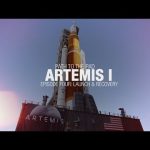
    Artemis I Path to the Pad: Launch and Recovery

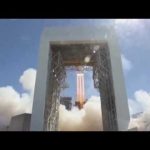
    On Nov. 16, 2022, NASA made history with the launch of our Space Launch System (SLS) rocket and Orion spacecraft – our newest transportation system that will return humans to the Moon. Relive the powerful moment SLS rumbled away from Earth, beginning Orion’s three-week test flight around the Moon, and watch as we document Orion’s splashdown in the Pacific Ocean, closing the first chapter in America’s next deep space exploration story.

    All about Artemis I: https://www.nasa.gov/specials/artemis-i/

    Writer: Danielle Sempsrott
    Editor: Francisco Martin
    Producers: John Sackman, Michael Justice & Madison Tuttle
    Music courtesy of Gothic Storm Music
    Credit: NASA

  • Shoebox-size satellites for Artemis I #shorts

    Shoebox-size satellites for Artemis I #shorts

    Joining @NASA’s Orion spacecraft on the powerful Space Launch System rocket are ten CubeSats that will help prepare for the return of astronauts to our lunar companion. Our deep space antennas, along with the Goonhilly Earth Station in the UK, are tracking six of the small satellites, ensuring they arrive where they need to be, and their data gets back home.

    Learn more: https://www.esa.int/Enabling_Support/Operations/ESA_Ground_Stations/Europe_to_support_Artemis_CubeSats_in_return_to_Moon

    ★ Subscribe: http://bit.ly/ESAsubscribe and click twice on the bell button to receive our notifications.

    Check out our full video catalog: http://bit.ly/SpaceInVideos
    Follow us on Twitter: http://bit.ly/ESAonTwitter
    On Facebook: http://bit.ly/ESAonFacebook
    On Instagram: http://bit.ly/ESAonInstagram
    On LinkedIn: https://bit.ly/ESAonLinkedIn
    On Pinterest: https://bit.ly/ESAonPinterest
    On Flickr: http://bit.ly/ESAonFlickr

    We are Europe’s gateway to space. Our mission is to shape the development of Europe’s space capability and ensure that investment in space continues to deliver benefits to the citizens of Europe and the world. Check out https://www.esa.int/ to get up to speed on everything space related.

    Copyright information about our videos is available here: https://www.esa.int/ESA_Multimedia/Terms_and_Conditions

    #ESA
    #CubeSats
    #ForwardToTheMoon

  • Artemis I launch

    Artemis I launch

    The Space Launch System (SLS) rocket with the Orion spacecraft aboard lifted off at 07:47 CET from @NASA’s Kennedy Space Center in Florida, USA on 16 November 2022.

    The most powerful rocket ever built sent NASA’s Orion spacecraft and ESA’s European Service Module (ESM) to a journey beyond the Moon and back. No crew will be on board Orion this time, and the spacecraft will be controlled by teams on Earth.

    ESM provides for all astronauts’ basic needs, such as water, oxygen, nitrogen, temperature control, power and propulsion.

    Much like a train engine pulls passenger carriages and supplies power, the European Service Module will take the Orion capsule to its destination and back.

    Learn more about Artemis I: https://www.esa.int/Science_Exploration/Human_and_Robotic_Exploration/Orion/Artemis_I

    ★ Subscribe: http://bit.ly/ESAsubscribe and click twice on the bell button to receive our notifications.

    Check out our full video catalog: http://bit.ly/SpaceInVideos
    Follow us on Twitter: http://bit.ly/ESAonTwitter
    On Facebook: http://bit.ly/ESAonFacebook
    On Instagram: http://bit.ly/ESAonInstagram
    On LinkedIn: https://bit.ly/ESAonLinkedIn
    On Pinterest: https://bit.ly/ESAonPinterest
    On Flickr: http://bit.ly/ESAonFlickr

    We are Europe’s gateway to space. Our mission is to shape the development of Europe’s space capability and ensure that investment in space continues to deliver benefits to the citizens of Europe and the world. Check out https://www.esa.int/ to get up to speed on everything space related.

    Copyright information about our videos is available here: https://www.esa.int/ESA_Multimedia/Terms_and_Conditions

    #ESA
    #Orion
    #Artemis

  • Crew-4 arrive at Kennedy Space Center

    Crew-4 arrive at Kennedy Space Center

    ESA astronaut Samantha Cristoforetti arrives at @NASA’s Kennedy Space Center in Florida, USA, with @NASA astronauts Kjell Lindgren, Bob Hines and Jessica Watkins on 18 April 2022.

    Collectively known as Crew-4, the astronauts flew in from Houston, Texas, and will spend the next week in quarantine before being launched to the International Space Station on a @SpaceX Crew Dragon spacecraft.

    When they arrive at the Station, Samantha’s Minerva mission will officially begin. This is the second long-duration space mission for Samantha who first flew to the orbital outpost in 2014 for her @AsiTV-sponsored mission Futura.

    Samantha will be welcomed on board by fellow ESA astronaut Matthias Maurer and enjoy a short handover in orbit before Matthias returns to Earth in April as part of Crew-3.

    Throughout her mission, Samantha will hold the role of US Orbital Segment (USOS) lead, taking responsibility for all operations within the US, European, Japanese and Canadian modules and components of the Space Station. She will support around 35 European and many more international experiments in orbit.

    Learn more about Mission Minerva: https://bit.ly/MissionMinerva

    ★ Subscribe: http://bit.ly/ESAsubscribe and click twice on the bell button to receive our notifications.

    Check out our full video catalog: http://bit.ly/SpaceInVideos
    Follow us on Twitter: http://bit.ly/ESAonTwitter
    On Facebook: http://bit.ly/ESAonFacebook
    On Instagram: http://bit.ly/ESAonInstagram
    On LinkedIn: https://bit.ly/ESAonLinkedIn
    On Pinterest: https://bit.ly/ESAonPinterest
    On Flickr: http://bit.ly/ESAonFlickr

    We are Europe’s gateway to space. Our mission is to shape the development of Europe’s space capability and ensure that investment in space continues to deliver benefits to the citizens of Europe and the world. Check out https://www.esa.int/ to get up to speed on everything space related.

    Copyright information about our videos is available here: https://www.esa.int/ESA_Multimedia/Terms_and_Conditions

    #ESA
    #MissionMinerva
    #SamanthaCristoforetti

  • Throwing a Cosmic Kiss – Matthias Maurer’s journey to the International Space Station

    Throwing a Cosmic Kiss – Matthias Maurer’s journey to the International Space Station

    ESA astronaut Matthias Maurer and @NASA astronauts Raja Chari, Tom Marshburn and Kayla Barron liftoff to the International Space Station in the @SpaceX Crew Dragon spacecraft “Endurance”.

    Collectively known as “Crew-3”, the astronauts were launched from launchpad 39A at @NASAKennedy in Florida, USA at 02:03 GMT/03:03 CET Thursday 11 November.

    The spacecraft docked to the International Space Station at 00:32 CET Friday, 12 November/23:32 GMT Thursday, 11 November, marking the official start of Matthias’s first mission ‘Cosmic Kiss’.

    Crew-3 will spend around six months living and working aboard the orbital outpost before returning to Earth. It is the first space mission for Matthias, who’s become the 600th human to fly to space. He chose the name “Cosmic Kiss” for his mission as a declaration of love for space.

    Matthias has a background in materials science and looks forward to supporting a wide range of science and research in orbit. The work he carries out throughout his mission will contribute to the success of future space missions and help enhance life on Earth.

    Follow Matthias: https://bit.ly/ESACosmicKiss

    Credits: ESA/NASA

    ★ Subscribe: http://bit.ly/ESAsubscribe and click twice on the bell button to receive our notifications.

    Check out our full video catalog: http://bit.ly/SpaceInVideos
    Follow us on Twitter: http://bit.ly/ESAonTwitter
    On Facebook: http://bit.ly/ESAonFacebook
    On Instagram: http://bit.ly/ESAonInstagram
    On LinkedIn: https://bit.ly/ESAonLinkedIn
    On Pinterest: https://bit.ly/ESAonPinterest
    On Flickr: http://bit.ly/ESAonFlickr

    We are Europe’s gateway to space. Our mission is to shape the development of Europe’s space capability and ensure that investment in space continues to deliver benefits to the citizens of Europe and the world. Check out https://www.esa.int/ to get up to speed on everything space related.

    Copyright information about our videos is available here: https://www.esa.int/ESA_Multimedia/Terms_and_Conditions

    #ESA
    #CosmicKiss
    #MatthiasMaurer

  • Vice President Pence Visits NASA’s Kennedy Space Center

    Vice President Pence Visits NASA’s Kennedy Space Center

    Vice President Mike Pence visited NASA’s Kennedy Space Center in Florida today and addressed employees at the iconic Vehicle Assembly Building. The vice president also toured Kennedy to learn more about the center’s work as a multi-user spaceport for commercial and government clients, and he saw the agency’s progress toward launching from U.S. soil on spacecraft built by American companies. He visited the Neil Armstrong Operation’s and Checkout Building to see NASA’s Orion spacecraft that will travel past the moon, and eventually on to Mars atop the Space Launch System rocket.

  • SpaceX, NASA Managers Discuss Vehicle Mishap Following CRS-7 Launch

    SpaceX, NASA Managers Discuss Vehicle Mishap Following CRS-7 Launch

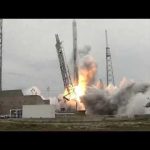
    During a post-launch press conference on June 28, mangers from SpaceX and NASA discuss the mishap following the liftoff of the SpaceX CRS-7 mission from Space Launch Complex 40 at Cape Canaveral Air Force Station. The mission was to deliver supplies, hardware and other important cargo to the International Space Station. SpaceX is leading the investigation of the cause of the issue.

    Anyone who spots debris in the water or sees it washed up anywhere along the shore should report it by calling 866-392-0035 or emailing recovery@spaceX.com or contacting your nearest local law enforcement official.

  • Orion flight test previewed on This Week @NASA – November 7, 2014

    Orion flight test previewed on This Week @NASA – November 7, 2014

    A NASA media briefing on Nov. 6 at Kennedy Space Center highlighted the fully assembled Orion spacecraft and details of its first test flight, scheduled for Dec. 4. The 4 and-a-half hour flight, called Exploration Flight Test-1, will send Orion 3,600 miles from Earth on a two-orbit flight to confirm its critical systems are ready for the challenges of eventually sending astronauts on deep space missions to an asteroid and Mars. Also, Delta IV Heavy wet dress test, Next ISS crew trains, Space agency leaders support ISS, Curiosity confirms orbital data and more!

  • New NASA Cargo Launches to Space Station Aboard SpaceX-3 Mission

    New NASA Cargo Launches to Space Station Aboard SpaceX-3 Mission

    Approximately 2.4 tons of NASA science investigations and cargo were launched to the International Space Station aboard SpaceX’s Dragon spacecraft. The launch aboard the company’s Falcon 9 rocket took place from Space Launch Complex 40 at Cape Canaveral Air Force Station in Florida on Monday, April 18 at 3:25 p.m. EDT. Dragon’s cargo will support more than 150 experiments that will be conducted during space station Expeditions 39 and 40. The spacecraft will be grappled at 7:11 a.m. on Wednesday, April 16 by Expedition 39 Commander Koichi Wakata of the Japan Aerospace Exploration Agency. Dragon is scheduled to depart the space station May 18 for a splashdown in the Pacific Ocean west of Baja California, bringing with it about 3,500 pounds of science and research, hardware, crew supplies and spacewalk tools from the space station.

  • NASA Shuttle Carrier Aircraft Arrives at Kennedy Space Center

    NASA Shuttle Carrier Aircraft Arrives at Kennedy Space Center

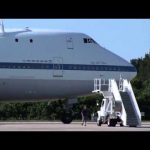
    NASA’s Shuttle Carrier Aircraft (SCA), a modified 747 jumbo jet, touched down just before 4 p.m. EDT on Tuesday at the Shuttle Landing Facility (SLF) at the agency’s Kennedy Space Center in Florida. The SCA, which is designated NASA 905, was the original shuttle carrier and was used in 1977 for the space shuttle approach and landing tests. This series of eight captive and five free flights with the orbiter prototype Enterprise, in addition to ground taxi tests, validated the aircraft’s performance as an SCA, in addition to verifying the glide and landing characteristics of the orbiter configuration — paving the way for orbital flights and ferry flights. NASA 905 now will fly the final ferry flight in Space Shuttle Program history.

  • NASA Launches Radiation Belt Storm Probes Mission

    NASA Launches Radiation Belt Storm Probes Mission

    NASA’s Radiation Belt Storm Probes (RBSP), the first twin-spacecraft mission designed to explore our planet’s radiation belts, launched into the predawn skies at 4:05a.m. EDT Thursday from Cape Canaveral Air Force Station, Fla.

    The two satellites, each weighing just less than 1,500 pounds, comprise the first dual-spacecraft mission specifically created to investigate this hazardous regions of near-Earth space, known as the radiation belts. These two belts, named for their discoverer, James Van Allen, encircle the planet and are filled with highly charged particles. The belts are affected by solar storms and coronal mass ejections and sometimes swell dramatically. When this occurs, they can pose dangers to communications, GPS satellites and human spaceflight.

    The hardy RBSP satellites will spend the next 2 years looping through every part of both Van Allen belts. By having two spacecraft in different regions of the belts at the same time, scientists finally will be able to gather data from within the belts themselves, learning how they change over space and time. Designers fortified RBSP with special protective plating and rugged electronics to operate and survive within this punishing region of space that other spacecraft avoid. In addition, a space weather broadcast will transmit selected data from those instruments around the clock, giving researchers a check on current conditions near Earth.

  • Mars Rover Launches on This Week @NASA

    Mars Rover Launches on This Week @NASA

    The NASA Mars Science Laboratory launched from the Cape Canaveral Air Force Station in Florida, beginning its journey to the Red Planet. When it arrives at Gale Crater next August, Curiosity rover’s ten instruments will investigate whether that area of Mars could ever have sustained microbial life. Also, ISS spinoff; Bolden on tour: lander test; best of the feds; money saver; high-flying feast, and more.

  • Atlantis’s Final Landing at Kennedy Space Center

    Atlantis’s Final Landing at Kennedy Space Center

    After more than 30 years, the space shuttle era has come to a close. Space shuttle Atlantis and the STS-135 crew landed safely on runway 15 at 5:57 a.m. EDT at Kennedy Space Center’s Shuttle Landing Facility in Florida, ending a 13-day journey of more than five million miles. It was the final and 133rd landing in shuttle history. The STS-135 crew consisted of Commander Chris Ferguson, Pilot Doug Hurley, Mission Specialists Sandra Magnus and Rex Walheim.

  • STS-135: Final Launch of the Space Shuttle Program

    STS-135: Final Launch of the Space Shuttle Program

    Space shuttle Commander Chris Ferguson and crewmates Pilot Doug Hurley, and Mission Specialists Sandy Magnus and Rex Walheim are on their way to the International Space Station after launching from NASA’s Kennedy Space Center at 11:29 a.m. EDT on Friday, July 8. STS-135 is the final mission of NASA’s Space Shuttle Program.
    The 12-day mission will deliver the Raffaello multi-purpose logistics module filled with more than 8,000 pounds of supplies and spare parts to sustain space station operations after the shuttles are retired. STS-135 is the 135th shuttle flight, the 33rd flight for Atlantis and the 37th shuttle mission dedicated to station assembly and maintenance,

  • NASA Delays Shuttle Launch; No New Date Set

    NASA Delays Shuttle Launch; No New Date Set

    Briefing held at NASA’s Kennedy Space Center on Sunday, May 1, during which shuttle program officials outline work remaining to resolve an electronics problem that scrubbed Friday’s launch try. A new date for space shuttle Endeavour’s launch on STS-134 has not yet been set.

  • Shuttle’s Boosters Recovered in HD

    Shuttle’s Boosters Recovered in HD

    NASA has released the first ever up-close, high-definition video of Kennedy Space Center’s solid rocket booster (SRB) recovery ships retrieving SRB segments from the Atlantic Ocean following a space shuttle launch. The unprecedented video is from the launch of the most recent shuttle mission, STS-133, Discovery’s final flight, on Feb. 24.
    Following each space shuttle launch, crew members of Liberty Star and Freedom Star pull the spent boosters out of the ocean and return them to Hangar AF at Cape Canaveral Air Force Station in Florida. Once they are processed, the boosters are transported to Utah, where they are refurbished and stored, if needed.

  • “Best of the Best” Provides New Views, Commentary of Shuttle Launches

    “Best of the Best” Provides New Views, Commentary of Shuttle Launches

    This video from the Glenn Research Center highlights in stunning, behind-the-scenes imagery the launches of three space shuttle missions: STS-114, STS-117, and STS-124. NASA engineers provide commentary as footage from the ground and from the orbiters themselves document in detail the first phase of a mission.

  • NASA Heroes Remembered

    NASA Heroes Remembered

    A wreath-laying ceremony at the Kennedy Space Center Visitor Complex is one of many tributes to NASAs fallen heroes on this Day of Remembrance.