Tag: Large Space Simulator

  • Juice takes the heat

    Juice takes the heat

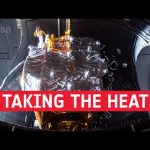
    ESA’s Jupiter Icy moons Explorer, Juice, has successfully completed rigorous thermal tests simulating the extreme coldness of space and the warmth of the Sun at ESA’s test centre ESTEC, in The Netherlands.

    The spacecraft underwent a month of round-the-clock testing and monitoring in the Large Space Simulator, which recreates the vacuum of space and is able to simulate both hot and cold space environments. The spacecraft was subjected to temperatures ranging from 250 degrees to minus 180 degrees Celsius, showing that it can survive its journey in space.

    Juice will launch in 2022 to our Solar System’s largest planet. It will spend over four years studying Jupiter’s atmosphere, magnetosphere and its icy moons Europa, Callisto and Ganymede, investigating whether the moons’ subsurface oceans are habitable for life.

    Learn more about Juice: https://bit.ly/JuiceESAScience

    ★ Subscribe: http://bit.ly/ESAsubscribe and click twice on the bell button to receive our notifications.

    Check out our full video catalog: http://bit.ly/SpaceInVideos
    Follow us on Twitter: http://bit.ly/ESAonTwitter
    On Facebook: http://bit.ly/ESAonFacebook
    On Instagram: http://bit.ly/ESAonInstagram
    On Flickr: http://bit.ly/ESAonFlickr

    We are Europe’s gateway to space. Our mission is to shape the development of Europe’s space capability and ensure that investment in space continues to deliver benefits to the citizens of Europe and the world. Check out https://www.esa.int/ to get up to speed on everything space related.

    Copyright information about our videos is available here: https://www.esa.int/ESA_Multimedia/Terms_and_Conditions

    #ESA
    #JuiceMission
    #InTheCleanRoom
  • The making of Juice

    The making of Juice

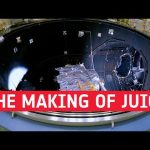
    The ESA Jupiter Icy Moons Explorer (Juice) team has been working very hard to prepare the spacecraft for the first test in the one-year long environmental test campaign. This is the so-called Thermal Balance Thermal Vacuum (TBTV) test.

    Juice is in the Large Space Simulator (LSS), a unique facility in Europe (run by the European Test Center, at ESA/ESTEC in the Netherlands) that can simulate the vacuum and cold and hot temperature conditions in space, and also the Sun itself!

    The TBTV started on 17 June with the closure of the LSS and the “pumping-down”, meaning the removal of air within the chamber to a pressure level of 10nbar (1/100 000 000th of the outside air pressure). This is the closest Juice will come to space conditions while on Earth. It will undergo 24/7 testing, ending on 16 July 2021.

    In this episode this process is followed and several team members comment on the different moments.

    Produced for ESA by Lightcurve Films.
    GoPro footage by ESA.
    Original music by William Zeitler.

    ★ Subscribe: http://bit.ly/ESAsubscribe and click twice on the bell button to receive our notifications.

    Check out our full video catalog: http://bit.ly/SpaceInVideos
    Follow us on Twitter: http://bit.ly/ESAonTwitter
    On Facebook: http://bit.ly/ESAonFacebook
    On Instagram: http://bit.ly/ESAonInstagram
    On Flickr: http://bit.ly/ESAonFlickr

    We are Europe’s gateway to space. Our mission is to shape the development of Europe’s space capability and ensure that investment in space continues to deliver benefits to the citizens of Europe and the world. Check out https://www.esa.int/ to get up to speed on everything space related.

    Copyright information about our videos is available here: https://www.esa.int/ESA_Multimedia/Terms_and_Conditions

    #ESA
    #JuiceMission
    #InTheCleanRoom

  • ESTEC: a day in the life

    ESTEC: a day in the life

    A composite day at ESTEC, the European space research and technology centre, as depicted in time-lapse format.

    Located in Noordwijk, the Netherlands, ESTEC is Europe’s largest place for space, the technical heart of the European Space Agency. For almost all European space missions, the path to space leads through ESTEC.

    Around 2700 people arrive here for work every day, working on a broad range of space activities from scientific exploration to telecommunications, Earth observation to navigation, robotics to human spaceflight.

    A suite of unique laboratories probe every aspect of the space environment, applying decades of hard-won expertise. Seen here is preparation for testing materials in simulated space conditions as well as atomic force microscopy, employing a nanometer-wide tip like a stylus across a record player to reveal surface topography down to the atomic scale.

    Full-scale testing of satellites takes place in the ESTEC Test Centre, including the Maxwell Chamber, kept isolated from the external world for precision electromagnetic testing, and the Large Space Simulator, Europe’s largest vacuum chamber used to reproduce the airlessness and temperature extremes encountered in space. The chamber uses large quantities of liquid nitrogen to mimic the chill of deep space.

    Erasmus is ESTEC’s human spaceflight facility, supporting researchers in the design and performance of experiments in microgravity conditions. Also based there is ESTEC’s Telerobotics lab – developing methods of remotely controlling robots using force feedback, extending the human sense of touch to space. The lab team are putting the finishing touches to the Interact Centaur rover, a robot designed to be operated remotely by astronauts in orbit.

    Want to see more? You can on Sunday 4 October, with your own eyes – register to attend the 2015 ESTEC Open Day! http://www.esa.int/About_Us/ESTEC/See_spacecraft_and_meet_astronauts_at_ESA_s_technical_heart

    Credit: ESA–S. Verzier