Experiments focused on vision-based navigation, spacecraft air quality, materials for drug and product manufacturing, and advancing plant growth with less reliance on photosynthesis are bound for the International Space Station via the NASA and SpaceX 32nd commercial resupply services mission.
Launching a pair of Earth-observing small satellites, an intriguing planet discovered outside of our solar system, and its “full cruise ahead” for our mission to a metal-rich asteroid … a few of the stories to tell you about – This Week at NASA!
Link to download this video: https://images.nasa.gov/details/Launching%20a%20Pair%20of%20Earth-Observing%20Small%20Satellites%20on%20This%20Week%20@NASA%20%E2%80%93%20May%2031,%202024
Video Producer: Andre Valentine Video Editor: Andre Valentine Narrator: Emanuel Cooper Music: Universal Production Music Credit: NASA
Tests of a 3D metal printer and thermal protection systems for reentry to Earth’s atmosphere are among the scientific investigations that NASA and international partners are launching to the International Space Station on Northrop Grumman’s 20th commercial resupply services mission. The company’s Cygnus cargo spacecraft is scheduled to launch on a SpaceX Falcon 9 rocket from Cape Canaveral Space Force Station in Florida no earlier than late January.
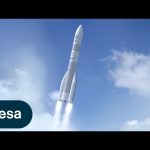
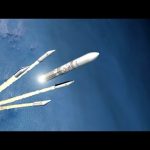
Animation of the first launch of the Ariane 6 rocket with two boosters.
Ariane 6 is an all-new design, created to succeed Ariane 5 as Europe’s heavy-lift launch system. With Ariane 6’s upper stage and its reignitable Vinci engine, Europe’s launch capability will be tailored to the needs of multiple payloads, for example to orbit satellite constellations. This autonomous capability to reach Earth orbit and deep space supports Europe’s navigation, Earth observation, scientific and security programmes. Ongoing development of Europe’s space transportation capabilities is made possible by the sustained dedication of thousands of talented people working in ESA’s 22 Member States.
At over 60 metres tall, Ariane 6 will weigh almost 900 tonnes when launched with a full payload – roughly equivalent to one and a half Airbus A380 passenger aircraft.
Vinci, the upper stage engine of Ariane 6 fed by liquid hydrogen and oxygen, can be stopped and restarted multiple times – to place satellites into different orbits and then de-orbit the upper stage, so it is not left behind as hazardous debris in space.
For the development of Ariane 6, ESA is working with an industrial network of several hundred companies in 13 European countries, led by prime contractor ArianeGroup.
France’s space agency, CNES, is preparing the Ariane 6 launch facilities at Europe’s Spaceport in French Guiana.
Credits: ESA – European Space Agency
★ Subscribe: http://bit.ly/ESAsubscribe and click twice on the bell button to receive our notifications.
We are Europe’s gateway to space. Our mission is to shape the development of Europe’s space capability and ensure that investment in space continues to deliver benefits to the citizens of Europe and the world. Check out https://www.esa.int/ to get up to speed on everything space related.
The 29th SpaceX commercial resupply services (CRS) mission for NASA carries scientific experiments and technology demonstrations, including studies of enhanced optical communications and measurement of atmospheric waves. The uncrewed SpaceX Dragon spacecraft is scheduled to launch to the International Space Station from the agency’s Kennedy Space Center in Florida no earlier than Nov. 5.
The 28th SpaceX commercial resupply mission to the International Space Station (CRS-28) is scheduled to launch from NASA’s Kennedy Space Center in Florida this June.
The scientific experiments and technology demonstrations carried by the Dragon spacecraft include studies of how plants adapt to stress, measurements of genetic structures called telomeres, and satellite projects designed by students in Canada.
NASA’s Artemis I mission is targeted to launch no earlier than Aug. 29, 2022.
Artemis I will be the first integrated test of NASA’s deep space exploration systems: the Orion spacecraft, Space Launch System (SLS) rocket and the ground systems at Kennedy Space Center in Cape Canaveral, Florida. The first in a series of increasingly complex missions, Artemis I will be an uncrewed flight test that will provide a foundation for human deep space exploration, and demonstrate our commitment and capability to extend human existence to the Moon and beyond.
During this flight, the spacecraft will launch on the most powerful rocket in the world and fly farther than any spacecraft built for humans has ever flown. It will travel 280,000 miles from Earth, thousands of miles beyond the Moon over the course of about a four to six-week mission. Orion will stay in space longer than any ship for astronauts has done without docking to a space station and return home faster and hotter than ever before.
The 25th SpaceX cargo resupply services mission (SpaceX CRS-25) carrying scientific research and technology demonstrations to the International Space Station is scheduled for launch July 14from NASA’s Kennedy Space Center in Florida. Experiments aboard the Dragon capsule include studies of the immune system, Earth’s oceans, soil communities, and cell-free biomarkers, along with mapping the composition of Earth’s dust and testing an alternative to concrete.
Launching a new mission around the Moon, preparing the Space Launch System for its first flight, and undocking a resupply spacecraft from the space station … a few of the stories to tell you about – This Week at NASA!
Launching a new Earth-observing satellite, things continue to line up for the James Webb Space Telescope, and imagining the future of aviation … a few of the stories to tell you about – This Week at NASA!
Producer: Andre Valentine Editor: Lacey Young Music: Universal Production Music
Scientific investigations on skin aging and tumor cells, along with tests of technology for oxygen production, batteries, and growing plants, all travel on the 17th Northrop Grumman commercial resupply services mission to the International Space Station. The Cygnus spacecraft is scheduled for liftoff no earlier than Saturday, Feb. 19, 2022, from NASA’s Wallops Flight Facility on Wallops Island, Virginia. More: https://go.nasa.gov/3KPKvpX
On Nov. 24, 2021, our Double Asteroid Redirection Test (DART) spacecraft will lift off on a ten-month journey to crash into a distant asteroid – on purpose.
As a test of NASA’s planetary defense technologies, DART will collide with and slightly change the speed of Dimorphos, a small ‘moonlet’ orbiting the asteroid Didymos. Dimorphos will be over 6 million miles away at the time of impact and does not pose a threat to Earth, either before or after DART’s collision. With nearby satellites and Earth-based telescopes, NASA and our international partners will track DART’s effect on Dimorphos and use this data to help protect Earth from future asteroid impact threats.
DART’s first launch attempt is scheduled for 1:20 a.m. EST (06:20 UTC) on Nov. 24. Launch coverage starts at 12:30 a.m. EST (05:30 UTC) on NASA TV, the NASA app, and @NASA social media. Be a part of DART’s historic launch day by using the hashtag #DARTMission.
Producer/Editor: Lacey Young Voiceover: Elena Adams, Michelle Chen, Kelly Fast, Andy Rivkin, Justyna Surowiec Music: Universal Production Music
Going where no spacecraft has gone before, NASA’s Lucy mission will embark on a 12-year journey to Jupiter’s Trojan asteroids. As time capsules to the early solar system, these ancient remnants could give scientists vital clues about how the planets formed 4.5 billion years ago. Join mission experts on Friday, October 15 at 3:30 p.m. EDT as they take you behind-the-scenes at NASA’s Kennedy Space Center ahead of the Lucy spacecraft launch on Saturday. Submit questions using #askNASA to have them answered live during the show.
Meet the experts: Dr. Carly Howett is the Assistant Director of the Department of Space Studies at the Southwest Research Institute. Her favorite part about her job is getting to explore the universe. Before working on the Lucy mission, Carly was on NASA’s New Horizons team when it flew past Pluto. When Carly isn’t working, she enjoys spending time with her husband, two young kids and participating in triathlons.
Wil Santiago is the Deep Space Exploration Engineer at Lockheed Martin Space. His favorite part of the job is working with a team that helps design, develop and fly robotic missions that allow humanity to explore our solar system and beyond and continue pushing the boundaries of what’s possible. Outside of work, Wil enjoys exploring the outdoors and traveling.
On Oct. 16, 2021, our Lucy spacecraft will begin its journey to visit a record-breaking number of asteroids. The 12-year mission starts from NASA’s Kennedy Space Center where it’ll launch aboard a United Launch Alliance Atlas V 401 rocket. From there, Lucy will be the first spacecraft to visit a record number of destinations in independent orbits around the sun – one main belt asteroid and seven of Jupiter’s Trojan Asteroids. Like the mission’s namesake – the fossilized human ancestor, “Lucy,” whose skeleton provided unique insight into humanity’s evolution – Lucy will revolutionize our knowledge of planetary origins and the formation of the solar system.
Lucy’s first launch attempt in its 21-day launch window is scheduled for 5:34 a.m. EDT on Oct. 16. Launch coverage starts at 5 a.m. EDT on NASA TV, the NASA app, and @NASA social media. Be a part of Lucy’s historic launch day by using the hashtag #LucyMission!
Producer/Editor: Lacey Young Music: Universal Production Music
The 23rd SpaceX cargo resupply mission carrying scientific research and technology demonstrations launches to the International Space Station from NASA’s Kennedy Space Center in Florida in late August. Experiments aboard include an investigation of protecting bone health with vegetal byproducts, testing a way to monitor crew eye health, demonstrating improved dexterity of robots, exposing materials to the harsh environment of space, mitigating stress in plants, and more.
Launching Soon: Starliner will launch on NASA’s Boeing Orbital Flight Test-2 mission headed for the International Space Station. The uncrewed mission will test end-to-end capabilities of the Starliner spacecraft and Atlas V rocket from launch to docking to a return to Earth in the desert of the western United States.
This is the second uncrewed flight test of the company’s CST-100 Starliner spacecraft for NASA’s Commercial Crew Program.
Producer/Editor: Lacey Young Music: Universal Production Music
Sixty years ago, on May 5, 1961, NASA astronaut Alan Shepard Jr. launched on the Freedom 7 mission, powered by a Mercury-Redstone rocket to become the first American in space. Shepard’s flight lasted 15 minutes, 22 seconds. He later made it to the Moon on Apollo 14.
Let’s talk about science! In the latest episode of #EZScience, learn about the upcoming launch of Perseverance. Dr. E and Dr. Z talk about the technological advancements of the newest Mars rover (and helicopter!). The premiere of this episode is part of the National Air and Space Museum’s Mars Day program. Learn more: https://airandspace.si.edu/mars-day
ABOUT THE SERIES: In our #EZScience video series with the National Air and Space Museum, NASA’s associate administrator for science Dr. Thomas Zurbuchen and Museum director Dr. Ellen Stofan talk about the latest in planetary science and exploration.
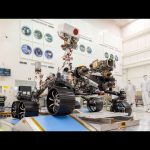
Our Mars Perseverance rover is targeted to lift off July 30, 2020, on a seven-month journey to the Red Planet. It will search for signs of ancient life, collect rock and soil samples and help prepare for future human exploration. About the mission: https://mars.nasa.gov/mars2020/
Launching America on a commercial spacecraft, a NASA astronaut is headed back to the space station, and new close-up imagery of asteroid Bennu … a few of the stories to tell you about – This Week at NASA!
This video is available for download from NASA’s Image and Video Library: https://images.nasa.gov/details-Launching%20America%20On%20a%20Commercial%20Spacecraft%20on%20This%20Week%20@NASA%20%E2%80%93%20June%205,%202020
Tracking the movement of Earth’s water, resupplying the International Space Station, and our Administrator testifies about the agency’s proposed budget – a few of the stories to tell you about – This Week at NASA!
This video is available for download from NASA’s Image and Video Library: https://images.nasa.gov/details-NHQ_2018_0525_Following%20the%20movement%20of%20Earth%E2%80%99s%20water%20on%20This%20Week%20@NASA%20%E2%80%93%20May%2025,%202018.html
On 28 May 2014, ESA astronaut Alexander Gerst and NASA astronaut Reid Wiseman under the command of Russian cosmonaut Maxim Suraev rocketed into space in a Soyuz spacecraft. This was their voyage.
For Alexander and Reid it was the first time they saw Earth from space.
Strapped atop 274 tonnes of rocket propellants delivering 26 million horsepower, it took only six hours to reach their destination, International Space Station.
Alexander worked as a geophysicist and volcanologist before he was selected as an ESA astronaut in 2009. His Blue Dot mission included an extensive scientific programme of experiments in physical science, biology, and human physiology as well as radiation research and technology demonstrations. All experiments make use of the out-of-this-world laboratory to improve life on Earth or prepare for further human exploration of our Solar System.
Decided in Luxemburg by the European Space Agency council meeting at Ministerial level, Ariane 6 is a modular three-stage launcher (solid–cryogenic–cryogenic) with two configurations using: four boosters (A64) or two boosters (A62).
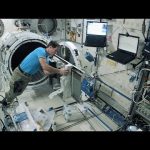
ESA astronaut Thomas Pesquet working in the Kibo laboratory to prepare a CubeSat launch – at 30 times increased speed.
The cylinder in the back is the mini-airlock that allows objects to be sent outside the Space Station. First Thomas and NASA astronaut Shane Kimbrough retrieved the Robotics External Leak Locator and wrapped it up for storage.
Afterwards Thomas installs the platform that the robotic arm grabs. The pointy bit is the connector for the robotic arm.
This video was recorded in December 2016 and was the first step for launching the CubeSats on 16 January 2017. Later Thomas put the satellite launcher on the platform and a third step is to connect the satellites themselves.
Thomas is spending six months on the International Space Station as part of his Proxima mission. During Proxima, Thomas will perform around 50 scientific experiments for ESA and France’s space agency CNES as well as take part in many research activities for the other Station partners. The mission is part of ESA’s vision to use Earth-orbiting spacecraft as a place to live and work for the benefit of European society while using the experience to prepare for future voyages of exploration further into the Solar System.
Timelapse movie following the preparations of the ExoMars 2016 spacecraft in the lead up to launch on 14 March 2016. The movie includes the integration of the entry, descent and landing demonstrator module, Schiaparelli, with the Trace Gas Orbiter, and the journey of the spacecraft inside the Proton rocket as it is moved to the launch pad and raised to a vertical position.
ExoMars launched from Baikonur, Kazakhstan at 09:31 GMT on 14 March. It will arrive at the Red Planet on 19 October. Its mission is to address unsolved mysteries of the planet’s atmosphere that could indicate present-day geological – or even biological – activity, and to demonstrate the landing technologies needed for future missions to Mars.
¿Existe la vida en Marte? La misión ExoMars intenta responder a esta pregunta. Aquí, en el Cosmódromo de Baikonur, en Kazajistán, nos reunimos con los científicos que trabajan en este proyecto. El cohete de la misión ExoMars se dirige hacia el planeta rojo para buscar buscar potenciales pruebas de actividad biológica.
Al cosmodromo di Bajkonur, in Kazakhstan, euronews ha seguito l’avvio di ExoMars,missione sviluppata dall’ESA, l’Agenzia Spaziale Europea ESA e da Roscosmos, Agenzia Spaziale Russa.
L’obiettivo di ExoMars è lo studio dell’ambiente biologico della superficie del pianeta ma anche la ricerca di eventuali tracce di vita, passata o presente.
Bajkonur, a Csillagváros a kazah sztyeppéken, az űrkutatás történelmi helyszíne, ahonnan az első ember felszállt az űrbe – itt kezdődik az Exomars-kaland.
A megfigyelőplatform három kilométerre van a kilövőállástól. Európai és orosz mérnökök figyelik, hogyan indulnak el az általuk éveken át tervezett és épített műszerek a Marsra.
This timelapse video shows the preparations for LISA Pathfinder’s launch at Europe’s Spaceport in Kourou, French Guiana. The video spans three weeks, starting on 12 November 2015 with the completed and fuelled spacecraft and ending on the 3 December launch day.
Over this period, the spacecraft was attached to the payload adaptor of the Vega launcher, encapsulated within the half-shells of the rocket fairing, transferred to the launcher assembly area, and installed on top of Vega inside the mobile gantry, which was rolled back shortly before liftoff.
LISA Pathfinder will test key technologies for space-based observation of gravitational waves – ripples in the fabric of spacetime that are predicted by Albert Einstein’s general theory of relativity.
Credit/Copyrights: Directed by Stephane Corvaja, ESA; Edited by Manuel Pedoussaut, Zetapress; Music: Hubrid-Gravity
ESA astronaut Tim Peake, NASA astronaut Tim Kopra and commander Yuri Malenchenko were launched into space 15 Decemeber 11:03 GMT from Baikonur cosmodrome, Kazakhstan.The launch marks the start of Tim Peake’s six-month Principia mission on the International Space Station running over 30 scientific experiments for ESA.Follow Tim Peake viatimpeake.esa.int and follow the whole mission on ESA’sPrincipia blog.