Tag: live

  • Live High-Definition Views from the International Space Station (Official NASA Stream)

    Live High-Definition Views from the International Space Station (Official NASA Stream)

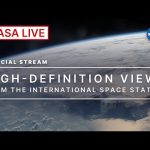
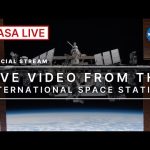
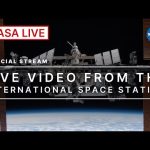
    Live views from the International Space Station are streaming from an external camera mounted on the station’s Harmony module.

    The camera is looking forward at an angle so that International Docking Adapter 2 is visible. If the Harmony module camera is not available due to operational considerations for a longer period of time, a continuous loop of recorded Earth views will be displayed with the caption “Previously Recorded.”

    The space station orbits Earth about 250 miles (425 kilometers) above the surface. An international partnership of five space agencies from 15 countries operates the station, and it has been continuously occupied since November 2000. It’s a microgravity laboratory where science, research, and human innovation make way for new technologies and research breakthroughs not possible on Earth. More: https://go.nasa.gov/3CkVtC8

    Did you know you can spot the station without a telescope? It looks like a fast-moving star, but you have to know when to look up. Download our mobile app for alerts to let you know when (and where) to spot the station and wave to the crew: https://www.nasa.gov/spot-the-station/

    https://nasa.gov/iss

    Credit: NASA

  • Live Video from the International Space Station (Official NASA Stream)

    Live Video from the International Space Station (Official NASA Stream)

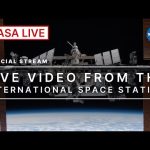
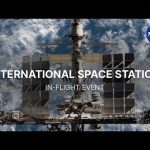
    Watch live video from the International Space Station, including inside views when the crew aboard the space station is on duty. Views of Earth are also streamed from an external camera located outside of the space station. During periods of signal loss due to handover between communications satellites, a blue screen is displayed.

    The space station orbits Earth about 250 miles (425 kilometers) above the surface. An international partnership of five space agencies from 15 countries operates the station, and it has been continuously occupied since November 2000. It’s a microgravity laboratory where science, research, and human innovation make way for new technologies and research breakthroughs not possible on Earth. More: https://go.nasa.gov/3CkVtC8

    Did you know you can spot the station without a telescope? It looks like a fast-moving star, but you have to know when to look up. Download our mobile app for alerts to let you know when (and where) to spot the station and wave to the crew: https://www.nasa.gov/spot-the-station/

    https://nasa.gov/iss

    Credit: NASA

  • Live Video from the International Space Station (Official NASA Stream)

    Live Video from the International Space Station (Official NASA Stream)

    Watch live video from the International Space Station, including inside views when the crew aboard the space station is on duty. Views of Earth are also streamed from an external camera located outside of the space station. During periods of signal loss due to handover between communications satellites, a blue screen is displayed.

    The space station orbits Earth about 250 miles (425 kilometers) above the surface. An international partnership of five space agencies from 15 countries operates the station, and it has been continuously occupied since November 2000. It’s a microgravity laboratory where science, research, and human innovation make way for new technologies and research breakthroughs not possible on Earth. More: https://go.nasa.gov/3CkVtC8

    Did you know you can spot the station without a telescope? It looks like a fast-moving star, but you have to know when to look up. Sign up for text messages or email alerts to let you know when (and where) to spot the station and wave to the crew: https://spotthestation.nasa.gov

    https://nasa.gov/iss

    Credit: NASA

  • Live Video from the International Space Station (Official NASA Stream)

    Live Video from the International Space Station (Official NASA Stream)

    Watch live video from the International Space Station, including inside views when the crew aboard the space station is on duty. Views of Earth are also streamed from an external camera located outside of the space station. During periods of signal loss due to handover between communications satellites, a blue screen is displayed.

    The space station orbits Earth about 250 miles (425 kilometers) above the surface. An international partnership of five space agencies from 15 countries operates the station, and it has been continuously occupied since November 2000. It’s a microgravity laboratory where science, research, and human innovation make way for new technologies and research breakthroughs not possible on Earth. More: https://go.nasa.gov/3CkVtC8

    Did you know you can spot the station without a telescope? It looks like a fast-moving star, but you have to know when to look up. Sign up for text messages or email alerts to let you know when (and where) to spot the station and wave to the crew: https://spotthestation.nasa.gov

    https://nasa.gov/iss

    Credit: NASA

  • Live High-Definition Views from the International Space Station (Official NASA Stream)

    Live High-Definition Views from the International Space Station (Official NASA Stream)

    Live views from the International Space Station are streaming from an external camera mounted on the station’s Harmony module.

    The camera is looking forward at an angle so that International Docking Adapter 2 is visible. If the Harmony module camera is not available due to operational considerations for a longer period of time, a continuous loop of recorded Earth views will be displayed with the caption “Previously Recorded.”

    The space station orbits Earth about 250 miles (425 kilometers) above the surface. An international partnership of five space agencies from 15 countries operates the station, and it has been continuously occupied since November 2000. It’s a microgravity laboratory where science, research, and human innovation make way for new technologies and research breakthroughs not possible on Earth. More: https://go.nasa.gov/3CkVtC8

    Did you know you can spot the station without a telescope? It looks like a fast-moving star, but you have to know when to look up. Sign up for text messages or email alerts to let you know when (and where) to spot the station and wave to the crew: https://spotthestation.nasa.gov

    https://nasa.gov/iss

    Credit: NASA

  • Live High-Definition Views from the International Space Station (Official NASA Stream)

    Live High-Definition Views from the International Space Station (Official NASA Stream)

    Live views from the International Space Station are streaming from an external camera mounted on the station’s Harmony module.

    The camera is looking forward at an angle so that International Docking Adapter 2 is visible. If the Harmony module camera is not available due to operational considerations for a longer period of time, a continuous loop of recorded Earth views will be displayed with the caption “Previously Recorded.”

    The space station orbits Earth about 250 miles (425 kilometers) above the surface. An international partnership of five space agencies from 15 countries operates the station, and it has been continuously occupied since November 2000. It’s a microgravity laboratory where science, research, and human innovation make way for new technologies and research breakthroughs not possible on Earth. More: https://go.nasa.gov/3CkVtC8

    Did you know you can spot the station without a telescope? It looks like a fast-moving star, but you have to know when to look up. Sign up for text messages or email alerts to let you know when (and where) to spot the station and wave to the crew: https://spotthestation.nasa.gov

    https://nasa.gov/iss

    Credit: NASA

  • Live High-Definition Views from the International Space Station (Official NASA Stream)

    Live High-Definition Views from the International Space Station (Official NASA Stream)

    Live views from the International Space Station are streaming from an external camera mounted on the station’s Harmony module.

    The camera is looking forward at an angle so that International Docking Adapter 2 is visible. If the Harmony module camera is not available due to operational considerations for a longer period of time, a continuous loop of recorded Earth views will be displayed with the caption “Previously Recorded.”

    The space station orbits Earth about 250 miles (425 kilometers) above the surface. An international partnership of five space agencies from 15 countries operates the station, and it has been continuously occupied since November 2000. It’s a microgravity laboratory where science, research, and human innovation make way for new technologies and research breakthroughs not possible on Earth. More: https://go.nasa.gov/3CkVtC8

    Did you know you can spot the station without a telescope? It looks like a fast-moving star, but you have to know when to look up. Sign up for text messages or email alerts to let you know when (and where) to spot the station and wave to the crew: https://spotthestation.nasa.gov

    https://nasa.gov/iss

    Credit: NASA

  • Live Video from the International Space Station (Official NASA Stream)

    Live Video from the International Space Station (Official NASA Stream)

    Watch live video from the International Space Station, including inside views when the crew aboard the space station is on duty. Views of Earth are also streamed from an external camera located outside of the space station. During periods of signal loss due to handover between communications satellites, a blue screen is displayed.

    The space station orbits Earth about 250 miles (425 kilometers) above the surface. An international partnership of five space agencies from 15 countries operates the station, and it has been continuously occupied since November 2000. It’s a microgravity laboratory where science, research, and human innovation make way for new technologies and research breakthroughs not possible on Earth. More: https://go.nasa.gov/3CkVtC8

    Did you know you can spot the station without a telescope? It looks like a fast-moving star, but you have to know when to look up. Sign up for text messages or email alerts to let you know when (and where) to spot the station and wave to the crew: https://spotthestation.nasa.gov

    https://nasa.gov/iss

    Credit: NASA

  • SPACE ROCKS: Live from ESA Open Day 2024 at ESTEC

    SPACE ROCKS: Live from ESA Open Day 2024 at ESTEC

    Live interviews and highlights from the ESA Open Day at ESTEC, featuring ESA astronauts Andreas Mogensen and André Kuipers, NASA astronaut Anna Fisher, The Expanse actor Steven Strait and more.

    The ESA Open Day is an annual event where ESA opens the doors of the European Space Research and Technology Centre in the Netherlands to the public.

    For more information on the ESA Open Day at ESTEC head to https://www.esa.int/About_Us/ESTEC/ESA_Open_Days_2024
    For more information on Space Rocks, head to www.spacerocksofficial.com

    —————————————————

    ★ Subscribe: http://bit.ly/ESAsubscribe and click twice on the bell button to receive our notifications.

    Check out our full video catalog: http://bit.ly/SpaceInVideos
    Follow us on Twitter: http://bit.ly/ESAonTwitter
    On Facebook: http://bit.ly/ESAonFacebook
    On Instagram: http://bit.ly/ESAonInstagram
    On LinkedIn: https://bit.ly/ESAonLinkedIn
    On Pinterest: https://bit.ly/ESAonPinterest
    On Flickr: http://bit.ly/ESAonFlickr

    We are Europe’s gateway to space. Our mission is to shape the development of Europe’s space capability and ensure that investment in space continues to deliver benefits to the citizens of Europe and the world. Check out https://www.esa.int/ to get up to speed on everything space related.

    Copyright information about our videos is available here: https://www.esa.int/ESA_Multimedia/Terms_and_Conditions

    #ESA #SpaceRocks #OpenDay

  • Live Views of Hurricane Helene from the International Space Station

    Live Views of Hurricane Helene from the International Space Station

    The International Space Station, orbiting roughly 260 miles (417 km) above Earth, passed over Hurricane Helene at 12:50 p.m. EDT on Sept. 26, 2024, as the hurricane approached the coast of Florida. See additional views from a pass at 2:25 p.m. EDT: https://www.youtube.com/watch?v=SmXJKqRZGnQ />
    Learn how NASA helps communities respond to natural disasters:
    https://go.nasa.gov/3HLXl82
    Spot the station as it passes over your town: https://spotthestation.nasa.gov/
    Watch live, 24/7 HD views from the ISS: https://youtu.be/O9mYwRlucZY

    Credit: NASA

    #NASA #SpaceStation #Hurricane

  • Live High-Definition Views from the International Space Station (Official NASA Stream)

    Live High-Definition Views from the International Space Station (Official NASA Stream)

    Live views from the International Space Station are streaming from an external camera mounted on the station’s Harmony module.

    The camera is looking forward at an angle so that International Docking Adapter 2 is visible. If the Harmony module camera is not available due to operational considerations for a longer period of time, a continuous loop of recorded Earth views will be displayed with the caption “Previously Recorded.”

    The space station orbits Earth about 250 miles (425 kilometers) above the surface. An international partnership of five space agencies from 15 countries operates the station, and it has been continuously occupied since November 2000. It’s a microgravity laboratory where science, research, and human innovation make way for new technologies and research breakthroughs not possible on Earth. More: https://go.nasa.gov/3CkVtC8

    Did you know you can spot the station without a telescope? It looks like a fast-moving star, but you have to know when to look up. Sign up for text messages or email alerts to let you know when (and where) to spot the station and wave to the crew: https://spotthestation.nasa.gov

    https://nasa.gov/iss

    Credit: NASA

  • Live Video from the International Space Station (Official NASA Stream)

    Live Video from the International Space Station (Official NASA Stream)

    Watch live video from the International Space Station, including inside views when the crew aboard the space station is on duty. Views of Earth are also streamed from an external camera located outside of the space station. During periods of signal loss due to handover between communications satellites, a blue screen is displayed.

    The space station orbits Earth about 250 miles (425 kilometers) above the surface. An international partnership of five space agencies from 15 countries operates the station, and it has been continuously occupied since November 2000. It’s a microgravity laboratory where science, research, and human innovation make way for new technologies and research breakthroughs not possible on Earth. More: https://go.nasa.gov/3CkVtC8

    Did you know you can spot the station without a telescope? It looks like a fast-moving star, but you have to know when to look up. Sign up for text messages or email alerts to let you know when (and where) to spot the station and wave to the crew: https://spotthestation.nasa.gov

    https://nasa.gov/iss

    Credit: NASA

  • Live High-Definition Views from the International Space Station (Official NASA Stream)

    Live High-Definition Views from the International Space Station (Official NASA Stream)

    Live views from the International Space Station are streaming from an external camera mounted on the station’s Harmony module.

    The camera is looking forward at an angle so that International Docking Adapter 2 is visible. If the Harmony module camera is not available due to operational considerations for a longer period of time, a continuous loop of recorded Earth views will be displayed with the caption “Previously Recorded.”

    The space station orbits Earth about 250 miles (425 kilometers) above the surface. An international partnership of five space agencies from 15 countries operates the station, and it has been continuously occupied since November 2000. It’s a microgravity laboratory where science, research, and human innovation make way for new technologies and research breakthroughs not possible on Earth. More: https://go.nasa.gov/3CkVtC8

    Did you know you can spot the station without a telescope? It looks like a fast-moving star, but you have to know when to look up. Sign up for text messages or email alerts to let you know when (and where) to spot the station and wave to the crew: https://spotthestation.nasa.gov

    https://nasa.gov/iss

    Credit: NASA

  • Juice: Live from the Moon + Q&A with the team

    Juice: Live from the Moon + Q&A with the team

    Join us for Juice’s flyby of the Moon. We’ll be sharing images as soon as we can after Juice sends them down to Earth. Be among the first people in the world to see these images, and ask your questions about the mission and its lunar-Earth flyby to our panel of Juice team members.

    The images will be captured using Juice’s two ‘monitoring cameras’, designed to watch the unfolding of Juice’s solar panels, antennas and booms in space in the weeks after the spacecraft launched into space in April 2023. The cameras have successfully completed their task. But we thought… what will we see if we point them at the Moon?

    We don’t know how the images will look. It’s the first time the cameras will point at a big bright object in space. And we’re sharing them publicly before we’ve had a chance to process them at all.

    Let’s see what happens!

    Read more: https://www.esa.int/Science_Exploration/Space_Science/Juice/Juice_s_lunar-Earth_flyby_all_you_need_to_know

    ★ Subscribe: http://bit.ly/ESAsubscribe and click twice on the bell button to receive our notifications.

    Check out our full video catalog: http://bit.ly/SpaceInVideos
    Follow us on Twitter: http://bit.ly/ESAonTwitter
    On Facebook: http://bit.ly/ESAonFacebook
    On Instagram: http://bit.ly/ESAonInstagram
    On LinkedIn: https://bit.ly/ESAonLinkedIn
    On Pinterest: https://bit.ly/ESAonPinterest
    On Flickr: http://bit.ly/ESAonFlickr

    We are Europe’s gateway to space. Our mission is to shape the development of Europe’s space capability and ensure that investment in space continues to deliver benefits to the citizens of Europe and the world. Check out https://www.esa.int/ to get up to speed on everything space related.

    Copyright information about our videos is available here: https://www.esa.int/ESA_Multimedia/Terms_and_Conditions

    #ESA #Juice #Moon

  • Live Video from the International Space Station (Official NASA Stream)

    Live Video from the International Space Station (Official NASA Stream)

    Watch live video from the International Space Station, including inside views when the crew aboard the space station is on duty. Views of Earth are also streamed from an external camera located outside of the space station. During periods of signal loss due to handover between communications satellites, a blue screen is displayed.

    The space station orbits Earth about 250 miles (425 kilometers) above the surface. An international partnership of five space agencies from 15 countries operates the station, and it has been continuously occupied since November 2000. It’s a microgravity laboratory where science, research, and human innovation make way for new technologies and research breakthroughs not possible on Earth. More: https://go.nasa.gov/3CkVtC8

    Did you know you can spot the station without a telescope? It looks like a fast-moving star, but you have to know when to look up. Sign up for text messages or email alerts to let you know when (and where) to spot the station and wave to the crew: https://spotthestation.nasa.gov

    https://nasa.gov/iss

    Credit: NASA

  • Live Video from the International Space Station (Official NASA Stream)

    Live Video from the International Space Station (Official NASA Stream)

    Watch live video from the International Space Station, including inside views when the crew aboard the space station is on duty. Views of Earth are also streamed from an external camera located outside of the space station. During periods of signal loss due to handover between communications satellites, a blue screen is displayed.

    The space station orbits Earth about 250 miles (425 kilometers) above the surface. An international partnership of five space agencies from 15 countries operates the station, and it has been continuously occupied since November 2000. It’s a microgravity laboratory where science, research, and human innovation make way for new technologies and research breakthroughs not possible on Earth. More: https://go.nasa.gov/3CkVtC8

    Did you know you can spot the station without a telescope? It looks like a fast-moving star, but you have to know when to look up. Sign up for text messages or email alerts to let you know when (and where) to spot the station and wave to the crew: https://spotthestation.nasa.gov

    https://nasa.gov/iss

    Credit: NASA

  • Live Video from the International Space Station (Official NASA Stream)

    Live Video from the International Space Station (Official NASA Stream)

    Watch live video from the International Space Station, including inside views when the crew aboard the space station is on duty. Views of Earth are also streamed from an external camera located outside of the space station. During periods of signal loss due to handover between communications satellites, a blue screen is displayed.

    The space station orbits Earth about 250 miles (425 kilometers) above the surface. An international partnership of five space agencies from 15 countries operates the station, and it has been continuously occupied since November 2000. It’s a microgravity laboratory where science, research, and human innovation make way for new technologies and research breakthroughs not possible on Earth. More: https://go.nasa.gov/3CkVtC8

    Did you know you can spot the station without a telescope? It looks like a fast-moving star, but you have to know when to look up. Sign up for text messages or email alerts to let you know when (and where) to spot the station and wave to the crew: https://spotthestation.nasa.gov

    https://nasa.gov/iss

    Credit: NASA

  • Live High-Definition Views from the International Space Station (Official NASA Stream)

    Live High-Definition Views from the International Space Station (Official NASA Stream)

    Live views from the International Space Station are streaming from an external camera mounted on the station’s Harmony module.

    The camera is looking forward at an angle so that International Docking Adapter 2 is visible. If the Harmony module camera is not available due to operational considerations for a longer period of time, a continuous loop of recorded Earth views will be displayed with the caption “Previously Recorded.”

    The space station orbits Earth about 250 miles (425 kilometers) above the surface. An international partnership of five space agencies from 15 countries operates the station, and it has been continuously occupied since November 2000. It’s a microgravity laboratory where science, research, and human innovation make way for new technologies and research breakthroughs not possible on Earth. More: https://go.nasa.gov/3CkVtC8

    Did you know you can spot the station without a telescope? It looks like a fast-moving star, but you have to know when to look up. Sign up for text messages or email alerts to let you know when (and where) to spot the station and wave to the crew: https://spotthestation.nasa.gov

    https://nasa.gov/iss

    Credit: NASA

  • Live High-Definition Views from the International Space Station (Official NASA Stream)

    Live High-Definition Views from the International Space Station (Official NASA Stream)

    Live views from the International Space Station (ISS) are streaming from an external camera mounted on the ISS module called Node 2. Node 2 is located on the forward part of the ISS.

    The camera is looking forward at an angle so that the International Docking Adapter 2, or IDA2, is visible. If the Node 2 camera is not available due to operational considerations for a longer period of time, a continuous loop of recorded HD Earth Views imagery will be displayed. The loop will have “Previously Recorded” on the image to distinguish it from the livestream from the Node 2 camera.

    The space station orbits Earth about 250 miles (425 kilometers) above the surface. An international partnership of five space agencies from 15 countries operates the station, and it has been continuously occupied since November 2000. It’s a microgravity laboratory where science, research, and human innovation make way for new technologies and research breakthroughs not possible on Earth. More: https://go.nasa.gov/3CkVtC8

    Did you know you can spot the station without a telescope? It looks like a fast-moving star, but you have to know when to look up. Sign up for text messages or email alerts to let you know when (and where) to spot the station and wave to the crew: https://spotthestation.nasa.gov

    https://nasa.gov/iss

    Credit: NASA

  • Despre conștiință, LIVE cu Anil Seth, cercetător în neuroștiințe și scriitor

    Despre conștiință, LIVE cu Anil Seth, cercetător în neuroștiințe și scriitor

    Anil Seth is a neuroscientist, author, and public speaker who has pioneered research into the brain basis of consciousness for more than twenty years. He is the author of Being You: A New Science of Consciousness (September 2021) as well as the best-selling 30 Second Brain, and other books. His 2017 TED talk on consciousness has been viewed more than thirteen million times, he has appeared in several films (The Most Unknown, The Search), and he has written for many venues including Aeon, The Guardian, Granta, New Scientist, and Scientific American. He was the 2017 President of the British Science Association (Psychology Section) and winner of the 2019 KidSpirit Perspectives award. He has published more than 200 academic apers and since 2019 has been listed in the Web of Science ‘highly cited researcher’ index, which recognizes the world’s most influential researchers over the past decade.rma

  • Live Video from the International Space Station (Official NASA Stream)

    Live Video from the International Space Station (Official NASA Stream)

    Watch live video from the International Space Station, including inside views when the crew aboard the space station is on duty. Views of Earth are also streamed from an external camera located outside of the space station. During periods of signal loss due to handover between communications satellites, a blue screen is displayed.

    The space station orbits Earth about 250 miles (425 kilometers) above the surface. An international partnership of five space agencies from 15 countries operates the station, and it has been continuously occupied since November 2000. It’s a microgravity laboratory where science, research, and human innovation make way for new technologies and research breakthroughs not possible on Earth. More: https://go.nasa.gov/3CkVtC8

    Did you know you can spot the station without a telescope? It looks like a fast-moving star, but you have to know when to look up. Sign up for text messages or email alerts to let you know when (and where) to spot the station and wave to the crew: https://spotthestation.nasa.gov

    https://nasa.gov/iss

    Credit: NASA

  • Live High-Definition Views from the International Space Station (Official NASA Stream)

    Live High-Definition Views from the International Space Station (Official NASA Stream)

    Live views from the International Space Station (ISS) are streaming from an external camera mounted on the ISS module called Node 2. Node 2 is located on the forward part of the ISS.

    The camera is looking forward at an angle so that the International Docking Adapter 2, or IDA2, is visible. If the Node 2 camera is not available due to operational considerations for a longer period of time, a continuous loop of recorded HD Earth Views imagery will be displayed. The loop will have “Previously Recorded” on the image to distinguish it from the livestream from the Node 2 camera.

    The space station orbits Earth about 250 miles (425 kilometers) above the surface. An international partnership of five space agencies from 15 countries operates the station, and it has been continuously occupied since November 2000. It’s a microgravity laboratory where science, research, and human innovation make way for new technologies and research breakthroughs not possible on Earth. More: https://go.nasa.gov/3CkVtC8

    Did you know you can spot the station without a telescope? It looks like a fast-moving star, but you have to know when to look up. Sign up for text messages or email alerts to let you know when (and where) to spot the station and wave to the crew: https://spotthestation.nasa.gov

    https://nasa.gov/iss

    Credit: NASA

  • Artemis I Live Feed from Orion Spacecraft (Official NASA Broadcast)

    Artemis I Live Feed from Orion Spacecraft (Official NASA Broadcast)

    On Dec. 11, our Orion spacecraft returns home to Earth. This live stream from Orion will end prior to splashdown, approximately at the time of crew module separation from the service module. Watch live splashdown coverage: https://youtu.be/xzZPzmMtQA8

    This is a live, low-resolution video feed from cameras on NASA’s Orion spacecraft as it accomplishes the Artemis I mission around the Moon and back to Earth. Splashdown is expected on Dec. 11, 2022.

    Viewers will see the Artemis logo, or the last frame of good video data, if there is a loss of signal, or if the bandwidth is needed for mission activities. Viewers may see what appears to be a black screen when the vehicle is in darkness. There is no audio.

    The primary goals for Artemis I are to demonstrate Orion’s systems in a spaceflight environment and ensure a safe re-entry, descent, splashdown, and recovery.

    For more information about NASA’s Artemis program, visit https://www.nasa.gov/specials/artemis/

    To see a simulation of where the Orion capsule is right now, visit https://www.nasa.gov/specials/trackartemis/

    Credit: NASA
  • Announcement of ESA’s new class of astronauts

    Announcement of ESA’s new class of astronauts

    An event absolutely not to be missed 👀

    ESA’s new class of astronauts was announced in Paris on 23 November 2022. It includes career astronauts, reserve astronauts and astronauts with a physical disability for a feasibility project.

    Last year and for the first time since 2008, ESA launched a call for applications and it received more than 22 500 valid applications. At an event on 23 November, ESA revealed which of these were successful. The event was moderated by Louise Houghton.

    Read more about the ESA astronaut class of 2022: https://www.esa.int/Science_Exploration/Human_and_Robotic_Exploration/ESA_presents_new_generation_of_ESA_astronauts

    ★ Subscribe: http://bit.ly/ESAsubscribe and click twice on the bell button to receive our notifications.

    Check out our full video catalog: http://bit.ly/SpaceInVideos
    Follow us on Twitter: http://bit.ly/ESAonTwitter
    On Facebook: http://bit.ly/ESAonFacebook
    On Instagram: http://bit.ly/ESAonInstagram
    On Flickr: http://bit.ly/ESAonFlickr

    We are Europe’s gateway to space. Our mission is to shape the development of Europe’s space capability and ensure that investment in space continues to deliver benefits to the citizens of Europe and the world. Check out https://www.esa.int/ to get up to speed on everything space related.

    Copyright information about our videos is available here: https://www.esa.int/ESA_Multimedia/Terms_and_Conditions

    #ESA
    #CM2022
    #AstronautSelection

  • Watch a Live Feed from NASA’s DART Spacecraft on Approach to Asteroid Dimorphos

    Watch a Live Feed from NASA’s DART Spacecraft on Approach to Asteroid Dimorphos

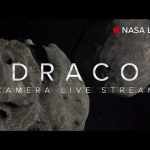
    NASA’s Double Asteroid Redirection Test (DART) has one single instrument onboard – the Didymos Reconnaissance and Asteroid Camera for Optical Navigation, aka the DRACO camera. DRACO serves as the spacecraft’s eye and will guide DART to its final destination: impact with asteroid Dimorphos. The stream you’re watching is a real-time feed from the DART spacecraft enabled through the DRACO camera sending one image per second to Earth. For the DART impact broadcast with commentary, watch: https://youtu.be/4RA8Tfa6Sck

    In the hours before impact, the screen will appear mostly black, with a single point of light. That point is the binary asteroid system Didymos which is made up of a larger asteroid named Didymos and a smaller asteroid that orbits around it called Dimorphos. As the 7:14 p.m. EDT (23:14 UTC) impact of asteroid Dimorphos nears closer, the point of light will get bigger and eventually detailed asteroids will be visible.

    At 7:14 p.m., the DART spacecraft is slated to intentionally crash into asteroid Dimorphos. This stream will be delayed due to the time it takes the images to arrive at Earth, plus additional time for feeding the images to various platforms. For the most up-to-date DRACO camera feed, please tune into the NASA DART Impact Broadcast here: https://youtu.be/4RA8Tfa6Sck

    After impact, the feed will turn black – due to a loss of signal. After about 2 minutes, this stream will turn into a replay – showing the final moments leading up to impact. That replay file will also become available on NASA websites and social media accounts.
    DART is a spacecraft designed to impact an asteroid as a test of technology. DART’s target asteroid is NOT a threat to Earth. This asteroid system is a perfect testing ground to see if intentionally crashing a spacecraft into an asteroid is an effective way to change its course, should an Earth-threatening asteroid be discovered in the future.

  • ESA Director General and astronauts meet the press | Live from IAC

    ESA Director General and astronauts meet the press | Live from IAC

    ESA astronauts Thomas Pesquet, Luca Parmitano, Alexander Gerst, and Matthias Maurer, together with the ESA Director General, will answer questions from journalists from the IAC in Paris. Andreas Mogensen will join remotely and Samantha Cristoforetti will connect directly from the ISS. A live not to be missed!

    Learn more: https://www.esa.int/About_Us/Exhibitions/ESA_Programme_at_IAC_2022

    ★ Subscribe: http://bit.ly/ESAsubscribe and click twice on the bell button to receive our notifications.

    Check out our full video catalog: http://bit.ly/SpaceInVideos
    Follow us on Twitter: http://bit.ly/ESAonTwitter
    On Facebook: http://bit.ly/ESAonFacebook
    On Instagram: http://bit.ly/ESAonInstagram
    On LinkedIn: https://bit.ly/ESAonLinkedIn
    On Pinterest: https://bit.ly/ESAonPinterest
    On Flickr: http://bit.ly/ESAonFlickr

    We are Europe’s gateway to space. Our mission is to shape the development of Europe’s space capability and ensure that investment in space continues to deliver benefits to the citizens of Europe and the world. Check out https://www.esa.int/ to get up to speed on everything space related.

    Copyright information about our videos is available here: https://www.esa.int/ESA_Multimedia/Terms_and_Conditions

    #ESA
    #Live
    #AIC2022

  • ESA Director General and Directors meet the press | Live from IAC

    ESA Director General and Directors meet the press | Live from IAC

    The world’s largest global space event takes place in Paris from 18 to 22 September 2022 and ESA, of course, will be there! Join us for the first live coming from the International Astronautical Congress with the ESA Director General and several Directors talking to the press. They will answer questions from journalists while focusing on ESA’s strategy, Agenda 2025 and the ambitious package that will be put forward at the ESA Ministerial in November.

    Find out more about Careers at ESA: https://www.esa.int/About_Us/Exhibitions/ESA_Programme_at_IAC_2022

    ★ Subscribe: http://bit.ly/ESAsubscribe and click twice on the bell button to receive our notifications.

    Check out our full video catalog: http://bit.ly/SpaceInVideos
    Follow us on Twitter: http://bit.ly/ESAonTwitter
    On Facebook: http://bit.ly/ESAonFacebook
    On Instagram: http://bit.ly/ESAonInstagram
    On LinkedIn: https://bit.ly/ESAonLinkedIn
    On Pinterest: https://bit.ly/ESAonPinterest
    On Flickr: http://bit.ly/ESAonFlickr

    We are Europe’s gateway to space. Our mission is to shape the development of Europe’s space capability and ensure that investment in space continues to deliver benefits to the citizens of Europe and the world. Check out https://www.esa.int/ to get up to speed on everything space related.

    Copyright information about our videos is available here: https://www.esa.int/ESA_Multimedia/Terms_and_Conditions

    #ESA
    #Live
    #IAC2022

  • ESA Director General and astronauts meet the press | Live from IAC

    ESA Director General and astronauts meet the press | Live from IAC

    ESA astronauts Thomas Pesquet, Luca Parmitano, Alexander Gerst, and Matthias Maurer, together with the ESA Director General, will answer questions from journalists from the IAC in Paris. Andreas Mogensen will join remotely and Samantha Cristoforetti will connect directly from the ISS. A live not to be missed!

    Learn more: https://www.esa.int/About_Us/Exhibitions/ESA_Programme_at_IAC_2022

    ★ Subscribe: http://bit.ly/ESAsubscribe and click twice on the bell button to receive our notifications.

    Check out our full video catalog: http://bit.ly/SpaceInVideos
    Follow us on Twitter: http://bit.ly/ESAonTwitter
    On Facebook: http://bit.ly/ESAonFacebook
    On Instagram: http://bit.ly/ESAonInstagram
    On LinkedIn: https://bit.ly/ESAonLinkedIn
    On Pinterest: https://bit.ly/ESAonPinterest
    On Flickr: http://bit.ly/ESAonFlickr

    We are Europe’s gateway to space. Our mission is to shape the development of Europe’s space capability and ensure that investment in space continues to deliver benefits to the citizens of Europe and the world. Check out https://www.esa.int/ to get up to speed on everything space related.

    Copyright information about our videos is available here: https://www.esa.int/ESA_Multimedia/Terms_and_Conditions

    #ESA
    #Live
    #AIC2022

  • News Briefing: NASA’s Perseverance Mars Rover Investigates Geologically Rich Area (Sept. 15, 2022)

    News Briefing: NASA’s Perseverance Mars Rover Investigates Geologically Rich Area (Sept. 15, 2022)

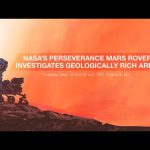
    NASA will host a briefing to provide highlights from the first year-and-a-half of the Perseverance rover’s exploration of Mars.

    The rover landed in Mars’ Jezero Crater in February 2021 and is collecting samples of rock and other materials from the Martian surface. Perseverance is investigating the sediment-rich ancient river delta in the Red Planet’s Jezero Crater.

    Speakers:
    • Lori Glaze, director of NASA’s Planetary Science Division, NASA Headquarters
    • Laurie Leshin, JPL director
    • Rick Welch, Perseverance deputy project manager, JPL
    • Ken Farley, Perseverance project scientist, Caltech
    • Sunanda Sharma, Scanning Habitable Environments with Raman and Luminescence for Organics and Chemicals (SHERLOC) scientist, JPL
    • David Shuster, Perseverance returned sample scientist, University of California, Berkeley

    https://mars.nasa.gov

    #NASA #Space #Exploration #Planets #Perseverance #Mars #MarsRover #PerseveranceRover #SearchForLife #RedPlanet #JetPropulsionLaboratory #JPL #JezeroCrater #Astrobiology #SolarSystem #MarsSampleReturn
  • LIVE lansare ARTEMIS 1, spre Lună!

    LIVE lansare ARTEMIS 1, spre Lună!

    Vom transmite LIVE lansarea ARTEMIS 1 de la ora 20:45
    Invitati: Dumitru Prunariu, Claudiu Tanaselia, Danivers, Cristian Roman, Alexandru Mironov, Dragos Alexandru Paun

  • Urmareste cu noi LIVE lansarea telescopului James Webb.

    Urmareste cu noi LIVE lansarea telescopului James Webb.

    Lansarea are loc pe 25 decembrie la ora 14:20. Urmarim LIVE lansarea impreuna cu Claudiu Tanaselia si Danivers. Pana atunci, urmariti acest video cu detaliile despre James Webb: https://www.youtube.com/watch?v=Jb5dFwEtEk0

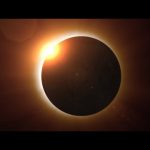
  • Live Feed of the Dec. 4, 2021 Total Solar Eclipse

    Live Feed of the Dec. 4, 2021 Total Solar Eclipse

    Weather permitting, NASA TV will air a view of the Dec. 4, 2021, total solar eclipse from Union Glacier, Antarctica. The stream will start at 1:30 a.m. EST (06:30 UTC) and end at 3:37 a.m. EST (08:47 UTC). Totality begins at 2:44 a.m. EST (07:44 UTC).

    This stream is provided courtesy of Theo Boris and Christian Lockwood of the JM Pasachoff Antarctic Expedition.

    For more details about this total solar eclipse, visit https://www.nasa.gov/content/dec-4-2021-eclipse.

    (The stream will have music playing; there will be no audio from the source.)

  • Live Q&A with NASA Planetary Defender

    Live Q&A with NASA Planetary Defender

    NASA’s #DARTMission is crashing a spacecraft into an asteroid to try to change its motion in space. But how will we know if this test worked? That’s where Johns Hopkins APL scientist Andy Rivkin comes in. He’ll be studying the precise change in the asteroid’s motion right here from Earth. Have questions about DART? Submit them using #askNASA and tune in on Monday, Nov. 15 at 4:30 pm ET for a LIVE Q&A with Andy.

  • Live Q&A with NASA Planetary Defender

    Live Q&A with NASA Planetary Defender

    NASA planetary defender Dr. Kelly Fast has a hard and fast rule: “Find asteroids before they find us.” Working in NASA’s Planetary Defense Coordination Office, Kelly is helping send the #DARTMission to test “nudging” an asteroid in space. DART, short for Double Asteroid Redirection Test, is a planetary defense-driven test of technologies for preventing an impact of Earth by a hazardous near-Earth object. DART will be the first demonstration of the kinetic impactor technique to change the motion of an asteroid in space. NOTE: the target asteroid is currently not a threat to Earth.

    Get all the info on our #DARTMission: https://www.nasa.gov/dart

  • Selection begins | ESA’s next astronauts

    Selection begins | ESA’s next astronauts

    Work is under way to sort and assess applications from more than 22 500 ESA astronaut hopefuls. The rigorous selection process will take around 18 months. Initial screening to ensure that basic criteria are met will be followed by medical and psychological tests, exercises and interviews.

    ESA plans to recruit 4-6 new astronauts through this 2021-22 selection round to support the future of European space exploration. This is likely to include missions to the International Space Station as well as the Moon. As part of the selection process, ESA is also assessing the feasibility of flying an astronaut with a physical disability.

    More information about the ESA Astronaut Selection is available online at https://esa.int/YourWayToSpace

    ★ Subscribe: http://bit.ly/ESAsubscribe and click twice on the bell button to receive our notifications.

    Check out our full video catalog: http://bit.ly/SpaceInVideos
    Follow us on Twitter: http://bit.ly/ESAonTwitter
    On Facebook: http://bit.ly/ESAonFacebook
    On Instagram: http://bit.ly/ESAonInstagram
    On Flickr: http://bit.ly/ESAonFlickr

    We are Europe’s gateway to space. Our mission is to shape the development of Europe’s space capability and ensure that investment in space continues to deliver benefits to the citizens of Europe and the world. Check out https://www.esa.int/ to get up to speed on everything space related.

    Copyright information about our videos is available here: https://www.esa.int/ESA_Multimedia/Terms_and_Conditions

    #ESA
    #YourWaytoSpace
    #ESArecruits

  • ESA’s astronaut selection – the aftermath

    ESA’s astronaut selection – the aftermath

    Want to learn more about applications to ESA’s astronaut selection? Watch the replay of this media briefing to get an insight into the total number and spread of applications across all ESA Member and Associate Member states. Vacancies for the positions of astronaut and astronaut (with a physical disability) have closed on 18 June 2021, after a two-and-a-half-month-long application period.

    ★ Subscribe: http://bit.ly/ESAsubscribe and click twice on the bell button to receive our notifications.

    Check out our full video catalog: http://bit.ly/SpaceInVideos
    Follow us on Twitter: http://bit.ly/ESAonTwitter
    On Facebook: http://bit.ly/ESAonFacebook
    On Instagram: http://bit.ly/ESAonInstagram
    On Flickr: http://bit.ly/ESAonFlickr

    We are Europe’s gateway to space. Our mission is to shape the development of Europe’s space capability and ensure that investment in space continues to deliver benefits to the citizens of Europe and the world. Check out https://www.esa.int/ to get up to speed on everything space related.

    Copyright information about our videos is available here: https://www.esa.int/ESA_Multimedia/Terms_and_Conditions

    #ESA
    #YourWaytoSpace
    #ESArecruits

  • Fizica nucleară. LIVE 19:30 Invitat: Cătălina Curceanu

    Fizica nucleară. LIVE 19:30 Invitat: Cătălina Curceanu

    Ne intalnim de la ora 19:30 (ro) cu Catalina Curceanu, care este fizician la Institutul de Fizica Nucleara din Italia. Catalina ne va prezenta rezultatele cercetarilor la care ia parte in prezent.

    https://en.wikipedia.org/wiki/Catalina_Curceanu
    Blogul Catalinei:
    https://www.scientia.ro/blogurile-scientia/blog-catalina-curceanu
    Faecebook:
    https://www.facebook.com/catalina.curceanu

    https://patreon.com/cristianpresura
    https://www.facebook.com/presura
    https://www.facebook.com/pg/stiintaclub/posts/
    https://www.instagram.com/cristianpresura/
    Cartea “O calatorie prin Univers”: t.ly/RkRED
    Cartea Fizica Povestita: https://bit.ly/2YsKaAc

  • ESA Astronaut Careers Fair Q&A

    ESA Astronaut Careers Fair Q&A

    This video is a summary compilation of the questions and answers sessions held during the ESA Astronaut Careers Fair on 22 April 2021. The ESA speakers are Florence Loustalot, Talent Acquisition Specialist; Antonella Costa, HR Business Partner; Dagmar Boos, Head of HR Competence and Policy Centre; and Guillaume Weerts, Space Medicine Team Leader.

    See the astronaut vacancy notice and other opportunities to work at ESA at https://jobs.esa.int

    ★ Subscribe: http://bit.ly/ESAsubscribe and click twice on the bell button to receive our notifications.

    Check out our full video catalog: http://bit.ly/SpaceInVideos
    Follow us on Twitter: http://bit.ly/ESAonTwitter
    On Facebook: http://bit.ly/ESAonFacebook
    On Instagram: http://bit.ly/ESAonInstagram
    On Flickr: http://bit.ly/ESAonFlickr

    We are Europe’s gateway to space. Our mission is to shape the development of Europe’s space capability and ensure that investment in space continues to deliver benefits to the citizens of Europe and the world. Check out https://www.esa.int/ to get up to speed on everything space related.

    Copyright information about our videos is available here: https://www.esa.int/ESA_Multimedia/Terms_and_Conditions

    #ESA
    #YourWaytoSpace
    #ESArecruits

  • Did you always want to be an astronaut?

    Did you always want to be an astronaut?

    This video summarises advice given by ESA astronauts during the ESA Astronaut Careers Fair on 22 April 2021. Samantha Cristoforetti, Thomas Reiter and André Kuipers have all flown in space as ESA astronauts and offer their perspectives on the selection process and the work and life of an astronaut.

    See the astronaut vacancy notice and other opportunities to work at ESA at https://jobs.esa.int

    ★ Subscribe: http://bit.ly/ESAsubscribe and click twice on the bell button to receive our notifications.

    Check out our full video catalog: http://bit.ly/SpaceInVideos
    Follow us on Twitter: http://bit.ly/ESAonTwitter
    On Facebook: http://bit.ly/ESAonFacebook
    On Instagram: http://bit.ly/ESAonInstagram
    On Flickr: http://bit.ly/ESAonFlickr

    We are Europe’s gateway to space. Our mission is to shape the development of Europe’s space capability and ensure that investment in space continues to deliver benefits to the citizens of Europe and the world. Check out https://www.esa.int/ to get up to speed on everything space related.

    Copyright information about our videos is available here: https://www.esa.int/ESA_Multimedia/Terms_and_Conditions

    #ESA
    #YourWaytoSpace
    #ESArecruits