Tag: LSS

  • Juice takes the heat

    Juice takes the heat

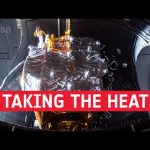
    ESA’s Jupiter Icy moons Explorer, Juice, has successfully completed rigorous thermal tests simulating the extreme coldness of space and the warmth of the Sun at ESA’s test centre ESTEC, in The Netherlands.

    The spacecraft underwent a month of round-the-clock testing and monitoring in the Large Space Simulator, which recreates the vacuum of space and is able to simulate both hot and cold space environments. The spacecraft was subjected to temperatures ranging from 250 degrees to minus 180 degrees Celsius, showing that it can survive its journey in space.

    Juice will launch in 2022 to our Solar System’s largest planet. It will spend over four years studying Jupiter’s atmosphere, magnetosphere and its icy moons Europa, Callisto and Ganymede, investigating whether the moons’ subsurface oceans are habitable for life.

    Learn more about Juice: https://bit.ly/JuiceESAScience

    ★ Subscribe: http://bit.ly/ESAsubscribe and click twice on the bell button to receive our notifications.

    Check out our full video catalog: http://bit.ly/SpaceInVideos
    Follow us on Twitter: http://bit.ly/ESAonTwitter
    On Facebook: http://bit.ly/ESAonFacebook
    On Instagram: http://bit.ly/ESAonInstagram
    On Flickr: http://bit.ly/ESAonFlickr

    We are Europe’s gateway to space. Our mission is to shape the development of Europe’s space capability and ensure that investment in space continues to deliver benefits to the citizens of Europe and the world. Check out https://www.esa.int/ to get up to speed on everything space related.

    Copyright information about our videos is available here: https://www.esa.int/ESA_Multimedia/Terms_and_Conditions

    #ESA
    #JuiceMission
    #InTheCleanRoom

  • The making of Juice

    The making of Juice

    The ESA Jupiter Icy Moons Explorer (Juice) team has been working very hard to prepare the spacecraft for the first test in the one-year long environmental test campaign. This is the so-called Thermal Balance Thermal Vacuum (TBTV) test.

    Juice is in the Large Space Simulator (LSS), a unique facility in Europe (run by the European Test Center, at ESA/ESTEC in the Netherlands) that can simulate the vacuum and cold and hot temperature conditions in space, and also the Sun itself!

    The TBTV started on 17 June with the closure of the LSS and the “pumping-down”, meaning the removal of air within the chamber to a pressure level of 10nbar (1/100 000 000th of the outside air pressure). This is the closest Juice will come to space conditions while on Earth. It will undergo 24/7 testing, ending on 16 July 2021.

    In this episode this process is followed and several team members comment on the different moments.

    Produced for ESA by Lightcurve Films.
    GoPro footage by ESA.
    Original music by William Zeitler.

    ★ Subscribe: http://bit.ly/ESAsubscribe and click twice on the bell button to receive our notifications.

    Check out our full video catalog: http://bit.ly/SpaceInVideos
    Follow us on Twitter: http://bit.ly/ESAonTwitter
    On Facebook: http://bit.ly/ESAonFacebook
    On Instagram: http://bit.ly/ESAonInstagram
    On Flickr: http://bit.ly/ESAonFlickr

    We are Europe’s gateway to space. Our mission is to shape the development of Europe’s space capability and ensure that investment in space continues to deliver benefits to the citizens of Europe and the world. Check out https://www.esa.int/ to get up to speed on everything space related.

    Copyright information about our videos is available here: https://www.esa.int/ESA_Multimedia/Terms_and_Conditions

    #ESA
    #JuiceMission
    #InTheCleanRoom
  • Making moves on MetOp

    Making moves on MetOp

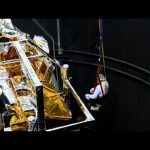
    It’s known colloquially as a ‘flying Dutchman’ operation: lowering an engineer down into ESA’s Large Space Simulator to make adjustments on the test item within; in this case the payload module of the newest in the MetOp series of weather satellites. The LSS is the largest vacuum chamber in Europe, based at ESA’s Test Centre in Noordwijk, the Netherlands.

    MetOp is a set of three polar-orbiting satellites whose temperature and humidity observations from a relatively close 800 km-altitude orbit have sharpened the accuracy of weather forecasting. Procured by ESA for Eumetsat, the European Organisation for the Exploitation of Meteorological Satellites, MetOp-A was launched in 2006 and MetOp-B in 2012, with MetOp-C due to follow next year.

    The 2.1 tonne module carries a suite of meteorology and climatology instruments, variously procured by ESA or sourced from Eumetsat, France’s CNES space agency and the US National Oceanic and Atmospheric Administration. Once testing is complete, MetOp-C’s payload module will travel to the Airbus Defence and Space facility in Toulouse, France, to be integrated with its service module – the segment of the satellite providing attitude and orbit control, electrical power and communications, and hosting the main computer. The launch of MetOp-C by Soyuz from Europe’s Spaceport in French Guiana is scheduled for October 2018.