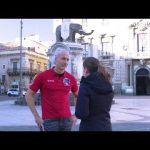
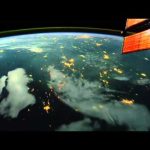
From ESA astronaut Luca Parmitano’s hometown in Catania, Italy, Luca talks about the science he ran on the International Space Station.
The European laboratory Columbus was launched in 2008 and offers scientists a permanent place in space to conduct research that is out of this world.
Luca’s first spaceflight was in 2013 with Russian cosmonaut Fyodor Yurchikhin and NASA astronaut Karen Nyberg. He conducted over 20 experiments during the Volare mission as flight engineer for Expeditions 36 and 37 and he was the first of ESA’s new generation of astronauts to fly into space.
Luca talks about space research, being a human guinea pig, dieting to avoid bone disease osteoporosis, human physiology, using ultrasound remotely to diagnose back problems, measuring eye pressure and how his body and mind reacted to living in weightlessness.
Luca is set for a second mission to the International Space Station in 2019.
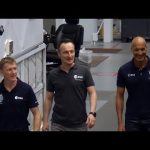
Four ESA astronauts have recently been training at NASA’s Johnson Space Centre (JSC) in Houston, Texas. For ESA’s newest astronaut Matthias Maurer, it was a chance to inspect a mock-up of NASA’s future space vehicle Orion alongside Tim Peake and Luca Parmitano, both experienced astronauts. Tim and Matthias have undergone spacewalk training in the neutral buoyancy pool. Alexander Gerst is also at JSC, training for his 2018 long-duration mission to the ISS.
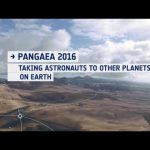
ESA is now training astronauts in identifying planetary geological features for future missions to the Moon, Mars and asteroids. This Pangaea course – named after the ancient supercontinent – will help astronauts to find interesting rock samples as well as to assess the most likely places to find traces of life on other planets.
This video was made during the second part of the Pangaea course held in Lanzarote, one of the Spanish Canary Islands in 2016 with ESA astronauts Luca Parmitano, Pedro Duque and Matthias Maurer and features interviews with the instructors and astronauts.
The students were tasked with interpreting geological features to understand the history of how the island formed. The goal is to help astronauts choose the best places to explore and collect rock samples.
This session put into practice a week’s training in Bressanone, Italy, where they learned about Earth and planetary geological processes as well as how to recognise rocks and meteorites.
The trio went on progressively difficult day trips, ending with a free exploration of the countryside searching for interesting samples while keeping in contact via radio with scientists at ‘mission control’.
Lanzarote was chosen for this course because of its geological similarity with Mars, such as a volcanic origin, mild sedimentary processes owing to a dry climate, hardly any vegetation and a well-preserved landscape.
ESA’s Asteroid Impact Mission, currently under study for launch in 2020 and arrival in 2022, would be humanity’s first probe to a double asteroid system. Targeting an approximately 180-m diameter asteroid – around the same size as the Great Pyramid of Giza – AIM would spend a busy six months gathering data on its surface and inner structure.
It would then perform before-and-after measurements as the NASA-led Double Asteroid Redirection Test spacecraft impacts straight into it, in an attempt to change the asteroid’s orbital period – marking the very first time that humanity shifts a Solar System object in a measurable way. Success would make it possible to consider carrying out such an operation again if an incoming asteroid ever threatened our planet. The two missions combined are called the Asteroid Impact & Deflection Assessment, or ‘AIDA’ for short.
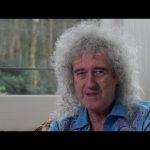
But why do we need to plan such a ground-breaking experiment? Astrophysicist and Queen guitarist Brian May, ESA astronaut Luca Parmitano, the UK’s Astronomer Royal Sir Martin Rees and Canadian astronaut Chris Hadfield share their own thoughts.
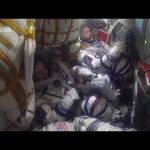
How does an astronaut return to Earth from the International Space Station? What does it feel like to re-enter the atmosphere? How does the Soyuz capsule function? Watch and find out. This video is based on an actual lesson delivered to the ESA astronaut class of 2009 (also known as the #Shenanigans09) during their ESA Basic Training. It features interviews with astronauts who have flown on the Soyuz and dramatic footage of actual landings.
Produced by the ESA Human Spaceflight and Operations (HSO) Astronaut Training Division, Cologne, Germany, in collaboration with the HSO Strategic Planning and Outreach Office, Noordwijk, The Netherlands, with special support from Roskosmos.
Content Design: Stephane Ghiste, Dmitriy Churkin, Raffaele Castellano, Matthew Day (HSO-UT)
Animation & Video Editing: Raffaele Castellano (HSO-UT), HSO-K
Project Coordination: Matthew Day, Stephane Ghiste, Dmitriy Churkin (HSO-UT)
Special thanks to:
Martin Schweiger (Orbiter software: http://orbit/medphys.ucl.ac.uk/)
Nikita Vtyurin, Andrew Thielmann (Orbiter Soyuz model)
Lionel Ferra (HSO-UT)
Oleg Polovnikov (HSO-UT)
Frank De Winne (HSO-A)
Paolo Nespoli (HSO-A)
Antonio Rodenas Bosque (HSO-UT)
NASA
ROSCOSMOS
S.P. Korolev Rocket and Space Corporation Energia
Aerospace Search and Rescue Service of the Russian Federation
Parachute footage: Cambridge University Spaceflight
Surfer footage: copyright Red Bull Media House
Footage from inside Soyuz capsule courtesy of RSC Energia has limited rights:
a) These data are submitted with Limited Rights under Agreement among the Government of Canada, Governments of Member States of the European Space Agency, the Government of Japan, the Government of the Russian Federation and the Government of the United States of America concerning co-operation on the civil International Space Station.
These data may be used by the receiving co-operating agency and its contractors and subcontractors, provided that such data shall be used, duplicated or disclosed only for the following purposes, which are related to the Cooperating Agency Space Station Program for ISS:
1) Use for ESA astronaut training
2) Use for educational purposes
These data shall not be used by persons or entities other than the receiving Cooperating Agency, its contractors or subcontractors, or for any other purposes, without the prior written permission of the furnishing partner state, acting through its cooperating agency.
b) This notice shall be marked on any reproduction of these data in whole or part.
Captions available in English, French, German, Italian, Russian, Romanian (with thanks to Alexa Mirel) and Spanish. Click on the CC button to switch between languages.
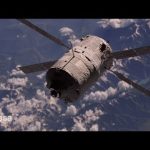
ATV Albert Einstein ESA’s automated support and supply ferry for the International Space Station was launched by an Ariane 5 launcher on 6 June 2013. After travelling over 6 million kms over the course of ten days it caught up with the International Space Station on 15 June and docked with the orbital outpost only 11 mm of absolute centre. ESA astronaut Luca Parmitano oversaw docking and unloading of Albert Einstein’s cargo as part of his six-month Volare mission on the International Space Station.
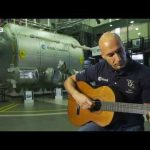
ESA astronaut Luca Parmitano plays one of his own compositions on guitar at ESA’s technical heart ESTEC in The Netherlands.
The song doesn’t have a name yet as playing the guitar is a way to relax for Luca after the extensive astronaut training he receives for his Volare mission to the International Space Station.
In less than three years, Luca has travelled between all five international partners’ training sites, gaining the knowledge and skills required for his mission. His tailored training has taken him to Houston, USA, Star City near Moscow, Russia, Tsukuba near Tokyo, Japan, Montreal, Canada, and the European Astronaut Centre in Cologne, Germany.
Critical tasks are trained over and over. As Soyuz flight engineer, Luca requires a great amount of ‘flying hours’ in the Russian spacecraft simulator, so he trained until he felt at home in the cockpit and can operate Soyuz flawlessly in any situation. During simulations, Luca had his hands at the controls of the spacecraft and wore the Russian Sokol flight suit.
Luca has been taught Space Station systems in full-size mockups, where he familiarised himself with the Station and learnt how everything works. He is trained in all systems and experiment operations scheduled for his mission. He has spent hours getting to know every corner of Europe’s Columbus laboratory, where most of the experiments in which he participates in take place.
Dressed in a spacesuit, Luca also trained to perform spacewalks in one of the largest swimming pools in the world on realistic mockups of the Space Station.
‘How do I become an astronaut?’ is a question that Frank Danesy has been asked many, many times. In this video Frank talks about the qualities needed to become an astronaut, the selection campaigns and the rigorous training involved for the lucky few who are eventually chosen.