
Acompaña a Paxi en su viaje al Planeta Rojo para investigar si existen los marcianos y descubrir más cosas sobre las misiones ExoMars de la Agencia Espacial Europea.
Tag: Mars
-

Paxi – Secretele Planetei Roșii
Însoţeşte-l pe Paxi în călătoria sa spre Planeta Roşie, pentru a investiga dacă există marţieni şi pentru a afla mai multe despre misiunile ExoMars ale Agenţiei Spaţiale Europene.
-

Paxi – Sekrety Czerwonej Planety
Leć razem z Paxim na Czerwoną Planetę, aby sprawdzić, czy Marsjanie istnieją i dowiedzieć się więcej o misjach ExoMars Europejskiej Agencji Kosmicznej.
-

Paxi – Segredos do Planeta Vermelho
Acompanhe o Paxi na sua viagem ao Planeta Vermelho para investigar se existem marcianos e ficar a conhecer as missões ExoMars da Agência Espacial Europeia.
-

Paxi – Den røde planeten
Bli med på reisen til den røde planeten for å finne ut om marsboerne eksisterer, og lær mer om ExoMars-oppdragene til Det europeiske romfartsbyrået.
-

Paxi – Finnes det marsboere
Bli med Paxi til Mars og utforsk planetens tørre elveleier, vulkaner og polaris.
-

Paxi – Existují Marťané?
Přidejte se k Paximu na jeho cestě k rudé planetě, prozkoumejte, zda existují Marťané, a seznamte se s misemi ExoMars Evropské vesmírné agentury.
-

Paxi – Gibt es Marsbewohner?
Begleite Paxi auf seiner Reise zum Roten Planeten und du erfährst, ob es Marsmännchen wirklich gibt und welchen Zweck die ExoMars-Missionen der Europäischen Weltraumorganisation haben.
-

Paxi – I marziani esistono?
Partite con Paxi nel suo viaggio sul pianeta rosso, per scoprire se esistono i marziani e per saperne di più sulle missioni ExoMars dell’Agenzia Spaziale Europea.
-

Paxi – Bestaan er Marsbewoners?
Ga met Paxi mee op zijn reis naar de Rode Planeet om te onderzoeken of marsmannetjes echt bestaan en ontdek wat de ExoMars-missies van het European Space Agency onderzoeken.
-

Paxi – Y a-t-il des martiens?
Rejoins Paxi dans son voyage vers la Planète rouge pour l’aider à découvrir si les Martiens existent et en savoir plus sur les missions ExoMars de l’Agence spatiale européenne.
-

Paxi – Onko marsilaisia olemassa?
Lähde Paxin mukaan punaiselle planeetalle tutkimaan, onko marsilaisia olemassa, ja tutustu Euroopan avaruusjärjestön ExoMars-ohjelmaan.
-

Paxi – Findes marsmænd i virkeligheden?
Tag med Paxi til den røde planet for at undersøge, om der findes marsmænd, og få mere at vide om Den Europæiske Rumorganisations ExoMars-missioner.
-

Paxi – Tajemství Rudé planety
Následujte Paxiho na jeho cestě na Mars, kde bude zkoumat vyschlá koryta řek, sopky a polární ledové čepice.
-

Paxi – Geheimnisse des Roten Planeten
Folge Paxi zum Mars, wo er die trockenen Flussbetten, einen beeindruckenden Vulkan und die polaren Eiskappen des Planeten erforschen wird.
-

Paxi – Punaisen planeetan salaisuudet
Lähde Paxin mukaan Marsiin, jossa hän tutkii planeetan kuivia joenuomia, tulivuoria ja napajäätiköitä.
-

Paxi – Geheimen van de Rode Planeet
Volg Paxi op zijn reis naar Mars, waar hij de droge rivierbeddingen, de vulkaan en de ijskappen op de polen gaat verkennen.
-

Paxi – I segreti del Pianeta Rosso
Seguite Paxi nel suo viaggio su Marte, all’esplorazione dei vulcani, degli alvei asciutti dei fiumi e delle calotte polari del pianeta.
-

Paxi – Secrets de la Planète Rouge
Suis Paxi dans son voyage vers Mars pour explorer avec lui des rivières asséchées, un volcan et des calottes de glace polaire.
-

NASA Does Facebook Live Update on the Next Mars Rover
The team developing NASA’s next rover mission to Mars has received a go-ahead from the agency to proceed with building the rover for launch in 2020. A July 15 Facebook Live event from NASA’s Jet Propulsion Laboratory featured updated news about the Mars 2020 rover and its mission. It will be almost identical to the Curiosity rover currently on Mars, but will have enhanced landing technology, the ability to prepare soil and rock samples for return to Earth and microphones to capture sound. The rover will look for signs of past life in a region of the Red Planet where the ancient environment was favorable for microbial life.
-

Paxi – The Red Planet
Follow Paxi on his journey to Mars, where he will explore the planet’s dry river beds, volcano, and polar ice caps.
Connect with Paxi on social media:
http://www.esa.int/paxi/Credits: ESA
-

Paxi – Do Martians exist?
Join Paxi on his journey to the Red Planet to investigate if Martians exist, and learn about the European Space Agency’s ExoMars missions.
Follow Paxi on social media:
http://www.esa.int/paxi/Credits: ESA
-

ExoMars prepares for liftoff (4K timelapse)
Timelapse movie following the preparations of the ExoMars 2016 spacecraft in the lead up to launch on 14 March 2016. The movie includes the integration of the entry, descent and landing demonstrator module, Schiaparelli, with the Trace Gas Orbiter, and the journey of the spacecraft inside the Proton rocket as it is moved to the launch pad and raised to a vertical position.
ExoMars launched from Baikonur, Kazakhstan at 09:31 GMT on 14 March. It will arrive at the Red Planet on 19 October. Its mission is to address unsolved mysteries of the planet’s atmosphere that could indicate present-day geological – or even biological – activity, and to demonstrate the landing technologies needed for future missions to Mars.
Find out more: http://www.esa.int/exomars
Credits: Directed by Stephane Corvaja, ESA; Edited by Manuel Pedoussaut, Zetapress; Music by Hubrid-Time
-

ESA Euronews: ExoMars inicia su búsqueda de vida en Marte
¿Existe la vida en Marte? La misión ExoMars intenta responder a esta pregunta. Aquí, en el Cosmódromo de Baikonur, en Kazajistán, nos reunimos con los científicos que trabajan en este proyecto. El cohete de la misión ExoMars se dirige hacia el planeta rojo para buscar buscar potenciales pruebas de actividad biológica.
-

ESA Euronews: alla ricerca di tracce di vita su Marte
Al cosmodromo di Bajkonur, in Kazakhstan, euronews ha seguito l’avvio di ExoMars,missione sviluppata dall’ESA, l’Agenzia Spaziale Europea ESA e da Roscosmos, Agenzia Spaziale Russa.
L’obiettivo di ExoMars è lo studio dell’ambiente biologico della superficie del pianeta ma anche la ricerca di eventuali tracce di vita, passata o presente.
-

ESA Euronews: Elindult az ExoMars-kaland
Bajkonur, a Csillagváros a kazah sztyeppéken, az űrkutatás történelmi helyszíne, ahonnan az első ember felszállt az űrbe – itt kezdődik az Exomars-kaland.
A megfigyelőplatform három kilométerre van a kilövőállástól. Európai és orosz mérnökök figyelik, hogyan indulnak el az általuk éveken át tervezett és épített műszerek a Marsra.
-

ExoMars 2016 rollout
The Proton rocket that will launch the ExoMars 2016 spacecraft during rollout to the launch pad where it was moved into a vertical position.
Launch is scheduled for 09:31 GMT/10:31 CET on 14 March from Baikonur, Kazakhstan.
Watch the launch via the ESA website from 08:30 GMT/09:30 CET: http://www.esa.int
Credit: ESA/Roscosmos/ExoMars
-
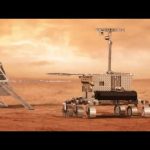
ExoMars – building on past missions to Mars
The ExoMars 2016 spacecraft will build on past missions to Mars. From the pioneering Viking missions onwards, our knowledge of Mars has been transformed and we now have an extraordinarily detailed picture of the planet. There are dust storms, polar ice caps and four distinct seasons. Mars has the largest volcanic mountain in our solar system and a canyon stretching over 5000 kilometres.
This film covers what we have learnt in particular from Europe’s Mars Express mission. Since its arrival in 2003, it has found evidence of water on Mars, discovered methane in the planet’s atmosphere, mapped the structure and composition of the south polar ice cap, discovered auroras and made the closest ever flybys of Phobos, one of Mars’ two moons. Mars Express also helped scientists select the landing site for the NASA Mars Curiosity rover, which arrived in Gale crater in 2012.
More remains to be learnt from Mars. Not least, whether the methane results from geological activity or past or present life.
Read more about ExoMars:
http://www.esa.int/exomars -
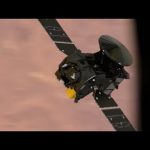
ExoMars science
On 14 March at 09:31 GMT ExoMars 2016 will be launched from Baikonur onboard a Proton rocket.
The joint European and Russian ExoMars mission will test key exploration technologies and search for evidence of methane and other rare gases in the Martian atmosphere. These gases could result from geological processes or they could be signatures of current biological activity on the planet.
This film examines the two European science instruments on the ExoMars Trace Gas Orbiter (TGO) – CaSSIS and NOMAD. The high-resolution CaSSIS (Colour and Stereo Surface Imaging System) acts as the orbiter’s scientific eye. It is a telescope with a sophisticated detector that can provide colour and stereo images over a nine and a half kilometre wide strip. CaSSIS will examine recurring slope linea – dark lines on the surface of Mars at different times of the day over the planet’s seasons. These linea are believed to be associated with liquid brine. They increase in size during the Martian spring and summer and fade away during autumn and winter.
NOMAD (Nadir and Occultation for MArs Discovery) will be the first high resolution instrument of its kind around the planet. It will observe information about Mars’ atmosphere by looking at the Sun during sunsets and sunrises. It contains three spectrometers – two working in the infrared and one in ultraviolet – and can identify trace gases in the atmosphere, such as methane. The presence of methane in Mars’ atmosphere could result from simple life forms like microbes.
-

The One-Year Crew returns on This Week @NASA – March 4, 2016
After spending nearly a year aboard the International Space Station — conducting a host of biomedical and psychological research on the impacts of long-duration spaceflight on the human body, NASA’s Scott Kelly and Mikhail Kornienko of the Russian space agency Roscosmos wrapped up their historic mission on March 1 – with a safe parachute landing in Kazakhstan . Just over a day, later – at Houston’s Ellington Field, near Johnson Space Center, a host of family, colleagues and VIPs welcomed Kelly back to the United States, including Second Lady of the United States Dr. Jill Biden, Assistant to the President for Science and Technology Dr. John P. Holdren, and NASA Administrator Charles Bolden. There were cheers, embraces and expressions of appreciation for his efforts to help advance deep space exploration and America’s Journey to Mars. Also, Next ISS crew heads to launch site, “Low boom” aircraft, Orion Service Module’s solar array wing deployment and more!
-
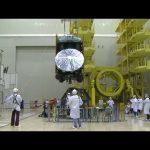
ExoMars prepares for launch
The ExoMars 2016 spacecraft – consisting of the Trace Gas Orbiter (TGO) and the Schiaparelli entry, descent and landing demonstrator – is in Baikonur, Kazakhstan, preparing for its mid-March launch on a Russian Proton rocket.
This joint European and Russian mission will test key exploration technologies and search for evidence of methane and other rare gases in the martian atmosphere. These gases could result from geological processes or they could be signatures of current biological activity on the planet. Three days before reaching Mars in October, Schiaparelli will separate from the orbiter and coast towards the planet in hibernation mode to reduce power consumption.
This video covers the journey, the orbit of the Trace Gas Orbiter, the separation of the Schiaparelli lander and its 20 000 km/hour descent and eventual landing. It also contains filming at ESA’s European Space and Technology Centre (ESTEC) Mars Yard in the Netherlands.
Learning more about Mars’ water and environment will shed further light on this planet – while knowing the origin of its methane could finally answer the exciting question of whether there is life on Mars.
Read more about ExoMars:
http://www.esa.int/exomars -
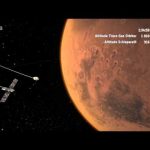
ExoMars 2016 arriving at Mars
The paths of the ExoMars 2016 Trace Gas Orbiter (TGO) and the Schiaparelli entry, descent and landing demonstrator module arriving at Mars on 19 October (right and left, respectively). The counter begins at the start of a critical engine burn that TGO must conduct in order to enter Mars orbit. The altitude above Mars is also indicated, showing the arrival of Schiaparelli on the surface and the subsequent trajectory of TGO. The orbiter’s initial 4-day orbit will be about 250 x 100 000 km. Starting in December 2016, the spacecraft will perform a series of aerobraking manoeuvres to steadily lower it into a circular, 400 km orbit (not shown here).
More about the ExoMars mission:
http://www.esa.int/exomarsCredits: ESA/ATG medialab
-

ExoMars 2016 journey to Mars
The journey that the ExoMars 2016 spacecraft will take from Earth to Mars. ‘Distance to Mars’ is the straight-line distance between the spacecraft and Mars, and not the actual distance that the spacecraft will travel.
The mission is scheduled for launch in the 14–25 March window. The Trace Gas Orbiter and the Schiaparelli entry, descent and landing demonstrator module will separate on 16 October. Schiaparelli is set to enter the martian atmosphere on 19 October, while TGO will enter orbit around Mars.
More about the ExoMars mission:
http://www.esa.int/exomarsCredits: ESA/ATG medialab
-
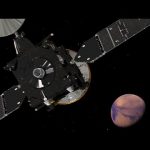
ExoMars 2016: launch to Mars
Animation visualising milestones during the launch of the ExoMars 2016 mission and its cruise to Mars. The mission comprises the Trace Gas Orbiter and an entry, descent and landing demonstrator module, Schiaparelli, which are scheduled to be launched on a four-stage Proton-M/Breeze-M rocket from Baikonur during the 14–25 March 2016 window.
About ten-and-a-half hours after launch, the spacecraft will separate from the rocket and deploy its solar wings. Two weeks later, its high-gain antenna will be deployed. After a seven-month cruise to Mars, Schiaparelli will separate from TGO on 16 October. Three days later it will enter the martian atmosphere, while TGO begins its entry into Mars orbit.
-

Administrator Bolden Discusses the ‘State of NASA’
On Tuesday, Feb. 9, as part of the rollout of President Barack Obama’s Fiscal Year 2017 budget proposal for NASA, Administrator Charles Bolden delivered a “State of NASA” speech at the agency’s Langley Research Center, in Hampton, Va. During the speech, Bolden highlighted key work and advancements by the agency during the last few years and discussed some of the future goals the agency continues to work toward, including exploration of Mars and elsewhere in our solar system and beyond, aeronautics research, development of technology to enable humans to explore deep space, and research aboard the International Space Station for the benefit of life on Earth and for astronauts on long duration space missions.
-

NASA 2016 Look Ahead
The work NASA does, and will continue in 2016, helps the United States maintain its world leadership in space exploration and scientific discovery. The agency will continue investing in its journey to Mars, returning human spaceflight launches from American soil, fostering groundbreaking technology development, breakthroughs in aeronautics and bringing to every American the awe-inspiring discoveries and images captured by NASA’s missions in our solar system and beyond.
For more about NASA’s missions, research and discoveries, visit:
-

NASA Reaches New Heights in 2015
As 2015 comes to a close we look back at an exciting year of reaching new heights and revealing the unknown for the benefit of humankind.
-

What Happened This Year @NASA December 21, 2015
In 2015, NASA explored the expanse of our solar system and beyond, and the complex processes of our home planet, while also advancing the technologies for our journey to Mars, and new aviation systems as the agency reached new milestones aboard the International Space Station. Here’s a look at some of the top NASA stories of the year!
-

Real-Life Robots
Meet some real-life robots, and find out what robots really are, and what they do for us every day!
———-
Like SciShow? Want to help support us, and also get things to put on your walls, cover your torso and hold your liquids? Check out our awesome products over at DFTBA Records: http://dftba.com/SciShowOr help support us by becoming our patron on Patreon:
https://www.patreon.com/scishow
———-
Looking for SciShow elsewhere on the internet?
Facebook: http://www.facebook.com/scishow
Twitter: http://www.twitter.com/scishow
Tumblr: http://scishow.tumblr.com
Instagram: http://instagram.com/thescishowSOURCES:
http://www.sciencekids.co.nz/robots.htmlhttp://idahoptv.org/sciencetrek/topics/robots/facts.cfm
https://student.societyforscience.org/article/cool-jobs-wide-world-robots
http://www.robothalloffame.org/inductees/03inductees/unimate.html
http://mars.nasa.gov/msl/mission/rover/
http://www.nasa.gov/mission_pages/station/main/robonaut.html#.VgJFGJc7FwU
-

Water Flowing on Mars Today on This Week @NASA – October 2, 2015
A major scientific discovery was announced by NASA at a Sept. 28 news conference. From its vantage point high above the Martian surface, NASA’s Mars Reconnaissance Orbiter (MRO) spacecraft has found the strongest evidence yet, that under certain circumstances, liquid water has been found on Mars. Researchers say an imaging spectrometer on MRO detected signatures of hydrated minerals on slopes where downhill streaks, known as Recurring Slope Lineae (RSL) are seen. In the past, RSL flows have been described as possibly related to liquid water. But the new findings of hydrated minerals is key evidence. Hydrated salts can lower the freezing point of liquid brine – and produce liquid water. Also, Life beyond Earth in the next decade?, “The Martian” screening event, Cargo ship departs space station, New cargo ship delivers to space station, Rare double celestial treat and Espacio a Tierra!