Tag: Melting

  • World’s ice is melting faster than ever

    World’s ice is melting faster than ever

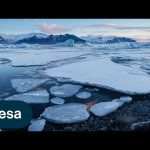
    As global temperatures increase, the melting of the massive ice sheets that blanket Antarctica and Greenland has accelerated, making a significant contribution to sea-level rise. In total, Earth is losing around a trillion tonnes of ice each year – which is not being replenished.

    Andrew Shepherd of the University of Leeds is a leading climate scientist working with ESA and @NASA. Join Andrew as he discusses how long-term satellite observations from ESA’s Climate Change Initiative are key in monitoring changes in ice sheets over decades.

    © Imperative Space

    ★ Subscribe: http://bit.ly/ESAsubscribe and click twice on the bell button to receive our notifications.

    Check out our full video catalog: http://bit.ly/SpaceInVideos
    Follow us on Twitter: http://bit.ly/ESAonTwitter
    On Facebook: http://bit.ly/ESAonFacebook
    On Instagram: http://bit.ly/ESAonInstagram
    On LinkedIn: https://bit.ly/ESAonLinkedIn
    On Pinterest: https://bit.ly/ESAonPinterest
    On Flickr: http://bit.ly/ESAonFlickr

    We are Europe’s gateway to space. Our mission is to shape the development of Europe’s space capability and ensure that investment in space continues to deliver benefits to the citizens of Europe and the world. Check out https://www.esa.int/ to get up to speed on everything space related.

    Copyright information about our videos is available here: https://www.esa.int/ESA_Multimedia/Terms_and_Conditions

    #ESA
    #ClimateChange
    #EarthObservation

  • Melt

    Melt

    Glaciers across the globe have lost over nine trillion tonnes of ice in half a century. How will glaciers look over the coming decades? “It all depends on what humans are doing now in terms of greenhouse gas emissions:” this is the message one scientist delivered during an ESA-led expedition to the Gorner Glacier in Switzerland – one of the biggest ice masses in the Alps.

    As world leaders gather for the 26th @United Nations Climate Change Conference of Parties, watch the exclusive premiere of the documentary that follows ESA astronaut Luca Parmitano, along with a team of glaciologists and climate experts, on their journey across the Alps to learn how rising global temperatures are taking their toll on glaciers.

    The documentary features breathtaking scenery of the Gorner Glacier as well as interviews with climate specialists as they explain how we can monitor glaciers using both satellite data and in situ measurements.

    Learn more about this expedition: https://blogs.esa.int/exploration/a-tale-of-ice-and-water/

    ★ Subscribe: http://bit.ly/ESAsubscribe and click twice on the bell button to receive our notifications.

    Check out our full video catalog: http://bit.ly/SpaceInVideos
    Follow us on Twitter: http://bit.ly/ESAonTwitter
    On Facebook: http://bit.ly/ESAonFacebook
    On Instagram: http://bit.ly/ESAonInstagram
    On LinkedIn: https://bit.ly/ESAonLinkedIn
    On Pinterest: https://bit.ly/ESAonPinterest
    On Flickr: http://bit.ly/ESAonFlickr

    We are Europe’s gateway to space. Our mission is to shape the development of Europe’s space capability and ensure that investment in space continues to deliver benefits to the citizens of Europe and the world. Check out https://www.esa.int/ to get up to speed on everything space related.

    Copyright information about our videos is available here: https://www.esa.int/ESA_Multimedia/Terms_and_Conditions

    #ESA
    #ClimateChange
    #TogetherforOurPlanet

  • Melting a piece of a satellite

    Melting a piece of a satellite

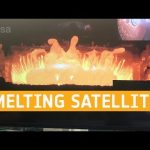
    Researchers took one of the heaviest, bulkiest parts of an Earth-orbiting satellite, placed it in a plasma wind tunnel, then proceeded to melt it into vapour. Their goal was to better understand how satellites burn up during reentry, to minimise the risk of endangering anyone on the ground.

    Taking place as part of our Clean Space initiative, the fiery testing occurred inside a plasma wind tunnel, reproducing reentry conditions, at the DLR German Aerospace Center’s site in Cologne.
    A magnetotorquer – designed to interact magnetically with Earth’s magnetic field to shift satellite orientation – was heated to several thousands of degrees C within the hypersonic plasma.

    As part of a larger effort called CleanSat, we are developing technologies and techniques to ensure future low-orbiting satellites are designed according to the concept of ‘D4D’ – design for demise – ensuring they will burn up entirely when they reenter the atmosphere.

    Credit: ESA/DLR/Belstead Research

    Learn more: http://bit.ly/MeltingASatelliteAPieceAtATime

    ★ Subscribe: http://bit.ly/ESAsubscribe and click twice on the bell button to receive our notifications.

    Check out our full video catalog: http://bit.ly/SpaceInVideos
    Follow us on Twitter: http://bit.ly/ESAonTwitter
    On Facebook: http://bit.ly/ESAonFacebook
    On Instagram: http://bit.ly/ESAonInstagram
    On Flickr: http://bit.ly/ESAonFlickr

    We are Europe’s gateway to space. Our mission is to shape the development of Europe’s space capability and ensure that investment in space continues to deliver benefits to the citizens of Europe and the world. Check out http://www.esa.int/ESA to get up to speed on everything space related.

    Copyright information about our videos is available here: http://www.esa.int/spaceinvideos/Terms_and_Conditions

    #ESA
    #Melting
    #CleanSpace

  • Eco-Friendly Packing Peanuts Demonstration

    Eco-Friendly Packing Peanuts Demonstration

    Steve Spangler shares an easy science demonstration to learn the differences between Styrofoam and the more eco-friendly starch-based packaging material.