SCIENTIFIC NOTES:
* The relationship between information and energy comes from Landauer’s Principle, which connects the erasure of information and energy. But, more generally changes in information (e.g. recording information) are related to changes in energy. I will talk more about this in a future episode about the physics of memory, and why you will forget everything you ever knew! https://en.wikipedia.org/wiki/Landauer%27s_principle
* The numbers calculated in this video give a lower limit on the energy to record a particular amount of information, but to create a more permanent storage of information would require more energy.
* Retina display resolution, as it’s name implies, is similar to the eye’s resolution.
While you interact with Tyche more and more, especially kids, they develop the power to express themselves better. Tyche learns incrementally to be able to carry out intelligent conversations with humans. Visual and audio receptors are used to perceive the world around Tyche building its own beliefs.
Scientists Are Convinced Mind Transfer Is the Key to Immortality http://motherboard.vice.com/blog/scientists-are-convinced-mind-transfer-is-the-key-to-immortality
“Call it mind transfer, uploading, brain backup, whatever—the idea of copying the human brain to a computer so it can live on without the body has a strong hold on futurists, neuroscientists, and folks that just want to live forever.”
Engineering a memory with LTD and LTP http://www.nature.com/nature/journal/v511/n7509/full/nature13294.html
“It has been proposed that memories are encoded by modification of synaptic strengths through cellular mechanisms such as long-term potentiation (LTP) and long-term depression (LTD).”
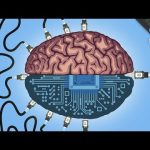
If your brain were a computer, how much storage space would it have? http://io9.com/if-your-brain-were-a-computer-how-much-storage-space-w-509687776
“The comparison between the human brain and a computer is not a perfect one, but it does lend itself to some interesting lines of inquiry. For instance: what is the storage capacity of your brain?”
____________________
DNews is dedicated to satisfying your curiosity and to bringing you mind-bending stories & perspectives you won’t find anywhere else! New videos twice daily.
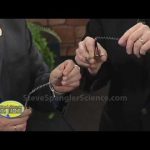
Check out this and other cool science experiments at http://www.stevespanglerscience.com/experiments/ Can a piece of metal have a “memory”? Yes, if the metal is a special alloy of nickel and titanium. It’s called Memory Metal, and the uses for this material go far beyond today’s amazing demonstration.
About Steve Spangler Science…
Steve Spangler is a celebrity teacher, science toy designer, speaker, author and an Emmy award-winning television personality. Spangler is probably best known for his Mentos and Diet Coke geyser experiment that went viral in 2005 and prompted more than 1,000 related YouTube videos. Spangler is the founder of www.SteveSpanglerScience.com, a Denver-based company specializing in the creation of science toys, classroom science demonstrations, teacher resources and home for Spangler’s popular science experiment archive and video collection. Spangler is a frequent guest on the Ellen DeGeneres Show where he takes classroom science experiments to the extreme. Check out his pool filled with 2,500 boxes of cornstarch!
On the education side, Spangler started his career as a science teacher in the Cherry Creek School district for 12 years. Today, Steve travels extensively training teachers in ways to make learning more engaging and fun. His hands-on science boot camps and summer institutes for teachers inspire and teach teachers how to prepare a new generation for an ever-changing work force. Over the last 15 years, he has also made more than 500 television appearances as an authority on hands-on science and inquiry-based learning.
On the business side, Spangler is the founder and CEO of Steve Spangler Science, a Denver-based company specializing in the creation of educational toys and kits and hands-on science training services for teachers. The companys unique business strategies and viral creations have been featured in the Wall Street Journal, Inc. Magazine, Wired and TIME Magazine where online readers voted Steve Spangler #18 in the Top 100 Most Influential People of the Year for 2006 (what were they thinking?). You’ll find more than 140 Spangler created products available online at SteveSpanglerScience.com and distributed to toy stores and mass-market retailers worldwide.
Spangler joined NBC affiliate 9News in 2001 as the science education specialist. His weekly experiments and science segments are designed to teach viewers creative ways to make learning fun. His now famous Mentos Geyser experiment, turning 2-liter bottles of soda into erupting fountains, became an Internet sensation in September 2005 when thousands of people started posting their own Mentos explosions on YouTube.com.
As founder of SteveSpanglerScience.com, Spangler and his design team have developed more than 140 educational toys and science-related products featured by mass-market retailers like Target, Wal-Mart, Toys R’ Us, Discovery Channel Stores and over 1,400 independent specialty toy stores. His educational science catalog and on-line business offers more than a thousand science toys and unique learning resources. Recently, Spangler has been featured in the Wall Street Journal, Inc. Magazine, WIRED, the History Channel, Food Network and TIME Magazine where on-line readers voted Steve Spangler #18 in the Top 100 Most Influential People of the Year for 2006.
His recent appearances on the Ellen DeGeneres Show have taught viewers how to blow up their food, shock their friends, create mountains of foam, play on a bed of nails, vanish in a cloud of smoke and how to turn 2,500 boxes of cornstarch and a garden hose into a swimming pool of fun.