Our astronaut Samantha Cristoforetti had to test if she could walk in microgravity with Velcro shoes, as it was portrayed in the space-cult movie ‘2001: A Space Odyssey’. As you can see, yes, you can, but very slowly.
Credit: ESA / @NASA
★ Subscribe: http://bit.ly/ESAsubscribe and click twice on the bell button to receive our notifications.
We are Europe’s gateway to space. Our mission is to shape the development of Europe’s space capability and ensure that investment in space continues to deliver benefits to the citizens of Europe and the world. Check out https://www.esa.int/ to get up to speed on everything space related.
Choose your player! NASA is holding a naming contest beginning Wednesday, June 16 for the manikin that will fly on an upcoming mission around the Moon.
As NASA gears up for the Artemis I mission around the Moon that will pave the way to send the first woman and the first person of color to the lunar surface, we have an important task for you (yes, you!). Artemis I will be an uncrewed flight test of the Space Launch System rocket and the Orion spacecraft ahead of the first flight with crew on Artemis II. We want your help to select a name for the suited manikin, or Moonikin in this case, that will fly aboard Orion to help gather data before missions with astronauts!
We have eight names to choose from, but only one can win. Every other day starting Wednesday, June 16, we will be asking you on @NASAArtemis Twitter, Facebook, and Instagram, to vote between one of two names. The winners of each bracket compete with one another until the final showdown on Monday, June 28.
The final name of the Moonikin will be announced on Tuesday, June 29!
For more information, go to: nasa.gov/namethemoonikin
We are Europe’s gateway to space. Our mission is to shape the development of Europe’s space capability and ensure that investment in space continues to deliver benefits to the citizens of Europe and the world. Check out https://www.esa.int/ to get up to speed on everything space related.
You’re invited to join us for a virtual event on Friday, Feb. 26 at 1 p.m. EST officially naming the NASA Headquarters building in Washington, D.C, in honor of Mary W. Jackson, the first African American female engineer at NASA who made extensive contributions to aerospace research, and the hiring and promotion of minorities in science, technology, engineering, and mathematics.
In addition to unveiling a building sign with Jackson’s name, the event will feature video tributes with reflections on her career and legacy from a variety of individuals, including William R. Harvey, the president of Hampton University, Jackson’s alma mater, as well as family and friends, current and former NASA employees and astronauts, celebrities, elected officials and others. The event also will feature a video of poet Nikki Giovanni reading an excerpt from her poem “Quilting the Black-Eyed Pea,” which is about space and civil rights.
NASA Administrator Jim Bridenstine announced on Wednesday, June 24, 2020, the agency’s headquarters building in Washington, D.C., will be named after Mary W. Jackson, the first African American female engineer at NASA.
Jackson started her NASA career in the segregated West Area Computing Unit of the agency’s Langley Research Center in Hampton, Virginia. Jackson, a mathematician and aerospace engineer, went on to lead programs influencing the hiring and promotion of women in NASA’s science, technology, engineering, and mathematics careers. In 2019, she was posthumously awarded the Congressional Gold Medal.
“Mary W. Jackson was part of a group of very important women who helped NASA succeed in getting American astronauts into space. Mary never accepted the status quo, she helped break barriers and open opportunities for African Americans and women in the field of engineering and technology,” said Bridenstine. “Today, we proudly announce the Mary W. Jackson NASA Headquarters building. It appropriately sits on ‘Hidden Figures Way,’ a reminder that Mary is one of many incredible and talented professionals in NASA’s history who contributed to this agency’s success. Hidden no more, we will continue to recognize the contributions of women, African Americans, and people of all backgrounds who have made NASA’s successful history of exploration possible.”
The work of the West Area Computing Unit caught widespread national attention in the 2016 Margot Lee Shetterly book “Hidden Figures: The American Dream and the Untold Story of the Black Women Mathematicians Who Helped Win the Space Race.” The book was made into a popular movie that same year and Jackson’s character was played by award-winning actress Janelle Monáe.
“We are honored that NASA continues to celebrate the legacy of our mother and grandmother Mary W. Jackson,” said, Carolyn Lewis, Mary’s daughter. “She was a scientist, humanitarian, wife, mother, and trailblazer who paved the way for thousands of others to succeed, not only at NASA, but throughout this nation.”
Jackson was born and raised in Hampton, Virginia. After graduating high school, she graduated from Hampton Institute in 1942 with a dual degree in math and physical sciences, and initially accepted a job as a math teacher in Calvert County, Maryland. She would work as a bookkeeper, marry Levi Jackson and start a family, and work a job as a U.S. Army secretary before her aerospace career would take off.
In 1951, Jackson was recruited by the National Advisory Committee for Aeronautics, which in 1958 was succeeded by NASA. She started as a research mathematician who became known as one of the human computers at Langley. She worked under fellow “Hidden Figure” Dorothy Vaughan in the segregated West Area Computing Unit.
After two years in the computing pool, Jackson received an offer to work in the 4-foot by 4-foot Supersonic Pressure Tunnel, a 60,000 horsepower wind tunnel capable of blasting models with winds approaching twice the speed of sound. There, she received hands-on experience conducting experiments. Her supervisor eventually suggested she enter a training program that would allow Jackson to earn a promotion from mathematician to engineer. Because the classes were held at then-segregated Hampton High School, Jackson needed special permission to join her white peers in the classroom.
Jackson completed the courses, earned the promotion, and in 1958 became NASA’s first Black female engineer. For nearly two decades during her engineering career, she authored or co-authored research numerous reports, most focused on the behavior of the boundary layer of air around airplanes. In 1979, she joined Langley’s Federal Women’s Program, where she worked hard to address the hiring and promotion of the next generation of female mathematicians, engineers and scientists. Mary retired from Langley in 1985.
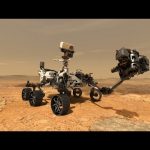
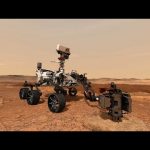
A new name for our next Mars rover, a new space station resupply mission, and how you can join the Artemis Generation … a few of the stories to tell you about – This Week at NASA!
This video is available for download from NASA’s Image and Video Library: https://images.nasa.gov/details-NHQ_2020_0307_A%20New%20Name%20for%20Our%20Next%20Mars%20Rover%20on%20This%20Week%20@NASA%20%E2%80%93%20March%207,%202020
NASA’s newest Mars Rover’s name – and student behind it – will be announced LIVE on Thursday, March 5 at 1:30 p.m. EST.
The Mars 2020 rover was the subject of a nationwide naming contest in 2019 that drew more than 28,000 essays by K-12 students from every U.S. state and territory. Nearly 4,700 volunteer judges – educators, professionals, and space enthusiasts from around the country – helped narrow the pool down to 155 semifinalists. A second round of judging selected the nine finalist essays that were open to an online public poll before Thomas Zurbuchen, associate administrator of NASA’s Science Mission Directorate, made the final selection.
A chance to send your name to the Sun, testing systems for our Orion spacecraft, and sizing up Earth, from space – a few of the stories to tell you about – This Week at NASA!
This video is available for download from NASA’s Image and Video Library: https://images.nasa.gov/details-NHQ_2018_0309_Send%20Your%20Name%20to%20the%20Sun%20on%20This%20Week%20@NASA%20%E2%80%93%20March%209,%202018.html