Experts from NASA, NOAA, and the Space Force will discuss three new missions to study space weather and its impacts on the solar system.
IMAP (Interstellar Mapping and Acceleration Probe), NASA’s Carruthers Geocorona Observatory, and the National Oceanic and Atmospheric Administration’s (NOAA) Space Weather Follow On-Lagrange 1 (SWFO-L1) are targeted to launch aboard a SpaceX Falcon 9 rocket at 7:32 a.m. EDT (1132 UTC), Tuesday, Sept. 23.
The participants in the news conference are: – Nicky Fox, associate administrator, Science Mission Directorate, NASA Headquarters – Brad Williams, IMAP program executive, NASA Headquarters – Irene Parker, deputy assistant administrator for Systems at NOAA’s National Environmental Satellite, Data, and Information Service – Denton Gibson, launch director, NASA’s Launch Services Program, NASA Kennedy – Julianna Scheiman, director, NASA Science Missions, SpaceX – Arlena Moses, launch weather officer, 45th Weather Squadron, U.S. Space Force
Live from NASA’s Johnson Space Center, we’re introducing our 2025 class of astronaut candidates to the public for the first time. Chosen from over 8,000 applicants, these candidates will undergo nearly two years of training before they graduate as astronauts, eligible for missions to the Moon and beyond.
Our astronaut corps is pushing the boundaries of exploration—from conducting scientific research on the International Space Station, to preparing for our Artemis missions to the Moon, to inspiring the next generation of explorers and innovators. Learn more about our active astronauts: https://www.nasa.gov/astronauts/
00:00:48 – Scurtă istorie a programului Apollo. 00:05:48 – De ce nu se văd stelele? 00:07:06 – De ce flutură steagul? 00:09:24 – De ce nu se mai întorc oamenii pe Lună? 00:12:44 – Cum au rezistat în centura de radiații Van Allen? 00:15:01 – Concluzii despre calatoria pe luna
Pentru a înțelege adevărul, trebuie privită istoria programului spațial. După discursul lui John F. Kennedy, „We choose to go to the moon”, SUA au lansat racheta Saturn V și au construit modulul lunar. Au urmat teste, sacrificii precum Apollo 1 și progrese remarcabile. Misiunea Apollo 11, în iulie 1969, i-a dus pe Neil Armstrong, Buzz Aldrin și Michael Collins pe Lună. Modulul Eagle a aselenizat, iar cuvintele „The Eagle has landed” au devenit legendare.
NASA a explicat clar misterele. Stelele nu apar în fotografii pentru că expunerea scurtă a aparatului favoriza suprafața Lunii și costumele albe, nu lumina slabă a stelelor. Steagul american părea să fluture din cauza unei bare metalice orizontale și a vibrațiilor mecanice produse de astronauți, nu a vântului. În privința radiațiilor, centurile Van Allen au fost traversate rapid, pe traiectorii periferice, iar grosimea aluminiului navei a asigurat protecție. Astronauții au primit doze comparabile cu un CT toracic, mult sub pragul de risc.
De ce nu s-a mai revenit pe Lună? Costurile uriașe și lipsa motivației politice după câștigarea cursei spațiale au dus la anularea misiunilor Apollo ulterioare. Totuși, interesul renaște odată cu programul Artemis, care pregătește o întoarcere pe Lună și chiar drumul spre Marte.
Astfel, dovezile arată că aselenizarea nu a fost falsă, ci o reușită istorică a astronauților și a întregului program spațial Apollo.”
NASA Acting Administrator Sean Duffy speaks on America’s mission to lead in space travel:
“We’re going back to the Moon. And this time, when we plant our flag, we stay!”
Through the Artemis campaign, NASA is returning astronauts to the lunar surface – advancing science, testing new technology, and learning how to live and work on another world. These missions prepare us for our next giant leap: sending humans to Mars.
We are saddened by the passing of Apollo astronaut Jim Lovell at the age of 97.
Jim Lovell was a veteran of the Gemini VII and Gemini XII missions before becoming command module pilot and navigator for Apollo 8, the first crewed spacecraft to be lifted into near-Earth orbit by the Saturn V launch vehicle. He became the first man to orbit the Moon on two separate missions when he served as the commander of Apollo 13.
Unfortunately, the mission to explore the Fra Mauro region of the Moon did not go as planned. What many viewed as a “routine” mission soon had millions around the globe glued to television sets watching and hoping for a positive outcome to one of the most intense episodes in the history of space exploration.
Want to do real NASA science? You can. Right now, dozens of NASA projects need your help. From spotting asteroids to searching for planets beyond our solar system, and so much more, there are projects for everyone. And you don’t need a PhD to get involved, just your curiosity!
Aboard the International Space Station, NASA astronauts Nichole Ayers, Anne McClain, and Jonny Kim share a Fourth of July message and extend their best wishes to those back on Earth in a video recorded on June 16, 2025.
Coming June 2025 to NASA+, YouTube, and other platforms, the original documentary film “Cosmic Dawn” takes you behind the scenes of the James Webb Space Telescope.
Relive the pitfalls and the triumphs of the world’s most powerful space telescope—from developing the idea of an impossible machine to watching with bated breath as it unfolded, hurtling through space a million miles away from Earth.
You’ve seen the universe through the eyes of Webb. Now discover how this technological marvel came about through the eyes of the scientists, engineers, and dreamers who made it possible.
Subscribe to NASA’s flagship YouTube channel to join astronauts on a spacewalk, watch rocket launches, see innovative technology, chat with scientists, and so much more. This is your ticket to discover, innovate and explore with NASA.
After seven months, 93 million miles, and 670,000 photos, astronaut Don Pettit has returned to Earth. Pettit is taking part in a news conference on Monday, April 28, to discuss his 220-day mission to the International Space Station.
Pettit returned to Earth on April 19 (April 20, Kazakhstan time), along with Roscosmos cosmonauts Alexey Ovchinin and Ivan Vagner. Pettit celebrated his 70th birthday on April 20. During his time in orbit, Pettit conducted hundreds of hours of scientific investigations, including research into 3D printing, water sanitization, and growing plants in space.
Have questions for Don? Join us on NASA’s Instagram account after the news conference for a live Q&A: https://www.instagram.com/nasa/
After 220 days and 93.3 million miles in space, astronaut Don Pettit is returning to Earth on Saturday, April 19.
After undocking from the International Space Station alongside cosmonauts Alexey Ovchinin and Ivan Vagner, Pettit’s Soyuz MS-26 spacecraft will begin its deorbit burn at 8:26 p.m. EDT (0026 UTC April 20) and touch down on the steppes of Kazakhstan around 9:20 p.m. EDT (0120 UTC April 20).
This was Pettit’s fourth spaceflight; while on the station, Pettit contributed to research that benefits humanity and delighted photography enthusiasts around the world with his unique point of view.
Watch as NASA astronaut Don Pettit, along with Roscosmos cosmonauts Alexey Ovchinin and Ivan Vagner, undock from the International Space Station and begin their voyage back to Earth.
The Soyuz MS-26 spacecraft is set to undock from the space station at 5:57 p.m. EDT (2157 UTC), heading for a parachute-assisted landing at 9:20 p.m. EDT (0120 UTC or 6:20 a.m. Kazakhstan time, Sunday, April 20) on the steppes of Kazakhstan, southeast of the town of Dzhezkazgan. Landing will occur on Pettit’s 70th birthday.
Watch as three International Space Station crew members—NASA astronaut Don Pettit, along with Roscosmos cosmonauts Alexey Ovchinin and Ivan Vagner—begin final preparations for their return to Earth aboard Soyuz MS-26, currently targeted for Saturday, April 19.
(In local time, MS-26 will touch down on Sunday, April 20: Pettit’s 70th birthday!)
After entering the Soyuz MS-26 spacecraft, the spacecraft’s hatch will close at approximately 2:25 p.m. EDT (1825 UTC); the spacecraft is scheduled to undock at 5:57 p.m. EDT (2157 UTC).
NASA astronaut Don Pettit is scheduled to return home in mid-April 2025 after a seven-month mission aboard the International Space Station as part of Expedition 72. Throughout his stay, Pettit contributed to research that benefits humanity and future space missions, and delighted photography enthusiasts around the world with his unique point of view.
Pettit also shared what he calls his “science of opportunity” to demonstrate how experimenting with our surroundings can help gain a better understanding of how things work. This understanding is enhanced when art, science, and microgravity come together.
Ai întrebări de știință și vrei răspunsuri personale? Intră acum pe Patreon și eu își voi răspunde direct pe whatsapp ►https://patreon.com/cristianpresura
0:00 Intro – Starship vs. China 1:00 Lansarea Starship și explozia 15:30 Probleme tehnice la Starship (analiză) 30:45 Planurile SpaceX după eșec 37:10 Programul spațial al Chinei – context 45:00 Cum vede China eșecul Starship 52:00 Concluzii și perspective
Unul dintre obiectivele majore ale Starship este implicarea în programul Artemis al NASA, în special în misiunea Artemis 3, programată teoretic pentru 2027. Această misiune presupune transportul astronauților de pe orbita lunară pe suprafața Lunii cu ajutorul unui model modificat numit Starship HLS (Human Landing System). Însă acest plan implică un proces complex de alimentare cu combustibil pe orbita Pământului, ceea ce necesită între 15 și 20 de lansări Starship de succes – un lucru care nu s-a realizat încă.
În paralel, China dezvoltă propriul program de aselenizare, mai centralizat și cu o arhitectură mai simplă, asemănătoare cu cea a programului Apollo. Dacă SUA nu reușesc să respecte calendarul actual, este posibil ca China să devanseze misiunea cu echipaj uman spre Lună până în 2030.
Podcastul subliniază dificultățile tehnice și politice cu care se confruntă programul Artemis, inclusiv incertitudinile legate de schimbările de administrație la NASA. Deși SpaceX a realizat progrese notabile, mai ales cu prima treaptă a rachetei, provocarea majoră rămâne revenirea treptei superioare de pe orbită într-o stare perfectă de reutilizare. În final, Claudiu rămâne sceptic privind respectarea termenelor și viitorul apropiat al misiunilor lunare americane.”
After lifting off from the Baikonur Cosmodrome in Kazakhstan and docking with the International Space Station, the Soyuz MS-27 mission to the station is scheduled to open its hatches at approximately 7:20 a.m. EDT (1120 UTC) on Tuesday, April 8.
NASA astronaut Jonny Kim, accompanied by cosmonauts Sergey Ryzhikov and Alexey Zubritsky, will spend approximately eight months on the International Space Station before returning to Earth in December.
Kim was selected to become a NASA astronaut in 2017; before joining NASA’s astronaut corps, Kim completed more than 100 combat operations as a Navy SEAL. A dual-designated naval aviator and flight surgeon, Kim received his doctorate in medicine from Harvard Medical School. This is Kim’s first mission to the station.
After lifting off from the Baikonur Cosmodrome in Kazakhstan, NASA astronaut Jonny Kim is scheduled to dock with the International Space Station at 5:03 a.m. EST (0903 UTC) on Tuesday, April 8.
Kim was selected to become a NASA astronaut in 2017; before joining NASA’s astronaut corps, Kim completed more than 100 combat operations as a Navy SEAL. A dual-designated naval aviator and flight surgeon, Kim received his doctorate in medicine from Harvard Medical School.
Accompanied by cosmonauts Sergey Ryzhikov and Alexey Zubritsky, Kim will spend approximately eight months on the International Space Station before returning to Earth in December. This is Kim’s first mission to the station.
NASA astronaut Jonny Kim is set to lift off on his first mission to the International Space Station on Tuesday, April 8. Launch is scheduled for 1:47 a.m. EDT (0547 UTC) from the Baikonur Cosmodrome in Kazakhstan.
Kim was selected to become a NASA astronaut in 2017; before joining NASA’s astronaut corps, Kim completed more than 100 combat operations as a Navy SEAL. A dual-designated naval aviator and flight surgeon, Kim received his doctorate in medicine from Harvard Medical School.
Kim will launch aboard the Roscosmos Soyuz MS-27 spacecraft, accompanied by cosmonauts Sergey Ryzhikov and Alexey Zubritsky, where they will spend approximately eight months on the International Space Station before returning to Earth in December. Kim will serve as a flight engineer and member of the Expedition 72/73 crew, supporting scientific research to help us learn how to live in space while making life better back on Earth.
After liftoff, MS-27 is scheduled to dock with the station at 5:03 a.m. EDT (0903 UTC), with hatch opening at approximately 7:20 a.m. EDT (1120 UTC).
Join NASA experts to talk about EZIE, a trio of just-launched NASA spacecraft that will study powerful electric currents in the sky. When colorful auroras glow, intense currents called “electrojets” flow. EZIE will help us better understand these electric currents by looking at the invisible magnetic fingerprints they leave in Earth’s upper atmosphere.
Knowing more about electrojets helps improve models for predicting the effects of space weather, which is important for protecting the power grid, GPS and communications systems on Earth, as well as satellites and astronauts in space.
Join the live chat or submit your questions via social media with the hashtag #AskNASA.
Watch with us as the four members of NASA’s SpaceX Crew-10 mission launch to the space station from Launch Complex 39A at NASA’s Kennedy Space Center in Florida.
Liftoff is targeted for 7:03 p.m. EDT (2303 UTC) on Friday, March 14. Wednesday’s launch attempt was scrubbed due to a hydraulic system issue with a ground support clamp arm.
SpaceX’s Dragon spacecraft will carry NASA astronauts Anne McClain, commander; and Nichole Ayers, pilot; along with mission specialists JAXA (Japan Aerospace Exploration Agency) astronaut Takuya Onishi, and Roscosmos cosmonaut Kirill Peskov to the orbiting laboratory for a long-duration science mission. This is the 10th crew rotation mission and the 11th human spaceflight mission for NASA to the space station supported by the Dragon spacecraft since 2020 as part of the agency’s Commercial Crew Program.
Following the launch of Crew-10, NASA astronauts Nick Hague, Suni Williams, and Butch Wilmore, along with Roscosmos cosmonaut Aleksandr Gorbunov, will depart the station for a splashdown off the coast of Florida.
Ai întrebări de știință și vrei răspunsuri personale? Intră acum pe Patreon și eu își voi răspunde direct pe whatsapp ►https://patreon.com/cristianpresura
Did you know that NASA technology is all around you? From the camera in your phone to lifesaving medical devices — and so much more — innovations developed for space often come back to improve life on Earth.
Through NASA spinoffs, space technology fuels advancements in healthcare, transportation, agriculture and more. Our expert explains how NASA is part of your everyday life!
You’ve heard about asteroid 2024 YR4 and we’ve heard your questions — so let’s talk about it. What are the chances it’ll hit Earth? Why do those odds keep changing? And should you be worried? (Spoiler alert: No). Get the facts from a NASA expert and learn how we track asteroids, update predictions, and keep an eye on the skies.
Coming April 2025, NASA’s Planetary Defenders documentary will showcase the international collaboration and dedicated team of astronomers and scientists working tirelessly to track and monitor near-Earth asteroids, aiming to protect our planet from potential impacts: https://go.nasa.gov/NASAPlanetaryDefenders
algoritm:”Analiza mostrelor aduse de pe asteroidul Bennu susține teoria panspermiei și abiogeneza, descoperind aminoacizi și baze azotate, esențiali în formarea vieții. Misiunea NASA OSIRIS-REx a adus dovezi prețioase pentru studiul chimiei prebiotice și originile vieții. Amoniacul, aminoacizii și compușii organici de pe Bennu ar fi putut contribui la apariția vieții pe Pământ. timp de 1m 9s Recentele descoperiri aduse de misiunea OSIRIS‐REx a NASA, care a colectat mostre spațiale de pe asteroidul Bennu, reprezintă o capsulă a timpului ce păstrează chimia prebiotică din sistemul solar de acum 4,5 miliarde de ani. Aceste mostre dezvăluie compuși organici, inclusiv 14 din cei 20 de aminoacizi esențiali pentru sinteza proteinelor, precum și toate cele cinci baze azotate (adenină, timină, guanină, citozină și uracil) ce stau la baza ADN-ului și ARN-ului. Astfel, Bennu devine un laborator natural al chimiei cosmice, confirmând existența ingredientelor de bază ale vieții și susținând ipoteza abiogenezei, conform căreia viața a apărut spontan din materie anorganică.
În plus, analiza moleculelor volatile, precum amoniacul, evidențiază reacții chimice complexe, similare cu experimentul Miller, care a demonstrat formarea aminoacizilor în condiții primordiale. Pe lângă carbon, azot, fosfați și sulfați, Bennu conține aproximativ 16.000 de formule moleculare diferite, oferind o privire detaliată asupra proceselor care au contribuit la evoluția chimică a materiei în mediul cosmic. Aceste descoperiri susțin teoria panspermiei, care presupune că asteroizii ar fi putut aduce ingredientele vieții pe Pământ, contribuind la apariția primelor molecule prebiotice.
Aceste descoperiri aduc o nouă lumină asupra dezbaterilor dintre perspectivele religioase și cele științifice privind originea vieții. În timp ce miturile despre creație susțin intervenția divină, datele din Bennu demonstrează că procesele chimice complexe și reacțiile organice au avut loc natural în univers. Astfel, experimentul Miller și evoluția chimică din sistemul solar se împletesc pentru a explica cum viața a putut să apară din materie simplă, contribuind la evoluția microorganismelor.
În esență, Bennu reprezintă dovada că elementele fundamentale ale vieții – aminoacizi, proteine, baze azotate și molecule volatile – au evoluat și s-au combinat pentru a da naștere vieții pe Pământ, marcând un pas important în înțele”
Material from the asteroid Bennu is revealing that a lost world fostered the building blocks of life… with an unexpected twist.
Join experts on Thursday, January 30, at 3:00 p.m. EST (2000 UTC) as they dive into the recent findings from the asteroid sample NASA’s OSIRIS-REx spacecraft brought to Earth in September 2023.
Have questions? Share them in chat and we’ll answer a few live!
How would humanity respond if we discovered an asteroid headed for Earth? NASA’s upcoming documentary, “Planetary Defenders,” takes you inside the high-stakes world of asteroid hunting and planetary defense. Follow dedicated scientists and astronomers as they work to protect Earth from potential impacts. With stunning visuals and compelling stories, this gripping documentary reveals the human spirit behind the quest to safeguard our planet.
Coming soon to NASA+ in spring 2025. No subscription required. https://plus.nasa.gov
On Wednesday, Jan. 8, at 1:25 p.m. EST (1825 UTC), NASA Administrator Bill Nelson and Deputy Administrator Pam Melroy will speak with NASA astronauts Nick Hague, Butch Wilmore, Suni Williams, and Don Pettit about their mission aboard the International Space Station.
The four astronauts are in the middle of a long-duration mission living and working aboard the microgravity laboratory. Hague, Wilmore, and Williams are scheduled to return to Earth in the spring of 2025 aboard SpaceX’s Crew-9 Dragon spacecraft, which is currently docked to the station.
Preparing to orbit and do science on the Moon, investigating how solar wind interacts with Mars, and demonstrating quiet supersonic flight are just a FEW of the milestones we have planned for 2025.
To learn more about the NASA missions mentioned in this highlight video, take a deep dive into these links:
Say hello to the fastest-moving human-made object, NASA’s Parker Solar Probe. On a mission to “touch the Sun,” this spacecraft is set to make history on Dec. 24 by making its closest dive through the Sun’s corona, or upper atmosphere.
Join NASA experts on Tuesday, December 17 at 3:00 p.m. EST as they take your questions about the mission, the currently high-activity phase of the Sun and more. Share your questions in the chat!
NASA will hold a media event on Dec. 5 to provide an update on the agency’s Artemis campaign.
Participants:
-NASA Administrator Bill Nelson -NASA Deputy Administrator Pam Melroy -NASA Associate Administrator Jim Free -Catherine Koerner, associate administrator, Exploration Systems Development Mission Directorate, NASA Headquarters -Amit Kshatriya, deputy associate administrator, Moon to Mars Program Office, Exploration Systems Development Mission Directorate -Reid Wiseman, NASA astronaut and Artemis II commander
Through the Artemis campaign, the agency will establish a long-term presence at the Moon for scientific exploration with our commercial and international partners, learn how to live and work away from home, and prepare for future human exploration of Mars.
NASA’s SLS (Space Launch System) rocket, exploration ground systems, and Orion spacecraft, along with the human landing system, next-generation spacesuits, the lunar space station, Gateway, and future rovers are NASA’s foundation for deep space exploration.
Just what you need for the holidays… the coziness of a crackling and roaring rocket engine!
Technically, this fireplace packs the heat of the SLS rocket’s four RS-25 engines and a pair of solid rocket boosters – just enough to get you to the Moon! (And get through the holidays with your in-laws.)
This glowing mood-setter is brought to you by the SLS (Space Launch System) rocket that launched Artemis I on its mission around the Moon and back on Nov. 16, 2022. 8.8 million pounds of total thrust – and a couple glasses of eggnog – might just be enough to make your holidays merry.
Video description: A stock fireplace illustration frames looping archival video of the blasting RS-25 engines that launched the Artemis I rocket to the Moon on Nov. 16, 2022 (source: https://go.nasa.gov/4g6LnWc ). The illustration includes stone tiling, a pillow, a basket of firewood, and contains elements generated with AI. NASA added two framed pictures to the illustration. One shows an archival image of the Orion capsule flying through space. The other shows the Artemis logo. The audio features the roar of the rockets at a low level, with the addition of the sounds of a crackling wood fire.
Credit: NASA Producers: Sami Aziz, John Sackman Designer: Chris Chamberland
This interactive Q&A will explore how NASA’s cutting-edge technology and research are helping to combat climate change and to develop solutions for a greener planet.
Fast’ solar wind moves with speeds above 500 km/s. Curiously, this wind exits the Sun’s corona with lower speeds, so something speeds it up as it moves farther away. The million-degree wind naturally cools down as it expands into a larger volume and becomes less dense, much like the air on Earth as you climb a mountain. And yet, it cools more slowly than expected from this effect alone.
So, what provides the necessary energy to accelerate and heat the fastest parts of the solar wind?
Data from our Solar Orbiter and NASA’s Parker Solar Probe have provided conclusive evidence that the answer is large-scale oscillations in the Sun’s magnetic field, known as Alfvén waves.
Join mission experts as they discuss NASA’s Europa Clipper mission to an ocean moon of Jupiter and answer your questions live. Submit questions in the chat using #AskNASA.
Clipper is set to launch on a journey to discover the secrets hidden under this moon’s icy crust. Does Europa have conditions to support life?
Europa Clipper is set to launch in October 2024 from NASA’s Kennedy Space Center in Florida. It will arrive at Jupiter in 2030. Learn more about the mission: https://science.nasa.gov/mission/europa-clipper/
NASA Administrator Bill Nelson speaks to the power of NASA’s climate-related data to help the world understand climate change and take action.
“The challenge of the climate crisis is here and now. Let’s answer it—from above.”
Most of what humanity knows about our changing planet comes from NASA’s more than two-dozen satellites and instruments—and from the agency’s observations for over 60 years.
For more information about how NASA in conjunction with the rest of the federal government studies our changing planet, visit https://earth.gov/
Credit: NASA Producer: Daniel Lauchu Music: Universal Production Music
NASA astronaut Don Pettit is set to lift off on his fourth mission to the International Space Station on Wednesday, Sept. 11. Live NASA coverage begins at 11:15 a.m. EDT (1555 UTC) for a 12:23 p.m. (1623 UTC) launch from the Baikonur Cosmodrome in Kazakhstan.
Pettit’s first trip to the orbiting laboratory was in 2002, where he served as the NASA Science Officer aboard the station as part of Expedition 6. Pettit later traveled to the station aboard space shuttle Endeavour on STS-126, and most recently went to space in 2011. Pettit has a Ph.D. in chemical engineering from the University of Arizona.
Pettit will launch aboard the Roscosmos Soyuz MS-26 spacecraft, accompanied by cosmonauts Alexey Ovchinin and Ivan Vagner, where they will spend six months on the International Space Station before returning to Earth in the spring of 2025.
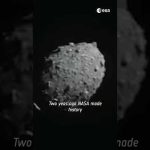
On 26 September 2022, NASA’s approximately half-tonne Double Asteroid Redirect Test (DART) spacecraft impacted the Dimorphos asteroid at an approximate speed of 6.1 km/s, shortening its orbit around Didymos by more than half an hour.
Our Hera spacecraft will be launched this October to reach Dimorphos and perform a close-up ‘crash scene investigation’, gathering data on the asteroid’s mass, structure and make-up to turn this kinetic impact method of planetary defence into a well understood and repeatable technique.
As Earth’s climate changes, we’re seeing shifts in the intensity of events such as record-breaking heat waves, severe floods, prolonged droughts, devastating wildfires, and stronger hurricanes. Join NASA’s Chief Scientist Dr. Kate Calvin and climate expert Dr. Michelle Hawkins on Wednesday, Aug. 21 at 3 p.m. EDT on NASA Science Live as they discuss the science behind these changes. Have questions? Ask them in our live chat during the broadcast.
Dorothy J. Vaughan was a pioneer human computer and visionary who was integral in the expansion of a diverse workforce across NASA.
She began her career with the National Advisory Committee for Aeronautics in 1943 as part of the segregated West Area Computing Unit, an all-black group of female mathematicians. Their ground-breaking work and remarkable contributions left an indelible mark on the NASA community.
Promoted to lead the West Area Computers in 1949, Vaughan was NACA’s first black supervisor and one of its few female supervisors. She was a steadfast advocate for the women who worked as human computers, and for all the individuals under her leadership.
Dorothy Vaughan helmed West Computing for nearly a decade. In 1958, when the NACA made the transition to NASA, segregated facilities, including the West Computing office, were abolished. Dorothy Vaughan and many of the former West Computers joined the new Analysis and Computation Division (ACD), a racially and gender-integrated group on the frontier of electronic computing. Dorothy Vaughan became an expert FORTRAN programmer, and she also contributed to the Scout Launch Vehicle Program.
Through her exceptional leadership and dedication to the betterment of all individuals – particularly women of color, her legacy informed the agency’s current diverse workforce.
Innovators like Vaughan laid the foundation for NASA to revisit the Moon for the first time since the Apollo era, this time with the first woman and first person of color under the Artemis program.