Tag: NASA

  • Thomas and Matthias astro chats: training | Episode 1

    Thomas and Matthias astro chats: training | Episode 1

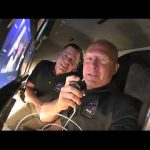
    Join ESA astronauts Thomas Pesquet and Matthias Maurer at NASA’s Johnson Space Center in Houston, Texas, USA. In part one of this video series, the two astronauts compare notes on their journey to date as they prepare for missions to the International Space Station.

    Though mission details and dates are yet to be confirmed, Thomas and Matthias are the next two European astronauts in line for flights. Thomas has flown to the International Space Station before, while Matthias will fly for the first time.

    Prior to a mission, astronauts train extensively to ensure they are familiar with the vast array of systems and operations on board. In this video, the pair discuss how training for a second mission differs from a first mission, the challenges of training during a global pandemic, and how flying to the Station on US commercial crew vehicles may differ from flying on the Russian Soyuz spacecraft.

    This video was filmed in June 2020. At that time, the platform Thomas and Matthias were standing on – in front of a full-scale mock-up of the International Space Station – was the only place at NASA’s JSC that they could interact without face masks. Despite this, the pair were required to maintain social distance at all times as a precaution.

    Learn more: https://bit.ly/HumanAndRoboticExplorationESA

    ★ Subscribe: http://bit.ly/ESAsubscribe and click twice on the bell button to receive our notifications.

    Check out our full video catalog: http://bit.ly/SpaceInVideos
    Follow us on Twitter: http://bit.ly/ESAonTwitter
    On Facebook: http://bit.ly/ESAonFacebook
    On Instagram: http://bit.ly/ESAonInstagram
    On Flickr: http://bit.ly/ESAonFlickr

    We are Europe’s gateway to space. Our mission is to shape the development of Europe’s space capability and ensure that investment in space continues to deliver benefits to the citizens of Europe and the world. Check out http://www.esa.int/ESA to get up to speed on everything space related.

    Copyright information about our videos is available here: http://www.esa.int/spaceinvideos/Terms_and_Conditions

    #ESA
    #MatthiasMaurer
    #ThomasPesquet

  • Solar Orbiter first images revealed

    Solar Orbiter first images revealed

    ESA’s Solar Orbiter spacecraft has sent back its first images of the Sun. At 77 million kilometres from the surface, this is the closest a camera has ever flown to our nearest star. The pictures reveal features on the Sun’s exterior that have never been seen in detail before.

    Launched on 10 February 2020, the spacecraft completed its commissioning phase and first close-approach to the Sun in mid-June. Since then, science teams have been processing and examining this early data.

    The spacecraft is currently in its cruise phase, on its way to Venus, but will eventually get even closer to the Sun.
    Learn more: https://bit.ly/SolarOrbitersFirstImages

    ★ Subscribe: http://bit.ly/ESAsubscribe and click twice on the bell button to receive our notifications.

    Check out our full video catalog: http://bit.ly/SpaceInVideos

    Follow us on Twitter: http://bit.ly/ESAonTwitter
    On Facebook: http://bit.ly/ESAonFacebook
    On Instagram: http://bit.ly/ESAonInstagram
    On Flickr: http://bit.ly/ESAonFlickr

    We are Europe’s gateway to space. Our mission is to shape the development of Europe’s space capability and ensure that investment in space continues to deliver benefits to the citizens of Europe and the world. Check out http://www.esa.int/ESA to get up to speed on everything space related.

    Copyright information about our videos is available here: http://www.esa.int/spaceinvideos/Terms_and_Conditions

    #ESA
    #SolarOrbiter
    #TheSunUpClose

  • Solar Orbiter sees ‘campfires’ on the Sun

    Solar Orbiter sees ‘campfires’ on the Sun

    The first images from ESA’s Solar Orbiter, captured around the spacecraft’s first close pass of the Sun, some 77 million kilometres from its surface, are already exceeding expectations revealing interesting new phenomena on our parent star.

    This animation shows a series of close-up views captured by the Extreme Ultraviolet Imager (EUI) at wavelengths of 17 nanometers, showing the upper atmosphere of the Sun, or corona, with a temperature of around 1 million degrees.

    These images reveal a multitude of small flaring loops, erupting bright spots and dark, moving fibrils. A ubiquitous feature of the solar surface, uncovered for the first time by these images, have been called ‘campfires’. They are omnipresent minuature eruptions that could be contributing to the high temperatures of the solar corona and the origin of the solar wind.

    Captured on 30 May 2020, when Solar Orbiter was roughly halfway between the Earth and the Sun, these are the closest views of the Sun ever taken, allowing EUI to see features in the solar corona of only 400 km across. As the mission continues, Solar Orbiter will go closer to the Sun and this will increase the instrument’s resolving power by a factor of two at closest approach.

    The colour on this image has been artificially added because the original wavelength detected by the instrument is invisible to the human eye.

    The circle in the lower left corner indicates the size of Earth for scale.

    The extended grey shape visible at times moving across the field (00:00-00:25; 01:00-01:28; 01:50-02:00; 02:52-03:27) is not a solar feature but is caused by a sensor artefact.

    Solar Orbiter is a space mission of international collaboration between ESA and NASA.

    Learn more: https://bit.ly/SolarOrbitersFirstImages

    Credit: Solar Orbiter/EUI Team (ESA & NASA); CSL, IAS, MPS, PMOD/WRC, ROB, UCL/MSSL

    ★ Subscribe: http://bit.ly/ESAsubscribe and click twice on the bell button to receive our notifications.

    Check out our full video catalog: http://bit.ly/SpaceInVideos
    Follow us on Twitter: http://bit.ly/ESAonTwitter
    On Facebook: http://bit.ly/ESAonFacebook
    On Instagram: http://bit.ly/ESAonInstagram
    On Flickr: http://bit.ly/ESAonFlickr

    We are Europe’s gateway to space. Our mission is to shape the development of Europe’s space capability and ensure that investment in space continues to deliver benefits to the citizens of Europe and the world. Check out http://www.esa.int/ESA to get up to speed on everything space related.

    Copyright information about our videos is available here: http://www.esa.int/spaceinvideos/Terms_and_Conditions

    #ESA
    #SolarOrbiter
    #TheSunUpClose

  • Closer than ever: Solar Orbiter’s first views of the Sun

    Closer than ever: Solar Orbiter’s first views of the Sun

    The first images from ESA’s Solar Orbiter are already exceeding expectations and revealing interesting new phenomena on the Sun.

    This animation combines a series of views captured with several remote-sensing instruments on Solar Orbiter between 30 May and 21 June 2020, when the spacecraft was roughly halfway between the Earth and the Sun ¬– closer to the Sun than any other solar telescope has ever been before.

    The red and yellow images were taken with the Extreme Ultraviolet Imager (EUI) in the extreme ultraviolet region of the electromagnetic spectrum, at wavelengths of 30 and 17 nanometers, respectively.

    The close-up views by EUI show the upper atmosphere of the Sun, or corona, with a temperature of around 1 million degrees. With the power to see features in the solar corona of only 400 km across, these images reveal a multitude of small flaring loops, erupting bright spots and dark, moving fibrils. A ubiquitous feature of the solar surface, uncovered for the first time by these images, have been called ‘campfires’. They are omnipresent minuature eruptions that could be contributing to the high temperatures of the solar corona and the origin of the solar wind.

    The EUI images are followed by three views based on data from the Polarimetric and Helioseismic Imager (PHI) instrument. The blue and red view is a ‘tachogram’ of the Sun, showing the line of sight velocity of the Sun, with the blue side turning to us and the red side turning away. The following view is a magnetogram, or a map of magnetic propertied for the whole Sun, featuring a large magnetically active region in the lower right-hand quadrant of the Sun. The yellow-orange view is a visible light image and represents what we would see with the naked eye: there are no sunspots visible because the Sun is displaying only low levels of magnetic activity at the moment.

    On larger scales, the Metis coronograph blocks out the dazzling light from the solar surface, bringing the fainter corona into view. Metis observes the corona simultaneously in visible light (shown in green) and ultraviolet light (shown in red) for the first time with unprecedented temporal coverage and spatial resolution. These images reveal the two bright equatorial streamers and fainter polar regions that are characteristic of the solar corona during times of minimal magnetic activity.

    On even grander scales, the Heliospheric Imager (SoloHI) telescope takes images of the solar wind – the stream of charged particles constantly released by the Sun into outer space – by capturing the light scattered by electrons in the wind. The first-light image from SoloHI is shown at the end, as a mosaic of four separate images from the instrument’s four separate detectors. In this view, the Sun is located to the right of the frame, and its light is blocked by a series of baffles; the last baffle is in the field of view on the right-hand side and is illuminated by reflections from the solar array. The partial ellipse visible on the right is the zodiacal light, created by sunlight reflecting off the dust particles that are orbiting the Sun. The signal from the solar wind outflow is faint compared to the much brighter zodiacal light signal, but the SoloHI team has developed techniques to reveal it. Planet Mercury is also visible as a small bright dot near the lower edge of the upper left tile.

    Solar Orbiter is a space mission of international collaboration between ESA and NASA.

    Learn more: https://bit.ly/SolarOrbitersFirstImages

    Credit: Solar Orbiter/EUI Team; PHI Team; Metis Team; SoloHI Team /ESA & NASA

    ★ Subscribe: http://bit.ly/ESAsubscribe and click twice on the bell button to receive our notifications.

    Check out our full video catalog: http://bit.ly/SpaceInVideos
    Follow us on Twitter: http://bit.ly/ESAonTwitter
    On Facebook: http://bit.ly/ESAonFacebook
    On Instagram: http://bit.ly/ESAonInstagram
    On Flickr: http://bit.ly/ESAonFlickr

    We are Europe’s gateway to space. Our mission is to shape the development of Europe’s space capability and ensure that investment in space continues to deliver benefits to the citizens of Europe and the world. Check out http://www.esa.int/ESA to get up to speed on everything space related.

    Copyright information about our videos is available here: http://www.esa.int/spaceinvideos/Terms_and_Conditions

    #ESA
    #SolarOrbiter
    #TheSunUpClose

  • NASA Science Live: How to Spot Comet NEOWISE

    NASA Science Live: How to Spot Comet NEOWISE

    Have you seen Comet NEOWISE in the sky? ☄️ Visiting from the most distant parts of our solar system, it made its once-in-our-lifetimes close approach to the Sun on July 3, 2020 and will cross outside Earth’s orbit on its way back to the outer parts of the solar system by mid-August. Join experts on #NASAScience Live Wednesday, July 15 at 3:00 p.m. EDT to learn more about this comet and how you can spot it before it’s gone. Set a reminder to tune in!

  • Our next Mars Rover gets closer to launch on This Week @NASA – July 10, 2020

    Our next Mars Rover gets closer to launch on This Week @NASA – July 10, 2020

    Our next Mars Rover gets closer to launch, a comet spotted from the space station and we’re ready to build a spacecraft to explore a metal-rich asteroid … a few of the stories to tell you about – This Week at NASA!

    Download Link: https://images.nasa.gov/details-Our%20next%20Mars%20Rover%20gets%20closer%20to%20launch%20on%20This%20Week%20@NASA%20%E2%80%93%20July%2010,%202020

  • Meet the NASA Psyche team who will map Psyche’s elemental composition

    Meet the NASA Psyche team who will map Psyche’s elemental composition

    Meet the team designing and building the Psyche mission’s gamma ray and neutron spectrometer. This instrument on the spacecraft will detect, measure, and map Psyche’s elemental composition. It is mounted on a 6-foot (2-meter) boom to distance the sensors from background radiation created by energetic particles interacting with the spacecraft and to provide an unobstructed field of view. The team is based at the Applied Physics Laboratory at Johns Hopkins University and is led by Principal Investigator David Lawrence. 

    Learn more: https://psyche.asu.edu/mission/instruments-science-investigations/

  • A Mighty Powerful Spacewalk Outside the Space Station on This Week @NASA – July 3, 2020

    A Mighty Powerful Spacewalk Outside the Space Station on This Week @NASA – July 3, 2020

    A mighty powerful spacewalk outside the space station, a look at the space station’s next crew, and updates on our Artemis program … a few of the stories to tell you about – This Week at NASA!

    This video is available for download from NASA’s Image and Video Library: https://images.nasa.gov/details-A%20Mighty%20Powerful%20Spacewalk%20Outside%20the%20Space%20Station%20on%20This%20Week%20@NASA%20%E2%80%93%20July%203,%202020

  • What You Need to Know About Astrobiology – The Search for Life in the Universe!

    What You Need to Know About Astrobiology – The Search for Life in the Universe!

    How did life begin on Earth? Does life exist beyond our home planet? How do we search for it?

    These are the really tough questions astrobiologists want to answer by studying life as we know it.

    Here’s what you need to know about our search for life in the cosmos: https://www.nasa.gov/content/the-search-for-life

  • What You Need To Know About Asteroids and Other Near-Earth Objects

    What You Need To Know About Asteroids and Other Near-Earth Objects

    Have burning questions about asteroids? Our experts have answers!

    (Spoiler Alert: none of them will hit Earth.)

    Our solar system is littered with asteroids and comets and sometimes they get a little close to Earth. When an asteroid or comet looks like it could come near our home planet, we keep close watch to warn of any potential impacts.

    Here’s what you need to know about how we find, track, and monitor these near-Earth objects: https://www.nasa.gov/mission_pages/asteroids/widget/index.html

  • Weather vs. Climate | Meet the experts

    Weather vs. Climate | Meet the experts

    Ice and snow can be a hot topic when talking about climate. The polar regions are very fragile and can tell us a lot about how Earth’s climate is changing. Andrew Shepherd of the University of Leeds is a leading climate scientist working with ESA and NASA. In this episode he explains how we can separate the effects of weather versus climate from data records and the role of space in studying changes to our planet in real-time and in the future.

    Learn more: http://bit.ly/ExpeditionHome12_18YearsOld

    ★ Subscribe: http://bit.ly/ESAsubscribe and click twice on the bell button to receive our notifications.

    Check out our full video catalog: http://bit.ly/SpaceInVideos
    Follow us on Twitter: http://bit.ly/ESAonTwitter
    On Facebook: http://bit.ly/ESAonFacebook
    On Instagram: http://bit.ly/ESAonInstagram
    On Flickr: http://bit.ly/ESAonFlickr

    We are Europe’s gateway to space. Our mission is to shape the development of Europe’s space capability and ensure that investment in space continues to deliver benefits to the citizens of Europe and the world. Check out http://www.esa.int/ESA to get up to speed on everything space related.

    Copyright information about our videos is available here: http://www.esa.int/spaceinvideos/Terms_and_Conditions

    #ESA
    #MeetTheExperts
    #ExpeditionHome

  • NASA Science Live: Science in the Time of Coronavirus

    NASA Science Live: Science in the Time of Coronavirus

    Our planet is facing an unprecedented crisis as we continue to wrestle with the impacts of coronavirus. With its unparalleled technical and scientific expertise, NASA has joined the fight against the pandemic. Join us Thursday, June 25 at 3 p.m. EDT on #NASAScience Live to learn about the ideas and developments that NASA has contributed to confront this global health crisis.

    To learn more about NASA’s response to coronavirus, go to: https://www.nasa.gov/coronavirus

  • NASA names headquarters after Hidden Figure Mary W. Jackson

    NASA names headquarters after Hidden Figure Mary W. Jackson

    NASA Administrator Jim Bridenstine announced on Wednesday, June 24, 2020, the agency’s headquarters building in Washington, D.C., will be named after Mary W. Jackson, the first African American female engineer at NASA.

    Jackson started her NASA career in the segregated West Area Computing Unit of the agency’s Langley Research Center in Hampton, Virginia. Jackson, a mathematician and aerospace engineer, went on to lead programs influencing the hiring and promotion of women in NASA’s science, technology, engineering, and mathematics careers. In 2019, she was posthumously awarded the Congressional Gold Medal.

    “Mary W. Jackson was part of a group of very important women who helped NASA succeed in getting American astronauts into space. Mary never accepted the status quo, she helped break barriers and open opportunities for African Americans and women in the field of engineering and technology,” said Bridenstine. “Today, we proudly announce the Mary W. Jackson NASA Headquarters building. It appropriately sits on ‘Hidden Figures Way,’ a reminder that Mary is one of many incredible and talented professionals in NASA’s history who contributed to this agency’s success. Hidden no more, we will continue to recognize the contributions of women, African Americans, and people of all backgrounds who have made NASA’s successful history of exploration possible.”

    The work of the West Area Computing Unit caught widespread national attention in the 2016 Margot Lee Shetterly book “Hidden Figures: The American Dream and the Untold Story of the Black Women Mathematicians Who Helped Win the Space Race.” The book was made into a popular movie that same year and Jackson’s character was played by award-winning actress Janelle Monáe.

    “We are honored that NASA continues to celebrate the legacy of our mother and grandmother Mary W. Jackson,” said, Carolyn Lewis, Mary’s daughter. “She was a scientist, humanitarian, wife, mother, and trailblazer who paved the way for thousands of others to succeed, not only at NASA, but throughout this nation.”

    Jackson was born and raised in Hampton, Virginia. After graduating high school, she graduated from Hampton Institute in 1942 with a dual degree in math and physical sciences, and initially accepted a job as a math teacher in Calvert County, Maryland. She would work as a bookkeeper, marry Levi Jackson and start a family, and work a job as a U.S. Army secretary before her aerospace career would take off.

    In 1951, Jackson was recruited by the National Advisory Committee for Aeronautics, which in 1958 was succeeded by NASA. She started as a research mathematician who became known as one of the human computers at Langley. She worked under fellow “Hidden Figure” Dorothy Vaughan in the segregated West Area Computing Unit.

    After two years in the computing pool, Jackson received an offer to work in the 4-foot by 4-foot Supersonic Pressure Tunnel, a 60,000 horsepower wind tunnel capable of blasting models with winds approaching twice the speed of sound. There, she received hands-on experience conducting experiments. Her supervisor eventually suggested she enter a training program that would allow Jackson to earn a promotion from mathematician to engineer. Because the classes were held at then-segregated Hampton High School, Jackson needed special permission to join her white peers in the classroom.

    Jackson completed the courses, earned the promotion, and in 1958 became NASA’s first Black female engineer. For nearly two decades during her engineering career, she authored or co-authored research numerous reports, most focused on the behavior of the boundary layer of air around airplanes. In 1979, she joined Langley’s Federal Women’s Program, where she worked hard to address the hiring and promotion of the next generation of female mathematicians, engineers and scientists. Mary retired from Langley in 1985.

    Download Link: https://images.nasa.gov/details-NASA%20names%20headquarters%20after%20Engineer%20%20Mary%20W.%20Jackson

  • Send NASA Your #CountdownToMars

    Send NASA Your #CountdownToMars

    NASA is inviting the public to help get ready for the upcoming launch of the Mars 2020 Perseverance Rover by joining a global, collective #CountdownToMars. Fans are asked to record video of their creative countdowns to liftoff, then share and tag them on social media with #CountdownToMars. Favorites may be featured on NASA social media and included in a compilation video on launch day.

    Learn more: https://go.nasa.gov/countdowntomars

    The launch period for the Perseverance rover opens July 20, 2020. Perseverance will land on Mars Feb. 18, 2021. For more information on the rover’s mission, visit: https://mars.nasa.gov/mars2020.

    Credit: NASA/JPL-Caltech

  • Matthias Maurer: training at NASA’s Johnson Space Center

    Matthias Maurer: training at NASA’s Johnson Space Center

    ** English and German subtitles are available for this clip under settings, subtitles/CC. **

    ESA astronaut Matthias Maurer travelled to Houston, USA for training at NASA’s Johnson Space Center. In this video he shares his first few weeks of refresher training, with a glimpse behind the scenes.

    Matthias travelled to Houston, USA from Europe with fellow ESA astronaut Thomas Pesquet. Thomas has flown to the International Space Station before, while Matthias is training for his first Space Station mission. Mission dates are yet to be confirmed, but as the next two ESA astronauts in line for flights, the pair are working to ensure they fully trained and ready.

    Due to the current situation with COVID-19, all personnel are required to adhere to special safety precautions while training. These include wearing a mask – as seen in the clip.

    Matthias will continue his training in Houston over the next weeks and months. Stay tuned for further footage of his training and experiences.

    Keep up with Matthias’ training: http://matthiasmaurer.esa.int/

    ★ Subscribe: http://bit.ly/ESAsubscribe and click twice on the bell button to receive our notifications.

    Check out our full video catalog: http://bit.ly/SpaceInVideos
    Follow us on Twitter: http://bit.ly/ESAonTwitter
    On Facebook: http://bit.ly/ESAonFacebook
    On Instagram: http://bit.ly/ESAonInstagram
    On Flickr: http://bit.ly/ESAonFlickr

    We are Europe’s gateway to space. Our mission is to shape the development of Europe’s space capability and ensure that investment in space continues to deliver benefits to the citizens of Europe and the world. Check out http://www.esa.int/ESA to get up to speed on everything space related.

    Copyright information about our videos is available here: http://www.esa.int/spaceinvideos/Terms_and_Conditions

    #ESA
    #MatthiasMaurer
    #AstronautTraining

  • Launching America On a Commercial Spacecraft on This Week @NASA – June 5, 2020

    Launching America On a Commercial Spacecraft on This Week @NASA – June 5, 2020

    Launching America on a commercial spacecraft, a NASA astronaut is headed back to the space station, and new close-up imagery of asteroid Bennu … a few of the stories to tell you about – This Week at NASA!

    This video is available for download from NASA’s Image and Video Library: https://images.nasa.gov/details-Launching%20America%20On%20a%20Commercial%20Spacecraft%20on%20This%20Week%20@NASA%20%E2%80%93%20June%205,%202020

  • Who is NASA Astronaut Bob Behnken?

    Who is NASA Astronaut Bob Behnken?

    NASA astronaut Bob Behnken is a native of Missouri and a veteran of two space shuttle flights. Behnken flew STS-123 in March 2008 and STS-130 in February 2010, logging more than 708 hours in space, and more than 37 hours during six spacewalks. Behnken is currently serving as Joint Operations Commander on the first crewed flight of the SpaceX Crew Dragon, the Demo-2 mission, which launched May 27, 2020. The SpaceX Crew Dragon, along with the Boeing CST-100 Starliner, will provide roundtrip crew transportation services to the International Space Station and return the ability to launch humans into space from United States soil as part of NASA’s Commercial Crew Program. After docking with the International Space Station on the second day of the mission, he also joined Expedition 63 as a flight engineer.

  • Who is NASA Astronaut Doug Hurley?

    Who is NASA Astronaut Doug Hurley?

    NASA astronaut Doug Hurley was the pilot on STS‐127 and STS‐135. Hurley holds a Bachelor of Science in Civil Engineering from Tulane University. Before joining NASA, he was a fighter pilot and test pilot in the U.S. Marine Corps. Hurley is currently serving as Spacecraft Commander on the first crewed flight of the SpaceX Crew Dragon, the Demo-2 mission, which launched May 27, 2020. The SpaceX Crew Dragon, along with Boeing’s CST-100 Starliner, will provide roundtrip crew transportation services to the International Space Station and return the ability to launch humans into space from United States soil as part of NASA’s Commercial Crew Program. After docking with the International Space Station on the second day of the mission, he also joined Expedition 63 as a flight engineer.

  • NASA Astronauts Ring the Opening Bell for Nasdaq

    NASA Astronauts Ring the Opening Bell for Nasdaq

    A historic bell ringing, 250 miles above Earth.

    Today we recognized the achievements of our #LaunchAmerica mission with NASA Astronauts Chris Cassidy, Robert Behnken and Douglas Hurley who rung the captain’s bell onboard the International Space Station to open the day’s trading on June 2.

    Behnken and Hurley arrived at the station on May 31, a day after becoming the first NASA astronauts to launch on a commercial rocket. The launch of the SpaceX Falcon 9 rocket and Crew Dragon spacecraft marked the return of human launches from U.S. soil to the space station for the first time since the retirement of the space shuttle program in 2011.

    Learn more about the mission: https://www.nasa.gov/launchamerica/

  • NASA Astronauts Ring the Opening Bell for Nasdaq

    NASA Astronauts Ring the Opening Bell for Nasdaq

    A historic bell ringing, 250 miles above Earth.

    Today we recognize the achievements of our #LaunchAmerica mission with NASA Astronauts Chris Cassidy, Robert Behnken and Douglas Hurley who will ring the captain’s bell on the space station for Nasdaq’s opening bell. This marks the first time NASA will ring the opening bell for Nasdaq.

  • From Space to Earth: NASA and SpaceX Honor Graduates of The Class of 2020

    From Space to Earth: NASA and SpaceX Honor Graduates of The Class of 2020

    When NASA astronauts Robert Behnken and Douglas Hurley launched to the space station aboard SpaceX’s Dragon Endeavor spacecraft, the world was watching. They also took 90,000 people along for the ride in a mosaic of Earth that include photos of Class of 2020 graduates

    In this video, the crew members talk to Benji Reed, the SpaceX Director of Crew Mission Management, before displaying the graduation mosaic to honor those who graduated this spring during the coronavirus pandemic

    Learn more about the mission by visiting https://www.nasa.gov/launchamerica/

  • They Made it: NASA Shares Update Following #LaunchAmerica Arrival at the International Space Station

    They Made it: NASA Shares Update Following #LaunchAmerica Arrival at the International Space Station

    After launching from American soil in the commercially built and operated SpaceX Dragon Endeavour spacecraft, astronauts Bob Behnken and Doug Hurley have officially joined the International Space Station crew today – making history in the process.

    Join NASA Administrator Jim Bridenstine, alongside other agency officials for a #LaunchAmerica update.

  • NASA Astronauts Arrive at the International Space Station on SpaceX Spacecraft

    NASA Astronauts Arrive at the International Space Station on SpaceX Spacecraft

    After a successful launch into orbit yesterday, SpaceX’s Dragon Endeavour spacecraft is en route to dock with the International Space Station. Watch as astronauts Robert Behnken and Douglas Hurley join the crew aboard our orbiting laboratory:

  • After the Launch: NASA and SpaceX Share Updates about Historic #LaunchAmerica Mission

    After the Launch: NASA and SpaceX Share Updates about Historic #LaunchAmerica Mission

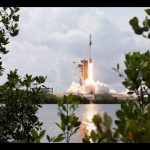
    Liftoff! The SpaceX Falcon 9 rocket carrying NASA astronauts Robert Behnken and Douglas Hurley aboard the company’s Crew Dragon spacecraft launched from Kennedy Space Center’s historic Launch Pad 39A at 3:22 p.m. EDT on May 30, kicking off a critical final flight test of the SpaceX crew transportation system.

    Following the successfully launch, NASA hosted a postlaunch news conference for officials to talk about the mission live from NASA’s Kennedy Space Center in Florida.

    Participants included:
    o NASA Administrator Jim Bridenstine
    o Pat Forrester, NASA Chief Astronaut
    o Kathy Lueders, manager, NASA Commercial Crew Program
    o Elon Musk, SpaceX chief engineer
    o Kirk Shireman, manager, International Space Station Program

    Learn more by visiting https://www.nasa.gov/launchamerica/

  • Launch Recap: NASA and SpaceX fly Astronauts to the Space Station

    Launch Recap: NASA and SpaceX fly Astronauts to the Space Station

    For the first time in history, NASA astronauts have launched from American soil in a commercially built and operated American crew spacecraft on its way to the International Space Station.

    The SpaceX Crew Dragon spacecraft carrying NASA astronauts Robert Behnken and Douglas Hurley lifted off at 3:22 p.m. EDT Saturday on the company’s Falcon 9 rocket from Launch Complex 39A at NASA’s Kennedy Space Center in Florida. The crew will have a 19-hour-journey to the space station, arriving on Sunday, May 31.

    Learn more about the mission: https://www.nasa.gov/launchamerica

  • Making History: NASA and SpaceX Launch Astronauts to Space! (#LaunchAmerica Success May 30, 2020)

    Making History: NASA and SpaceX Launch Astronauts to Space! (#LaunchAmerica Success May 30, 2020)

    Watch history unfold on Saturday, May 30, as NASA and SpaceX launch astronauts Robert Behnken and Douglas Hurley to the International Space Station. This mission marks the first time since the retirement of the space shuttle in 2011 that humans will fly to the space station from U.S. soil. The mission’s first launch attempt on Wednesday, May 27 was scrubbed due to weather conditions. 

    Tune in starting at 11 a.m. EDT as NASA and SpaceX provide joint, live coverage from launch to arrival at the space station. Teams are targeting 3:22 p.m. EDT for the launch of the SpaceX Crew Dragon spacecraft atop a Falcon 9 rocket from historic Launch Complex 39A at NASA’s Kennedy Space Center in Florida. The Crew Dragon is scheduled to dock to the space station on Sunday, May 31.

    Learn more about the mission: https://www.nasa.gov/launchamerica/

    Download Link: https://images.nasa.gov/details-Demo-2%20Launch%20Coverage

     Chats are moderated. Inappropriate language or posts that harass other individuals will be removed.

    • Be courteous
    • Use respectful language
    • Protect your private information
    • No spam, sexually explicit or discriminatory material
    • Stay on topic

  • Tour from Space: Inside the SpaceX Crew Dragon Spacecraft on Its Way to the Space Station

    Tour from Space: Inside the SpaceX Crew Dragon Spacecraft on Its Way to the Space Station

    In this video, NASA astronauts Robert Behnken and Douglas Hurley take viewers on a tour of the SpaceX Crew Dragon spacecraft that will take them on a 19-hour-journey to their new home in orbit.

    The SpaceX Falcon 9 rocket and Crew Dragon spacecraft successfully launched from Kennedy Space Center’s historic Launch Pad 39A at 3:22 p.m. EDT on May 30 with the astronauts aboard for a mission to the orbiting laboratory. Crew Dragon will perform a series of phasing maneuvers to gradually approach and autonomously dock with the International Space Station on Sunday, May 31, at approximately 10:29 a.m. EDT.

    Learn more about the mission by visiting https://www.nasa.gov/launchamerica

  • What’s the Status of NASA and SpaceX’s Mission to Launch Astronauts to Space?

    What’s the Status of NASA and SpaceX’s Mission to Launch Astronauts to Space?

    Reporting from the Countdown Clock at NASA’s Kennedy Space Center — America’s spaceport — officials from NASA provided an update May 29 about the upcoming second attempt on May 30 to launch SpaceX’s Crew Dragon spacecraft to space carrying NASA astronauts Robert Behnken and Douglas Hurley.

    Watch this video to see NASA Administrator Jim Bridenstine, NASA Deputy Administrator Jim Morhard, Kennedy Space Center Director Bob Cabana, and astronauts Kjell Lindgren and Nicole Mann share their insights about the mission.

    NASA and SpaceX now are targeting 3:22 p.m. EDT Saturday, May 30, for the launch of the first commercially built and operated American rocket and spacecraft carrying astronauts to the space station. The first launch attempt, on May 27, was scrubbed due to unfavorable weather conditions.

    Learn more about the mission: https://www.nasa.gov/launchamerica/

    This video is available for download from NASA’s Image and Video Library: https://images.nasa.gov/details-What‘s%20the%20Status%20of%20NASA%20and%20SpaceX’s%20Mission%20to%20Launch%20Astronauts%20to%20Space

  • How to Make a Demo-2 Straw Rocket

    How to Make a Demo-2 Straw Rocket

    In 2020, NASA and SpaceX will launch American astronauts to the International Space Station from U.S. soil for the first time since 2011.

    Would you like to learn how to make your own Demo-2 to launch in your home? Watch this tutorial to learn how.

    All you will need is paper, markers, scissors, tape, yarn or ribbon (optional) and a straw.

    How are you preparing to #LaunchAmerica? From building your own rocket to binge-watching launch videos, share a video, a photo or simply your thoughts using #LaunchAmerica for a chance to be featured on our social media platforms.

    This video is available for download from NASA’s Image and Video Library: https://images.nasa.gov/details-NHQ_2020_0427_How%20to%20Make%20Demo-2%20Straw%20Rockets

  • Making History: NASA and SpaceX Launch Astronauts to Space! (#LaunchAmerica Attempt May 27, 2020)

    Making History: NASA and SpaceX Launch Astronauts to Space! (#LaunchAmerica Attempt May 27, 2020)

    Recorded May 27, 2020: Watch history unfold on Wednesday, May 27, as NASA and SpaceX launch astronauts Robert Behnken and Douglas Hurley to the International Space Station. This mission marks the first time since the retirement of the space shuttle in 2011 that humans will fly to the space station from U.S. soil.

    Tune in starting at 12:15 p.m. EDT as NASA and SpaceX provide joint, live coverage from launch to arrival at the space station. Teams are targeting 4:33 p.m. EDT for the launch of the SpaceX Crew Dragon spacecraft atop a Falcon 9 rocket from historic Launch Complex 39A at NASA’s Kennedy Space Center in Florida. The Crew Dragon is scheduled to dock to the space station at 11:29 a.m. Thursday, May 28.

    Learn more about the mission: https://www.nasa.gov/launchamerica/

    Chats are moderated. Inappropriate language or posts that harass other individuals will be removed.

    • Be courteous
    • Use respectful language
    • Protect your private information
    • No spam, sexually explicit or discriminatory material
    • Stay on topic

  • European Service Module 3

    European Service Module 3

    The Artemis programme is bringing humans back to the Moon. It depends heavily on NASA’s Orion spacecraft that consists of a crew module and the European Service Module, which will provide propulsion, life support, environmental control and electrical power. Main contractor Airbus has just been green-lighted by ESA to develop a third European Service Module.

    Learn more: http://bit.ly/ESAOrion

    ★ Subscribe: http://bit.ly/ESAsubscribe and click twice on the bell button to receive our notifications.

    Check out our full video catalog: http://bit.ly/SpaceInVideos
    Follow us on Twitter: http://bit.ly/ESAonTwitter
    On Facebook: http://bit.ly/ESAonFacebook
    On Instagram: http://bit.ly/ESAonInstagram
    On Flickr: http://bit.ly/ESAonFlickr

    We are Europe’s gateway to space. Our mission is to shape the development of Europe’s space capability and ensure that investment in space continues to deliver benefits to the citizens of Europe and the world. Check out http://www.esa.int/ESA to get up to speed on everything space related.

    Copyright information about our videos is available here: http://www.esa.int/spaceinvideos/Terms_and_Conditions

    #ESA
    #Artemis
    #Orion

  • Mission Update: NASA and SpaceX Crew Dragon Launch

    Mission Update: NASA and SpaceX Crew Dragon Launch

    One day prior to NASA’s mission with SpaceX to launch American astronauts to the International Space Station aboard the Crew Dragon spacecraft, officials will talk about the mission live from NASA’s Kennedy Space Center in Florida.

    NASA Administrator Jim Bridenstine, Kennedy Space Center Director Bob Cabana, and astronauts Kjell Lindgren and Nicole Mann will be on hand to talk about the upcoming mission to fly astronauts Douglas Hurley and Robert Behnken to the orbiting laboratory.

    Teams are targeting 4:33 p.m. EDT Wednesday, May 27, for the launch of the mission, which will be the first time a commercially built and operated American rocket and spacecraft will carry humans to the space station.

    Learn more by visiting https://www.nasa.gov/launchamerica/

  • NASA and SpaceX are ‘GO’ to Proceed for Launch!

    NASA and SpaceX are ‘GO’ to Proceed for Launch!

    NASA’s mission with SpaceX to launch American astronauts to the International Space Station is cleared to proceed, officials said, following a successful Flight Readiness Review that concluded Friday, May 22, at NASA’s Kennedy Space Center in Florida.

    Participants in a news briefing about the mission include:
    · NASA Administrator Jim Bridenstine
    · NASA Associate Administrator Steve Jurczyk
    · Kathy Lueders, manager, NASA Commercial Crew Program
    · Kirk Shireman, manager, International Space Station Program
    · Benji Reed, director of crew mission management, SpaceX
    · Norm Knight, deputy director, NASA Johnson Space Center Flight Operations

    NASA and SpaceX are targeting 4:33 p.m. EDT Wednesday, May 27, for the launch of the Demo-2 flight, which will be the first time a commercially built and operated American rocket and spacecraft will carry humans to the space station.

    Learn about the mission by visiting https://www.nasa.gov/launchamerica/

  • NASA Science Live: Expanding Our View of the Universe

    NASA Science Live: Expanding Our View of the Universe

    NASA’s WFIRST mission will explore the universe, seeking answers to some of its biggest mysteries. From understanding the nature of dark energy to studying planets outside our solar system, this mission will expand our view of the cosmos. Join experts Wednesday, May 20 at 11 a.m. ET for an exciting announcement about the WFIRST mission.

  • NASA celebrates Asian American Pacific Islander Month

    NASA celebrates Asian American Pacific Islander Month

    Honoring the past and present, NASA celebrates Asian American Pacific Islanders Heritage Month. These NASA employees, who have helped contribute to America’s space program, celebrate their diverse history, rich culture and contributions.

  • NASA and SpaceX prepare to #LaunchAmerica

    NASA and SpaceX prepare to #LaunchAmerica

    Together with SpaceX, NASA will return human spaceflight to American soil after nearly a decade. SpaceX will launch people into space for the first time ever with astronauts Bob Behnken and Doug Hurley on board Crew Dragon, which will dock to the International Space Station.

    Prepare to #LaunchAmerica on May 27: www.nasa.gov/launchamerica

    Share with us how you’re planning to #LaunchAmerica for a chance to be featured on our social media: https://www.nasa.gov/nasa-invites-you-to-launchamerica

  • How to Make a Rocket Pop-Up Card

    How to Make a Rocket Pop-Up Card

    Making a pop-up card is the perfect way to celebrate NASA launching American astronauts to the International Space Station from U.S. soil for the first time since 2011.

    All you will need is is some construction paper, scrapbook paper (or cardstock), scissors, drawing supplies, and adhesive. Watch this video to learn more.

    How are you preparing to #LaunchAmerica? From building your own rocket to binge-watching launch videos, share a video, a photo or simply your thoughts using #LaunchAmerica for a chance to be featured on our social media platforms.

    Check here for terms and conditions: https://www.nasa.gov/nasa-invites-you-to-launchamerica

  • NASA Science Live: On Ice

    NASA Science Live: On Ice

    Join NASA ice experts as we discuss important science about Earth’s icy regions, and how it can impact us here in warmer environments. NASA’s ICESat-2 mission uses a laser instrument on a satellite to precisely measure ice and just released new findings about how Earth’s ice is changing. Scientists discovered that enough ice has melted from Antarctica and Greenland to rise sea level about half an inch over the last 16 years. We’ll talk to these researchers to see what that means, and then take you to the coast of Virginia to see the real-world impacts of Earth’s melting ice.

  • Highlighting Our Upcoming Launch of Astronauts from Florida on This Week @NASA – May 1, 2020

    Highlighting Our Upcoming Launch of Astronauts from Florida on This Week @NASA – May 1, 2020

    Highlighting our upcoming launch of astronauts from Florida, some news about our Moon to Mars effort, and our Mars helicopter has a new name … a few of the stories to tell you about – This Week at NASA!

    This video is available for download from NASA’s Image and Video Library: https://images.nasa.gov/details-Highlighting%20Our%20Upcoming%20Launch%20of%20Astronauts%20from%20Florida%20on%20This%20Week%20@NASA%20%E2%80%93%20May%201,%202020

  • Artemis Announcement: NASA Selects Human Landing Systems

    Artemis Announcement: NASA Selects Human Landing Systems

    NASA has selected three American companies – Blue Origin, Dynetics and SpaceX – to design and develop human landing systems for the Artemis program. With these awards, NASA is on track to land the next astronauts on the lunar surface by 2024, and establish sustainable human exploration of the Moon by the end of the decade.

    This video is available for download from NASA’s Image and Video Library: https://images.nasa.gov/details-NHQ_0430_HLS%20Announcement%201