Missions to Mars have made many exciting discoveries that have transformed our understanding of the planet, but the next step is to bring samples to Earth for detailed analysis in sophisticated laboratories.
A journey of a billion miles and back begins with a launch.
OSIRIS-REx’s goal: Travel to asteroid Bennu, collect a sample, and return it home. But why Bennu? Meet the NASA Explorers looking for clues to our early solar system in a sample of asteroid rock.
It’s not rockets and satellites that make NASA soar. It’s people. Go inside the space agency and follow the pioneers, risk-takers and experts at the frontline of exploration. This season, follow along with the OSIRIS-REx team, as they launch a spacecraft to an asteroid, collect a sample of Bennu, and bring it home to Earth.
Watch this series and more on NASA+, our no cost, ad-free streaming service. No subscription required. https://plus.nasa.gov
Created by: James Tralie Producers: James Tralie, Dan Gallagher, Lauren Ward, Katy Mersmann Scientists: Dante Lauretta, Mike Drake, Dani DellaGiustina, Christina Richey, Jason Dworkin, Rich Kuhns, Sandy Freund, Olivia Billett Videographers: Rob Andreoli, John Philyaw, John Caldwell Animation: Walt Feimer, Michael Lentz, Jonathan North, Adriana Manrique Gutierrez, Krystofer Kim, James Tralie, Bailee DesRocher, Jacquelyn DeMink, Lisa Poje Sound Design: James Tralie Data Visualization: Kel Elkins NASA+ Executive Producer: Rebecca Sirmons
Music provided by Universal Production Music: “Vortex” Tom Sue and Zac Singerz; “Tested to the Limit” Krantz; “Interstellar” Alan Myson; “Ascension” Alan Myson; “In a Perfect World” Angus Pendergast; “Tough Terrain” Ty Unwin; “Do Androids Dream” Aidan Lavelle; “Kyoto Vision” Andy Blythe and Marten Joustra; “Presidential Destiny” Laurent Dury; “Driving Force” Ben Niblett and Jon Cotton; “Break the Rules” Tihomir Hristozov; “Deadlock” Dean McGinnes; “Final Preparations” Alan Boyd; “Tundra Sunrise” Ty Unwin; “Zero In” Airglo; “Stepping out of the Darkness” Ty Unwin; “Dark Intensity” Jeremy Smith; “Regeneration” Andy Blythe and Marten Joustra; “Warm Drift” Alan Myson; “Distant Suns” Jason Soudah; “Scenes of Devastation” Benji Merrison and Will Slater; “Look to the Stars” Alan Boyd; “Warming” Benji Merrison and Will Slater
Celebrating the NASA worm, NASA telescopes spot a record-breaking black hole, and the first science images from a new space observatory … a few of the stories to tell you about – This Week at NASA!
The iconic “worm” symbol debuted in 1975, and has since wriggled its way into pop culture and deep space. Watch as worm designer Richard Danne joins us at our Headquarters in Washington to discuss the emblem’s lasting legacy.
Following opening remarks by Marc Etkind, associate administrator for NASA’s Office of Communications at NASA Headquarters, Danne and David Rager, creative art director at NASA, will provide remarks followed by a panel discussion with Danne and others including:
Bert Ulrich, entertainment and branding liaison, NASA Headquarters
Michael Bierut, designer, Pentagram
Shelly Tan, design reporter, The Washington Post (moderator)
Julia Heiser, head of live event merchandise, Amazon Music
At some point, statistically speaking, a large asteroid will impact Earth. Whether that’s tomorrow, in ten years, or a problem for our descendants, ESA is getting prepared.
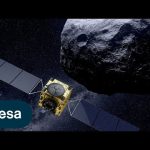
As part of the world’s first test of asteroid deflection, ESA’s Hera mission will perform a detailed post-impact survey of Dimorphos – the 160-metre asteroid struck, and successfully deflected, by NASA’s DART spacecraft.
Hera will soon study the aftermath. Launching in October 2024, Hera will turn this grand-scale experiment into a well-understood and hopefully repeatable planetary defence technique.
But before Hera and its two CubeSats fly, they’re rigorously tested at ESA’s ESTEC test centre in Noordwijk, the Netherlands. From the force and noise of the rocket take-off to the sustained vacuum and temperature extremes of deep space, all aspects of Hera’s functioning are checked before they begin their journey, alone in space.
Credits: ESA – European Space Agency
★ Subscribe: http://bit.ly/ESAsubscribe and click twice on the bell button to receive our notifications.
We are Europe’s gateway to space. Our mission is to shape the development of Europe’s space capability and ensure that investment in space continues to deliver benefits to the citizens of Europe and the world. Check out https://www.esa.int/ to get up to speed on everything space related.
Celebrating 65 years, NASA is a symbol of human creativity and exploration. NASA has consistently pushed boundaries, from the historic Apollo missions that landed the first humans on the Moon to the Space Shuttle program that built the International Space Station. Missions like Landsat and Cassini have deepened our understanding of Earth and our solar system. With NASA launching the James Webb Space Telescope, the future holds even more exciting discoveries. Throughout all these adventures, NASA’s commitment to exploration and science continues to lead the way.
Today, the Artemis missions herald a new chapter, aiming to return humanity to the Moon and laying robust foundations for expeditions to Mars and beyond. As we honor NASA’s storied past, we anticipate a future filled with discoveries, technologies, and deep-space exploration encouraged by a new generation of dedicated explorers. Here’s to NASA, commemorating 65 years of cosmic exploration, innovation, and the undying quest to expand our universal frontier.
On Sunday, Sept. 24, 2023, NASA’s OSIRIS-REx spacecraft safely delivered an estimated 8.8 ounces of rocky material collected from the surface of asteroid Bennu to Earth. The sample will be transported to NASA’s Johnson Space Center where it will be opened and studied.
Join us live on Tuesday, Sept. 26, as OSIRIS-REx mission experts recap the sample landing, preview what’s to come and answer your questions about the mission. Submit questions in the live chat.
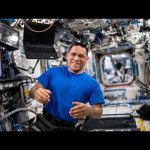
NASA astronaut Frank Rubio is set to return to Earth this fall after setting the record for the longest single spaceflight by a U.S. astronaut. He arrived at the International Space Station on Sept. 21, 2022, and will return home after 371 days in space.
While on the orbiting lab, Rubio and his fellow crew members conducted dozens of scientific investigations and technology demonstrations.
Learn more about Frank Rubio’s year-long scientific journey aboard the space station: https://go.nasa.gov/3LrwS29
Record-breaking astronaut Frank Rubio talks with NASA Administrator Bill Nelson and Deputy Administrator Pam Melroy about his historic mission during a space-to-ground call. On Sept. 11, 2023, Rubio surpassed the U.S. record for single longest duration spaceflight, a record previously set by astronaut Mark Vande Hei in 2022.
Rubio is set to return to Earth on Sept. 27, 2023, when he will have spent 371 days in space. His extended stay aboard the orbiting laboratory helps us see how the human body reacts to microgravity and informs future missions to deep space.
Earth-observing satellites like Landsat have documented the shrinking of chimpanzee habitat, Africa’s equatorial forest belt. The Jane Goodall Institute uses Landsat and other satellite data to empower local communities to drive conservation on their own land by creating habitat suitability maps for chimpanzees.
Mobile apps also bring in data in real-time so communities can protect their village forest reserves, and create land use plans for watersheds, people, and chimpanzees. After years of forest loss, the last few decades have seen habitats recovering.
Credits: Conservation dashboards created with support from NASA, The University of Maryland, Esri, Maxar, and the US Agency for International Development Video footage Courtesy of Jane Goodall Institute/Lilian Pintea
How did rocky planets form? We’re launching a mission to find out.
NASA’s Psyche spacecraft is preparing to lift off on Oct. 5 to embark on a 2.2-billion-mile journey to a unique metal-rich asteroid named Psyche. The mission could help us understand the early formation of rocky planets in our solar system, like Earth.
Join experts on Wednesday, Aug. 23, for an opportunity to learn more about Psyche. Submit your questions in the live chat using #AskNASA for a chance to have them answered live during the show.
During Artemis I the European Service Module (ESM) surpassed expectations. Now, as we set our sights on Artemis II, the European Service Module is ready to once again serve as Orion’s primary power and propulsion component and keep the spacecraft at the right temperature and on course. And this time, with real astronauts on board.
ESM-2 stands as a testament to ESA’s contributions to NASA’s Orion spacecraft and the Artemis programme, ensuring the crew will have the essentials – from electricity to temperature control – in the vastness of space.
Next up, ESM-2 will be connected with the crew module to create the Artemis II vehicle. It will then be thoroughly tested before launch scheduled for next year.
ESA is committed to send astronauts beyond low-Earth orbit and ultimately to the surface of the Moon and beyond. ESM is a key contribution to this joint international endeavour.
This video features interviews with: – Philippe Berthe, ESA’s European Service Module Project Coordination manager – Kai Bergemann, Airbus deputy programme manager for Orion and the European Service Module – Jeremy Hansen, Canadian Space Agency Artemis II astronaut – Debbie Korth, NASA deputy programme manager for Orion
Credits: ESA – European Space Agency 📸 NASA/Kim Shiflett
★ Subscribe: http://bit.ly/ESAsubscribe and click twice on the bell button to receive our notifications.
We are Europe’s gateway to space. Our mission is to shape the development of Europe’s space capability and ensure that investment in space continues to deliver benefits to the citizens of Europe and the world. Check out https://www.esa.int/ to get up to speed on everything space related.
This summer, Earth has been experiencing some of the hottest temperatures on record and July is shaping up to follow this record-breaking trend. Join NASA climate experts on Monday, Aug. 14 as they discuss impacts of climate change, and how data can be used to mitigate its effects.
Watch live with us as a crew of four launch on NASA’s SpaceX #Crew7 mission to the International Space Station. Liftoff is targeted at 3:49 a.m. EDT (0749 UTC), Fri., Aug. 25. Commander Jasmin Moghbeli of NASA, pilot Andreas Mogensen of the European Space Agency, and mission specialists Satoshi Furukaw of the Japan Aerospace Exploration Agency and Konstantin Borisov of Roscosmos will launch on their SpaceX Dragon spacecraft, powered by a Falcon 9 rocket, from Launch Complex 39A at NASA’s Kennedy Space Center in Florida.
Over 200 science experiments and technology demonstrations will take place during Crew-7’s mission of approximately six months in space. Experiments will include the collection of microbial samples from the exterior of the space station, the first study of human response to different spaceflight durations, and an investigation of the physiological aspects of astronauts’ sleep. Learn more about the mission and science at: https://www.nasa.gov/feature/what-you-need-to-know-about-nasa-s-spacex-crew-7-mission/
On May 16, 2023, NASA’s Juno spacecraft flew past Jupiter’s volcanic moon Io, and then the gas giant soon after. Io is the most volcanically active body in the solar system. Slightly larger than Earth’s moon, Io is a world in constant torment. Not only is the biggest planet in the solar system forever pulling at it gravitationally, but so are its Galilean siblings – Europa and the biggest moon in the solar system, Ganymede. The result is that Io is continuously stretched and squeezed, actions linked to the creation of the lava seen erupting from its many volcanoes.
This rendering provides a “starship captain” point of view of the flyby, using images from JunoCam. For both targets, Io and Jupiter, raw JunoCam images were reprojected into views similar to the perspective of a consumer camera. The Io flyby and the Jupiter approach movie were rendered separately and composed into a synchronous split-screen video.
Launched on Aug. 5, 2011, Juno embarked on a 5-year journey to Jupiter. Its mission: to probe beneath the planet’s dense clouds and answer questions about the origin and evolution of Jupiter, our solar system, and giant planets in general across the cosmos. Juno arrived at the gas giant on July 4, 2016, after a 1.7-billion-mile journey, and settled into a 53-day polar orbit stretching from just above Jupiter’s cloud tops to the outer reaches of the Jovian magnetosphere. Now in its extended mission, NASA’s most distant planetary orbiter continues doing flybys of Jupiter and its moons.
This month marks one year since the James Webb Space Telescope astonished the world with the release of its first images and data. Since then, the observatory has been transforming the way we see the universe, from revealing details of planets and moons in our own solar system, to providing new understanding of how stars and galaxies form.
Join experts on Wednesday, July 12, as they highlight Webb’s first year of science and answer your questions about the mission. Submit questions during our live chat.
In September 2023, scientists with NASA’s OSIRIS-REx mission will gather in the Utah desert for the arrival of the largest asteroid sample ever received on Earth. “Asteroid City” actors, including Scarlett Johansson, Jason Schwartzman, Maya Hawke, Rupert Friend, Jake Ryan and Jeffrey Wright, join NASA OSIRIS-REx sample expert Dr. Danny Glavin to discuss how studying the asteroid sample will give scientists insight into how the early solar system formed and how life began on Earth.
After a seven-year round trip journey that included mapping Bennu’s surface (a near-Earth asteroid that is no threat to our planet), identifying minerals and chemicals, and collecting a sample from the surface, OSIRIS-REx is on its way back to Earth with more than eight ounces of material. For more information on NASA’s OSIRIS-REx mission: https://www.nasa.gov/osiris-rex/
Producers: Scott Bednar, Jessica Wilde, Emily Furfaro, Sami Aziz, Molly Wasser Editor: Jessica Wilde Movie Footage courtesy of Focus Features Asteroid City
Is NASA mining asteroids? No, we’re not in the business of mining asteroids but we do love to study them.
This year, our #PsycheMission launches to a unique metal-rich asteroid to study what appears to be the exposed nickel-iron core of an early planet, one of the building blocks of our solar system. However, the science we gain from missions like this could one day benefit future humans in cosmic mining and resource endeavors.
And in September, our OSIRIS-REx mission will deliver an asteroid sample back to Earth. Analysis from the sample may help improve future asteroid missions: https://go.nasa.gov/43PoK2y
Watch the opening and ribbon-cutting ceremony for the Earth Information Center at NASA Headquarters in Washington. The exhibit is a hybrid – part physical, part online – effort that shows how viewing Earth from space can improve lives in the face of disasters, environmental challenges, and climate change. Speakers include NASA Administrator Bill Nelson; Kate Calvin, NASA chief scientist and senior climate advisor; and Karen St. Germain, the director of NASA’s Earth Sciences Division. Agency partner representatives will also speak.
NASA created the Earth Information Center with founding partners National Oceanic and Atmospheric Administration (NOAA), U.S. Geological Survey (USGS), U.S. Department of Agriculture (USDA), U.S. Agency for International Development (USAID), Environmental Protection Agency (EPA), and Federal Emergency Management Administration (FEMA).
Join NASA astronaut Victor Glover as he imparts an inspiring message about Juneteenth, a day that honors the sacrifices and struggles of past generations by continuing to fight for justice, equality, and freedom for all. The message reminds us of our shared past while pushing us towards an inclusive future.
The planet’s thick CO2-filled atmosphere is great at trapping heat. This creates a runaway greenhouse effect that makes Venus roughly 700°F (389°C) hotter than it would be otherwise. @NASAJPL’s Dr. Amy Hofmann provides all the sizzling details.
Detect, fetch and collect. A seemingly easy task is being tested to find the best strategy to collect samples on the martian surface, some 290 000 million km away from home.
Testing technologies for Mars exploration is part of the daily job of Laura Bielenberg, an ESA graduate trainee for the Mars Sample Return campaign.
The test takes place at the rock-strewn recreation of the Red Planet at ESA’s ESTEC technical centre in Noordwijk, the Netherlands. The nickname of this test site is the ‘Mars Yard’ and is part of the Planetary Robotics Laboratory.
The tube is a replica of the sample caches that NASA’s Perseverance rover is leaving on Mars hermetically sealed with precious martian samples inside. They are called RSTA, an acronym of Returnable Sample Tube Assembly, and to most people on Earth they look like lightsabers. Laura is investigating sample tube collection strategies, from autonomous detection to pose estimation of sample tubes on Mars, with a testbed called the RABBIT (RAS Bread Boarding In-house Testbed).
The Sample Transfer Arm will need to load the tubes from the martian surface for delivery towards Earth. ESA’s robotic arm will collect them from the Perseverance rover, and possibly others dropped by sample recovery helicopters as a backup.
Besides cameras and sensors, the team relies on neural networks to detect the tubes and estimate their pose. Inspired by the way the human brain works, neural networks mimic the way biological neurons signal to one another.
We are Europe’s gateway to space. Our mission is to shape the development of Europe’s space capability and ensure that investment in space continues to deliver benefits to the citizens of Europe and the world. Check out https://www.esa.int/ to get up to speed on everything space related.
On April 19 (in the US) / April 20 (Australia), the Moon will pass between the Sun and Earth, creating a total solar eclipse visible from Australia and Southeast Asia.
Starting at 10:30 p.m. EDT Wednesday, April 19 (0230 UTC Thursday, April 20) we will share live telescope views of the eclipse. Join NASA experts to learn about this rare phenomenon, see the eclipse through a telescope, and hear about the two upcoming eclipse events in the United States. Questions? Ask them in our live chat!
Click here to find out about upcoming eclipses around the world, including the annular eclipse in North and South America on Oct. 14, 2023, and the total solar eclipse in North America on April 8, 2024: https://solarsystem.nasa.gov/eclipses/future-eclipses/
Telescope feed compiled by timeanddate/Perth Observatory
Four astronauts are flying around the Moon on our 10-day Artemis II mission: NASA’s Reid Wiseman, Victor Glover, and Christina Koch, and the Canadian Space Agency’s Jeremy Hansen.
Get to know them a little bit better with us—and learn more about Artemis II, which is getting us ready for a long-term human presence on the Moon: https://www.nasa.gov/specials/artemis-ii/
NASA astronauts share their space station experience, our heavy-duty hauler crawls into the history books, and preparing for the return of some historic samples … a few of the stories to tell you about – This Week at NASA!
Video Producer: Andre Valentine Video Editor: Andre Valentine Music: Universal Production Music Credit: NASA
On Nov. 16, 2022, NASA made history with the launch of our Space Launch System (SLS) rocket and Orion spacecraft – our newest transportation system that will return humans to the Moon. Relive the powerful moment SLS rumbled away from Earth, beginning Orion’s three-week test flight around the Moon, and watch as we document Orion’s splashdown in the Pacific Ocean, closing the first chapter in America’s next deep space exploration story.
Writer: Danielle Sempsrott Editor: Francisco Martin Producers: John Sackman, Michael Justice & Madison Tuttle Music courtesy of Gothic Storm Music Credit: NASA
Chariklo is an icy, small body, but the largest of the known Centaur population, located more than 3.2 billion kilometres away beyond the orbit of Saturn. Chariklo is only 250 kilometers or ~51 times smaller than Earth in diameter, and its rings orbit at a distance of about 400 kilometers from the center of the body.
On 18 October 2022, a team used the James Webb Space Telescipe to closely monitor the star Gaia DR3 6873519665992128512, and watch for the tell-tale dips in brightness indicating an occultation had taken place. The shadows produced by Chariklo’s rings were clearly detected, demonstrating a new way of using Webb to explore solar system objects. The star shadow due to Chariklo itself tracked just out of Webb’s view. This appulse (the technical name for a close pass with no occultation) was exactly as had been predicted after the last Webb course trajectory maneuver.
Credit: @NASA, ESA, CSA, Leah Hustak (STScI), Pablo Santos-Sanz (IAA-CSIC), Nicolás Morales (IAA-CSIC), Bruno Morgado (UFRJ, ON/MCTI, LIneA)
★ Subscribe: http://bit.ly/ESAsubscribe and click twice on the bell button to receive our notifications.
We are Europe’s gateway to space. Our mission is to shape the development of Europe’s space capability and ensure that investment in space continues to deliver benefits to the citizens of Europe and the world. Check out https://www.esa.int/ to get up to speed on everything space related.
••NASA celebrates Women’s History Month 2023 by launching a new campaign to mobilize women at NASA to participate in student-centered activities as STEM mentors and role models.
Participants include:
• Kris Brown, deputy associate administrator of NASA STEM Engagement • Christyl Johnson, deputy director of technology and research investments a NASA’s Goddard Space Flight Center • Sandra Cauffman, NASA Headquarters deputy director of astrophysics • Mamta Patel, associate chief scientist for exploration and applied research
We are Europe’s gateway to space. Our mission is to shape the development of Europe’s space capability and ensure that investment in space continues to deliver benefits to the citizens of Europe and the world. Check out https://www.esa.int/ to get up to speed on everything space related.
NASA’s investment in low-Earth orbit has launched a commercial economy in space. See how the private sector will expand the economic sphere with commercial cargo to space, commercial spaceflights, and commercial destinations in orbit, and how it will enable NASA to be one of many customers and advance human space exploration.
The Webb observations which revealed this small asteroid were not originally designed to hunt for new asteroids — in fact, they were calibration images of the main-belt asteroid (10920) 1998 BC1, which astronomers discovered in 1998, but the calibration team considered them to have failed for technical reasons due to the brightness of the target and an offset telescope pointing. Despite this, the data on asteroid 10920 were used by the team to establish and test a new technique to constrain an object’s orbit and to estimate its size. The validity of the method was demonstrated for asteroid 10920 using Webb observations combined with data from ground-based telescopes and ESA’s Gaia mission.
In the course of the analysis of Webb’s data, the team found the smaller and previously unknown interloper in the same field of view. The team’s results suggest the object measures 100–200 meters, occupies a very low-inclination orbit, and was located in the inner main-belt region at the time of the Webb observations.
We are Europe’s gateway to space. Our mission is to shape the development of Europe’s space capability and ensure that investment in space continues to deliver benefits to the citizens of Europe and the world. Check out https://www.esa.int/ to get up to speed on everything space related.
NASA remembers the crews of Apollo 1, space shuttles Challenger and Columbia during the agency’s Day of Remembrance on Jan. 26, 2023. Feb. 1 marks the 20th anniversary of the Columbia STS-107 accident.
NASA’s Day of Remembrance honors all members of the NASA family who lost their lives while furthering the cause of exploration and discovery.
These are termed “tidal disruption events.” But the wording belies the complex, raw violence of a black hole encounter. There is a balance between the black hole’s gravity pulling in star stuff, and radiation blowing material out. In other words, black holes are messy eaters. Astronomers are using Hubble to find out the details of what happens when a wayward star plunges into the gravitational abyss.
We are Europe’s gateway to space. Our mission is to shape the development of Europe’s space capability and ensure that investment in space continues to deliver benefits to the citizens of Europe and the world. Check out https://www.esa.int/ to get up to speed on everything space related.
Two of the most distant galaxies seen to date have been captured by Webb in the outer regions of the giant galaxy cluster Abell 2744. The galaxies are not inside the cluster, but many billions of light-years behind it.
One of the galaxies existed only 450 million years after the Big Bang while the other one existed 350 million years after the Big Bang.
Both galaxies are seen really close in time to the Big Bang which occurred 13.8 billion years ago.
We are Europe’s gateway to space. Our mission is to shape the development of Europe’s space capability and ensure that investment in space continues to deliver benefits to the citizens of Europe and the world. Check out https://www.esa.int/ to get up to speed on everything space related.
The hopes of a new generation of astronomers were riding in the nosecone of the ESA-provided Ariane 5 rocket that had just disappeared into the clouds above Europe’s Spaceport in Kourou, French Guiana.
One year after this historic launch, Webb has already delivered groundbreaking data and breathtaking images. Here are the top 5 images for our Instagram community.
We are Europe’s gateway to space. Our mission is to shape the development of Europe’s space capability and ensure that investment in space continues to deliver benefits to the citizens of Europe and the world. Check out https://www.esa.int/ to get up to speed on everything space related.
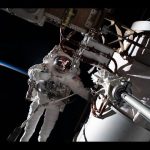
NASA astronauts Josh Cassada and Frank Rubio are conducting a spacewalk on Thursday, Dec. 22, to install new rollout solar arrays to upgrade the station’s power system. This spacewalk is the second of a pair this month to install the solar arrays and is scheduled to begin at 8:30 a.m. EST (1330 UTC), when the astronauts switch on their spacesuit battery packs. The spacewalk is expected to last about seven hours. Rubio (wearing the suit with red stripes) and Cassada (wearing the unmarked suit) are part of NASA’s SpaceX Crew-5 mission, which arrived at the station on Oct. 6, 2022. This is the third spacewalk for both astronauts.
The spacewalk originally scheduled for Wednesday, Dec. 21, was postponed when the International Space Station conducted a Pre-Determined Debris Avoidance Maneuver at 8:42 a.m. EST. The decision to conduct the maneuver was based on tracking data that showed a close approach to station of a fragment of Russian Fregat-SB upper stage debris. The crew was never in any immediate danger.
NASA’s Artemis mission flew on a historic journey around the Moon, testing technologies, performing science and deploying CubeSats along the way. The Orion capsule splashed down in the Pacific Ocean on Sunday, Dec. 11 with science experiments on board. What questions do you have about the science on Artemis I? Watch NASA Science Live on Monday, Dec. 12 at 3 p.m. ET and submit your questions using #Artemis.
Following the successful splashdown of the Artemis I mission off the coast of California at 12:40 p.m. EST (17:40 UTC) on Dec. 11, NASA experts will discuss the next steps for the Orion spacecraft. Orion spent 25.5 days in space and travelled 1.4 million miles (2.3 million km) around the Moon and back after launching aboard the Space Launch System (SLS) rocket on Nov. 16 from NASA’s Kennedy Space Center.
The Artemis I mission is the first integrated test of NASA’s deep space exploration systems: the Orion spacecraft, the SLS rocket, and Kennedy Space Center’s Exploration Ground Systems.