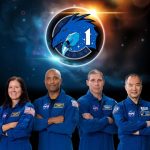
Tune in to hear NASA leadership discuss the successful launch and docking of Crew Dragon “Resilience” following the arrival of the Crew-1 astronauts Michael Hopkins, Victor Glover, Shannon Walker, and Japan Aerospace Exploration Agency’s (JAXA) Soichi Noguchi at the International Space Station. This is the first crew rotation flight of the SpaceX Crew Dragon spacecraft on a Falcon 9 rocket, following certification by NASA for regular flights to the space station as part of the agency’s Commercial Crew Program.
Final preparations are underway in California for the launch of Sentinel-6 Michael Freilich, a joint European and US satellite designed to take precise measurements of sea-level change. The satellite forms part of the European Union’s Copernicus Earth Observation programme and will employ a radar altimeter to map sea-surface topography. The satellite will provide fundamental data for climate science and policymaking, helping to protect the 600 million people who live in vulnerable coastal areas. It will also deliver near-realtime information for marine and weather forecasts.
The mission is a collaboration between ESA, the European Commission, EUMETSAT, NASA and NOAA, with support from the French space agency CNES. Scheduled for launch on 21 November on a SpaceX Falcon 9 rocket from the Vandenberg Air Force Base on the California coast, the satellite is named Michael Freilich after NASA’s former Director of Earth Science.
★ Subscribe: http://bit.ly/ESAsubscribe and click twice on the bell button to receive our notifications.
We are Europe’s gateway to space. Our mission is to shape the development of Europe’s space capability and ensure that investment in space continues to deliver benefits to the citizens of Europe and the world. Check out https://www.esa.int/ to get up to speed on everything space related.
Marking 20 years of humans aboard the space station, getting out the vote from space, and preparations continue for NASA and SpaceX’s next crew launch … a few of the stories to tell you about – This Week at NASA!
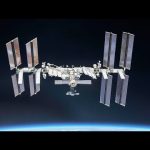
Monday 2 November, 2020 marks 20 years since the first crew took up residence on the International Space Station. Since then, 240 people including 18 ESA astronauts have lived and worked on the orbital outpost, carrying out essential research to benefit life on Earth.
In this clip, ESA astronauts Luca Parmitano, Alexander Gerst, Thomas Pesquet, Tim Peake, Andreas Mogensen, André Kuipers, Christer Fuglesang, Frank De Winne and Reinhold Ewald pay tribute to the Station. ESA Director General Jan Wörner and NASA Administrator Jim Bridenstine also speak about the Station’s significance for space exploration and international collaboration.
The next ESA mission to the International Space Station is set for 2021, when Thomas Pesquet will become the first European to fly on a SpaceX Crew Dragon spacecraft for his Alpha mission.
★ Subscribe: http://bit.ly/ESAsubscribe and click twice on the bell button to receive our notifications.
We are Europe’s gateway to space. Our mission is to shape the development of Europe’s space capability and ensure that investment in space continues to deliver benefits to the citizens of Europe and the world. Check out https://www.esa.int/ to get up to speed on everything space related.
This November the newest member of the EU’s Copernicus programme, Sentinel-6 Michael Freilich, will take to the heavens from Vandenberg Air Force Base in California. The satellite is named after NASA’s former Director of Earth Observation and is a radar altimetry mission to monitor sea-level rise, wave-height and windspeed.
The mission is a collaboration between ESA, the European Commission, EUMETSAT, NASA and NOAA, with support from the French space agency CNES. It will continue a three-decade-long time-series of radar altimetry missions that started with the Topex-Poseidon mission and was then followed by the Jason missions.
★ Subscribe: http://bit.ly/ESAsubscribe and click twice on the bell button to receive our notifications.
We are Europe’s gateway to space. Our mission is to shape the development of Europe’s space capability and ensure that investment in space continues to deliver benefits to the citizens of Europe and the world. Check out https://www.esa.int/ to get up to speed on everything space related.
An international agreement to collaborate on Artemis, an intriguing discovery on the Moon, and an update on OSIRIS-REx … a few of the stories to tell you about – This Week at NASA!
On Nov. 14, 2020, NASA astronauts Mike Hopkins, Victor Glover, Shannon Walker and JAXA astronaut Soichi Noguchi will launch on NASA’s SpaceX Crew-1 mission bound for the International Space Station. Once there, they will perform space station upgrades, conduct science experiments to benefit life on Earth, and continue preparing humanity for future missions to the Moon — and eventually Mars.
This is the first crew rotation mission with four astronauts flying on a commercial spacecraft, and the first including an international partner. Get on board. It’s #LaunchAmerica time!
NASA has touched the surface of asteroid Bennu to collect the agency’s first ever asteroid sample, which will one day shed new insights on the history of our solar system… so what’s next? Join NASA’s OSIRIS-REx Asteroid Sample Return Mission experts and ask them your questions! Submit them using #ToBennuAndBack and tune in today at 6:15 p.m. ET as they walk you through new images and videos captured by the spacecraft as it descended down to the asteroid’s surface.
A touch of history for our first asteroid sample return mission, a safe return from the International Space Station, and a big move in preparation for Artemis I … a few of the stories to tell you about – This Week at NASA!
On Oct. 20, NASA will attempt to maneuver the OSIRIS-REx spacecraft down to touch the surface of asteroid Bennu and collect a sample. Join NASA’s Dr. Z and Dr. Glaze as we gear up for this historic event and ask them your questions using #ToBennuAndBack.
On October 13, 2020, NASA and international partners from Australia, Canada, Italy, Japan, Luxembourg, the United Arab Emirates and the United Kingdom signed the Artemis Accords agreements for international participation in the agency’s Artemis program, during a virtual meeting of the International Astronautical Congress.
While NASA is leading the Artemis program, international partnerships will play a key role in achieving a sustainable and robust presence on the Moon while preparing to conduct a historic human mission to Mars. International cooperation on Artemis will bolster space exploration and enhance peaceful relationships between nations. The Artemis Accords will also reinforce the principles of the Outer Space Treaty.
Join astronaut Frank Rubio and leaders from NASA on Oct. 7 at 2 p.m. ET as we celebrate the contributions of Hispanic Americans across the agency during a special program titled “Hispanics: Be Proud of Your Past, Embrace the Future.” Participants for this Hispanic Heritage Month program include:
Jim Green, NASA chief scientist
Bettina Inclán, NASA associate administrator for Communications
Clara O’Farrell, Mars Entry, Descent and Landing Engineer
Erika Podest, climate scientist
Opening remarks by NASA associate administrator Steve Jurczyk.
The OSIRIS-REx spacecraft is scheduled to touch down on the asteroid Bennu on October 20, 2020, for its first sample collection attempt. To kick off the second season of #EZScience, NASA associate administrator for science Dr. Thomas Zurbuchen and National Air and Space Museum director Dr. Ellen Stofan discuss this exciting and innovative mission to return samples from an asteroid to Earth and the scientific opportunities it opens up.
Diversity brings strength to our missions and goals, and with a range of perspectives and backgrounds, we are able to achieve the impossible. Join as we celebrate our many amazing NASA employees with Hispanic Heritage and the valuable ideas and skills they bring to the agency.
La diversidad enfortece a nuestras misiones y metas, y con una variedad de perspectivas y experiencias podemos lograr lo imposible. Únete a nosotros mientras celebramos a nuestros increíbles empleados de la NASA con herencia hispana y las valiosas ideas y habilidades que aportan a la agencia.
A European satellite built to carry out precise measurements of sea level changes has arrived in California in preparation for launch. The Sentinel-6 Michael Freilich satellite forms part of the European Union’s Copernicus Earth Observation programme and will employ radar to map sea surface topography.
The mission will be used to monitor the height of the sea surface to understand long-term change. It will also measure wave height and wind speed. The satellite will provide fundamental data for climate science, policy-making and protecting the 600 million people who live in vulnerable coastal areas.
Data are provided to Copernicus services in near-real time to improve marine and weather forecasts used by maritime and coastal communities.
The mission is a collaboration between ESA, the European Commission, EUMETSAT, NASA and NOAA, with support from the French Space Agency CNES.
It is named Michael Freilich after NASA’s former Director of Earth Science and is scheduled for launch on 10 November on a SpaceX Falcon 9 rocket from the Vandenberg Air Force Base.
★ Subscribe: http://bit.ly/ESAsubscribe and click twice on the bell button to receive our notifications.
We are Europe’s gateway to space. Our mission is to shape the development of Europe’s space capability and ensure that investment in space continues to deliver benefits to the citizens of Europe and the world. Check out http://www.esa.int/ESA to get up to speed on everything space related.
Listen to the full episode of this podcast and subscribe at: https://www.nasa.gov/gravityassist
For decades, moons of the outer solar system have proven fascinating subjects for scientists interested in the search for life. Forty years ago this year, NASA’s Voyager 1 spacecraft flew by Saturn’s moon Titan and took the first close images, revealing a thick orange-colored atmosphere that is the most Earth-like in the solar system. NASA’s Cassini probe then dropped off a lander at Titan called Huygens in 2004, and studied Titan in detail during its 13 years at Saturn. Now, NASA is preparing to launch the rotorcraft mission Dragonfly to Titan in the 2020s. But Titan is just one interesting moon. The European Space Agency’s upcoming JUpiter ICy moons Explorer (JUICE) mission will study Ganymede, Europa, and another moon of Jupiter called Callisto. Meanwhile, NASA’s Europa Clipper mission will provide complementary observations of Europa.
The Sun goes through regular cycles of activity approximately every 11 years, and tracking these cycles is a key part of better understanding the Sun and mitigating its impacts on human technology and astronauts in space. Join NASA and NOAA experts Tuesday, Sept. 15 at 3:00 p.m. EDT as they discuss predictions for the upcoming solar cycle. Send in your questions by commenting below or by using #askNASA.
If astrobiologists find life beyond Earth in the solar system, it will most likely be in the form of tiny organisms called microbes – nothing that would talk to us. But the galaxy is a big place; the universe even bigger. Somewhere out there, life may have evolved to become as smart, or even much smarter, than us. And the next step in that ladder may be “post-biological,” argues Susan Schneider, the Baruch S. Blumberg NASA/Library of Congress Chair in Astrobiology, Exploration, and Scientific Innovation. Advanced life may be entirely based on microchips and silicon, using the tools of artificial intelligence instead of brains. Listen to the full episode of “Gravity Assist” at nasa.gov/gravityassist.
Producer Credit: Sonnet Apple & Elizabeth Landau
Music Credit: Universal Production Music
While NASA is working aggressively to meet our near-term goal of landing the first woman and next man on the Moon by 2024, our Artemis program also is focused on taking steps that will establish a safe and sustainable lunar exploration architecture.
NASA is taking a critical step forward by releasing a solicitation for commercial companies to provide proposals for the collection of space resources.
To meet NASA’s requirements, a company will collect a small amount of Moon “dirt” or rocks from any location on the lunar surface, provide imagery to NASA of the collection and the collected material, along with data that identifies the collection location, and conduct an “in-place” transfer of ownership of the lunar regolith or rocks to NASA. After ownership transfer, the collected material becomes the sole property of NASA for our use.
NASA’s goal is that the retrieval and transfer of ownership will be completed before 2024. The solicitation creates a full and open competition, not limited to U.S. companies, and the agency may make one or more awards. The agency will determine retrieval methods for the transferred lunar regolith at a later date.
Over the next decade, the Artemis program will lay the foundation for a sustained long-term presence on the lunar surface and use the Moon to validate deep space systems and operations before embarking on the much farther voyage to Mars. The ability to conduct in-situ resources utilization (ISRU) will be incredibly important on Mars, which is why we must develop techniques and gain experience with ISRU on the surface of the Moon.
This season on NASA Explorers, you’ve seen what it takes to send science to the International Space Station through the eyes of one team of researchers. They are just two of thousands more scientists who have sent experiments to the orbiting laboratory over the past two decades.
Take a look back at those 20 years of microgravity science along with the researchers who helped make it happen.
NASA completed a full-scale booster test for NASA’s Space Launch System rocket in Promontory, Utah, on Sept. 2.
The full-scale booster firing was conducted with new materials and processes that may be used for NASA’s Space Launch System (SLS) rocket boosters. NASA and Northrop Grumman, the SLS boosters lead contractor, will use data from the test to evaluate the motor’s performance using potential new materials and processes for Artemis missions beyond the initial Moon landing in 2024.
The SLS boosters are the largest, most powerful boosters ever built for flight. The two boosters on the rocket provide more than 75% of the thrust needed to launch NASA’s future deep space missions through NASA’s Artemis lunar program. Northrop Grumman is the lead contractor for the SLS boosters.
For a little over two minutes — the same amount of time that the boosters power the SLS rocket during liftoff and flight for each Artemis mission — the five-segment flight support booster fired in the Utah desert, producing more than 3 million pounds of thrust.
NASA and Northrop Grumman have previously completed three development motor tests and two qualification motor tests. Today’s test, called Flight Support Booster-1 (FSB-1), builds on prior tests with the introduction of propellant ingredients from new suppliers for boosters on SLS rockets to support flights after Artemis III.
It turns out Beck, NASA and artificial intelligence have a lot in common!
NASA spacecraft and observatories have been imaging our solar system and our universe for over 60 years. The NASA archives host a wealth of images that showcase and educate. Beck’s latest music videos for the album Hyperspace, created by Osk Studios, use artificial intelligence to interpret our NASA images. We’ve also used our databases of Mars images to train our new Mars rover Perseverance to help it land, drive and explore with autonomy. In this episode of #AskNASA, Beck joins NASA-JPL engineer Farah Alibay and Osk designers Isabelle Albuquerque and Jon Ray to answer social media questions about A.I. in art and science.
Join ESA astronauts Thomas Pesquet and Matthias Maurer at NASA’s Johnson Space Center in Houston, Texas, USA. In part four of this video series, the astronauts discuss taking photos on the International Space Station.
Though mission details and dates are yet to be confirmed, Thomas and Matthias are the next two European astronauts in line for flights. Thomas has flown to the International Space Station before, while Matthias will fly for the first time.
Prior to a mission, astronauts train extensively to ensure they are familiar with the vast array of systems and operations on board. In this video, the pair reflect on the images Thomas took during his first mission and how he plans to approach space photography the second time around.
This video was filmed in June 2020. At that time, the platform Thomas and Matthias were standing on – in front of a full-scale mock-up of the International Space Station – was the only place at NASA’s JSC that they could interact without face masks. Despite this, the pair were required to maintain social distance at all times as a precaution.
We are Europe’s gateway to space. Our mission is to shape the development of Europe’s space capability and ensure that investment in space continues to deliver benefits to the citizens of Europe and the world. Check out http://www.esa.int/ESA to get up to speed on everything space related.
The #LaunchAmerica mission aboard SpaceX’s Crew Dragon “Endeavour” spacecraft that brought NASA astronauts Robert Behnken and Douglas Hurley back to Earth marked the first splashdown of an American crew spacecraft in 45 years. Tune in at 4:30 p.m. EDT to hear Bob and Doug talk about this milestone in human spaceflight.
Today we made history as NASA Astronauts Robert Behnken and Douglas Hurley safely and successfully splashed down into the Gulf of Mexico after two months on board the International Space Station. This completes the flight demonstration of the SpaceX Dragon Endeavour spacecraft, which will now be used to ferry astronauts to and from the space station from American soil. Now that our #LaunchAmerica crew has returned to Earth, join us in welcoming them as they fly into Ellington Field, home of our astronaut corps:
NASA Astronauts Robert Behnken and Douglas Hurley splashed down in the Dragon Endeavour capsule at 2:48 p.m. EDT on Sunday, Aug. 2, off the coast of Pensacola, Florida.
The Crew Dragon hatch was opened at 3:59 p.m., and Behnken and Hurley exited the spacecraft onto the Go Navigator for initial medical checks before returning to shore by helicopter. Once returned to shore, both crew members will immediately board a waiting NASA plane to fly back to Ellington field in Houston.
Hurley and Behnken arrived to the International Space Station May 31 and spent 62 days supporting science and research aboard the orbiting laboratory as part of Expedition 63.
Demo-2 is SpaceX’s final test flight and is providing data on the performance of the Falcon 9 rocket, Crew Dragon spacecraft and ground systems, as well as in-orbit, docking, splashdown, and recovery operations. The data will inform NASA’s certification of the SpaceX crew transportation system for regular flights carrying astronauts to and from the space station. SpaceX is readying the hardware for the first rotational mission that will occur following NASA certification, which is expected to take about six weeks.
Today’s #LaunchAmerica mission that brought NASA astronauts Robert Behnken and Douglas Hurley back to Earth marks the first splashdown of an American crew spacecraft in 45 years. Tune in starting at 4:45 p.m. EDT to hear Administrator Jim Bridenstine and #LaunchAmerica mission experts talk about this milestone in human spaceflight.
After 62 days in space, approximately 1,024 orbits around our planet and four spacewalks, our #LaunchAmerica crew members made their way home!
On Sunday, Aug. 2, 2020, NASA astronauts Robert Behnken and Douglas Hurley returned to Earth aboard SpaceX’s Crew Dragon Endeavour spacecraft. They splashed down safely in the Gulf of Mexico off the coast of Pensacola, Florida at 2:48 p.m. EDT.
On Aug. 1, NASA astronauts Robert Behnken and Douglas Hurley will depart from the International Space Station aboard SpaceX’s Dragon “Endeavour” spacecraft after their mission aboard our orbiting laboratory. Starting at 5:15 p.m. EDT, tune in for our live coverage to see the duo undock from the station and make their return back to planet Earth.
Docking their SpaceX Crew Dragon capsule to the International Space Station in May completed the first part of the mission for NASA astronauts Robert Behnken and Douglas Hurley on the first crewed test flight for the Commercial Crew Program (CCP). But their task was far from over. The following months contained another important piece of their journey: living and working aboard the orbiting laboratory. Together, they spent more than 100 hours assisting or conducting science and technology demonstrations on station. Learn more about their work here: https://go.nasa.gov/312ES1y
On Aug. 1, NASA astronauts Robert Behnken and Douglas Hurley will depart the International Space Station on SpaceX’s Crew Dragon spacecraft after a more than 60-day stay.
The mission, which is part of NASA’s Commercial Crew Program, marks the first crewed test flight of the spacecraft. Continuous coverage of their departure begins Aug. 1 at 5:15 p.m. EDT and you can watch here on YouTube: https://youtu.be/13OkD0C_TWU
Hear from the two NASA astronauts who launched to space aboard the SpaceX Dragon Endeavour, and from International Space Station commander Chris Cassidy, during a live Q&A. Astronauts Robert Behnken and Douglas Hurley are set to board the SpaceX Dragon Endeavour spacecraft on Saturday, August 1 and undock from the station for the journey home to Earth.
Weather permitting, NASA and SpaceX are targeting 2:42 p.m. EDT Sunday, Aug. 2, for the splashdown and conclusion of the Demo-2 test flight mission. The SpaceX Crew Dragon spacecraft, named Endeavour, lifted off May 30 on a Falcon 9 rocket from Launch Complex 39A at NASA’s Kennedy Space Center in Florida.
Hear from NASA Administrator Jim Bridenstine and NASA and SpaceX officials about the upcoming departure of the SpaceX Dragon “Endeavour” from the International Space Station.
The SpaceX Dragon Endeavour, with NASA astronauts Robert Behnken and Douglas Hurley aboard, is currently targeted to undock from the space station on Saturday, Aug. 1 and splash down on Sunday, Aug. 2. This will be the first return of a commercially built and operated American spacecraft carrying astronauts from the space station.
In this “On the Go” episode of #EZScience, we’re on the scene at Kennedy Space Center with the rocket that will take the Perseverance rover and the Ingenuity helicopter to Mars.
ABOUT THE SERIES: In our #EZScience video series with the National Air and Space Museum, NASA’s associate administrator for science Dr. Thomas Zurbuchen and Museum director Dr. Ellen Stofan talk about the latest in planetary science and exploration.
This video shows Jezero crater, the landing site of the @NASA Mars 2020 Perseverance rover on the Red Planet, based on images from ESA’s Mars Express mission. The planned landing area is marked with an orange ellipse.
Scheduled for launch from Cape Canaveral, Florida on 30 July 2020 on board an Atlas V rocket, the Perseverance rover will land on 18 February 2021 in Jezero crater.
An impact crater with a diameter of about 45 km, Jezero is located at the rim of the giant Isidis impact basin. Morphological evidence suggests that the crater once hosted a lake, some 3.5 billion years ago.
Jezero possesses an inlet- and an outlet channel. The inlet channel discharges into a fan-delta deposit, containing water-rich minerals such as smectite clays. Scientists believe that the lake was relatively long lived because the delta may have required 1 to 10 million years to reach its thickness and size. Other studies conclude that the lake did not experience periods of important water-level fluctuations and that it was formed by a continuous surface runoff. This makes Jezero crater to a prime target for the search for potential signs of microbial life, because organic molecules are very well preserved in river deltas and lake sediments.
The animation was created using an image mosaic made from four single orbit observations obtained by the High Resolution Stereo Camera (HRSC) on Mars Express between 2004 and 2008. The mosaic combines data from the HRSC nadir and colour channels; the nadir channel is aligned perpendicular to the surface of Mars, as if looking straight down at the surface. The mosaic image was then combined with topography information from the stereo channels of HRSC to generate a three-dimensional landscape, which was then recorded from different perspectives, as with a movie camera, to render the flight shown in the video.
Copyright:
Animation: ESA/DLR/FU Berlin, CC BY-SA 3.0 IGO
Music: Björn Schreiner
Soundtrack logo: Alicia Neesemann
★ Subscribe: http://bit.ly/ESAsubscribe and click twice on the bell button to receive our notifications.
We are Europe’s gateway to space. Our mission is to shape the development of Europe’s space capability and ensure that investment in space continues to deliver benefits to the citizens of Europe and the world. Check out http://www.esa.int/ESA to get up to speed on everything space related.
ESA astronaut Matthias Maurer has been training at @NASA’s Johnson Space Center in Houston, USA. In this video, he walks us through training for a spacewalk with NASA colleagues in the 12 m deep Neutral Buoyancy Facility (NBL).
Matthias travelled to Houston from Europe with fellow ESA astronaut Thomas Pesquet. Thomas has flown to the International Space Station before, while Matthias is training for his first Space Station mission. Mission dates are yet to be confirmed, but as the next two ESA astronauts in line for flights, the pair are working to ensure they fully trained and ready.
Due to the current situation with COVID-19, all personnel are required to adhere to special safety precautions while training. These include wearing a mask – as seen in the clip.
Matthias will continue his training in Houston over the next weeks and months. Stay tuned for further footage of his training and experiences.
We are Europe’s gateway to space. Our mission is to shape the development of Europe’s space capability and ensure that investment in space continues to deliver benefits to the citizens of Europe and the world. Check out http://www.esa.int/ESA to get up to speed on everything space related.
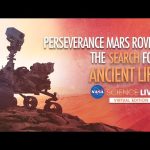
Millions of miles from Earth lies a dusty, cold, desert world with a very thin atmosphere. You know this planet as Mars…but it hasn’t always been this way. There’s evidence that the Red Planet was much wetter and warmer, with a thicker atmosphere, billions of years ago. Could it also have supported life? NASA’s Perseverance rover launches next week and will explore the Red Planet to collect rock and soil samples, which may preserve ancient signs of life. Join experts on #NASAScience Live Wednesday, July 22 at 3:00 p.m. EDT, to learn more about this robotic astrobiologist.
As we explore Mars and other places in the solar system that might have life, scientists who work in Planetary Protection are busy making sure that we don’t contaminate them. While engineers prepare the Perseverance Rover for launch, Lisa Pratt, NASA’s Planetary Protection Officer, is making sure that it’s not carrying too many spores — cells that could re-activate and transport Earthly bacteria to Mars. It’s especially important to keep Perseverance clean because it will collect samples on Mars that will one day return to Earth. Learn what your hand sanitizer has in common with NASA’s clean rooms, and how scientists are thinking about protecting Mars in terms of future human missions.
NASA is advancing many technologies to send astronauts to Mars as early as the 2030s. Here are six things we are working on right now to make future human missions to the Red Planet possible.