Tag: noaa

  • NASA, NOAA Climate Experts Discuss Record-Breaking Heat (Official News Briefing)

    NASA, NOAA Climate Experts Discuss Record-Breaking Heat (Official News Briefing)

    On the heels of record-breaking June temperatures, climate experts from NASA and NOAA (the National Oceanographic and Atmospheric Administration) will discuss the latest findings, and how using satellite data can help manage the effects of climate change.

    Participants include:

    • Bill Nelson, administrator, NASA
    • Kate Calvin, chief scientist and senior climate advisor, NASA Headquarters
    • Karen St. Germain, director, Earth Science Division, NASA Headquarters
    • Gavin Schmidt, director, NASA Goddard Institute for Space Studies, New York
    • Carlos Del Castillo, chief, Ocean Ecology Laboratory at NASA Goddard Space Flight Center in Greenbelt, Maryland
    • Sarah Kapnick, chief scientist, NOAA

    Then, join us at 3:30 p.m. EDT (1930 UTC) for a NASA Science Live episode to discuss recent climate trends. Ask questions in our live chat and they may get answered on air: https://www.youtube.com/live/HZ3q7yArd_8?feature=share />
    Credit: NASA

  • Copernicus Sentinel-6 ready for launch

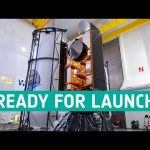
    Copernicus Sentinel-6 ready for launch

    Final preparations are underway in California for the launch of Sentinel-6 Michael Freilich, a joint European and US satellite designed to take precise measurements of sea-level change. The satellite forms part of the European Union’s Copernicus Earth Observation programme and will employ a radar altimeter to map sea-surface topography. The satellite will provide fundamental data for climate science and policymaking, helping to protect the 600 million people who live in vulnerable coastal areas. It will also deliver near-realtime information for marine and weather forecasts.

    The mission is a collaboration between ESA, the European Commission, EUMETSAT, NASA and NOAA, with support from the French space agency CNES. Scheduled for launch on 21 November on a SpaceX Falcon 9 rocket from the Vandenberg Air Force Base on the California coast, the satellite is named Michael Freilich after NASA’s former Director of Earth Science.

    ★ Subscribe: http://bit.ly/ESAsubscribe and click twice on the bell button to receive our notifications.

    Check out our full video catalog: http://bit.ly/SpaceInVideos
    Follow us on Twitter: http://bit.ly/ESAonTwitter
    On Facebook: http://bit.ly/ESAonFacebook
    On Instagram: http://bit.ly/ESAonInstagram
    On Flickr: http://bit.ly/ESAonFlickr

    We are Europe’s gateway to space. Our mission is to shape the development of Europe’s space capability and ensure that investment in space continues to deliver benefits to the citizens of Europe and the world. Check out https://www.esa.int/ to get up to speed on everything space related.

    Copyright information about our videos is available here: https://www.esa.int/ESA_Multimedia/Terms_and_Conditions

    #ESA
    #Sentinel6
    #SeeingTheSeas

  • Copernicus Sentinel-6 measuring sea levels using radar altimetry

    Copernicus Sentinel-6 measuring sea levels using radar altimetry

    This November the newest member of the EU’s Copernicus programme, Sentinel-6 Michael Freilich, will take to the heavens from Vandenberg Air Force Base in California. The satellite is named after NASA’s former Director of Earth Observation and is a radar altimetry mission to monitor sea-level rise, wave-height and windspeed.

    The mission is a collaboration between ESA, the European Commission, EUMETSAT, NASA and NOAA, with support from the French space agency CNES. It will continue a three-decade-long time-series of radar altimetry missions that started with the Topex-Poseidon mission and was then followed by the Jason missions.

    ★ Subscribe: http://bit.ly/ESAsubscribe and click twice on the bell button to receive our notifications.

    Check out our full video catalog: http://bit.ly/SpaceInVideos
    Follow us on Twitter: http://bit.ly/ESAonTwitter
    On Facebook: http://bit.ly/ESAonFacebook
    On Instagram: http://bit.ly/ESAonInstagram
    On Flickr: http://bit.ly/ESAonFlickr

    We are Europe’s gateway to space. Our mission is to shape the development of Europe’s space capability and ensure that investment in space continues to deliver benefits to the citizens of Europe and the world. Check out https://www.esa.int/ to get up to speed on everything space related.

    Copyright information about our videos is available here: https://www.esa.int/ESA_Multimedia/Terms_and_Conditions

    #ESA
    #Sentinel6
    #SeeingTheSeas

  • Copernicus Sentinel-6 Michael Freilich: preparing for launch

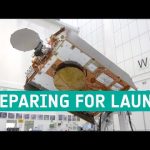
    Copernicus Sentinel-6 Michael Freilich: preparing for launch

    A European satellite built to carry out precise measurements of sea level changes has arrived in California in preparation for launch. The Sentinel-6 Michael Freilich satellite forms part of the European Union’s Copernicus Earth Observation programme and will employ radar to map sea surface topography.

    The mission will be used to monitor the height of the sea surface to understand long-term change. It will also measure wave height and wind speed. The satellite will provide fundamental data for climate science, policy-making and protecting the 600 million people who live in vulnerable coastal areas.

    Data are provided to Copernicus services in near-real time to improve marine and weather forecasts used by maritime and coastal communities.

    The mission is a collaboration between ESA, the European Commission, EUMETSAT, NASA and NOAA, with support from the French Space Agency CNES.

    It is named Michael Freilich after NASA’s former Director of Earth Science and is scheduled for launch on 10 November on a SpaceX Falcon 9 rocket from the Vandenberg Air Force Base.

    ★ Subscribe: http://bit.ly/ESAsubscribe and click twice on the bell button to receive our notifications.

    Check out our full video catalog: http://bit.ly/SpaceInVideos
    Follow us on Twitter: http://bit.ly/ESAonTwitter
    On Facebook: http://bit.ly/ESAonFacebook
    On Instagram: http://bit.ly/ESAonInstagram
    On Flickr: http://bit.ly/ESAonFlickr

    We are Europe’s gateway to space. Our mission is to shape the development of Europe’s space capability and ensure that investment in space continues to deliver benefits to the citizens of Europe and the world. Check out http://www.esa.int/ESA to get up to speed on everything space related.

    Copyright information about our videos is available here: http://www.esa.int/spaceinvideos/Terms_and_Conditions

    #ESA
    #NASA
    #Sentinel6

  • NASA Launches NOAA Weather Satellite to Improve Forecasts

    NASA Launches NOAA Weather Satellite to Improve Forecasts

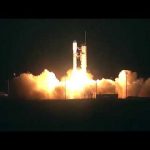
    Early on the morning of Saturday, Nov. 18, NASA successfully launched for the National Oceanic and Atmospheric Administration (NOAA) the first in a series of four advanced polar-orbiting satellites, equipped with next-generation technology and designed to improve the accuracy of U.S. weather forecasts out to seven days. The Joint Polar Satellite System-1 (JPSS-1) lifted off on a United Launch Alliance Delta II rocket from Vandenberg Air Force Base on California’s central coast. JPSS-1 data will improve weather forecasting and help agencies involved with post-storm recovery by visualizing storm damage and the geographic extent of power outages.

    This video is available for download from NASA’s Image and Video Library: https://images.nasa.gov/details-NHQ_2017_1118_NASA%20Launches%20NOAA%20Weather%20Satellite%20to%20Improve%20Forecasts.html

  • Tracking Hurricane Maria from Space on This Week @NASA – September 22, 2017

    Tracking Hurricane Maria from Space on This Week @NASA – September 22, 2017

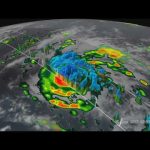
    Satellite data continues to enable weather forecasters to look inside and outside of powerful hurricanes. Imagery from NOAA’s GOES East satellite, captured Sept. 17 to Sept. 20, shows Hurricane Jose along the U.S. east coast, and Hurricane Maria, as it moved through the Leeward Islands, strengthening to a Category 5 hurricane, and making landfall in Puerto Rico. Meanwhile, The Global Precipitation Measurement (GPM) satellite found rain falling inside Maria at a rate of over 6.44 inches per hour in powerful storms that reached above 9.7 miles high. Also, SpaceX Dragon Returns with Science, Katherine Johnson Research Facility Opened, Earth’s Gravity Assist to OSIRIS-REx, Hubble Spots Asteroids Orbiting Each Other, and Engineering the Future!

    This video is available for download from NASA’s Image and Video Library: https://images.nasa.gov/#/details-NHQ_2017_0922_This%20Week%20@NASA.html