Our Proba-3 mission recently pulled off its first-ever autonomous formation flight — aligning with the Sun and holding position for hours, all on its own.
This is precision. This is the future. And it’s just the beginning.
Embark on a cosmic journey with ESA as we explore the universe through the lens of ‘One Million’. From the scorching temperatures of the Sun’s corona to the cosmic gaze of the NASA/ESA/CSA James Webb Space Telescope — discover the astronomical wonders that surround us. 🚀
🎉 Join our space community in celebrating a momentous occasion — 1 MILLION subscribers on YouTube! 🌟 Thank you for your enthusiasm and support. ✨
★ Subscribe: http://bit.ly/ESAsubscribe and click twice on the bell button to receive our notifications.
We are Europe’s gateway to space. Our mission is to shape the development of Europe’s space capability and ensure that investment in space continues to deliver benefits to the citizens of Europe and the world. Check out https://www.esa.int/ to get up to speed on everything space related.
Steve Spangler is a bestselling author, STEM educator and Emmy award-winning television personality with more than 2,100 television appearances to his credit. Steve appeared as a regular guest on the Ellen DeGeneres Show from 2007-2022. Learn more about Steve at https://stevespangler.com/about-steve-spangler/
After many years of study, development, building and testing, ESA’s Jupiter Icy Moons Explorer, Juice, has finally arrived at Europe’s Spaceport in Kourou, French Guiana. At the end of 2022 the spacecraft underwent its final thermal vacuum test at an Airbus Defence and Space facility in Toulouse, as well as its final software verification tests, whereby it was controlled from the ESOC mission control centre in Darmstadt, Germany.
Soon, an Ariane 5 will lift Juice into orbit and send it on its journey to explore the largest planet in our Solar System and its three icy moons, Europa, Callisto and in particular Ganymede. By exploring and studying the Jovian system, the mission neatly fullfills its role in ESA’s Cosmic Vision programme, teaching us about our Universe and the origins of life.
Stay tuned: www.esa.int/juice
★ Subscribe: http://bit.ly/ESAsubscribe and click twice on the bell button to receive our notifications.
We are Europe’s gateway to space. Our mission is to shape the development of Europe’s space capability and ensure that investment in space continues to deliver benefits to the citizens of Europe and the world. Check out https://www.esa.int/ to get up to speed on everything space related.
The SpaceX Crew Dragon Resilience successfully docked to the International Space Station at 11:01 p.m. EST Monday, transporting NASA astronauts Michael Hopkins, Victor Glover, Shannon Walker, and Japan Aerospace Exploration Agency (JAXA) astronaut Soichi Noguchi.
NASA’s SpaceX Crew-1 mission lifted off Sunday, Nov. 15, at 7:27 p.m. on the SpaceX Falcon 9 rocket and Crew Dragon spacecraft from Launch Complex 39A at NASA’s Kennedy Space Center in Florida. The mission is the first of six certified, crew missions NASA and SpaceX will fly as a part of the agency’s Commercial Crew Program.
The crew will conduct science and maintenance during a six-month stay aboard the orbiting laboratory and will return in spring 2021. It is scheduled to be the longest human space mission launched from the United States. The Crew Dragon spacecraft is capable of staying in orbit for at least 210 days, as a NASA requirement.
Producer Credit: Sonnet Apple Music: Willpower/Universal Production Music
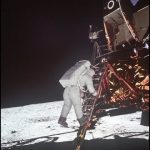
Neil Armstrong and Buzz Aldrin spent more than two hours outside their spacecraft on the Moon. They studied the surface. They collected rocks. After almost a day, they blasted off. They docked with Michael Collins in orbit around the Moon.
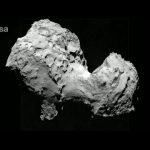
It’s been an extraordinary year for the Rosetta comet mission since Philae landed on the surface of Comet 67P/Churyumov-Gerasimenko on 12 November 2014.
Continual data from the orbiter, together with information collected over several days from the lander, is providing a comprehensive picture of a remnant from our Solar System.
This film covers the most recent science news from the Rosetta mission, as well as selected scientific highlights from the last year. It includes the comet’s unusual surface terrace structure, its formation from two colliding objects producing the unusual rubber duck shape, how water is transported from inside the comet towards the surface, and the surprising detection of molecular oxygen – familiar on Earth but not on a comet.
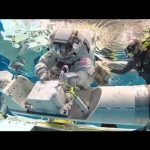
Expedition 43, the next crew headed to the International Space Station is conducting final training at the Baikonur Cosmodrome in Kazakhstan. NASA’s Scott Kelly and Gennady Padalka and Flight Engineer Mikhail Kornienko of the Russian Federal Space Agency (Roscosmos) are scheduled for launch aboard a Soyuz spacecraft on March 27 at 3:42 p.m. Eastern. Kelly and Kornienko will become the first crew to conduct a one-year research mission aboard the orbital laboratory. Expedition 44/45 news conference, Orion heat shield testing, Spacewalk training under water, Gemini 3 50th anniversary, SXSW Interactive and Total solar eclipse!
Gaia is ESA’s billion-star surveyor, designed to provide a precise 3D map of our Milky Way galaxy in order to understand its composition, formation and evolution.
So what can a planetary rover do with a year on Mars? All NASA’s Curiosity rover did was beam back over 190 gigabits of data, more than 36-thousand images and zap 75-thousand-plus laser shots at science targets … and oh by the way, it also completed the mission’s main science goal by finding evidence that life was possible on Mars in the past. The agency celebrated the one year anniversary of Curiosity’s landing on Mars with live events from the Jet Propulsion Laboratory — featuring rover team members. And at NASA Headquarters — a discussion about how Curiosity and other robotic projects are benefitting future human space exploration. Also, Maven Arrives, Garver Leaving NASA, Great Ball of Fire, Supply Ship Arrives Safely, Carbon Copy, The First Barrel Segment and more!