Tag: Orion spacecraft

  • Shoebox-size satellites for Artemis I #shorts

    Shoebox-size satellites for Artemis I #shorts

    Joining @NASA’s Orion spacecraft on the powerful Space Launch System rocket are ten CubeSats that will help prepare for the return of astronauts to our lunar companion. Our deep space antennas, along with the Goonhilly Earth Station in the UK, are tracking six of the small satellites, ensuring they arrive where they need to be, and their data gets back home.

    Learn more: https://www.esa.int/Enabling_Support/Operations/ESA_Ground_Stations/Europe_to_support_Artemis_CubeSats_in_return_to_Moon

    ★ Subscribe: http://bit.ly/ESAsubscribe and click twice on the bell button to receive our notifications.

    Check out our full video catalog: http://bit.ly/SpaceInVideos
    Follow us on Twitter: http://bit.ly/ESAonTwitter
    On Facebook: http://bit.ly/ESAonFacebook
    On Instagram: http://bit.ly/ESAonInstagram
    On LinkedIn: https://bit.ly/ESAonLinkedIn
    On Pinterest: https://bit.ly/ESAonPinterest
    On Flickr: http://bit.ly/ESAonFlickr

    We are Europe’s gateway to space. Our mission is to shape the development of Europe’s space capability and ensure that investment in space continues to deliver benefits to the citizens of Europe and the world. Check out https://www.esa.int/ to get up to speed on everything space related.

    Copyright information about our videos is available here: https://www.esa.int/ESA_Multimedia/Terms_and_Conditions

    #ESA
    #CubeSats
    #ForwardToTheMoon
  • Artemis I Live Feed from Orion Spacecraft (Official NASA Broadcast)

    Artemis I Live Feed from Orion Spacecraft (Official NASA Broadcast)

    On Dec. 11, our Orion spacecraft returns home to Earth. This live stream from Orion will end prior to splashdown, approximately at the time of crew module separation from the service module. Watch live splashdown coverage: https://youtu.be/xzZPzmMtQA8

    This is a live, low-resolution video feed from cameras on NASA’s Orion spacecraft as it accomplishes the Artemis I mission around the Moon and back to Earth. Splashdown is expected on Dec. 11, 2022.

    Viewers will see the Artemis logo, or the last frame of good video data, if there is a loss of signal, or if the bandwidth is needed for mission activities. Viewers may see what appears to be a black screen when the vehicle is in darkness. There is no audio.

    The primary goals for Artemis I are to demonstrate Orion’s systems in a spaceflight environment and ensure a safe re-entry, descent, splashdown, and recovery.

    For more information about NASA’s Artemis program, visit https://www.nasa.gov/specials/artemis/

    To see a simulation of where the Orion capsule is right now, visit https://www.nasa.gov/specials/trackartemis/

    Credit: NASA

  • ESA highlights 2020

    ESA highlights 2020

    2020 has been another year of progress for ESA. The launch and commissioning of Solar Orbiter heralded a new era of space science, whilst Eutelsat Konnect revolutionised telecommunications. The new Vega SSMS began a cost-effective new launch system for small satellites, deploying exciting new technologies such as PhiSat and ESAIL. ESA’s Earth Observation activities were also showcased, with the launch of Sentinel-6 and an international effort to monitor the environmental and economic impact of COVID-19. Gaia and Cheops yielded new findings about our universe; ESA astronaut Luca Parmitano returned successfully from orbit. With a lunar programme agreement signed and new steps being taken to control debris, ESA is set to begin 2021 at the forefront of space exploration.

    ★ Subscribe: http://bit.ly/ESAsubscribe and click twice on the bell button to receive our notifications.

    Check out our full video catalog: http://bit.ly/SpaceInVideos
    Follow us on Twitter: http://bit.ly/ESAonTwitter
    On Facebook: http://bit.ly/ESAonFacebook
    On Instagram: http://bit.ly/ESAonInstagram
    On Flickr: http://bit.ly/ESAonFlickr

    We are Europe’s gateway to space. Our mission is to shape the development of Europe’s space capability and ensure that investment in space continues to deliver benefits to the citizens of Europe and the world. Check out https://www.esa.int/ to get up to speed on everything space related.

    Copyright information about our videos is available here: https://www.esa.int/ESA_Multimedia/Terms_and_Conditions

    #ESA
    #Space
    #2020Highlights

  • Launch of Orion Spacecraft Ascent Abort-2 Test

    Launch of Orion Spacecraft Ascent Abort-2 Test

    Watch a fully functional launch abort system (LAS) and test Orion spacecraft launch to an altitude of 31,000 feet at Mach 1.15 (more than 1,000 mph)! On July 2, 2019, NASA successfully demonstrated the Orion spacecraft’s launch abort system can outrun a speeding rocket and pull astronauts to safety during an emergency during launch. News release: https://go.nasa.gov/2Xg7mkJ Orion was launched atop a Northrop Grumman provided booster from Launch Pad 46 at Cape Canaveral Air Force Station in Florida. The test is another milestone in the agency’s preparation for Artemis missions to the Moon that will lead to astronaut missions to Mars.

  • Orion’s service and crew modules – Finally together

    Orion’s service and crew modules – Finally together

    After a 24-hour journey from Bremen, Germany with stops in Hamburg and Portsmouth, USA, the European Service Module landed on 6 November 2018 at Kennedy Space Center in Florida.

    The shipment from Bremen to Florida is just the beginning – the first leg of an exciting journey that will boost the spacecraft to lunar orbit and back.

    The first service module is a key component that will see #Orion around the Moon for Exploration Mission-1. It will make the powerful burns required to enter and exit lunar orbit as well as softer burns to allow for space manoeuvring and course correction.
    After years of designing, building, and testing in Europe, the powerhouse that will propel NASA’s Orion spacecraft to the Moon will be mated with the rest of the spacecraft to undergo final testing before flight.

    ESA’s partnership with NASA takes the European effort to the global stage. For the first time, NASA will use a European-built system as a critical element to power an American spacecraft, extending the international cooperation of the International Space Station into deep space.

    Find out more about Orion and ESM: http://www.esa.int/orion

    ★ Subscribe: http://bit.ly/ESAsubscribe

    Check out our full video catalog: http://bit.ly/SpaceInVideos
    Follow ESA on Twitter: http://bit.ly/ESAonTwitter
    On Facebook: http://bit.ly/ESAonFacebook
    On Instagram: http://bit.ly/ESAonInstagram
    On Flickr: http://bit.ly/ESAonFlickr

    ESA is Europe’s gateway to space. Our mission is to shape the development of Europe’s space capability and ensure that investment in space continues to deliver benefits to the citizens of Europe and the world. Check out http://www.esa.int/ESA to get up to speed on everything space related.

    Copyright information about our videos is available here: http://www.esa.int/spaceinvideos/Terms_and_Conditions

  • Assisting Those Fighting the California Wildfires on This Week @NASA – November 17, 2018

    Assisting Those Fighting the California Wildfires on This Week @NASA – November 17, 2018

    Data from space are informing those fighting the California wildfires, a U.S. commercial resupply mission launches to the space station, and showcasing the powerhouse for our Orion spacecraft … a few of the stories to tell you about – This Week at NASA!

    This video is available for download from NASA’s Image and Video Library: https://images.nasa.gov/details-NHQ_2018_1117_Assisting%20Those%20Fighting%20the%20California%20Wildfires%20on%20This%20Week%20@NASA%20%E2%80%93%20November%2017,%202018.html

  • NASA’s Test Orion Spacecraft in the Pacific Ocean at Sunset

    NASA’s Test Orion Spacecraft in the Pacific Ocean at Sunset

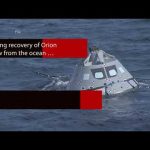
    Orion is NASA’s spacecraft for carrying astronauts on exploration missions to the Moon and beyond. When Orion returns to Earth from space, it will be slowed by parachutes before splashdown. Here, NASA’s recovery team and the U.S. Navy practice recovering a test Orion capsule from the ocean waters. Bonus: stunning views of the sunset in the Pacific off the coast of California!

    This footage was captured on Nov. 1, 2018, during Underway Recovery Test-7 (URT-7) — one in a series of tests that NASA’s Exploration Ground Systems Recovery Team and the U.S. Navy are conducting: https://go.nasa.gov/2Ph6Mnr. These tests verify and validate procedures and hardware that will be used to recover the Orion spacecraft after it splashes down in the Pacific Ocean following deep space exploration missions.

    NASA/Jamie Peer
    Editor: NASA/Nasreen Alkhateeb

    Download original footage: https://images.nasa.gov/details-KSC_20181101_MH_JBP_0002_BTA_Open_Water_Sunset_DRONE.html

  • Send Your Name to the Sun on This Week @NASA – March 9, 2018

    Send Your Name to the Sun on This Week @NASA – March 9, 2018

    A chance to send your name to the Sun, testing systems for our Orion spacecraft, and sizing up Earth, from space – a few of the stories to tell you about – This Week at NASA!

    This video is available for download from NASA’s Image and Video Library: https://images.nasa.gov/details-NHQ_2018_0309_Send%20Your%20Name%20to%20the%20Sun%20on%20This%20Week%20@NASA%20%E2%80%93%20March%209,%202018.html

  • Feel the Rumble! RS-25 Engine Test on This Week @NASA – January 19, 2018

    Feel the Rumble! RS-25 Engine Test on This Week @NASA – January 19, 2018

    Firing the engine that will power humans to deep space, testing a potential source of power for future exploration, and practicing water recovery of the Orion spacecraft – a few of the stories to tell you about – This Week at NASA!

    This video is available for download from NASA’s Image and Video Library: https://images.nasa.gov/details-NHQ_2018_0119_Feel%20the%20Rumble!%20RS-25%20Engine%20Test%20on%20This%20Week%20@NASA%20%E2%80%93%20January%2019,%202018.html

  • Pence Visits Mars InSight Facility on This Week @NASA – October 27, 2017

    Pence Visits Mars InSight Facility on This Week @NASA – October 27, 2017

    On Oct. 26, Vice President Mike Pence joined our Associate Administrator for Science, Thomas Zurbuchen for a close-up view of the agency’s Mars InSight spacecraft, during a visit to the Littleton, Colorado facilities of Lockheed Martin. InSight is being prepped for a May 2018 launch to the Red Planet, with landing targeted for next November. The mission will study the deep interior of Mars, with a primary goal of helping scientists understand how rocky planets – including Earth – formed and evolved. The vice president also visited a Virtual Reality lab that featured demos of the company’s human exploration efforts, including our Orion spacecraft. Orion will launch on the agency’s Space Launch System rocket, and take humans farther into the solar system than ever before. Also, Interstellar Visitor from Beyond the Solar System, Space Station Crew Talks with Pope Francis, Dawn Finds Possible Ancient Ocean Remnants at Ceres, and Take a Walk on Mars!

    This video is available for download from NASA’s Image and Video Library: https://images.nasa.gov/#/details-NHQ_2017_1027_Pence%20Visits%20Mars%20InSight%20Facility%20on%20This%20Week%20@NASA%20%E2%80%93%20October%2027,%202017.html

  • Vice President Visits Marshall Space Flight Center on This Week @NASA – September 29, 2017

    Vice President Visits Marshall Space Flight Center on This Week @NASA – September 29, 2017

    Vice President Mike Pence visited our Marshall Space Flight Center on Sept. 25 to thank employees working on NASA’s human spaceflight programs. He also spoke to the three NASA astronauts currently serving onboard the International Space Station. During a tour, the Vice President also saw progress being made on our Space Launch System rocket, that will send astronauts in our Orion spacecraft on missions around the Moon and ultimately to Mars. Also, NASA Data and Tech Aid in Disaster Relief, Congressional Hearing on August 21 Solar Eclipse, OSIRIS-REx Views Earth During Flyby, and “Bladed Terrain” on Pluto Made of Frozen Methane!

    This video is available for download from NASA’s Image and Video Library: https://images.nasa.gov/#/details-NHQ_2017_0929_Vice%20President%20Visits%20Marshall%20Space%20Flight%20Center%20on%20This%20Week%20@NASA%20%E2%80%93%20September%2029,%202017.html

  • Media View Barge Pegasus and SLS Hardware on This Week @NASA – May 19, 2017

    Media View Barge Pegasus and SLS Hardware on This Week @NASA – May 19, 2017

    On May 16, NASA held a media event at Marshall Space Flight Center in Huntsville, Alabama, to highlight the recent arrival of the barge Pegasus with the first core stage test article for NASA’s Space Launch System (SLS) rocket. NASA modified Pegasus to accommodate the massive SLS core stage, increasing the barge’s length and weight-carrying capacity. The core stage test article – manufactured at the agency’s Michoud Assembly Facility, in New Orleans – is the first of four core stage test articles scheduled to be delivered to Marshall for testing. This delivery marks a critical milestone toward Exploration Mission-1 (EM-1), the first flight of SLS and NASA’s Orion spacecraft. It also brings the agency a step closer to sending humans to deep space destinations – including Mars. Also, Lightfoot Discusses Future Exploration Goals, Ochoa, Foale Inducted into Hall of Fame, and Virtual Tour of Meteorite Lab!

  • Orion Spacecraft Parachute Test on This Week @NASA – March 10, 2017

    Orion Spacecraft Parachute Test on This Week @NASA – March 10, 2017

    NASA conducted the latest successful test of the Orion spacecraft’s parachute system on March 8 in the skies above the U.S. Army’s Yuma Proving Ground in Arizona. The test was designed to evaluate the parachutes’ performance in an emergency abort situation that would require Orion to be jettisoned from the agency’s Space Launch System rocket during a launch. Even at this relatively low altitude, the parachutes are designed to fully deploy and safely return Orion and its crew to Earth. Also, Shin Honored by Aviation Week, Space Station Resupply Mission Targeted for March 19, Small Business Innovation Proposals Selected, Deep Space Atomic Clock, Modern Figures Virtual Tour, and NASA Aero “Night of Flight”!

  • Michoud Recovering From Tornado on This Week @NASA – February 10, 2017

    Michoud Recovering From Tornado on This Week @NASA – February 10, 2017

    Recovery efforts are underway at NASA’s Michoud Assembly Facility in New Orleans, which was hit by a tornado Feb. 7. In accounting for all 3,500 employees at the facility, officials reported five suffered minor injuries. Buildings, structures and parked cars sustained damage, but there was no reported damage to hardware for NASA’s Space Launch System (SLS) rocket, Orion spacecraft, or the barge Pegasus docked at Michoud. NASA will release updates on the facility’s status as they become available. Also, SpaceX Launch Targeted for Mid-February, SLS Booster Hardware Arrives at KSC, and NASA Aerospace Days!

  • Asteroid Redirect Mission Briefing on This Week @NASA – September 19, 2016

    Asteroid Redirect Mission Briefing on This Week @NASA – September 19, 2016

    On Sept. 14, officials from the White House and NASA discussed the space agency’s Asteroid Redirect Mission (ARM) during a televised event at NASA’s Goddard Space Flight Center. On the mission, which is targeted for launch in Dec. 2021, NASA plans to send a robotic spacecraft to an asteroid tens of millions of miles from Earth, capture a multi-ton boulder, and bring it to an orbit near the moon for future exploration by astronauts on a following mission aboard NASA’s Orion spacecraft. During the live discussion, John Holdren, assistant to President Obama for Science and Technology, NASA Administrator Charles Bolden and ARM Program Director Michele Gates highlighted the mission’s scientific and technological benefits, how the mission will support NASA’s goal of sending humans to Mars in the 2030s, and how it will demonstrate technology relevant to defending Earth from potentially hazardous asteroids. Also, Astronaut Tim Kopra Visits DC Area, The Warmest August in 136 Years, and 2016 Arctic Sea Ice Minimum Ties 2nd Lowest on Record!

  • Space Launch System Booster Test Fired on This Week @NASA  – July 1, 2016

    Space Launch System Booster Test Fired on This Week @NASA – July 1, 2016

    On June 28, the booster for NASA’s Space Launch System (SLS) rocket was fired up for a major two-minute full-duration qualification ground test at Orbital ATK Propulsion Systems’ test facilities in Promontory, Utah. Engineers will evaluate test data on the motor’s performance using cold propellant, the steering operation of its redesigned nozzle, and other operational data to help qualify the booster for flight. This is the last time the booster will be fired in a test environment before it’s used for the first uncrewed test flight of SLS with NASA’s Orion spacecraft, known as Exploration Mission-1, in late 2018. Also, SLS Test Hardware Arrives at Marshall, Juno Arrives at Jupiter July 4th, Test Lab Launched to Streamline Air Travel, Russian Docking System Tested on ISS, and NASA 2016 Agency Honor Award Distinguished Honorees.

  • Suited Test in Orion on This Week @NASA – April 1, 2016

    Suited Test in Orion on This Week @NASA – April 1, 2016

    Engineers at Johnson Space Center in Houston are using a mockup of NASA’s Orion spacecraft to evaluate how well astronauts are able to operate Orion’s rotational hand controller and cursor control device, while dressed in spacesuits. The controllers operate the displays and control system used to maneuver and interact with the spacecraft. The testing aims to provide data that can be used to make adjustments needed to ensure future Orion crews can interact appropriately with the spacecraft’s control system during deep space missions. Also, Milestone for Spaceport of the Future, Russian Supply Ship Launches to ISS, Team Selected to Build Planet-Hunting Instrument, First Heat Map of Super Earth and Milestone for Green Propellant Mission!

  • Rocket welding tool ready on This Week @NASA – September 12, 2014

    Rocket welding tool ready on This Week @NASA – September 12, 2014

    NASA Administrator Charlie Bolden, other NASA officials and representatives from The Boeing Company participated in a September 12 ribbon cutting for the new 170-foot-high Vertical Assembly Center at NASA’s Michoud Assembly Facility in New Orleans. The Vertical Assembly Center is a new tool that will be used to assemble parts of NASA’s Space Launch System rocket that will send humans to an asteroid and Mars. The administrator also visited Stennis Space Center in nearby Bay St. Louis, Mississippi, where engineers plan to test the RS-25 engines that will power the core stage of SLS. Also, Orion moved for fueling, Curiosity to climb Martian mountain, Possible geological activity on Europa, Expedition 40 returns, Earth Science on ISS and Hurricane-hunting aircraft!

  • Orion recovery test update on This Week @NASA – August 8, 2014

    Orion recovery test update on This Week @NASA – August 8, 2014

    NASA wrapped up its second Underway Recovery Test Aug. 4 with the Orion spacecraft, off the coast of San Diego, California. The agency teamed with Lockheed Martin, the U.S. Navy and the Department of Defense’s Human Space Flight Support Detachment 3 to evaluate primary and alternative methods to recover Orion after the spacecraft safely splashes down in the ocean at the conclusion of future deep space missions. Orion’s first spaceflight test with a splashdown in the Pacific Ocean is targeted for December. Also, Low-Density Supersonic Decelerator update, 2nd anniversary: 7 Minutes of Terror, Bolden visits MMS at Naval Research Lab, Scanning for algal blooms, Earth science showcase, and more!

  • NASA’s Fleet of Satellites Help Understand Climate Change on This Week @NASA

    NASA’s Fleet of Satellites Help Understand Climate Change on This Week @NASA

    The third U.S. National Climate Assessment was released which took observations from NASA’s fleet of satellites to help understand climate change in the United States. Also, NASA’s Orbiting Carbon Observatory-2 spacecraft arrived at California’s Vandenberg Air Force Base to begin final preparations for a scheduled July 1 launch. In Florida, the remaining flight hardware for the Delta IV rocket that will launch NASA’s Orion spacecraft on Exploration Flight Test-1 in December arrived at Port Canaveral. At the Stennis Space Center, a cold-shock test for the RS-25 engine that will help power NASA’s new Space Launch System rocket was completed. The Chandra X-ray Observatory found new stars, simulated space dust was created on earth, a new ISS crew trains in Russia, Shannon Lucid and Jerry Ross are inducted into the Astronaut Hall of Fame and NASA recognizes the small business community for helping the agency work toward achieving its goals!