One of the greatest challenges for most people when it comes to understanding geology is the concept of time. When our lives are measured in minutes, hours, and days, what does 3-7 million years even mean? Or 4 billion years? Explore the conventions of geologic time during this week’s installment.
About the series: Join the Geology Gents, Gavin and Graham, for weekly conversations about rocks live on Facebook. Each week we’ll explore a different geologic topic, from Santa Cruz formations to tips for being a more effective rockhound. Graham Edwards and Gavin Piccione are PhD candidates in geochronology with the Department of Earth and Planetary Sciences at UC Santa Cruz.
Submit your questions ahead of time on Facebook or by emailing events@santacruzmuseum.org, or during the program live on Facebook. Feel free to include pictures of rocks you’d like identified! Pro-tip: the better the picture, the better the ID.
ESA astronaut Matthias Maurer is currently living and working aboard the International Space Station for his first space mission, Cosmic Kiss. Recently, he experimented with water in microgravity. In this water experiments video series, Matthias demonstrates the different behavior of water in weightlessness and how this research is applied to life on Earth.
In part 5, Matthias explains how studying the behavior of water and other liquids on the International Space Station is important for numerous applications on Earth, such as in industry or food technology.
Matthias will live and work in orbit for approximately six months for his Cosmic Kiss mission. During this time, he will conduct and support more than 35 European and numerous other international experiments in microgravity.
We are Europe’s gateway to space. Our mission is to shape the development of Europe’s space capability and ensure that investment in space continues to deliver benefits to the citizens of Europe and the world. Check out https://www.esa.int/ to get up to speed on everything space related.
ESA astronaut Matthias Maurer is currently living and working aboard the International Space Station for his first space mission, Cosmic Kiss. Recently, he experimented with water in microgravity. In this water experiments video series, Matthias demonstrates the different behavior of water in weightlessness and how this research is applied to life on Earth.
In part 4 of this video series, Matthias takes a closer look at the lens effect and surface tension of water.
Matthias will live and work in orbit for approximately six months for his Cosmic Kiss mission. During this time, he will conduct and support more than 35 European and numerous other international experiments in microgravity.
We are Europe’s gateway to space. Our mission is to shape the development of Europe’s space capability and ensure that investment in space continues to deliver benefits to the citizens of Europe and the world. Check out https://www.esa.int/ to get up to speed on everything space related.
ESA astronaut Matthias Maurer is currently living and working aboard the International Space Station for his first space mission, Cosmic Kiss. Recently, he experimented with water in microgravity. In this water experiments video series, Matthias demonstrates the different behavior of water in weightlessness and how this research is applied to life on Earth.
In this second clip in the series, Matthias blows air into a floating water sphere and looks at what happens when he tries to mix it with olive oil.
Matthias will live and work in orbit for approximately six months for his Cosmic Kiss mission. During this time, he will conduct and support more than 35 European and numerous other international experiments in microgravity.
We are Europe’s gateway to space. Our mission is to shape the development of Europe’s space capability and ensure that investment in space continues to deliver benefits to the citizens of Europe and the world. Check out https://www.esa.int/ to get up to speed on everything space related.
ESA astronaut Matthias Maurer is currently living and working aboard the International Space Station for his first space mission, Cosmic Kiss. Recently, he has been experimenting with water in microgravity.
In this water experiments video series, Matthias demonstrates the different behavior of water in weightlessness and how this research is applied to life on Earth.
In Part 1, Matthias lets water spheres float inside the Columbus module of the Space Station and wets a paddle with a hydrophobic surface to take a closer look at the viscosity and surface tension of water.
Matthias will live and work in orbit for approximately six months for his Cosmic Kiss mission. During this time, he will conduct and support more than 35 European and numerous other international experiments in microgravity.
We are Europe’s gateway to space. Our mission is to shape the development of Europe’s space capability and ensure that investment in space continues to deliver benefits to the citizens of Europe and the world. Check out https://www.esa.int/ to get up to speed on everything space related.
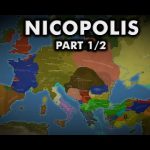
The First Crusade was one of the most extraordinary, bloody and significant episodes in medieval history. It began with an appeal for aid from the Christian Byzantine Empire, threatened by the rising power of the Muslim Seljuk Turks. But when Pope Urban II preached a sermon at Clermont in 1095, the result was unlike anything ever seen before. The Pope offered spiritual salvation to those willing to go east to aid their fellow Christians in a holy war, and help liberate Jerusalem from Muslim rule. Knights and peasants alike signed up in their thousands, leading to the disastrous People’s, or Peasants’, Crusade, then to a much more organised and powerful Princes’ Crusade. Their forces gathered at Constantinople, where they made an uneasy alliance with Byzantine Emperor Alexius I Comnenus. Entering Anatolia, they helped to win back the city of Nicaea, then won a decisive but hard-fought victory at Dorlyaeum, before marching on the great city of Antioch…
Music with thanks to Filmstro: https://filmstro.com/?ref=7765
Get 20% off an annual license! Use our exclusive coupon code: EPICHISTORYTV_ANN
Image credits – via Flickr under Creative Commons CC-BY-SA 2.0
Sky – Anyul Rivas
Wooded Hills – Alexander Annenkov
Dramatic Fields – Antonio Caiazzo
Twin peaks of Mount Ararat – Adam Jones
🚩 Help support our channel and check out Backblaze https://thld.co/backblaze_historymarche – Get peace of mind knowing your files are backed up securely in the cloud!
👇 Push down for more cool stuff 👇
📝 Sources:
Adrian Goldsworthy – Cannae, Hannibal’s Greatest Victory
Adrian Goldsworthy – Fall of Carthage
Mark Healy – Cannae 216 BC
Adrian Goldsworthy – Roman Warfare
Polybius – Histories
Dexter Hoyos – A companion to the Punic Wars
New users can get an in-game starter pack with my creator code historygog and you will have a chance to win a $50 Amazon gift card!
Please check the details of the giveaways here: https://forms.gle/gLErJW2FShxMJxh56
All Guns of Glory events mentioned in the video only available to players in Kingdom#1 to Kingdom#590.
📝 Sources:
A Military History of the Ottomans – Mesut Uyar
Tuchman (of course 😏)
David Nicolle – Nicopolis 1396, the Last Crusade
Runciman – A history of the Crusades
🚩 Watch thousands of documentaries for FREE on CuriosityStream: http://go.thoughtleaders.io/1600320200805 – Use the code “historymarche” to get a 30-day free trial!
👇 Push down for more cool stuff 👇
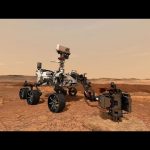
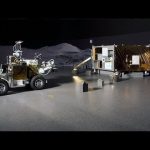
Let’s talk about science! In the latest episode of #EZScience, learn about the science behind NASA’s Perseverance rover that is targeted to launch to the Red Planet on July 30.
ABOUT THE SERIES: In our #EZScience video series with the National Air and Space Museum, NASA’s associate administrator for science Dr. Thomas Zurbuchen and Museum director Dr. Ellen Stofan talk about the latest in planetary science and exploration.
🚩 Get 70% off NordVPN! Only $3.49/mo, plus you get an additional month FREE at: https://nordvpn.com/historymarche ⌨️ Use coupon code: historymarche
👇 Push down for more cool stuff 👇
📝 Sources:
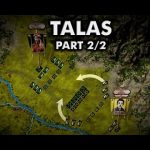
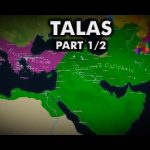
Bartold, Vasily (1928). Turkestan Down to the Mongol Invasion (Trans. T. Minorsky & C.E. Bosworth)
Chen, Sanping (2012). Multicultural China in the Early Middle Ages
Golden, Peter B. (1990). “The Kharakhanids and early Islam” in The Cambridge
History of Early Inner Asia, vol. 1 (ed. Denis Sinor)
Hoberman, Barry (Sept/Oct. 1982). “The Battle of Talas” in Aramco World, vol. 33 no. 5
Ibn al-Athir, Ali (ca. 1231) The Complete History
Sima, Guang (1084). Zizhi Tongjian.
Soucek, Svak (2000). A History of Inner Asia
Starr, S. Frederick (2004). Xinjiang: China’s Muslim Borderland
🚩 Watch thousands of documentaries for FREE on CuriosityStream: http://go.thoughtleaders.io/1601020200605 – Use the code “historymarche” to get a 30-day free trial!
👇 Push down for more cool stuff 👇
📝 Sources:
Bartold, Vasily (1928). Turkestan Down to the Mongol Invasion (Trans. T. Minorsky & C.E. Bosworth)
Chen, Sanping (2012). Multicultural China in the Early Middle Ages
Golden, Peter B. (1990). “The Kharakhanids and early Islam” in The Cambridge
History of Early Inner Asia, vol. 1 (ed. Denis Sinor)
Hoberman, Barry (Sept/Oct. 1982). “The Battle of Talas” in Aramco World, vol. 33 no. 5
Ibn al-Athir, Ali (ca. 1231) The Complete History
Sima, Guang (1084). Zizhi Tongjian.
Soucek, Svak (2000). A History of Inner Asia
Starr, S. Frederick (2004). Xinjiang: China’s Muslim Borderland
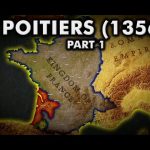
★ The Battle of Poitiers in 1356 AD was a major encounter of the Hundred Years War. But little attention is given to the Grand Chevauchée (raid) of 1355, conducted by the Black Prince – the son of King Edward III. Chevauchée of 1355 was, in hindsight, the ‘Grand Prelude’ of sorts to the Battle of Poitiers that took place just less than a year later.
Although no battles were fought and no territory conquered during the Chevauchée of 1355, southern France was utterly devastated. The destruction of the rich countryside and urban areas, and the atrocities against the civilian population are among the most brutal military campaigns of the medieval period.
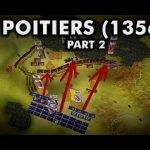
This video is part 1 of a two-part mini series about the Battle of Poitiers, 1356 AD.
★ Please consider supporting the channel on Patreon or perhaps making a small donation on PayPal. Thank you.
Patreon: https://www.patreon.com/historymarche
PayPal: paypal.me/historymarche
★ Narration:
Narration:
Alexander Doddy – www.alexanderdoddy.com
The Battle of Poitiers in 1356 was the second major English victory of the Edwardian phase of the Hundred Years’ War. The effect of the defeat on France was catastrophic. Years of political turmoil and civil unrest followed, leading to a humiliating treaty at Bretigny in 1360, which saw huge portions of the French kingdom ceded to England.
Please consider supporting the channel on Patreon or PayPal. Every dollar counts.
Patreon: https://www.patreon.com/historymarche
PayPal: paypal.me/historymarche
Narration:
Alexander Doddy – www.alexanderdoddy.com
Everybody is talking about 5G, the new generation of wireless communication. We are at the start of a revolution in connectivity for everything, everywhere, at all times.
Space plays at important roll in this revolution. We need satellites to ensure businesses and citizens can benefit smoothly from 5G.
★ Subscribe: http://bit.ly/ESAsubscribe and click twice on the bell button to receive our notifications.
ESA is Europe’s gateway to space. Our mission is to shape the development of Europe’s space capability and ensure that investment in space continues to deliver benefits to the citizens of Europe and the world. Check out http://www.esa.int/ESA to get up to speed on everything space related.
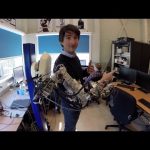
In preparation for his 10-day Iriss mission to the International Space Station in September this year, ESA astronaut Andreas Mogensen is at ESA’s technical centre, ESTEC, in Noordwijk, the Netherlands, visiting the Telerobotics and Haptics Laboratory. In this second part of his video diary, Andreas meets Bill Carey to talk about the Meteron project. Andreas will participate in Meteron during his ISS mission.
In preparation for his 10-day Iriss mission to the International Space
Station in September this year, ESA astronaut Andreas Mogensen is at
ESA’s technical centre, ESTEC, in Noordwijk, the Netherlands, visiting
the Telerobotics and Haptics Laboratory. Andreas catches up with Andre
Schiele, head of the laboratory, to learn more about the robotics
activities he will be participating in during his mission.