Tag: pathfinder

  • Lisa Pathfinder end of Mission

    Lisa Pathfinder end of Mission

    The LISA Pathfinder mission ends on 18 July 2017 after a successful demonstration of the technology needed to detect gravitational waves in space. These vibrations in spacetime, first predicted by Einstein over a hundred years ago, are produced by huge astronomical events – such as two black holes colliding – and will allow scientists to open new windows into our universe.

    The success of the LISA Pathfinder mission has paved the way for the newly selected LISA mission which, when built and launched, will detect gravitational waves from objects up to a million times larger than our Sun.

    The film features interview soundbites from Dr Paul McNamara, LISA Pathfinder Project Scientist, at the European Space Agency’s European Technology and Science facility (ESTEC) in The Netherlands.

    More about LISA Pathfinder:
    http://sci.esa.int/lisa-pathfinder/

  • LISA Pathfinder results

    LISA Pathfinder results

    Launched in December 2015, LISA Pathfinder travelled to its operational orbit, 1.5 million km from earth towards the Sun, where it started its scientific mission on 1 March.

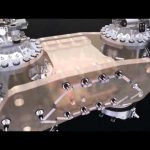
    At the core of the spacecraft, two identical gold-platinum cubes, are being held in the most precise free-fall ever produced in space.

    Placing the test masses in a motion subject only to gravity is the challenging condition needed to build and operate a future space mission to observe gravitational waves. Predicted by Albert Einstein a century ago, gravitational waves are fluctuations in the fabric of space-time, which were recently detected directly for the first time by the Laser Interferometer Gravitational-Wave Observatory.

    Over the first two months of scientific operations, the LISA Pathfinder team has performed a number of experiments on the test masses to prove the feasibility of gravitational wave observation from space.

    These results are explained in this video with interviews of Paul McNamara, LISA Pathfinder Project scientist, ESA and two LISA Pathfinder Principal investigators : Rita DOLES, University of Trento and Martin Hewitson, University of Hannover.

    Read more in LISA Pathfinder exceeds expectations: http://www.esa.int/Our_Activities/Space_Science/LISA_Pathfinder_exceeds_expectations

  • LISA Pathfinder prepares for liftoff (4K timelapse replay)

    LISA Pathfinder prepares for liftoff (4K timelapse replay)

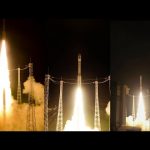
    This timelapse video shows the preparations for LISA Pathfinder’s launch at Europe’s Spaceport in Kourou, French Guiana. The video spans three weeks, starting on 12 November 2015 with the completed and fuelled spacecraft and ending on the 3 December launch day.

    Over this period, the spacecraft was attached to the payload adaptor of the Vega launcher, encapsulated within the half-shells of the rocket fairing, transferred to the launcher assembly area, and installed on top of Vega inside the mobile gantry, which was rolled back shortly before liftoff.

    LISA Pathfinder will test key technologies for space-based observation of gravitational waves – ripples in the fabric of spacetime that are predicted by Albert Einstein’s general theory of relativity.

    Credit/Copyrights: Directed by Stephane Corvaja, ESA; Edited by Manuel Pedoussaut, Zetapress; Music: Hubrid-Gravity

  • LISA Pathfinder – Window on the gravitational universe

    LISA Pathfinder – Window on the gravitational universe

    LISA Pathfinder’s name, Laser Interferometer Space Antenna, clearly indicates the role of precursor that this mission plays. Its goal is to validate the technology required to detect gravitational waves from space. Gravitational waves will open a new door in our understanding of the Universe, and at the same time help to verify Einstein’s General Theory of Relativity. LISA Pathfinder will be launched early December 2015 on a Vega rocket from Kourou in French Guiana.

  • Lisa Pathfinder mission overview

    Lisa Pathfinder mission overview

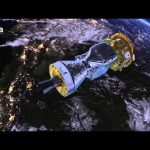
    LISA Pathfinder will pave the way for future missions by testing in flight the very concept of gravitational wave detection: it will put two test masses in a near-perfect gravitational free-fall and control and measure their motion with unprecedented accuracy. LISA Pathfinder will use the latest technology to minimise the extra forces on the test masses, and to take measurements.

    The inertial sensors, the laser metrology system, the drag-free control system and an ultra-precise micro-propulsion system make this a highly unusual mission.

    LISA Pathfinder is an ESA mission, which will also carry a NASA payload.

  • LISA Pathfinder launch animation

    LISA Pathfinder launch animation

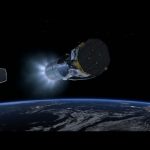
    Artist’s impression of the launch of LISA Pathfinder, ESA’s technology demonstration mission that will pave the way for future gravitational-wave observatories in space.

    Scheduled to lift off on a Vega rocket from Europe’s Spaceport in French Guiana in late 2015, LISA Pathfinder will operate at the Lagrange point L1, 1.5 million km from Earth towards the Sun. After launch, the spacecraft will take about eight weeks to reach its operational orbit around L1.

    The Vega rocket is designed to take small payloads into low-Earth orbit. The animation shows the rocket shortly after launch, rising above our planet and releasing the fairing.

    Vega will place the spacecraft onto an elliptical orbit with perigee at 200 km, apogee at 1540 km and angled at about 6.5° to the equator. Then, LISA Pathfinder will continue on its own, using its separable propulsion module to perform a series of six manoeuvres and gradually raise the apogee of the initial orbit.

    Eventually, LISA Pathfinder will cruise towards its final orbiting location, discarding the propulsion system along the way, one month after the last burn. Once in orbit around L1, the spacecraft will begin its six months of operations devised to demonstrate key technologies for space-based observation of gravitational waves.

    More about LISA Pathfinder:
    http://www.esa.int/Our_Activities/Space_Science/LISA_Pathfinder_overview

    Credit: ESA/ATG medialab