The results of our DART planetary defense test, astronauts return safely from the space station, and more new imagery from the Webb Space Telescope … a few of the stories to tell you about – This Week at NASA!
Launched in December 2015, LISA Pathfinder travelled to its operational orbit, 1.5 million km from earth towards the Sun, where it started its scientific mission on 1 March.
At the core of the spacecraft, two identical gold-platinum cubes, are being held in the most precise free-fall ever produced in space.
Placing the test masses in a motion subject only to gravity is the challenging condition needed to build and operate a future space mission to observe gravitational waves. Predicted by Albert Einstein a century ago, gravitational waves are fluctuations in the fabric of space-time, which were recently detected directly for the first time by the Laser Interferometer Gravitational-Wave Observatory.
Over the first two months of scientific operations, the LISA Pathfinder team has performed a number of experiments on the test masses to prove the feasibility of gravitational wave observation from space.
These results are explained in this video with interviews of Paul McNamara, LISA Pathfinder Project scientist, ESA and two LISA Pathfinder Principal investigators : Rita DOLES, University of Trento and Martin Hewitson, University of Hannover.
Update on the Rosetta mission, including status of the Philae lander.
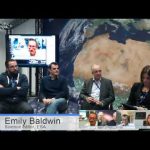
Hosted by Emily Baldwin – ESA Science Editor, with:
Andrea Accomazzo – ESA Rosetta Flight Director, ESOC
Stephan Ulamec – Philae Lander Manager, DLR
Matt Taylor – Rosetta Project Scientist, ESA
Philippe Gaudon – CNES Rosetta Project Manager, SONC
Holger Sierks – PI for OSIRIS, Max-Planck-Institute for Solar System Research
Valentina Lommatsch – DLR-Lander Control Center, mission team
Jeff Grossman – OSIRIS-REx Program Scientist, NASA
Gordon Johnston – OSIRIS-REx Program Scientist, NASA