Tag: Rocket Engine (Industry)

  • ESA Euronews: It’s rocket science!

    ESA Euronews: It’s rocket science!

    Years in the building, seconds in the launching; rocket engines are truly awesome in their sheer power, but are also amazing feats of engineering and design.

    The scientific principle remains quite simple: accelerated gas creating thrust through a nozzle. However, extrapolating that concept to the point where the rocket has sufficient power to lift people and satellites beyond Earth’s gravity and into orbit is far more complex. Don’t let anybody tell you otherwise, the manufacturing and testing process IS rocket science.

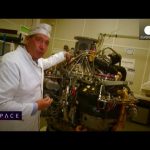
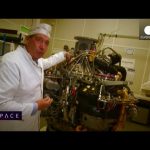
    In Europe one of the key centres of work on rocket engines is done at the Snecma factory complex in a remote location in forests near the town of Vernon in Normandy. Many of the components are built elsewhere in Europe, but the assembly and testing are carried at the site in northern France.

    The pieces are carefully milled from titanium or lightweight alloys over a period of weeks. When construction is finally completed then comes the critical test phase, where the rockets are fired into life inside a vast tower.

    Space reporter Jeremy Wilks visited the Snecma site to find out more about this unique and constantly evolving industrial sector.

    This video is also available in the following languages:
    French: https://www.youtube.com/watch?v=OZBJLWDpcsw />German: https://www.youtube.com/watch?v=4NqwfcnC7n4 />Spanish: https://www.youtube.com/watch?v=cqjek6gLBU4 />Italian: https://www.youtube.com/watch?v=BWLYS5lLh3g />Portuguese: https://www.youtube.com/watch?v=t8c7hJn6-34 />Greek: https://www.youtube.com/watch?v=k-e6FMJQZls />Hungarian: https://www.youtube.com/watch?v=2TMVZ_5dErI
  • ESA Euronews: Rakétahajtóművek: több, mint gépészet

    ESA Euronews: Rakétahajtóművek: több, mint gépészet

    Iszonyú erő kell ahhoz, hogy valamit kijuttassunk az űrbe. A rakétahajtóművekre ma már komoly kereskedelmi iparág épül rájuk, amely a teljesítményt abban méri, mekkora tömeget hány dollárért lehet föld körüli pályára állítani.

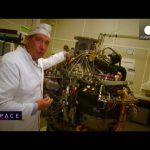
    Európa kifejezetten sikeres ebben az üzletben: az Ariane 5-ös rakéták az iparág kipróbált igáslovai, és már készül az új Ariane 6-os. A Space júniusi epizódjában Jeremy Wilks ellátogat a hajtóműveket gyártó francia SNECMA üzemeibe, hogy megtudja, hogyan lehet valamin akkorát lökni, hogy a geostacionárius pályáig meg se álljon.

    A szakemberek a Space-ben megszokott nyíltsággal és érzelmességgel beszélnek a munkájukról, arról, hogy milyen dolog évekig építeni valamit, aminek a sikere azután pár perc alatt eldől, és egyetlen kis hiba is végzetes lehet.

  • ESA Euronews: Missili, la potenza è nel motore

    ESA Euronews: Missili, la potenza è nel motore

    Per costruire un razzo possono volerci anni. Mentre per lanciarlo in orbita bastano pochi secondi. Secondi importanti dove lavorano contemporaneamente forze diverse.

    “Per andare nello spazio serve tantissima potenza” spiega Gaele Winters
    (ESA) “Potenza necessaria a superare la forza di gravità”

    La forza in grado di portare uomini e apparecchiature in orbita è generata da sofisticati motori nei quali brucia combustibile liquido o solido, o entrambi. Come nel caso del missile Ariane 5.

    “Cinque, quattro, tre, due, uno, zero.E’ in quel momento che accendiamo le turbopompe, che inviano idrogeno e ossigeno nella camera di combustione del cosiddetto motore *Vulcain*” spiega Thierry Delaporte (Snecma) “Il primo ad accendersi. Una volta verificato che funziona, nel giro di 5 secondi, accendiamo anche i due booster laterali a propulsione e…..Hop, il razzo decolla”.

    L’azienda dove si producono i motori usati per il programma europeo di lanciatori Ariane è a Vernon, in Francia. E’ qui che si procede ai test sui missili che saranno lanciati in orbita. La torre usata per i test si trova in una valle. E’ lì che i motori vengono accesi per la prima volta.