Steve Spangler is a bestselling author, STEM educator and Emmy award-winning television personality with more than 2,100 television appearances to his credit. Steve appeared as a regular guest on the Ellen DeGeneres Show from 2007-2022. Learn more about Steve at https://stevespangler.com/about-steve-spangler/
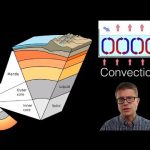
In this video Paul Andersen explains how rock is formed and changed on the planet. The video begins with a brief description of rocks, minerals, and the rock cycle. Plate tectonics is used to describe structure near plate boundaries. Hot spots and natural hazards (like volcanos, earthquake, and tsunamis) are included.
Wheeled, tracked and walking rovers competed to survey a shadowy analogue of the polar lunar surface for useable resources during the first field test of the ESA-ESRIC Space Resources Challenge. Some 12 teams from across Europe and Canada took part in the field test in the Netherlands, with five winners going on to the next phase of the contest.
The Space Resources Challenge – supported by ESA and the European Space Resources Innovation Centre (ESRIC) in Luxembourg – asked European (and Canadian) researchers and institutions to develop and demonstrate a system of one or more vehicles capable of prospecting resources on the Moon in the near future.
Working inside a former aircraft hangar, the competition organisers spread 200 tons of lava rock across an area equivalent to seven tennis courts, landscaping it into a Moon-like environment, including the main crater of interest. Then they scattered rocks, including a hundred simulated boulders larger than a metre across, whose positions were precisely geo-referenced.
These measurements served as the basis of a map provided to the rover teams. The idea was to give them the equivalent level of local information from satellite imagery, while still leaving smaller-scale surprises. Once complete, the moonscape was kept concealed from the rover groups behind black curtains, so they would see it only through the cameras of their rovers. The 12 teams each made their prospecting attempt one at a time.
The competing rovers had to navigate and map the whole test environment to prospect for useable resources – meaning first of all to track down their location, identify the best and safest passages and then to gather information about the characteristics and the composition of the rocks they located.
Credit: ESA
★ Subscribe: http://bit.ly/ESAsubscribe and click twice on the bell button to receive our notifications.
We are Europe’s gateway to space. Our mission is to shape the development of Europe’s space capability and ensure that investment in space continues to deliver benefits to the citizens of Europe and the world. Check out https://www.esa.int/ to get up to speed on everything space related.
While NASA is working aggressively to meet our near-term goal of landing the first woman and next man on the Moon by 2024, our Artemis program also is focused on taking steps that will establish a safe and sustainable lunar exploration architecture.
NASA is taking a critical step forward by releasing a solicitation for commercial companies to provide proposals for the collection of space resources.
To meet NASA’s requirements, a company will collect a small amount of Moon “dirt” or rocks from any location on the lunar surface, provide imagery to NASA of the collection and the collected material, along with data that identifies the collection location, and conduct an “in-place” transfer of ownership of the lunar regolith or rocks to NASA. After ownership transfer, the collected material becomes the sole property of NASA for our use.
NASA’s goal is that the retrieval and transfer of ownership will be completed before 2024. The solicitation creates a full and open competition, not limited to U.S. companies, and the agency may make one or more awards. The agency will determine retrieval methods for the transferred lunar regolith at a later date.
Over the next decade, the Artemis program will lay the foundation for a sustained long-term presence on the lunar surface and use the Moon to validate deep space systems and operations before embarking on the much farther voyage to Mars. The ability to conduct in-situ resources utilization (ISRU) will be incredibly important on Mars, which is why we must develop techniques and gain experience with ISRU on the surface of the Moon.
Steve Spangler is a celebrity teacher, science toy designer, speaker, author and an Emmy award-winning television personality. Spangler is probably best known for his Mentos and Diet Coke geyser experiment that went viral in. Spangler is the founder of www.SteveSpanglerScience.com, a Denver-based company specializing in the creation of science toys, classroom science demonstrations, teacher resources and home for Spangler’s popular science experiment archive and video collection. Spangler is a frequent guest on the Ellen DeGeneres Show and Denver 9 News where he takes classroom science experiments to the extreme. For teachers, parents or DIY Science ideas – check out other sources of learning:
ESA is Europe’s gateway to space. Our mission is to shape the development of Europe’s space capability and ensure that investment in space continues to deliver benefits to the citizens of Europe and the world. Check out http://www.esa.int/ESA to get up to speed on everything space related.
ESA is Europe’s gateway to space. Our mission is to shape the development of Europe’s space capability and ensure that investment in space continues to deliver benefits to the citizens of Europe and the world. Check out http://www.esa.int/ESA to get up to speed on everything space related.
ESA is Europe’s gateway to space. Our mission is to shape the development of Europe’s space capability and ensure that investment in space continues to deliver benefits to the citizens of Europe and the world. Check out http://www.esa.int/ESA to get up to speed on everything space related.
ESA is Europe’s gateway to space. Our mission is to shape the development of Europe’s space capability and ensure that investment in space continues to deliver benefits to the citizens of Europe and the world. Check out http://www.esa.int/ESA to get up to speed on everything space related.
ESA is Europe’s gateway to space. Our mission is to shape the development of Europe’s space capability and ensure that investment in space continues to deliver benefits to the citizens of Europe and the world. Check out http://www.esa.int/ESA to get up to speed on everything space related.
There are lots of names associated with space rocks, so what is the difference? Join the Royal Observatory Greenwich astronomers to find out. They will also explore what space rocks can tell us about our very own planet Earth. http://bit.ly/rogvideo #rogspacerocks
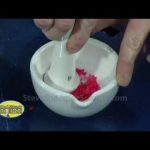
If you are a candy enthusiast, like a lot of the people at Spangler Labs, you know that not all candies are created equal. And, if we’re being honest, Pop Rocks are one of the greatest candies of all time! You dump a few of the tiny pebbles onto your tongue and, in an instant, they begin fizzing, popping, and snapping about in your mouth. What’s going on here? Being scientists, we devised a way to figure out the popping secret behind the famous candy. Are you ready to expand your mind (as well as a few balloons)?