Tag: Rome

  • World Water Day: what’s space got to do with it?

    World Water Day: what’s space got to do with it?

    UN Sustainable Goal 6 is crystal clear: Water for all by 2030.

    For World Water Day we take a look at ways that space can help this global challenge. While Earth-observing satellites monitor our precious water resources, technologies developed for human space missions also serve global needs in harsh environments here on Earth.

    ★ Subscribe: http://bit.ly/ESAsubscribe and click twice on the bell button to receive our notifications.

    Check out our full video catalog: http://bit.ly/SpaceInVideos
    Follow ESA on Twitter: http://bit.ly/ESAonTwitter
    On Facebook: http://bit.ly/ESAonFacebook
    On Instagram: http://bit.ly/ESAonInstagram
    On Flickr: http://bit.ly/ESAonFlickr

    ESA is Europe’s gateway to space. Our mission is to shape the development of Europe’s space capability and ensure that investment in space continues to deliver benefits to the citizens of Europe and the world. Check out http://www.esa.int/ESA to get up to speed on everything space related.

    Copyright information about our videos is available here: http://www.esa.int/spaceinvideos/Terms_and_Conditions

    #ESA
    #WorldWaterDay
    #WaterForAll
  • 50 years of ESRIN

    50 years of ESRIN

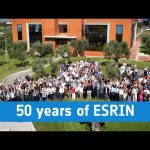
    ESRIN, ESA’s centre for Earth observation in Frascati, near Rome, is one of the agency’s main specialised centres in Europe, and its founding ceremony took place 50 years ago on 27 September 1968.

    Today, ESRIN manages the exploitation phase of the Earth Observation satellites and the ground segment for ESA and third-party Earth observation satellites, maintaining the largest archive of environmental data in Europe and coordinating over 20 ground stations and ground segment facilities in Europe. It also hosts the project team managing the Vega small-launcher programme.

    Learn more about ESRIN: http://bit.ly/ESA_ESRIN

    ★ Subscribe: http://bit.ly/ESAsubscribe

    Check out our full video catalog: http://bit.ly/SpaceInVideos
    Follow ESA on Twitter: http://bit.ly/ESAonTwitter
    On Facebook: http://bit.ly/ESAonFacebook
    On Instagram: http://bit.ly/ESAonInstagram
    On Flickr: http://bit.ly/ESAonFlickr

    ESA is Europe’s gateway to space. Our mission is to shape the development of Europe’s space capability and ensure that investment in space continues to deliver benefits to the citizens of Europe and the world. Check out http://www.esa.int/ESA to get up to speed on everything space related.

    Copyright information about our videos is available here: http://www.esa.int/spaceinvideos/Terms_and_Conditions

  • Preparing for Vega-C

    Preparing for Vega-C

    At the end of 2019 Vega-C will be launched from Europe’s Spaceport in French Guiana increasing performance from Vega’s current 1.5 t to about 2.2 t in its reference 700 km polar orbit, with no increase in launch costs.

    Vega-C’s first stage is based on the P120, the largest single segment carbon fibre solid-propellant rocket motor ever built. It was successfully tested in July 2018. Its development relies on new technologies derived from Vega’s current first stage P80 motor. Two or four P120C motors will also be used for the liftoff boosters on Ariane 6.

    Vega-C’s 3.3 m diameter fairing will accommodate larger payloads such as Earth observation satellites of more than two tonnes, and ESA’s Space Rider reentry vehicle.

    The Vega launch pad and mobile gantry are being modified to accommodate Vega-C leading into a period when launch facilities will accommodate both vehicles.

    Learn more about #VegaC: http://bit.ly/VegaC

    ★ Subscribe: http://bit.ly/ESAsubscribe

    Check out our full video catalog: http://bit.ly/SpaceInVideos
    Follow ESA on Twitter: http://bit.ly/ESAonTwitter
    On Facebook: http://bit.ly/ESAonFacebook
    On Instagram: http://bit.ly/ESAonInstagram
    On Flickr: http://bit.ly/ESAonFlickr

    ESA is Europe’s gateway to space. Our mission is to shape the development of Europe’s space capability and ensure that investment in space continues to deliver benefits to the citizens of Europe and the world. Check out http://www.esa.int/ESA to get up to speed on everything space related.

    Copyright information about our videos is available here: http://www.esa.int/spaceinvideos/Terms_and_Conditions

  • Welcome, introduction to ESA and the Earth Observation Programme

    Welcome, introduction to ESA and the Earth Observation Programme

    Diego Fernandez and Chris Stewart welcome Earth observation attendants and provide their opening remarks.

    Every two years, ESA’s Earth observation summer schools draws young scientists from all over the world to learn more about remote sensing, Earth system science, modelling and monitoring, and how data can be used to better understand the world we live in. In 2018, the two-week summer school is held on 30 July to 10 August. While the students engage in practical sessions in the afternoons, the morning lectures were streamed live.

    ★ Subscribe: http://bit.ly/ESAsubscribe

    For more information visit: http://bit.ly/EOsummerSchool

  • ESA Euronews: Inside Italy’s Vega launcher factory

    ESA Euronews: Inside Italy’s Vega launcher factory

    Euronews had a unique chance to visit the Avio rocket factory, situated in Colleferro, just south of Rome, Italy, where engineers are lovingly crafting the next generation of carbon fibre European launchers.

    The site is one of the very few space rocket factories in Europe. It’s the place where the lightweight Vega launcher was born, and where the launchers of the future are being created.

    This video is also available in the following languages:
    German: https://youtu.be/fut4JpM6HrA
    French: https://youtu.be/o-hpzV0NOxA
    Italian: https://youtu.be/JVfA3ZmIj5k
    Spanish: https://youtu.be/GiXlxZzkxcE
    Portuguese: https://youtu.be/BW7VVlVxg1g
    Greek: https://youtu.be/cVPCFGxL0Ao
    Hungarian: https://youtu.be/XLXv2q5ydUI

    ★ Subscribe to our channel: http://bit.ly/ESAsubscribe

    Learn more about Vega C: http://bit.ly/VegaC

  • ESA Euronews: Earth as a planet

    ESA Euronews: Earth as a planet

    Earth is the largest rocky planet in our Solar System, and the only body we know of capable of supporting life. With so much news about exoplanets dominating the headlines, in this episode of Space we take a step back to take a look at Earth as a planet.

    Four and a half billion years old and 149.6 million kilometres from the Sun, it’s not like anything else in the Solar System: “Planet Earth is quite a particular planet,” says Josef Aschbacher, Director of Earth Observation at ESA. “We have 70% of water, we have land masses which are actually moving over time. We have an atmosphere which is rich in oxygen, nitrogen, in water vapour. All of these are necessities in order to have life on a planet like this.”

    Rome is a perfect spot to look at the defining characteristics of planet Earth, in particular the presence of liquid water. Our home planet has the right temperature and correct atmospheric pressure for water to flow on its surface, making it so hospitable to life.

    This video is also available in the following languages:
    French: https://www.youtube.com/watch?v=a6mylGSpU_c
    German: https://www.youtube.com/watch?v=wNFtVSWePiY
    Italian: https://www.youtube.com/watch?v=YKX1tFjiM6s
    Spanish: https://www.youtube.com/watch?v=FauZDhLEeJI
    Portguese: https://www.youtube.com/watch?v=7o3B8MlIFQ4
    Romanian: https://www.youtube.com/watch?v=0L7ZEcpYbiA
    Greek: https://www.youtube.com/watch?v=YKX1tFjiM6s

  • ESA Euronews: La Tierra vista como un planeta

    ESA Euronews: La Tierra vista como un planeta

    A 149.6 millones de kilómetros del sol, con unos cuatro mil millones y medio de años de antigüedad, la Tierra es el único planeta capaz de albergar vida.

    “El planeta Tierra es muy particular, como puede observar detrás de mi, es un planeta fascinante. La superficie está compuesta en un 70% de agua, las placas tectónicas están en continuo movimiento. La atmósfera es muy rica en oxígeno, nitrógeno y vapor de agua. Todos esos elementos son necesarios para la vida en un planeta como este”, explica Josef Aschbacher, director del Observatorio de la Tierra, ESA.

    La historia de Roma está impregnada de ejemplos que nos recuerdan la importancia del agua para nuestro planeta que, a diferencia de Marte o Venus, posee la temperatura y la presión atmosférica idóneas para que el agua fluya en la superficie. También, fluye en las profundidades, lo vemos aquí, en Villa Medici, donde sigue activo un acueducto construido en la época romana.

  • ESA Euronews: Um olhar mais atento sobre o planeta Terra

    ESA Euronews: Um olhar mais atento sobre o planeta Terra

    A Terra é, segundo sabemos, o único planeta capaz de suportar vida. Está a cerca de 150 milhões de quilómetros do Sol e tem cerca de quatro mil e quinhentos milhões de anos de idade.

    Não existe nada semelhante no sistema solar, como confirma o diretor do Observatório da Terra da “Agência Espacial Europeia”:http://www.esa.int/por/ESA_in_your_country/Portugal (AEE), Josef Aschbacher: “A Terra é um planeta bastante específico. Como podem ver aqui, é fascinante. Temos 70% de água, temos massas que se movem, ao longo do tempo. Temos uma atmosfera rica em oxigénio, nitrogénio, vapor de água… Tudo necessário para haver vida num planeta como este”.

    Na superfície da Terra, em Roma, Itália, somos constantemente lembrados de como a água é importante para nosso planeta.

    Ao contrário de Marte ou Vénus, a Terra tem a temperatura e a pressão atmosférica corretas para que a água flua na sua superfície.

  • ESA Euronews: A Föld, mint bolygó

    ESA Euronews: A Föld, mint bolygó

    A legnagyobb sziklás bolygó a Naprendszerben, egy igazán különleges hely: lássuk, milyen planéta tulajdonképpen a Föld.

    Egy négy és fél milliárd éves szikla, nagyjából százötven millió kilométerre a Naptól. Az egyetlen általunk ismert bolygó, amelyen élet lehetséges. A Naprendszeren belül pedig egészen biztosan egyedülálló.

    – A Föld egy különleges bolygó – szögezte le Josef Aschbacher, az Európai Űrügynökség (ESA) Föld-megfigyelési Központjának igazgatója. – A felszín 70 százalékát víz fedi, vannak nagy földtömegek, amelyek lassan mozognak. Van oxigénben, nitrogénben vízgőzben gazdag atmoszféra. Ezek mindegyikéhez szükség van ahhoz, hogy az élet fennmaradhasson egy ilyen bolygón.

    A Föld felületén minden emlékeztet arra, hogy a folyékony víz mennyire fontos. A Marssal vagy a Vénusszal ellentétben a Földön a hőmérséklet és a légköri nyomás is megfelelő ahhoz, hogy folyékony víz legyen a felszínen.

  • ESA Euronews: Der Blaue Planet

    ESA Euronews: Der Blaue Planet

    Space schaut diesmal nicht ins All, sondern auf unseren eigenen Planeten, die Erde. Der größte Gesteinsplanet in unserem Sonnensystem und ein wahrlich außergewöhnlicher Ort. 149,6 Millionen Kilometer von der Sonne entfernt, rund viereinhalb Milliarden Jahre alt. Mit einem Durchmesser von 12.700 Kilometern – ein bisschen größer als die Venus, etwa doppelt so groß wie der Mars. Und der einzige Planet, den wir bislang kennen, auf dem Leben möglich ist.

    Die Erde ist einzigartig im Sonnensystem, bekräftigt Josef Aschbacher, Leiter der Erdbeobachtung bei der Europäischen Weltraumorganisation ESA: “Der Planet Erde ist ein ganz besonderer, ein faszinierender Planet. Wir haben 70 Prozent Wasser, wir haben Landmassen, die sich über die Zeit verschieben, wir haben eine Atmosphäre, die reich an Sauerstoff, Stickstoff und Wasserdampf ist. Und all das sind die notwendigen Gegebenheiten, um Leben auf einem Planeten wie diesem haben zu können.”

    Auf der Oberfläche der Erde wird einem ständig in Erinnerung gerufen, wie wichtig Wasser für unseren Planeten ist. Anders als Mars oder Venus hat sie die richtige Temperatur und den passenden atmosphärischen Druck, dass Wasser auf ihr fließen kann.

  • Alan Parsons’ “Eye in the Sky” message to Luca

    Alan Parsons’ “Eye in the Sky” message to Luca

    On Tuesday, 23 July, the Alan Parsons Live Project played at the Foro Italico in Rome. Alan dedicated his classic song Eye in the Sky to ESA astronaut Luca Parmitano and recorded a video message that was sent to International Space Station. Eye in the Sky is one of Luca’s favourite songs, and on viewing this message, Luca said, “Fantastico!”

    Luca Parmitano is the sixth Italian astronaut in space, but he was the first to really go ‘into space’ and leave the the protective shell of his spacecraft, when he made two spacewalks a few weeks ago during his Volare mission.

    Video copyright: ESA/Alan Parsons Music
    Sirius/Eye in the Sky written by: A. Parsons/E. Woolfson
    Music excerpts, courtesy Alan Parsons Music
    Video produced by ESA/M. Civita