Tag: separation

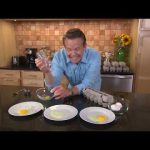
  • Egg Yolk Separation Magic??

    Egg Yolk Separation Magic??

    What’s Steve doing now? ► https://linktr.ee/stevespangler
    For business inquiries, contact +1-855-228-8780 or steve@stevespangler.com

    This channel provides STEM ideas for classroom teachers and educators.

    Follow Steve’s Daily Posts on…
    INSTAGRAM ► https://www.instagram.com/stevespangler/
    FACEBOOK ► https://www.facebook.com/stevespangler
    TIKTOK ► https://www.tiktok.com/@stevespangler

    Other Channels…
    The Spangler Effect ► https://www.youtube.com/user/TheSpanglerEffect
    Spangler Science TV ► https://www.youtube.com/user/SpanglerScienceTV

    Watch Steve’s syndicated television series ► https://bit.ly/2KaO0fT
    Purchase Steve Spangler’s books at
    https://stevespangler.com/easy-science-experiments-stem-challenges-books/

    Steve Spangler is a bestselling author, STEM educator and Emmy award-winning television personality with more than 2,100 television appearances to his credit. Steve appeared as a regular guest on the Ellen DeGeneres Show from 2007-2022 (27 appearances).

    Learn more about Steve at https://stevespangler.com

    The SICK Science® series was created by Steve Spangler in 2008. For licensing inquiries, contact +1-855-228-8780 or steve@stevespangler.com

    © 2006 – 2025 Steve Spangler, Inc. All Rights Reserved.

  • Magic Sand Separation

    Magic Sand Separation

    What’s Steve doing now? ► https://linktr.ee/stevespangler

    Other Channels…

    The Spangler Effect ► https://www.youtube.com/user/TheSpanglerEffect
    Spangler Science TV ► https://www.youtube.com/user/SpanglerScienceTV

    Follow Steve’s Daily Posts on…

    INSTAGRAM ► https://www.instagram.com/stevespangler/
    FACEBOOK ► https://www.facebook.com/stevespangler
    TIKTOK ► https://www.tiktok.com/@stevespangler

    Steve Spangler is a bestselling author, STEM educator and Emmy award-winning television personality with more than 2,100 television appearances to his credit. Steve appeared as a regular guest on the Ellen DeGeneres Show from 2007-2022. Learn more about Steve at https://stevespangler.com/about-steve-spangler/

    Watch Steve’s syndicated television series ► https://bit.ly/2KaO0fT

    The SICK Science® series was created by Steve Spangler.

    © 2010 Steve Spangler, Inc. All Rights Reserved.
    SICK Science is a registered trademark of Steve Spangler, Inc. Reg. No. 4,398,849

  • Our place in space | Meet the experts

    Our place in space | Meet the experts

    How long would it take us to reach our closest neighbour? How do astronomers know so much about the universe? Why is astronomy important for society? In this Meet the Experts episode, ESA research fellow Tereza Jerabkova discusses our place in the universe and takes us on a journey through space.

    Learn more about Webb: https://bit.ly/ESAWebb

    ★ Subscribe: http://bit.ly/ESAsubscribe and click twice on the bell button to receive our notifications.

    Check out our full video catalog: http://bit.ly/SpaceInVideos
    Follow us on Twitter: http://bit.ly/ESAonTwitter
    On Facebook: http://bit.ly/ESAonFacebook
    On Instagram: http://bit.ly/ESAonInstagram
    On LinkedIn: https://bit.ly/ESAonLinkedIn
    On Pinterest: https://bit.ly/ESAonPinterest
    On Flickr: http://bit.ly/ESAonFlickr

    We are Europe’s gateway to space. Our mission is to shape the development of Europe’s space capability and ensure that investment in space continues to deliver benefits to the citizens of Europe and the world. Check out https://www.esa.int/ to get up to speed on everything space related.

    Copyright information about our videos is available here: https://www.esa.int/ESA_Multimedia/Terms_and_Conditions

    #ESA
    #Webb
    #ESAEducation

  • The James Webb Space Telescope | Meet the experts

    The James Webb Space Telescope | Meet the experts

    Are you curious to know how a telescope works? Join ESA astronomer Giovanna Giardino as she gives an insight into the inner workings of the world’s largest telescope in space, the extraordinary James Webb Space Telescope.

    Learn more about Webb: https://bit.ly/ESAWebb

    ★ Subscribe: http://bit.ly/ESAsubscribe and click twice on the bell button to receive our notifications.

    Check out our full video catalog: http://bit.ly/SpaceInVideos
    Follow us on Twitter: http://bit.ly/ESAonTwitter
    On Facebook: http://bit.ly/ESAonFacebook
    On Instagram: http://bit.ly/ESAonInstagram
    On LinkedIn: https://bit.ly/ESAonLinkedIn
    On Pinterest: https://bit.ly/ESAonPinterest
    On Flickr: http://bit.ly/ESAonFlickr

    We are Europe’s gateway to space. Our mission is to shape the development of Europe’s space capability and ensure that investment in space continues to deliver benefits to the citizens of Europe and the world. Check out https://www.esa.int/ to get up to speed on everything space related.

    Copyright information about our videos is available here: https://www.esa.int/ESA_Multimedia/Terms_and_Conditions

    #ESA
    #Webb
    #ESAEducation

  • The early universe | Meet the experts

    The early universe | Meet the experts

    How did the universe go from a dark and cold place after the Big Bang, to the mesmerizing cosmos we see today? In this episode of Meet the Experts, ESA research fellow Rachana Bhatawdekar takes us on a tour of the early universe, to discover how the very first stars and galaxies were born after the Big Bang.

    Find more educational resources on astronomy at https://www.esa.int/Education/Teach_with_astronomy

    ★ Subscribe: http://bit.ly/ESAsubscribe and click twice on the bell button to receive our notifications.

    Check out our full video catalog: http://bit.ly/SpaceInVideos
    Follow us on Twitter: http://bit.ly/ESAonTwitter
    On Facebook: http://bit.ly/ESAonFacebook
    On Instagram: http://bit.ly/ESAonInstagram
    On LinkedIn: https://bit.ly/ESAonLinkedIn
    On Pinterest: https://bit.ly/ESAonPinterest
    On Flickr: http://bit.ly/ESAonFlickr

    We are Europe’s gateway to space. Our mission is to shape the development of Europe’s space capability and ensure that investment in space continues to deliver benefits to the citizens of Europe and the world. Check out https://www.esa.int/ to get up to speed on everything space related.

    Copyright information about our videos is available here: https://www.esa.int/ESA_Multimedia/Terms_and_Conditions

    #ESA
    #Webb
    #ESAEducation

  • Webb separation from Ariane 5

    Webb separation from Ariane 5

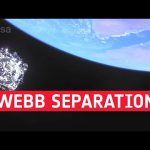
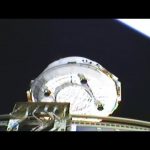
    This real-time video shows the separation of the James Webb Space Telescope from the Ariane 5 launch vehicle and the subsequent solar array deployment.

    Webb’s launch on an ESA-provided Ariane 5 rocket was performed by @arianespace on behalf of ESA from Europe’s Spaceport in French Guiana, at 12:20:07 GMT (13:20:07 CET) on 25 December 2021.

    Webb separation from the Ariane 5 occurred at 12:47:14 GMT (13:47:14 CET) with solar array deployment starting 69 seconds later.

    Thanks to Ariane 5’s highly precise launch trajectory Webb’s solar array was able to deploy soon after separation from the Ariane 5, capturing sunlight to power the observatory.

    This video shows the view from Ariane 5’s upper stage, taken by a camera manufactured by Irish company Réaltra Space Systems Engineering.

    Webb is the next great space science observatory following Hubble, designed to answer outstanding questions about the Universe and to make breakthrough discoveries in all fields of astronomy. Webb will see farther into our origins: from the formation of stars and planets, to the birth of the first galaxies in the early Universe. Webb is an international partnership between @NASA, ESA and the @Canadian Space Agency.

    Learn more about this historic launch: https://bit.ly/WebbLiftoff

    Copyright: ESA/Arianespace ; Music: “Lonely Waltz” by Charlotte Hatherley, used with permission ; Camera: Réaltra Space Systems Engineering

    ★ Subscribe: http://bit.ly/ESAsubscribe and click twice on the bell button to receive our notifications.

    Check out our full video catalog: http://bit.ly/SpaceInVideos
    Follow us on Twitter: http://bit.ly/ESAonTwitter
    On Facebook: http://bit.ly/ESAonFacebook
    On Instagram: http://bit.ly/ESAonInstagram
    On LinkedIn: https://bit.ly/ESAonLinkedIn
    On Pinterest: https://bit.ly/ESAonPinterest
    On Flickr: http://bit.ly/ESAonFlickr

    We are Europe’s gateway to space. Our mission is to shape the development of Europe’s space capability and ensure that investment in space continues to deliver benefits to the citizens of Europe and the world. Check out https://www.esa.int/ to get up to speed on everything space related.

    Copyright information about our videos is available here: https://www.esa.int/ESA_Multimedia/Terms_and_Conditions

    #ESA
    #Webb
    #WebbFliesAriane

  • ExoMars: From separation to landing

    ExoMars: From separation to landing

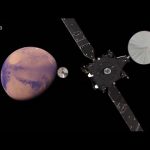
    On 16 October, seven months and 500 million km after launching from Baikonur in Kazakhstan, the joint European and Russian ExoMars 2016 mission reaches a crucial phase.

    The Trace Gas Orbiter will release its Schiaparelli lander for a three day coast and a six minute descent to the Martian surface.The lander, which was designed to demonstrate technologies for entry, descent and landing on Mars, is heading for the Meridiani Planum. This is an area that is currently being studied by NASA’s Opportunity rover and Europe’s Mars Express orbiter.

    On 19 October, the Schiaparelli lander will be activated a few hours before reaching the Martian atmosphere, when it will be travelling at some 21 000 km/h. The front heatshield – covered with 90 insulating tiles – will be subjected to temperatures of up to 1500 degrees Celsius.

    This video covers the separation, descent and landing procedures, as well as the orbiter’s critical burn to avoid crashing on the surface of Mars.

  • IXV separation test

    IXV separation test

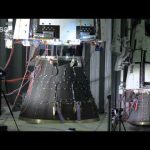
    ESA’s Intermediate eXperimental Vehicle, IXV, is put to the test at ESA’s technical centre, ESTEC, in the Netherlands. During the actual flight, at an altitude of 320 km, a pyrotechnic device will fire to open a clamp band for springs to push IXV away from the upper stage. This test shows mission planners that it can withstand the mechanical shock of the pyrotechnic detonation, mimicking the moment the craft separates from the Vega rocket.

    To be launched on Vega in early November 2014, IXV will test in flight the technologies and critical systems for Europe’s future automated re-entry vehicles returning from low orbit.

  • ATV-5 separation from Ariane 5

    ATV-5 separation from Ariane 5

    These images were taken by cameras on the Ariane 5 launcher that rocketed skywards on 29 July 2014 with Europe’s last cargo vessel to visit the International Space Station, ATV-5.

    The video shows the separation of ATV Georges Lemaîtres and its Ariane 5.

    From then on, it was a self-sufficient spacecraft heading towards the Space Station. The video also shows Ariane’s last stage manoeuvring out of the way.

    ATV-5 is carrying almost 6.6 tonnes of supplies to the International Space Station, including a record amount of dry cargo – 2682 kg.

  • Onboard camera view: launch and separation of Sentinel-1A

    Onboard camera view: launch and separation of Sentinel-1A

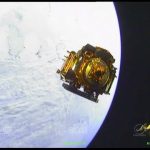
    Cameras mounted on the Soyuz Fregat upper stage that sent Sentinel-1A into space on 3 April 2014 captured this superb footage. It shows liftoff, the various stages in the rocket’s ascent and the Sentinel-1A satellite being released from the Fregat upper stage to start its life in orbit around Earth.

    The 2.3 tonne satellite lifted off on a Soyuz rocket from Europe’s Spaceport in Kourou, French Guiana at 21:02 GMT (23:02 CEST). The first stage separated 118 sec later, followed by the fairing (209 sec), stage 2 (287 sec) and the upper assembly (526 sec). After a 617 sec burn, the Fregat upper stage delivered Sentinel into a Sun-synchronous orbit at 693 km altitude. The satellite separated from the upper stage 23 min 24 sec after liftoff.

    Sentinel-1 is the first in the family of satellites for Europe’s Copernicus programme. It carries an advanced radar to scan Earth’s surface in all weather conditions and regardless of whether it is day or night. This new mission will be used to care for many aspects of our environment, from detecting and tracking oil spills and mapping sea ice to monitoring movement in land surfaces and mapping changes in the way land is used.

  • Sentinel-1A separation in space

    Sentinel-1A separation in space

    This superb footage was acquired by cameras on the Soyuz Fregat upper stage that released Sentinel-1A into orbit on 3 April 2014. It shows the Sentinel-1A satellite separating from the Fregat to start its life in orbit around Earth.

    The 2.3 tonne satellite lifted off on a Soyuz rocket from Europe’s Spaceport in Kourou, French Guiana at 21:02 GMT (23:02 CEST). The first stage separated 118 sec later, followed by the fairing (209 sec), stage 2 (287 sec) and the upper assembly (526 sec). After a 617 sec burn, the Fregat upper stage delivered Sentinel into a Sun-synchronous orbit at 693 km altitude. The satellite separated from the upper stage 23 min 24 sec after liftoff.

    Sentinel-1 is the first in the family of satellites for Europe’s Copernicus programme. It carries an advanced radar to scan Earth’s surface in all weather conditions and regardless of whether it is day or night. This new mission will be used to care for many aspects of our environment, from detecting and tracking oil spills and mapping sea ice to monitoring movement in land surfaces and mapping changes in the way land is used.

    Credits:
    Arianespace/ESA/Roscosmos