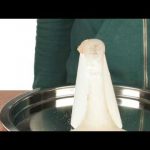
Read the full experiment at http://www.stevespanglerscience.com/experiment/blubber-gloves The animals of the Arctic and Antarctic circles spend their lives surviving subfreezing air temperatures and frigid water. Their secret is blubber, a thick layer of body fat that comprises up to 50% of some marine mammals. Is there any way for humans to replicate this cold-weather adaptation? With the Blubber Glove experiment, you’ll test a blubber substitute on a small scale and see what it’s like to take a dip in cold water without turning into a human popsicle.
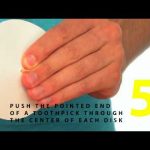
Read the full experiment at http://www.stevespanglerscience.com/experiment/talking-cups From the soulful crooning of an R&B singer to the deep roar of thunder, sounds are created by vibrations. So, if you’re looking to make a cup speak, you have to find a way to make it vibrate. Combining the plastic cups with a toothpick and a length of string is the first step… but how do we make it talk?
Read the full experiment at http://www.stevespanglerscience.com/experiment/rocket-powered-skateboard Anyone who has tried the Mentos and Diet Coke Geyser will tell you that it is totally awesome! But how awesome would it be if you turned that geyser horizontal, strapped it to a skateboard, and made the whole thing an eruption-powered rocket car? You might not believe the amazing results.
Read the full experiment at http://www.stevespanglerscience.com/experiment/balloon-powered-race-car When it comes to powering a race car, there are a ton of different options. Some cars are powered by gasoline, diesel, or other combustible fuels, or you can even power miniature race cars using a mousetrap! In the Balloon Powered Car, we’ll show you how to build a racer that uses the power of air pressure to roll across a room.
Read the full experiment at http://www.stevespanglerscience.com/experiment/drag-racing-coffee-cups
What do Starbucks, Dunkin Donuts, and Einstein Bros. have in common? They all use disposable cups. What do these disposable cups have to do with Sick Science? They make awesome drag racers! In the Drag Racing Cups experiment, you’ll construct a simple and fun racer that converts potential energy into kinetic energy. Now if your parents would hurry up with their caramel macchiatos…
Read the full experiment at http://www.stevespanglerscience.com/experiment/mousetraps-in-motion Use the spring-loaded action of a mousetrap to make a real working car. A mousetrap is a stellar example of converting potential energy to kinetic energy. The spring of the mousetrap is held back with a bunch of potential energy and, once released, snaps forward in a burst of kinetic energy. What if you could harness the release of energy to power a car? We’ll show you how with the Mousetraps in Motion experiment.
Read the full experiment at http://www.stevespanglerscience.com/experiment/wind-up-racer
Finding creative, hands-on ways to demonstrate the difference between potential and kinetic energy can be difficult. Not to worry… that’s why you have us! With some simple household items and a little creativity, the Wind Up Racer will have you racing a spool across the room in no time!
Read the full experiment at http://www.stevespanglerscience.com/experiment/cave-pillar-experiment
This crazy cave pillar forms in days, not centuries. If you’ve ever ventured into a naturally formed cave, you probably saw pillars stretching from the ceiling to the floor. They’re called stalactites and they take hundreds and thousands of years to form as precipitation drips from down from the cave’s ceiling. In the Washing Soda Stalactite experiment, you’ll cut the stalactite formation process down to just a couple of days.
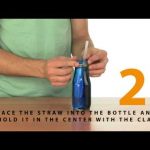
Read the full experiment at http://www.stevespanglerscience.com/content/experiment/squeeze-bottle-rocket It’s easy to turn a juice bottle into a rocket launcher. How? Grab a few straws of different sizes, some modeling clay, and an empty juice bottle to make a launcher that will send the straw rocket soaring across the room. Don’t worry, you aren’t just playing. You’ll learn something about Newton’s Third Law of Motion at the same time.
Read the full experiment at http://www.stevespanglerscience.com/content/experiment/incredible-egg-geode Forgive the wordplay, but we love to do “eggs-periments.” Get it? We’ve made naked eggs, put eggs in a bottle, folded eggs, and we’ve even shown you how to determine whether an egg is hard-boiled or raw. We want to find something new and amazing to do with eggs, and the Incredible Egg Geode is “eggs-actly” what we are looking for.
Read the full experiment at http://www.stevespanglerscience.com/content/experiment/build-a-light-bulb-circuit-science When you are conducting experiments and demonstrations using electricity, you’ll use the science of circuits. Amazing things are possible with circuits including alarms, radios, and lights. In the Build a Light Bulb experiment, you’ll use household items to construct a complete circuit that results in a homemade light bulb.
Read the full experiment at http://www.stevespanglerscience.com/experiment/microwave-lightbulb
We love to see what microwaves do to common household items. We’ve shrunk potato chip bags and turned Ivory Soap into a fluffy soap souffle. What more could we want to do? We heard that it’s possible to actually make a lightbulb light-up if you do it right. And sure enough, we figured it out.
Learn more at http://www.stevespanglerscience.com/content/experiment/colorful-convection-currents
Convection is one of those words that we often hear used, but we may not completely understand its meaning. Weather forecasters show how convection currents are formed when warm and cold air masses meet in the atmosphere. Convection currents are responsible for warm water currents that occur in oceans. This activity demonstrates convection currents in a very colorful fashion.
Learn more at http://www.stevespanglerscience.com/content/experiment/weather-vane Early weathermen and women didn’t use Doppler radar or computers to forecast the weather, they relied on tools that were much more simple. Take, for instance, the weather vane. You have probably seen weather vanes atop barns, houses, or mailboxes and they are used to show wind direction. Even though weather vanes are usually made of welded metal, you can make an equally functional weather vane using supplies in your own home!
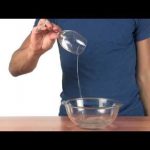
Water in rivers, in a glass, or falling from clouds obeys gravity. It’s going to fall towards the ground because of the physical pull of the earth. But, what if we told you that you could turn a glass of water completely upside down and the water wouldn’t fall to the floor? That’s what happens in the Anti-Gravity Water demonstration. It’s a simple experiment that dramatically demonstrates the amazing physical properties of water.
Steve Spangler is a celebrity teacher, science toy designer, speaker, author and an Emmy award-winning television personality. Spangler is probably best known for his Mentos and Diet Coke geyser experiment that went viral in. Spangler is the founder of www.SteveSpanglerScience.com, a Denver-based company specializing in the creation of science toys, classroom science demonstrations, teacher resources and home for Spangler’s popular science experiment archive and video collection. Spangler is a frequent guest on the Ellen DeGeneres Show and Denver 9 News where he takes classroom science experiments to the extreme. For teachers, parents or DIY Science ideas – check out other sources of learning:
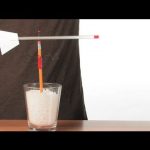
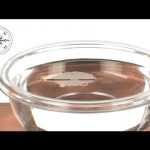
Learn more at http://www.stevespanglerscience.com/experiment/homemade-compass There is one tool that is sure to give you guidance if you get lost, a compass. But what could you do if you forgot to pack this useful tool in your survival kit? Easy! Float a needle on top of a standing pool of water. Well, there’s a bit more to creating a compass out of a needle and some water, but you can do it right at home with just a few tools.
Learn more at http://www.stevespanglerscience.com/experiment/erupting-peroxide-volcano Volcanoes have shaped history and science since the dawn of time. From the ultra-destructive Mount Vesuvius to the more recent Eyjafjallajokull volcano in Iceland (good luck pronouncing that one), volcanic eruptions can dramatically alter the world with their massive blasts. Perhaps that’s why, for decades, students have been awed by the reproduction of volcanic eruptions by their teachers using vinegar and baking soda. We get that and have come up with a way that you can replicate a volcanic blast without the stench of vinegar in your nostrils.
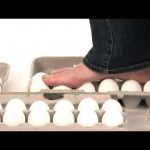
Learn more at http://www.stevespanglerscience.com/experiment/walking-on-eggshells
The phrase “walking on eggshells” is an idiom that is often used to describe a situation in which people must tread lightly around a sensitive topic for fear of offending someone or creating a volatile situation. Literally walking on eggshells would require exceptional caution, incredible skill, and a sense of self-control that would be nothing short of amazing. But what if eggs were really much stronger than most of us imagine? What if nature’s design of the incredible edible egg was so perfect that the thin, white outer coating of an egg was strong enough to withstand the weight of your body? Wake the kids! Phone the neighbors! It’s time for the Walking on Eggshells challenge.
Learn more at http://www.stevespanglerscience.com/experiment/how-to-make-a-newspaper-tree Newspapers are made from trees and trees grow… so it only makes sense that you should be able to grow a newspaper tree, right? What? You have doubts? Roll several sheets of newspaper into a tube, tear the tube in a few spots, and an eight foot tall tree suddenly appears!
Learn more at http://www.stevespanglerscience.com/content/experiment/magic-crystal-snowflake
Bringing real snowflakes inside individually is next to impossible. So, to work around this conundrum, we’ve come up with the Magic Crystal Snowflake. This special snowflake is just a beautiful and unique as a snowflake from the sky, but it won’t melt! The Magic Crystal Snowflake uses some fun hands-on chemistry and makes a perfect holiday experiment.
Learn more at http://www.stevespanglerscience.com/lab/experiments/magic-crystal-tree/ Impress your friends by creating a colorful Christmas tree out of salt crystals, cardboard, and a few other household items. Within a day, you’ll have a colorful snow-covered tree that seemed to magically sprout from nothing!
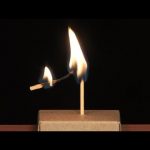
Learn more at http://www.stevespanglerscience.com/experiment/move-a-match-with-your-mind The ability to move an object with your mind is called telekinesis. Magicians and psychics claim to have this amazing ability… and you will too once you’ve learned the science secret behind the Sympathetic Match trick. If you like to annoy all of your dinner guests by running your finger along the rim of a wine glass to make it sing, you’ll soon have your friends convinced that you can move objects with your mind!
Learn more at http://www.stevespanglerscience.com/experiment/the-force-of-sound-sick-science If you’ve ever watched an action movie in a theater, you’ve seen and felt an onscreen explosion. Did you know that what you were feeling was actually waves of sound from the theater’s speaker system? We’ll show you how you can visualize the sound vibrations and explain why, even though you can’t always see it, you can feel sound.
Learn more at http://www.stevespanglerscience.com/experiment/water-whistle-sick-science People have told us that we do things to our own tune around Steve Spangler Science. At first we didn’t know what they meant, but then we decided that they had to be talking about our Water Whistle experiment. We’ve created an instrument out of nothing more than a drinking straw and a glass of water. It’s musical and fun as well as a great lesson in vibration, sound, and pitch.
Learn more at http://www.stevespanglerscience.com/experiment/match-levitation-sick-science Whether watching that movie about wizards or catching up on our magic tricks, we love it when things mysteriously rise into the air. We are especially fond of levitation when there are no strings or trickery attached… stuff just starts lifting off of the ground. That’s what happens with the Match Levitation experiment. Truly, there’s nothing up our sleeves. Try it and you’ll see for yourself!
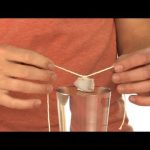
Learn more at http://www.stevespanglerscience.com/experiment/ice-cube-rope-sick-science Most normal people won’t put effort into trying to catch a solid chunk of ice with a rope. Luckily, we aren’t most people… and we certainly are not normal. Steve and his freeze-ologists wondered if it was possible to pick up an ice cube by using a rope. Seems simple enough. But here’s the catch… you can’t tie the rope around the ice cube! Believe it or not, it is possible!
Is it possible to make a thermometer out of water? Absolutely! The best part about our Water Thermometer experiment is that you have all the materials you need in your own home. That’s right, you’ll be measuring temperature with this amazing homemade tool in no time.
Is there a way to see air changing? Sure, there are clouds and fog, but those are particles of water. Does anything happen to air when it gets cooled or heated? We’ve come up with a great way to see how air changes when it gets hotter and colder… and you can do it all with just a few things you probably already have in your house!
Have you ever tried writing in the dark? Even something as simple as your own name might turn out looking like you were writing in an earthquake. We knew there had to be a better way, and after giving Steve and his team a bit of time they came up with a beautiful and amazing solution – Light Writer. It’s a phenomenal trip into the world of optics, photography, and fun.
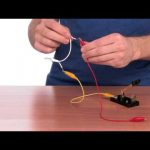
Ever wonder how light switches really work? Using some christmas lights, a couple alligator clips, a battery, and a switch, you can build your own circuit at home.
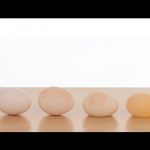
This experiment answers the age-old question, “Which came first, the rubber egg or the rubber chicken?” It’s easy to make a rubber egg if you understand the chemistry of removing the eggshell with vinegar. What you’re left with is a totally embarrassed naked egg and a cool piece of science.
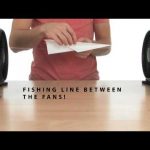
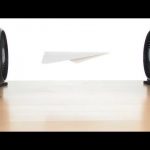
APRIL FOOL’S! A few days ago we posted a video showing a paper airplane hovering between two fans. This is not actually possible without the help of a little fishing line. We thought why not have some fun around April Fool’s Day and see how many people we could trick.
We don’t know if the Wright Brothers ever made the attempt, but Steve Spangler has defied the odds to create a hovering airplane. We don’t suggest any passengers (because they wouldn’t fit), but this Floating Paper Plane is a great hands-on science tool for teaching the science behind airplanes, lift and drag, and principles of air.
Last summer, Spangler Labs took a company trip to an amusement park. We didn’t go for a company retreat, we didn’t even go on a day off. We went to do research on physics, the science of motion. One amusement park ride that really got Steve thinking was the gravitron. As we all stood in a circular room with our backs against the wall, the walls began to spin. Faster and faster the walls spun until the floor dropped out from under us. There were shrieks of terror as everyone thought they were about to fall, but to our surpise… we didn’t drop! Steve wanted to find a way to recreate this phenomenon on a small, kitchen-science scale. Steve Spangler Science gives you the Marble Gravitron!
Recently, the scientists at Spangler Labs had a day where they recollected their fond memories of elementary school. Some thought back to their favorite science or math class, but Steve was excited about the playground equipment. He loved the monkey bars, the swings, and even loved to play tetherball.
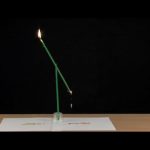
But, he recalled, his favorite thing to do on the playground was seesaw. Steve’s memories even included a daredevil stunt where he seesawed while it was on fire. He was a regular elementary Evil Knievel. And then it hit him…what if he could use some amazing science principles to make a magic seesaw?