Tag: spacecraft

  • Closer than ever: Solar Orbiter’s first views of the Sun

    Closer than ever: Solar Orbiter’s first views of the Sun

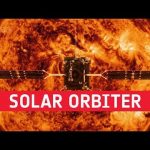
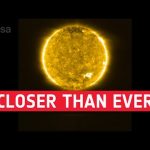
    The first images from ESA’s Solar Orbiter are already exceeding expectations and revealing interesting new phenomena on the Sun.

    This animation combines a series of views captured with several remote-sensing instruments on Solar Orbiter between 30 May and 21 June 2020, when the spacecraft was roughly halfway between the Earth and the Sun ¬– closer to the Sun than any other solar telescope has ever been before.

    The red and yellow images were taken with the Extreme Ultraviolet Imager (EUI) in the extreme ultraviolet region of the electromagnetic spectrum, at wavelengths of 30 and 17 nanometers, respectively.

    The close-up views by EUI show the upper atmosphere of the Sun, or corona, with a temperature of around 1 million degrees. With the power to see features in the solar corona of only 400 km across, these images reveal a multitude of small flaring loops, erupting bright spots and dark, moving fibrils. A ubiquitous feature of the solar surface, uncovered for the first time by these images, have been called ‘campfires’. They are omnipresent minuature eruptions that could be contributing to the high temperatures of the solar corona and the origin of the solar wind.

    The EUI images are followed by three views based on data from the Polarimetric and Helioseismic Imager (PHI) instrument. The blue and red view is a ‘tachogram’ of the Sun, showing the line of sight velocity of the Sun, with the blue side turning to us and the red side turning away. The following view is a magnetogram, or a map of magnetic propertied for the whole Sun, featuring a large magnetically active region in the lower right-hand quadrant of the Sun. The yellow-orange view is a visible light image and represents what we would see with the naked eye: there are no sunspots visible because the Sun is displaying only low levels of magnetic activity at the moment.

    On larger scales, the Metis coronograph blocks out the dazzling light from the solar surface, bringing the fainter corona into view. Metis observes the corona simultaneously in visible light (shown in green) and ultraviolet light (shown in red) for the first time with unprecedented temporal coverage and spatial resolution. These images reveal the two bright equatorial streamers and fainter polar regions that are characteristic of the solar corona during times of minimal magnetic activity.

    On even grander scales, the Heliospheric Imager (SoloHI) telescope takes images of the solar wind – the stream of charged particles constantly released by the Sun into outer space – by capturing the light scattered by electrons in the wind. The first-light image from SoloHI is shown at the end, as a mosaic of four separate images from the instrument’s four separate detectors. In this view, the Sun is located to the right of the frame, and its light is blocked by a series of baffles; the last baffle is in the field of view on the right-hand side and is illuminated by reflections from the solar array. The partial ellipse visible on the right is the zodiacal light, created by sunlight reflecting off the dust particles that are orbiting the Sun. The signal from the solar wind outflow is faint compared to the much brighter zodiacal light signal, but the SoloHI team has developed techniques to reveal it. Planet Mercury is also visible as a small bright dot near the lower edge of the upper left tile.

    Solar Orbiter is a space mission of international collaboration between ESA and NASA.

    Learn more: https://bit.ly/SolarOrbitersFirstImages

    Credit: Solar Orbiter/EUI Team; PHI Team; Metis Team; SoloHI Team /ESA & NASA

    ★ Subscribe: http://bit.ly/ESAsubscribe and click twice on the bell button to receive our notifications.

    Check out our full video catalog: http://bit.ly/SpaceInVideos
    Follow us on Twitter: http://bit.ly/ESAonTwitter
    On Facebook: http://bit.ly/ESAonFacebook
    On Instagram: http://bit.ly/ESAonInstagram
    On Flickr: http://bit.ly/ESAonFlickr

    We are Europe’s gateway to space. Our mission is to shape the development of Europe’s space capability and ensure that investment in space continues to deliver benefits to the citizens of Europe and the world. Check out http://www.esa.int/ESA to get up to speed on everything space related.

    Copyright information about our videos is available here: http://www.esa.int/spaceinvideos/Terms_and_Conditions

    #ESA
    #SolarOrbiter
    #TheSunUpClose
  • After the Launch: NASA and SpaceX Share Updates about Historic #LaunchAmerica Mission

    After the Launch: NASA and SpaceX Share Updates about Historic #LaunchAmerica Mission

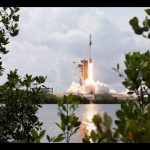
    Liftoff! The SpaceX Falcon 9 rocket carrying NASA astronauts Robert Behnken and Douglas Hurley aboard the company’s Crew Dragon spacecraft launched from Kennedy Space Center’s historic Launch Pad 39A at 3:22 p.m. EDT on May 30, kicking off a critical final flight test of the SpaceX crew transportation system.

    Following the successfully launch, NASA hosted a postlaunch news conference for officials to talk about the mission live from NASA’s Kennedy Space Center in Florida.

    Participants included:
    o NASA Administrator Jim Bridenstine
    o Pat Forrester, NASA Chief Astronaut
    o Kathy Lueders, manager, NASA Commercial Crew Program
    o Elon Musk, SpaceX chief engineer
    o Kirk Shireman, manager, International Space Station Program

    Learn more by visiting https://www.nasa.gov/launchamerica/

  • Solar Orbiter launch highlights

    Solar Orbiter launch highlights

    Highlights from the preparation and liftoff of ESA’s Sun-exploring mission Solar Orbiter.

    Solar Orbiter lofted to space aboard the US Atlas V 411 rocket from NASA’s spaceport in Cape Canaveral, Florida at 04:03 GMT (05:03 CET) on 10 February 2020.

    An ESA-led mission with strong NASA participation, Solar Orbiter carries a set of ten instruments for imaging the surface of the Sun and studying the environment in its vicinity. The spacecraft will travel around the Sun on an elliptical orbit that will take it as close as 42 million km away from the Sun’s surface, about a quarter of the distance between the Sun and Earth. The orbit will allow Solar Orbiter to see some of the never-before-imaged regions of the Sun, including the poles, and shed new light on what gives rise to solar wind, which can affect infrastructure on Earth.

    More about Solar Orbiter: https://www.esa.int/solarorbiter

    ★ Subscribe: http://bit.ly/ESAsubscribe and click twice on the bell button to receive our notifications.

    Check out our full video catalog: http://bit.ly/SpaceInVideos
    Follow us on Twitter: http://bit.ly/ESAonTwitter
    On Facebook: http://bit.ly/ESAonFacebook
    On Instagram: http://bit.ly/ESAonInstagram
    On Flickr: http://bit.ly/ESAonFlickr

    We are Europe’s gateway to space. Our mission is to shape the development of Europe’s space capability and ensure that investment in space continues to deliver benefits to the citizens of Europe and the world. Check out http://www.esa.int/ESA to get up to speed on everything space related.

    Copyright information about our videos is available here: http://www.esa.int/spaceinvideos/Terms_and_Conditions

    #ESA
    #SolarOrbiter
    #WeAreAllSolarOrbiters

  • Solar Orbiter liftoff

    Solar Orbiter liftoff

    ESA’s new Sun-exploring mission Solar Orbiter lofted to space aboard the US Atlas V 411 rocket from NASA’s spaceport in Cape Canaveral, Florida at 04:03 GMT (05:03 CET) on 10 February 2020.

    Solar Orbiter, an ESA-led mission with strong NASA participation, carries a set of ten instruments for imaging the surface of the Sun and studying the environment in its vicinity. The spacecraft will travel around the Sun on an elliptical orbit that will take it as close as 42 million km away from the Sun’s surface, about a quarter of the distance between the Sun and Earth. The orbit will allow Solar Orbiter to see some of the never-before-imaged regions of the Sun, including the poles, and shed new light on what gives rise to solar wind, which can affect infrastructure on Earth.

    More about Solar Orbiter: https://www.esa.int/solarorbiter

    ★ Subscribe: http://bit.ly/ESAsubscribe and click twice on the bell button to receive our notifications.

    Check out our full video catalog: http://bit.ly/SpaceInVideos
    Follow us on Twitter: http://bit.ly/ESAonTwitter
    On Facebook: http://bit.ly/ESAonFacebook
    On Instagram: http://bit.ly/ESAonInstagram
    On Flickr: http://bit.ly/ESAonFlickr

    We are Europe’s gateway to space. Our mission is to shape the development of Europe’s space capability and ensure that investment in space continues to deliver benefits to the citizens of Europe and the world. Check out http://www.esa.int/ESA to get up to speed on everything space related.

    Copyright information about our videos is available here: http://www.esa.int/spaceinvideos/Terms_and_Conditions

    #ESA
    #SolarOrbiter
    #WeAreAllSolarOrbiters

  • Solar Orbiter launch preparations

    Solar Orbiter launch preparations

    ESA’s Solar Orbiter satellite in a cleanroom at the Astrotech payload processing facility near Kennedy Space Centre, Florida. The spacecraft is seen being mounted onto the payload adaptor ring and encapsulated into a fairing, which will protect the satellite and the rocket upper stage during the turbulent ascent through Earth’s atmosphere.

    Learn more about Solar Orbiter: http://bit.ly/ESASolarOrbiter

    The video was created with support from Airbus/Astrotech/ULA/NASA

    ★ Subscribe: http://bit.ly/ESAsubscribe and click twice on the bell button to receive our notifications.

    Check out our full video catalog: http://bit.ly/SpaceInVideos
    Follow us on Twitter: http://bit.ly/ESAonTwitter
    On Facebook: http://bit.ly/ESAonFacebook
    On Instagram: http://bit.ly/ESAonInstagram
    On Flickr: http://bit.ly/ESAonFlickr

    We are Europe’s gateway to space. Our mission is to shape the development of Europe’s space capability and ensure that investment in space continues to deliver benefits to the citizens of Europe and the world. Check out http://www.esa.int/ESA to get up to speed on everything space related.

    Copyright information about our videos is available here: http://www.esa.int/spaceinvideos/Terms_and_Conditions

    #ESA
    #SolarOrbiter
    #WeAreAllSolarOrbiters

  • Solar Orbiter operations simulations

    Solar Orbiter operations simulations

    ESA’s Solar Orbiter is getting ready for its launch on an Atlas V rocket provided by NASA and operated by United Launch Alliance from Cape Canaveral, Florida.

    Once in space, and over the course of several years, the spacecraft will repeatedly use the gravity of Venus and Earth to raise its orbit above the poles of the Sun, providing new perspectives on our star, including the first images of the Sun’s polar regions.

    All these operations will be controlled from the European Space Operations Centre (ESOC), Germany, where a dedicated team is currently working on simulations of the first moments in orbit, after separation from the launcher, but also all the delicate manoeuvres of the journey that will make Solar Orbiter mission possible.

    Learn more Solar Orbiter: http://bit.ly/ESASolarOrbiter

    ★ Subscribe: http://bit.ly/ESAsubscribe and click twice on the bell button to receive our notifications.

    Check out our full video catalog: http://bit.ly/SpaceInVideos
    Follow us on Twitter: http://bit.ly/ESAonTwitter
    On Facebook: http://bit.ly/ESAonFacebook
    On Instagram: http://bit.ly/ESAonInstagram
    On Flickr: http://bit.ly/ESAonFlickr

    We are Europe’s gateway to space. Our mission is to shape the development of Europe’s space capability and ensure that investment in space continues to deliver benefits to the citizens of Europe and the world. Check out http://www.esa.int/ESA to get up to speed on everything space related.

    Copyright information about our videos is available here: http://www.esa.int/spaceinvideos/Terms_and_Conditions

    #ESA
    #SolarOrbiter
    #WeAreAllSolarOrbiters

  • Solar Orbiter – the Sun close-up

    Solar Orbiter – the Sun close-up

    ESA’s mission to the Sun, Solar Orbiter, is due for launch on an Atlas V 411 from Cape Canaveral, Florida on 9 February 23:03 EST / 04:03 GMT / 05:03 CET on 10 Feb.
     
    Equipped with a suite of ten scientific instruments, Solar Orbiter will capture the first images of the Sun’s poles and make detailed observations of solar activity. Its specially designed heatshield is capable of enduring temperatures of more than 500ºC.

    Solar Orbiter is a space mission of international collaboration between ESA and NASA. The spacecraft has been developed by Airbus.

    Learn more Solar Orbiter: http://bit.ly/ESASolarOrbiter

    ★ Subscribe: http://bit.ly/ESAsubscribe and click twice on the bell button to receive our notifications.

    Check out our full video catalog: http://bit.ly/SpaceInVideos
    Follow us on Twitter: http://bit.ly/ESAonTwitter
    On Facebook: http://bit.ly/ESAonFacebook
    On Instagram: http://bit.ly/ESAonInstagram
    On Flickr: http://bit.ly/ESAonFlickr

    We are Europe’s gateway to space. Our mission is to shape the development of Europe’s space capability and ensure that investment in space continues to deliver benefits to the citizens of Europe and the world. Check out http://www.esa.int/ESA to get up to speed on everything space related.

    Copyright information about our videos is available here: http://www.esa.int/spaceinvideos/Terms_and_Conditions

    #ESA
    #SolarOrbiter
    #WeAreAllSolarOrbiters

  • Forward to the Moon with ESA

    Forward to the Moon with ESA

    The first flight of the Artemis programme, which will see humans return to the Moon, is scheduled to begin soon. The lunar spacecraft consists of NASA’s Orion crew module and the European Service Module, or ESM. Developed by ESA and building on technology from its Automated Transfer Vehicle (ATV), the ESM will provide propulsion, life support, environmental control and electrical power to Orion. The Artemis 1 spacecraft modules are undergoing thermal vacuum and electromagnetic interference tests in the world’s largest space simulation vacuum chamber at the Glenn Research Centre’s Plum Brook Station in Sandusky, Ohio, USA.

    Learn more about Orion: http://bit.ly/ESAOrion

    ★ Subscribe: http://bit.ly/ESAsubscribe and click twice on the bell button to receive our notifications.

    Check out our full video catalog: http://bit.ly/SpaceInVideos
    Follow us on Twitter: http://bit.ly/ESAonTwitter
    On Facebook: http://bit.ly/ESAonFacebook
    On Instagram: http://bit.ly/ESAonInstagram
    On Flickr: http://bit.ly/ESAonFlickr

    We are Europe’s gateway to space. Our mission is to shape the development of Europe’s space capability and ensure that investment in space continues to deliver benefits to the citizens of Europe and the world. Check out http://www.esa.int/ESA to get up to speed on everything space related.

    Copyright information about our videos is available here: http://www.esa.int/spaceinvideos/Terms_and_Conditions

    #ESA
    #Artemis
    #Orion

  • What is Cheops?

    What is Cheops?

    What is ESA’s Characterising Exoplanet Satellite, Cheops, and how will it improve our knowledge of exoplanets? Find out more in this interview with Kate Isaak, ESA Cheops project scientist.

    More about Cheops: http://bit.ly/ESACheops

    ★ Subscribe: http://bit.ly/ESAsubscribe and click twice on the bell button to receive our notifications.

    Check out our full video catalog: http://bit.ly/SpaceInVideos
    Follow us on Twitter: http://bit.ly/ESAonTwitter
    On Facebook: http://bit.ly/ESAonFacebook
    On Instagram: http://bit.ly/ESAonInstagram
    On Flickr: http://bit.ly/ESAonFlickr

    We are Europe’s gateway to space. Our mission is to shape the development of Europe’s space capability and ensure that investment in space continues to deliver benefits to the citizens of Europe and the world. Check out http://www.esa.int/ESA to get up to speed on everything space related.

    Copyright information about our videos is available here: http://www.esa.int/spaceinvideos/Terms_and_Conditions

    #ESA
    #Cheops
    #Exoplanets

  • Sentinel-6: charting sea level

    Sentinel-6: charting sea level

    In a cleanroom in Ottobrunn, Germany, the latest Copernicus Sentinel satellite is ready for final testing before it is packed up and shipped to the US for liftoff next year. Designed and built to chart changing sea level, it is the first of two identical Sentinel-6 satellites that will be launched consecutively to continue the time series of sea-level measurements. This new mission builds on heritage from previous ocean topography satellites, including the French–US Topex-Poseidon and Jason missions, previous ESA missions such as the ERS satellites, Envisat and CryoSat, as well as Copernicus Sentinel-3. With millions of people around the world at risk from rising seas, it is essential to continue measuring the changing height of the sea surface so that decision-makers are equipped to take appropriate mitigating action – as is being currently highlighted at the COP-25 Climate Change Conference in Spain.

    Learn more about Sentinel-6: http://bit.ly/Sentinel6

    ★ Subscribe: http://bit.ly/ESAsubscribe and click twice on the bell button to receive our notifications.

    Check out our full video catalog: http://bit.ly/SpaceInVideos

    Follow us on Twitter: http://bit.ly/ESAonTwitter

    On Facebook: http://bit.ly/ESAonFacebook

    On Instagram: http://bit.ly/ESAonInstagram

    On Flickr: http://bit.ly/ESAonFlickr

    We are Europe’s gateway to space. Our mission is to shape the development of Europe’s space capability and ensure that investment in space continues to deliver benefits to the citizens of Europe and the world. Check out http://www.esa.int/ESA to get up to speed on everything space related.

    Copyright information about our videos is available here: http://www.esa.int/spaceinvideos/Terms_and_Conditions

    #ESA
    #EarthObservation
    #Sentinel6

  • YGT experience as a Spacecraft Operations Engineer

    YGT experience as a Spacecraft Operations Engineer

    Nicolas Soubirous, Spacecraft Operations Engineer, shares his Young Graduate Trainee (YGT) experience at ESA, working in the EarthCARE, SEOSat & SMOS Missions Operations Unit at ESOC, Germany.

    Learn more: http://bit.ly/ESAygt

    ★ Subscribe: http://bit.ly/ESAsubscribe and click twice on the bell button to receive our notifications.

    Check out our full video catalog: http://bit.ly/SpaceInVideos
    Follow us on Twitter: http://bit.ly/ESAonTwitter
    On Facebook: http://bit.ly/ESAonFacebook
    On Instagram: http://bit.ly/ESAonInstagram
    On Flickr: http://bit.ly/ESAonFlickr

    We are Europe’s gateway to space. Our mission is to shape the development of Europe’s space capability and ensure that investment in space continues to deliver benefits to the citizens of Europe and the world. Check out http://www.esa.int/ESA to get up to speed on everything space related.

    Copyright information about our videos is available here: http://www.esa.int/spaceinvideos/Terms_and_Conditions

    #ESA
    #YGT
    #SpacecraftOperationsEngineer

  • Orion Spacecraft Arrives in Ohio for Testing on This Week @NASA – November 29, 2019

    Orion Spacecraft Arrives in Ohio for Testing on This Week @NASA – November 29, 2019

    Our Artemis I spacecraft is delivered for some critical testing, a big step for our Commercial Crew program, and a possible connection between dust storms and water loss on Mars … a few of the stories to tell you about – This Week at NASA!

    This video is available for download from NASA’s Image and Video Library: https://images.nasa.gov/details-NHQ_2019_1129_Orion%20Spacecraft%20Arrives%20in%20Ohio%20for%20Testing%20on%20This%20Week%20@NASA%20%E2%80%93%20November%2029,%202019

  • Solar Orbiter

    Solar Orbiter

    Engineers have completed their testing of ESA’s Solar Orbiter spacecraft in preparation for launch early next year.

    Equipped with a suite of ten instruments, Solar Orbiter will capture the closest ever pictures of our star, the first images of its poles, and make detailed observations of solar activity. Its specially designed heatshield is capable of enduring temperatures of more than 500 degrees Celsius.

    Over the past year, Solar Orbiter has been undergoing a series of rigorous tests at the IABG test centre near Munich, Germany. The spacecraft is due to be packed into an Antonov cargo plane on 31 October for shipping to Florida. Launch on an Atlas 5 rocket from Cape Canaveral, is planned for February 2020.

    Learn more about Solar Orbiter: http://bit.ly/ESASolarOrbiter

    ★ Subscribe: http://bit.ly/ESAsubscribe and click twice on the bell button to receive our notifications.

    Check out our full video catalog: http://bit.ly/SpaceInVideos
    Follow us on Twitter: http://bit.ly/ESAonTwitter
    On Facebook: http://bit.ly/ESAonFacebook
    On Instagram: http://bit.ly/ESAonInstagram
    On Flickr: http://bit.ly/ESAonFlickr

    We are Europe’s gateway to space. Our mission is to shape the development of Europe’s space capability and ensure that investment in space continues to deliver benefits to the citizens of Europe and the world. Check out http://www.esa.int/ESA to get up to speed on everything space related.

    Copyright information about our videos is available here: http://www.esa.int/spaceinvideos/Terms_and_Conditions

    #ESA
    #SolarOrbiter
    #SolarSystem

  • SpaceX Crew Dragon Parachute Test

    SpaceX Crew Dragon Parachute Test

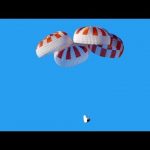
    The SpaceX #CrewDragon spacecraft parachutes successfully deploy during the latest development test. This test simulated a pad abort, where the vehicle is tumbling at low altitude before parachute deploy, validating SpaceX’s parachute models and margins. As a part of NASA’s Commercial Crew Program, SpaceX has been developing and testing the Crew Dragon parachute system, which is comprised of two drogue parachutes and four main ring-sail parachutes—the same type of parachutes that have been commonly and successfully used for human spaceflight in the past.

    More on Commercial Crew and SpaceX: https://go.nasa.gov/2O8cS7X
    Download this video: https://images.nasa.gov/details-KSC-20190918-VP-MWC01-SPACEX-PARACHUTE.html

  • Launch of Orion Spacecraft Ascent Abort-2 Test

    Launch of Orion Spacecraft Ascent Abort-2 Test

    Watch a fully functional launch abort system (LAS) and test Orion spacecraft launch to an altitude of 31,000 feet at Mach 1.15 (more than 1,000 mph)! On July 2, 2019, NASA successfully demonstrated the Orion spacecraft’s launch abort system can outrun a speeding rocket and pull astronauts to safety during an emergency during launch. News release: https://go.nasa.gov/2Xg7mkJ Orion was launched atop a Northrop Grumman provided booster from Launch Pad 46 at Cape Canaveral Air Force Station in Florida. The test is another milestone in the agency’s preparation for Artemis missions to the Moon that will lead to astronaut missions to Mars.

  • How do astronauts return to Earth? [with Closed Captions]

    How do astronauts return to Earth? [with Closed Captions]

    [TURN CC ON!]

    The ride home from the International Space Station sees the astronauts brake from 28 800 km/h to a standstill at touchdown in barely three hours. How does the Soyuz spacecraft reenter the atmosphere? And how does the capsule land?

    Watch in just two minutes the sequence of events from farewell to landing. This video is based on a training lesson for ESA astronauts, and it features dramatic footage of actual landings.

    To find out more, watch the extended version: https://www.youtube.com/watch?v=-l7MM9yoxII />
    Credits:
    ESA; NASA; Roscosmos; S.P. Korolev Rocket; Space Corporation Energia; Aerospace Search and Rescue Service of the Russian Federation.

    ★ Subscribe: http://bit.ly/ESAsubscribe and click twice on the bell button to receive our notifications.

    Check out our full video catalog: http://bit.ly/SpaceInVideos
    Follow ESA on Twitter: http://bit.ly/ESAonTwitter
    On Facebook: http://bit.ly/ESAonFacebook
    On Instagram: http://bit.ly/ESAonInstagram
    On Flickr: http://bit.ly/ESAonFlickr

    ESA is Europe’s gateway to space. Our mission is to shape the development of Europe’s space capability and ensure that investment in space continues to deliver benefits to the citizens of Europe and the world. Check out http://www.esa.int/ESA to get up to speed on everything space related.

    Copyright information about our videos is available here: http://www.esa.int/spaceinvideos/Terms_and_Conditions

  • Soyuz spacecraft launch timelapse seen from space

    Soyuz spacecraft launch timelapse seen from space

    This is what three astronauts being launched into space looks like – seen from space. ESA astronaut Alexander Gerst took this time-lapse sequence from the International Space Station’s Cupola observatory on 3 December 2018.

    Inside the Soyuz MS-11 spacecraft were NASA astronaut Anne McClain, Canadian Space Agency astronaut David Saint-Jacques and Roscosmos astronaut and Soyuz commander Oleg Konenenko. The trio blasted into orbit at 11:31 GMT from the Baikonur cosmodrome in Kazakhstan and docked with the International Space Station just six hours later.

    Spacecraft are launched after the Space Station flies overhead. This allowed Alexander to set up a camera to take regular pictures at intervals that are played back to create this video.

    The rocket leaves behind a trail of exhaust as it gains altitude and passes through the layers of Earth’s atmosphere.

    Download the video from ESA’s space in videos: http://www.esa.int/spaceinvideos/Videos/2018/12/Soyuz_spacecraft_launch_timelapse_seen_from_space

    Follow Alexander and the #Horizons mission on social media via http://bit.ly/AlexanderGerstESA and on http://bit.ly/HorizonsBlogESA.

    Credits: ESA/NASA.

    ★ Subscribe: http://bit.ly/ESAsubscribe and click twice on the bell button to receive our notifications.

    Check out our full video catalog: http://bit.ly/SpaceInVideos
    Follow ESA on Twitter: http://bit.ly/ESAonTwitter
    On Facebook: http://bit.ly/ESAonFacebook
    On Instagram: http://bit.ly/ESAonInstagram
    On Flickr: http://bit.ly/ESAonFlickr

    ESA is Europe’s gateway to space. Our mission is to shape the development of Europe’s space capability and ensure that investment in space continues to deliver benefits to the citizens of Europe and the world. Check out http://www.esa.int/ESA to get up to speed on everything space related.

    Copyright information about our videos is available here: http://www.esa.int/spaceinvideos/Terms_and_Conditions

  • NASA’s Test Orion Spacecraft in the Pacific Ocean at Sunset

    NASA’s Test Orion Spacecraft in the Pacific Ocean at Sunset

    Orion is NASA’s spacecraft for carrying astronauts on exploration missions to the Moon and beyond. When Orion returns to Earth from space, it will be slowed by parachutes before splashdown. Here, NASA’s recovery team and the U.S. Navy practice recovering a test Orion capsule from the ocean waters. Bonus: stunning views of the sunset in the Pacific off the coast of California!

    This footage was captured on Nov. 1, 2018, during Underway Recovery Test-7 (URT-7) — one in a series of tests that NASA’s Exploration Ground Systems Recovery Team and the U.S. Navy are conducting: https://go.nasa.gov/2Ph6Mnr. These tests verify and validate procedures and hardware that will be used to recover the Orion spacecraft after it splashes down in the Pacific Ocean following deep space exploration missions.

    NASA/Jamie Peer
    Editor: NASA/Nasreen Alkhateeb

    Download original footage: https://images.nasa.gov/details-KSC_20181101_MH_JBP_0002_BTA_Open_Water_Sunset_DRONE.html

  • The Closest Spacecraft to the Sun on This Week @NASA – November 2, 2018

    The Closest Spacecraft to the Sun on This Week @NASA – November 2, 2018

    A new record for our mission to the Sun, the end of an era for a prolific planet hunter, and our next mission to Mars is closing in on its destination … a few of the stories to tell you about – This Week at NASA!

    This video is available for download from NASA’s Image and Video Library: https://images.nasa.gov/details-NHQ_2018_1102_The%20Closest%20Spacecraft%20to%20the%20Sun%20on%20This%20Week%20@NASA%20%E2%80%93%20November%202,%202018.html

  • NASA’s Dawn Mission Nears the End

    NASA’s Dawn Mission Nears the End

    After 11 years of 🌌breathtaking imagery, ⚙️unprecedented feats of engineering & 🛰️spacecraft records broken — it’s nearly time to bid farewell to NASA’s Dawn spacecraft as it comes to the expected end of the mission. Learn about its final orbits at Ceres: https://go.nasa.gov/dawnfinale

  • Crew Safe After Soyuz Launch Abort

    Crew Safe After Soyuz Launch Abort

    NASA astronaut Nick Hague and Russian cosmonaut Alexey Ovchinin are in good condition following an aborted launch of their Soyuz spacecraft.

    The Soyuz MS-10 spacecraft launched from the Baikonur Cosmodrome in Kazakhstan to the International Space Station at 4:40 a.m. EDT Thursday, October 11 (2:40 p.m. in Baikonur) carrying American astronaut Nick Hague and Russian cosmonaut Alexey Ovchinin. Shortly after launch, there was an anomaly with the booster and the launch ascent was aborted, resulting in a ballistic landing of the spacecraft. Search and rescue teams were deployed to the landing site. Hague and Ovchinin are out of the capsule and are reported to be in good condition.

    Note: This video is edited for length, but includes the launch, the initial report of the issue, and the confirmation that the crew landed safely.

  • NASA Astronaut Drew Feustel Records Music Video from Space

    NASA Astronaut Drew Feustel Records Music Video from Space

    NASA astronaut Drew Feustel recorded this music video from space. Feustel launched to the International Space Station in March 2018 and is currently serving as Expedition 56 Commander. Drew thanks all who helped bring this to life, including his friend, Gord Sinclair, for giving him permission to use the song, and the crew of Expeditions 55 and 56 for their support and participation in NASA’s human space exploration mission.

    Learn more about the International Space Station by visiting https://www.nasa.gov/mission_pages/station/main/index.html

  • How Do We Prepare a Spacecraft for Launch? Countdown to T-Zero for NASA’s TESS Mission

    How Do We Prepare a Spacecraft for Launch? Countdown to T-Zero for NASA’s TESS Mission

    Revisit the April 18, 2018, launch of NASA’s Transiting Exoplanet Survey Satellite (TESS) aboard a SpaceX Falcon 9 rocket. TESS is already scanning the skies, identifying planet candidates that may be orbiting distant stars. https://go.nasa.gov/2Q3J9ei

    TESS is NASA’s next step in the search for planets outside of our solar system, including those that could support life. The mission will find exoplanets that periodically block part of the light from their host stars, events called transits. TESS will survey 200,000 of the brightest stars near the sun to search for transiting exoplanets.

  • NASA | 360 Video of Parker Solar Probe Mission to “Touch” the Sun

    NASA | 360 Video of Parker Solar Probe Mission to “Touch” the Sun

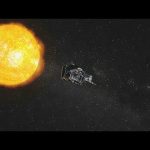
    Watch in 360 degrees as an United Launch Alliance Delta IV Heavy rocket lifts off from Space Launch Complex-37 at Cape Canaveral Air Force Station in Florida carrying NASA’s Parker Solar Probe spacecraft. Roughly the size of a small car, the spacecraft lifted off at 3:31 a.m. EDT on Aug. 12, 2018, starting its historic mission to “touch” the Sun.

    Learn more about the mission at https://www.nasa.gov/parkersolarprobe.

  • BepiColombo launch to Mercury

    BepiColombo launch to Mercury

    Enjoy this animation visualising BepiColombo’s launch and cruise to Mercury. Some aspects have been simplified for the purpose of this animation.

    The joint ESA-JAXA mission comprises the European Mercury Planetary Orbiter and Japan’s Mercury Magnetospheric Orbiter, which will be transported to the innermost planet by the Mercury Transfer Module. The animation highlights several key milestones, including the solar array and antenna deployments once in space, through to the arrival at Mercury seven years later. When approaching Mercury, the transfer module will separate and the two science orbiters, still together, will be captured into orbit around the planet. Their altitude will be adjusted until the Magnetospheric Orbiter’s desired orbit is reached. Then the Planetary Orbiter will separate and descend to its lower orbit, and the two craft will begin their scientific exploration of Mercury and its environment.

    More information: http://bit.ly/ESAsBepiColombo

    Credits: ESA/ATG medialab

    ★ Subscribe: http://bit.ly/ESAsubscribe

  • Mars sample return

    Mars sample return

    Spacecraft in orbit and on Mars’s surface have made many exciting discoveries, transforming our understanding of the planet and unveiling clues to the formation of our Solar System, as well as helping us understand our home planet. The next step is to bring samples to Earth for detailed analysis in sophisticated laboratories where results can be verified independently and samples can be reanalysed as laboratory techniques continue to improve.

    Bringing Mars to Earth is no simple undertaking—it would require at least three missions from Earth and one never-been-done-before rocket launch from Mars.

    A first mission, NASA’s 2020 Mars Rover, is set to collect surface samples in pen-sized canisters as it explores the Red Planet. Up to 31 canisters will be filled and readied for a later pickup – geocaching gone interplanetary.

    In the same period, ESA’s ExoMars rover, which is also set to land on Mars in 2021, will be drilling up to two meters below the surface to search for evidence of life.

    A second mission with a small fetch rover would land nearby and retrieve the samples in a Martian search-and-rescue operation. This rover would bring the samples back to its lander and place them in a Mars Ascent Vehicle – a small rocket to launch the football-sized container into Mars orbit.

    A third launch from Earth would provide a spacecraft sent to orbit Mars and rendezvous with the sample containers. Once the samples are safely collected and loaded into an Earth entry vehicle, the spacecraft would return to Earth, release the vehicle to land in the United States, where the samples will be retrieved and placed in quarantine for detailed analysis by a team of international scientists.

    Credits: NASA/ESA

    ★ Subscribe: http://bit.ly/ESAsubscribe
    Learn more: http://bit.ly/BringingMartianSoilToEarth

  • NASA’s Juno Spacecraft Reveals the Depth of Jupiter’s Colored Bands

    NASA’s Juno Spacecraft Reveals the Depth of Jupiter’s Colored Bands

    For hundreds of years, this gaseous giant planet appeared shrouded in colorful bands of clouds extending from dusk to dawn, referred to as zones and belts. Story: https://www.nasa.gov/feature/jpl/nasa-juno-findings-jupiter-s-jet-streams-are-unearthly

    The bands were thought to be an expression of Jovian weather, related to winds blowing eastward and westward at different speeds.

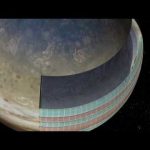
    This animation illustrates a recent discovery by Juno that demonstrates these east-west flows, also known as jet-streams penetrate deep into the planet’s atmosphere, to a depth of about 1,900 miles (3,000 kilometers). Due to Jupiter’s rapid rotation (Jupiter’s day is about 10 hours), these flows extend into the interior parallel to Jupiter’s axis of rotation, in the form of nested cylinders. Below this layer the flows decay, possibly slowed by Jupiter’s strong magnetic field.

    The depth of these flows surprised scientists who estimate the total mass involved in these jet streams to be about 1% of Jupiter’s mass (Jupiter’s mass is over 300 times that of Earth). This discovery was revealed by the unprecedented accuracy of Juno’s measurements of the gravity field.

    Credit: NASA/JPL-Caltech/SwRI/ASI

  • Cassini End of Mission Commentary

    Cassini End of Mission Commentary

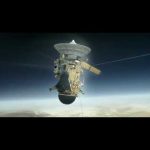
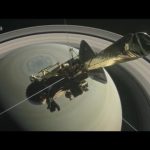
    On Sept. 15, NASA’s Cassini spacecraft completed its remarkable story of exploration with an intentional plunge into Saturn’s atmosphere, ending its mission after nearly 20 years in space. Live commentary of Cassini’s end of mission activities was shown on NASA TV and the agency’s website. Launched in 1997, Cassini arrived in orbit around Saturn in 2004 on a mission to study the giant planet, its rings, moons and magnetosphere.

    This video is available for download from NASA’s Image and Video Library: https://images.nasa.gov/#/details-NHQ_2017_0915_Cassini%20End%20of%20Mission%20Commentary.html

  • Cassini diving into history

    Cassini diving into history

    Following over a decade of ground-breaking discoveries, Cassini is now approaching its mission end.

    With little fuel left to correct the NASA’s spacecraft trajectory, it has been decided to end the mission by plunging it into Saturn’s atmosphere on 15 September 2017. In the process, Cassini will burn up, satisfying planetary protection requirements to avoid possible contamination of any moons of Saturn that could have conditions suitable for life. These include Saturn’s largest moon Titan and Enceladus, which has a liquid ocean under its icy crust.

    The grand finale is not only a spectacular way to complete this extraordinary mission, but will also return a bounty of unique scientific data that was not possible to collect during the previous phases of the mission. Cassini has never ventured into the area between Saturn and its rings before, so the new set of orbits is almost like a whole new mission.

    These close orbits will provide the highest resolution observations ever achieved of the inner rings and the planet’s clouds. The orbits will also give the chance to examine in situ the material in the rings and plasma environment of Saturn. It will also probe the planet’s magnetic field at close distances.

    This video explains Cassini ‘s final operations, what the Cassini-Huygens mission has taught us about Saturn, the potential for life on its moons and the promise of more science to come.

    More about Cassini-Huygens:
    http://www.esa.int/Our_Activities/Space_Science/Cassini-Huygens

  • Voyager 1 Trajectory through the Solar System

    Voyager 1 Trajectory through the Solar System

    This visualization tracks the trajectory of the Voyager 1 spacecraft through the solar system. Launched on September 5, 1977, it was one of two spacecraft sent to visit the giant planets of the outer solar system. Voyager 1 flew by Jupiter and Saturn before being directed out of the solar system.

    To fit the 40 year history of the mission into a short visualization, the pacing of time accelerates through most of the movie, starting at about 5 days per second at the beginning and speeding up to about 11 months per second after the planet flybys are past.

    The termination shock and heliopause are the ‘boundaries’ created when the plasma between the stars interacts with the plasma flowing outward from the Sun. They are represented with simple grid models and oriented so their ‘nose’ is pointed in the direction (Right Ascension = 17h 24m, declination = 17 degrees south) represented by more recent measurements from other missions.
    https://svs.gsfc.nasa.gov/4139
    Credit: NASA’s Scientific Visualization Studio

  • Voyager 2 Trajectory through the Solar System

    Voyager 2 Trajectory through the Solar System

    This visualization tracks the trajectory of the Voyager 2 spacecraft through the solar system. Launched on August 20, 1977, it was one of two spacecraft sent to visit the giant planets of the outer solar system. Like Voyager 1, Voyager 2 flew by Jupiter and Saturn, but the Voyager 2 mission was extended to fly by Uranus and Neptune before being directed out of the solar system.

    To fit the 40 year history of the mission into a short visualization, the pacing of time accelerates through most of the movie, starting at about 5 days per second at the beginning and speeding up to about 11 months per second after the planet flybys are past.

    The termination shock and heliopause are the ‘boundaries’ created when the plasma between the stars interacts with the plasma flowing outward from the Sun. They are represented with simple grid models and oriented so their ‘nose’ is pointed in the direction (Right Ascension = 17h 24m, declination = 17 degrees south) represented by more recent measurements from other missions.

    Credit: NASA’s Scientific Visualization Studio
    https://svs.gsfc.nasa.gov/4140

  • NASA Spacecraft Fire and Combustion

    NASA Spacecraft Fire and Combustion

    In this episode, NASA experts discuss Spacecraft Fire and Combustion Research.

  • Orion and the European Service Module

    Orion and the European Service Module

    NASA’s Orion spacecraft will take astronauts to destinations at or beyond low Earth orbit. In January 2013, it was announced that ESA would provide the European Service Module (ESM) for Orion’s first uncrewed mission. Derived from ESA’s Automated Transfer Vehicle cargo spacecraft, the ESM will provide life support, propulsion and structural functions for Orion. In February 2017, a contract was signed for a second ESM to be used on Orion’s first crewed flight, which will carry astronauts beyond the Moon and back.

    More about European Service Module:
    http://www.esa.int/Our_Activities/Human_Spaceflight/Orion/European_Service_Module

  • Orion Spacecraft Parachute Test on This Week @NASA – March 10, 2017

    Orion Spacecraft Parachute Test on This Week @NASA – March 10, 2017

    NASA conducted the latest successful test of the Orion spacecraft’s parachute system on March 8 in the skies above the U.S. Army’s Yuma Proving Ground in Arizona. The test was designed to evaluate the parachutes’ performance in an emergency abort situation that would require Orion to be jettisoned from the agency’s Space Launch System rocket during a launch. Even at this relatively low altitude, the parachutes are designed to fully deploy and safely return Orion and its crew to Earth. Also, Shin Honored by Aviation Week, Space Station Resupply Mission Targeted for March 19, Small Business Innovation Proposals Selected, Deep Space Atomic Clock, Modern Figures Virtual Tour, and NASA Aero “Night of Flight”!

  • Capturing a dragon

    Capturing a dragon

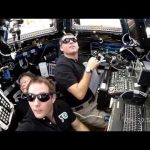
    ESA astronaut Thomas Pesquet with NASA astronauts Shane Kimbrough and Peggy Whitson in the Cupola observatory using the International Space Station’s 16-m robotic arm to grapple the SpaceX Dragon cargo spaceship.

    The video is sped up 20 times with this recording lasting 45 minutes 30 seconds at normal speed. It shows Shane and Thomas monitoring the spacecraft’s approach scanning the monitors, ready to step in if necessary. Thomas took manual control of the robotic arm and extended it to grapple the vehicle when 11 m from the Station. The Dragon CRS-10 flight was launched on 19 February 2017 and berthed with the Space Station four days later.

    The spacecraft carried over 1500 kg of supplies including NASA’s Stratospheric Aerosol and Gas Experiment, or SAGE III, to monitor aerosols, ozone and other gases in Earth’s high atmosphere by looking at the sunlight and moonlight as they pass through. SAGE III is mounted on ESA’s Hexapod – a six-legged tracker that points the facility in the right direction.

    Inside the spacecraft was also France’s CNES space agency Fluidics experiment to probe how fluids behave in weightlessness.
    Thomas is spending six months on the International Space Station as part of his Proxima mission. During Proxima, Thomas will perform around 50 scientific experiments for ESA and France’s space agency CNES as well as take part in many research activities for the other Station partners.

    The mission is part of ESA’s vision to use Earth-orbiting spacecraft as a place to live and work for the benefit of European society while using the experience to prepare for future voyages of exploration further into the Solar System.

    Connect with Thomas Pesquet: http://thomaspesquet.esa.int

  • BepiColombo status

    BepiColombo status

    BepiColombo, Europe’s first mission to Mercury, is currently being put through its paces at ESA’s European Space Research and Technology Centre (ESTEC) in the Netherlands. Mechanical and vibration tests will get underway in April with a view to a launch in October 2018. BepiColombo will arrive at Mercury, the smallest planet in our Solar System, in December 2025.

    The ESA-led joint European and Japanese mission consists of two spacecraft – the Mercury Planetary Orbiter (MPO) and the Mercury Magnetospheric Orbiter (MMO) – as well as a sunshield and a Mercury Transfer Module, which will power its seven year journey using its solar electric propulsion engine. It will be a mission of further discovery after NASA’s Messenger spacecraft uncovered a number of surprises – including evidence of water ice at the closest planet to the Sun and a magnetic dipole field.

    This video covers the mission status as well and its plan to follow up on Mercury’s unexpected features and properties. It includes an interview with Johannes Benkhoff, ESA BepiColombo project scientist.

    More about BepiColombo on our website: http://www.esa.int/Our_Activities/Space_Science/BepiColombo_overview2

  • ESA Euronews: Rosetta heads for glorious crash-landing

    ESA Euronews: Rosetta heads for glorious crash-landing

    In just a few days’ time ESA’s Rosetta mission is going to come to a close in a most extraordinary fashion, because the spacecraft is going to slowly, and deliberately crash-land into the comet that it has been orbiting for the past two years.

    Euronews is with the team as they prepare for this dramatic finale.

    This video is available in the following languages:
    English https://www.youtube.com/watch?v=K_7u71Lu3S4
    German https://www.youtube.com/watch?v=MX7SYFWzUp8
    French https://www.youtube.com/watch?v=WXTn3mDWH-Y
    Spanish https://www.youtube.com/watch?v=SjenXVAFTTw
    Italian https://www.youtube.com/watch?v=32nyF3IkzU8
    Portuguese https://www.youtube.com/watch?v=4_CTvNZfXxc
    Greek https://www.youtube.com/watch?v=CdUgVQibZWo
    Hungarian https://www.youtube.com/watch?v=i3OTRPHckSM

  • ESA Euronews: El final programado de Rosetta

    ESA Euronews: El final programado de Rosetta

    En pocos días, la misión Rosetta de la Agencia Espacial Europea (ESA) tocará a su fin. Y lo hará de la forma más extraordinaria, porque la nave espacial irá a chocar, lenta y deliberadamente, contra el cometa alrededor del cual ha estado orbitando durante los últimos dos años. Nos reunimos con el equipo mientras preparan este dramático final.

  • ESA Euronews: Rosetta se prépare au choc fatal sur la comète Tchouri

    ESA Euronews: Rosetta se prépare au choc fatal sur la comète Tchouri

    Le 30 septembre prochain, la sonde Rosetta s’écrasera lentement et délibérément sur la comète autour de laquelle elle orbite depuis deux ans. Or elle n’a pas été conçue pour cela. L’issue sera fatale. Mais avant cette dernière manoeuvre, les scientifiques ont prévu d’effectuer des relevés inédits à l’approche de “Tchouri”.

  • Dragon Cargo Spacecraft Departs the ISS on This Week @NASA – August 26, 2016

    Dragon Cargo Spacecraft Departs the ISS on This Week @NASA – August 26, 2016

    The SpaceX Dragon cargo spacecraft left the International Space Station on August 26. The Dragon departed the station five weeks after delivering almost 5,000 pounds of supplies, experiments and equipment to the orbital complex – including an international docking adapter for use by future American commercial crew spacecraft transporting astronauts to the station. The station’s Canadarm2 robotic arm was used to grapple the Dragon, move it away from the ISS, and release it for its return trip to Earth. The capsule is returning with about 3,000 pounds of cargo and experiments for researchers and investigators. Also, New U.S. Endurance Record in Space, Next U.S. Spacewalk Previewed, Boeing CST-100 Starliner Land Drop Test, SLS Liquid Hydrogen Test Tank Moved, and Celebrating National Parks, from Space!